
Have you done a grouch a favor today? If not then it’s likely that no one told you it was National Do a Grouch a Favor Day, as doing a grouch a favor is what the day is all about.
We all know a grouch at some point in our lives, and it is very likely that we’ve had phases of being grouchy ourselves.
Sometimes another person doing us a favor is the last time, but other days a favor from someone, be they a close friend or a random stranger, is exactly what we need to break us out of our slump!
National Do a Grouch a Favor Day Timeline
Menander’s “Dyskolos” Introduces the Classic Grouch
The Athenian playwright Menander premieres “Dyskolos” (“The Grouch”), centered on a misanthropic, bad-tempered old man whose surliness drives the plot and humor, establishing a lasting “grumpy neighbor” archetype.
Ebenezer Scrooge Embodies the Miserly Grouch
Charles Dickens publishes “A Christmas Carol,” featuring Ebenezer Scrooge, a cold, irritable miser whose transformation from grouch to generous benefactor becomes one of literature’s most famous redemption arcs.
The Grinch Becomes a Modern Holiday Grouch
Dr. Seuss’s book “How the Grinch Stole Christmas!” is published, introducing the Grinch, a grumpy recluse who despises the joy of others until acts of kindness and community spirit change his heart.
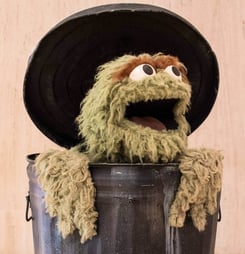
Oscar the Grouch Debuts on Sesame Street
Sesame Street premieres on U.S. television, introducing Oscar the Grouch, a trash-can-dwelling curmudgeon whose crankiness, softened by neighbors’ patience and kindness, turns “the grouch” into a beloved children’s character.
Psychology Coins the “Negativity Bias”
Psychologist Roy Baumeister and others later popularize findings that negative events affect us more strongly than positive ones, helping explain why grouchy behavior stands out and why deliberate kindness can counterbalance it.
Research Shows Helping Others Boosts the Helper’s Mood
Social psychologists report that performing small, everyday acts of kindness—like favors for others—significantly increases the giver’s positive mood, suggesting that being kind to a grouch can uplift both people.
“Positive Activity” Studies Highlight Power of Simple Kindness
Emerging positive psychology research finds that brief, intentional prosocial acts—such as doing favors or expressing gratitude—reliably enhance well-being, lending scientific backing to the idea of cheering up even the grumpiest among us.
How to Celebrate National Do a Grouch a Favor Day
Be Kind to a Grouch
Depending on the nature of the grumps in your life it might be possible that observing National Do a Grouch a Favor Day will be no chore for you at all.
However, even if the grouch in the cubicle next to yours is insufferably nasty, do a Grouch a Favor Day is still an excellent opportunity to surprise them with a favor of some description, whether it be an outstanding act of kindness or just a smile and kind response to one of their cynical comments.
Reach Out to a Grouch
Even the foulest mood can be improved by a kind word or action, and whether you feel like it or not going out of your way to do a favor for a grouchy person is the theme of National Do a Grouch a Favor Day
Maybe the grouchy neighbor across the street is not really a terrible human being and is in fact just lonely. A smile and wave might just cause the glare to fall off their face and be replaced by a reciprocated smile, even if just for a moment.
Watch Oscar the Grouch
If you’re unwilling to reach out to a grouch, or simply do not know a grouch (lucky you) than National Do a Grouch a Favor Day may be just the excuse you needed to flop onto the couch and turn on your favorite Sesame Street episode (we know you have one) and enjoy the shenanigans of the Grouch.
Alternatively, if you can stomach Christmas films without becoming grouchy yourself, than classics such as A Christmas Carol, or The Grinch who Stole Christmas, might prove to be right up your alley.
History of National Do a Grouch a Favor Day
This day might have been the brain child of Big Bird, in an attempt to pull Oscar the Grouch out of his continual grumbling spirit, or it may have been the secret initiative of a grump who secretly wants people to do nice things for them, despite their prickly exterior.
Whatever, the ‘grump’ has been a stereotype character since stereotype characters were invented. Even ancient Greek plays feature a grump character archetype to amuse those of us who have a sense of humor and are not resigned to a grouchy fate.
Of course, there may not be any redemption for the grouchy neighbor who hates your dog, and your mailbox, and the way your lawn mower sounds, and the color of your house and…. Well, you get the point.
Even if you have that person for a neighbor, doing them a well meaning favor would not go amiss on National Do a Grouch a Favor Day.
Facts About National Do a Grouch a Favor Day
Hidden Health Reasons Behind Chronic Grouchiness
Why Some People Seem Permanently Irritable
Concept analyses in nursing and mental-health research describe irritability as a distinct emotional state that blends anger, impatience, and oversensitivity to stimulation, often becoming a habitual response style rather than a one-off reaction.
Unlike brief annoyance, chronic irritability tends to persist across situations, can damage relationships over time, and is linked to difficulty regulating emotions in everyday life.
Tiny Acts of Kindness Have Measurable Mood Effects
Experiments in social psychology show that performing even small, low-cost kind acts—such as giving someone a compliment or a small favor—significantly boosts well‑being for both giver and receiver, and people reliably underestimate how positive the impact will be.
In one series of field studies, participants who did simple kind acts for strangers reported greater happiness than control groups, while recipients rated the gestures as more meaningful than givers expected.
Kindness Can Soften Defensive, “Prickly” Behavior
Research on prosocial behavior finds that unexpected generosity can reduce defensiveness because it signals warmth and safety in social interactions, especially where someone expects rejection or criticism.
Studies on “high-quality connections” at work show that small, respectful gestures—like offering help or listening without judgment—can quickly de-escalate tension and improve cooperation, even with colleagues initially perceived as difficult or negative.
Irritability and the Brain’s Threat System
Neuroscience research links chronic irritability to heightened reactivity in the brain’s threat-detection circuits, including the amygdala, with weaker regulation from frontal regions that help us pause and reframe situations.
This makes some people much more likely to interpret neutral or mildly frustrating events as hostile, which can show up outwardly as constant complaining, snapping, or pessimism.
Exercise as a Fast Antidote to Feeling Grouchy
Clinical sources note that as little as 10 minutes of light physical activity—such as walking, taking the stairs, or stretching—can increase mood-regulating brain chemicals for one to two hours, helping reduce irritability and tension.
Regular movement also lowers stress hormones like cortisol, which otherwise keep the body in a “primed to snap” state that many people experience subjectively as being on edge or grouchy.
The “Grumpy Neighbor” Archetype Has Ancient Roots
The modern stereotype of the grouchy neighbor has a long literary history: ancient Greek New Comedy often featured a misanthropic, irritable old man (the senex iratus) whose grumbling and resistance to others’ joy created much of the plot’s humor.
This stock character evolved through Roman plays into later European theater and eventually into modern film and television portrayals of the cantankerous but sometimes soft‑hearted curmudgeon.