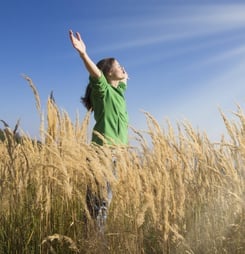
National All is Ours Day is celebrated on April 8 every year. It’s a time for everyone to pause and appreciate the beauty and abundance in our lives and the world around us.
This special day reminds us of the things we share and the importance of caring for them together.
The day has three main ways to be celebrated: appreciating nature and everything around us, expressing gratitude for what we have, and sharing with others, whether material things, time, or talents.
It emphasizes the joy of the simple things and encourages us to give back to the community and those in need. The day is about enjoying what we have and extending kindness and help to others, promoting a sense of community and collective well-being.
National All is Ours Day is about appreciating the natural world and recognizing our interconnectedness with others. It calls on us to act selflessly, engaging in acts of kindness that benefit both the giver and the receiver.
Whether it’s by volunteering, hosting gatherings, or simply sharing a smile, the day serves as a reminder of our shared responsibility to each other and the environment.
Remember, April 8 is more than just a date on the calendar. It’s an opportunity to reflect on the wonders surrounding us, express gratitude, and make a positive impact in the lives of others. Let’s embrace this day with open hearts and minds, celebrating the gift of togetherness and the beauty of our world.
National All is Ours Day Timeline
Stoic Philosophy and the Idea of a Shared World
Early Stoic thinkers such as Zeno of Citium teach that all humans are part of one cosmopolis, stressing that nature, reason, and moral concern are fundamentally shared rather than owned in isolation.
Magna Carta and Limits on Exclusive Ownership
The Magna Carta in England curbs absolute royal control over land and resources, recognizing certain rights of “common” use and laying groundwork for later ideas of shared access to forests, rivers, and grazing lands.
John Locke and Rights in the Commons
Philosopher John Locke argues that while individuals may claim private property by mixing their labor with nature, they must leave “enough, and as good” for others, shaping later debates about the ethics of common resources.
Founding of the First Modern Urban Public Park
Liverpool’s Princes Park is laid out as one of the first purpose‑built public parks, helping to inspire the idea that green spaces should be open for everyone’s enjoyment rather than reserved for elites.
Creation of Yellowstone as the First National Park
The United States establishes Yellowstone National Park, declaring it a public “pleasuring-ground” for all people, a landmark in the global movement to preserve natural beauty and wildlife as a shared heritage.
Launch of the Gratitude Journal in Positive Psychology
Psychologists Robert Emmons and Michael McCullough begin systematic studies using gratitude journals, providing strong evidence that regularly noting things one is thankful for improves well‑being and prosocial behavior.
Elinor Ostrom’s Work Popularizes Community Stewardship of Commons
Building on decades of research, Elinor Ostrom’s influential book “Understanding Institutional Diversity” highlights how communities can successfully manage shared resources through cooperation, challenging the idea that commons must be privatized or depleted.
History of National All is Ours Day
The history of National All is Ours Day remains a bit of a mystery. Despite efforts to uncover its origins, the exact beginnings and the person or group who first declared the celebration are poorly documented.
The day encourages appreciation of nature and the beauty of life, highlighting the importance of gratitude for our surroundings and the things we cherish.
Celebrated on April 8 each year, this special day prompts us to appreciate everything from nature’s beauty to the love of friends and family and even to share what we have with those less fortunate.
It’s a day for reflecting on the good in our lives, both big and small, and for sharing our blessings with others, fostering a spirit of generosity.
Interestingly, the name “All is Ours Day” suggests a day meant for collective appreciation and ambition, urging us not just to dream but to seek out those dreams with the support of others.
It emphasizes community and shared success over individual gain, promoting the idea that the best experiences in life are shared.
One article humorously mentions the Union College administration instituting National All Is Ours Day as a new holiday, although it clarifies that this is fictitious.
This playful take underscores the day’s potential for fostering gratitude and the enjoyment of nature’s beauty among students and the broader community.
In summary, while the specific history of National All is Ours Day might be unclear, the day’s essence focuses on appreciation, sharing, and collective joy. It’s a reminder to look around and be thankful for the beauty in our lives, to reach out to others, and to remember that together, we can achieve more.
How to Celebrate National All is Ours Day
Share the Love, Not Just the Likes
In the spirit of National All is Ours Day, let’s get whimsical with our acts of kindness. Instead of scrolling past friends’ life updates, reach out with a personal message or, better yet, a phone call.
Surprise someone with a letter or a quirky postcard. It’s a refreshing twist to the digital “likes” we’re all accustomed to giving and receiving.
Nature’s Date: A Meeting to Remember
Next, why not plan a date with Mother Nature? This doesn’t mean a glance out the window. Dive into the outdoors, whether it’s a lazy afternoon in the park or an adventurous hike through local trails.
Bring a friend, a four-legged companion, or your own splendid company. The aim is to soak in the beauty around us, perhaps even leaving our phones behind. The world looks different when it’s not through a screen.
The Art of Giving, Literally
Here’s a playful idea: create something. Anything. Then, give it away. It could be a doodle on a napkin, a heartfelt poem, or a home-cooked meal.
Putting a piece of yourself into what you’re sharing is the point. Imagine the joy of finding a random act of art left for discovery in the public. It’s the little things that spark joy and connection among us.
Collective Dream Weaving
Finally, on this day of shared joy, team up with others to dream big. Collaborate on a community project, whether planting a garden, starting a book club, or organizing a neighborhood cleanup.
It’s about coming together to create something larger than ourselves, something that says, “We did this together.” National All is Ours Day reminds us that our dreams have more power when we invite others to dream with us.
By weaving these threads of connection, appreciation, and collaboration into the fabric of our day, we truly embody the spirit of National All is Ours Day.
Let’s make it a day to remember, filled with laughter, generosity, and a shared sense of wonder at the world around us.
Uplifting Facts About Gratitude and Kindness
Small actions rooted in appreciation and generosity can have a surprisingly strong effect on both emotional and physical well-being.
Researchers studying gratitude, kindness, and helping behavior have found that these everyday habits influence health, happiness, and even how people experience time.
The following facts highlight how simple acts such as expressing thanks, offering help, or showing kindness can create positive effects for both the giver and the receiver.
Gratitude Can Improve Physical Health
Psychological studies have found that regularly practicing gratitude is linked to better sleep, lower blood pressure, fewer aches and pains, and improved immune function.
In one landmark study, people who kept weekly “gratitude journals” reported exercising more and visiting doctors less often than those who focused on hassles, suggesting that appreciating what one already has can translate into measurable physical health benefits.
Small Acts of Kindness Boost Happiness for Both Sides
Research on prosocial behavior shows that even brief, low-cost acts of kindness, such as writing a kind note or giving a small gift, significantly increase happiness not just for recipients but also for the people performing the acts.
A 2019 study in the journal Emotion found that people systematically underestimated how much their kind gestures would be appreciated, implying that everyday generosity has more emotional impact than most people expect.
Time Given to Others Can Feel Like “More Time” for Ourselves
Contrary to the feeling of being too busy to help others, experiments led by researchers at Wharton and Yale found that people who spent time doing something for someone else reported feeling as though they had more time available than those who spent the same amount of time on themselves or wasted it.
Helping others seemed to increase feelings of personal competence and effectiveness, which in turn made time feel more expansive.
Sharing and Cooperation Emerge Early in Childhood
Developmental psychologists have found that children begin to show spontaneous helping and sharing behaviors in the second year of life, long before they are strongly socialized by parents or schools.
Studies with toddlers as young as 18 months show that many will share toys or help an unfamiliar adult complete a simple task, suggesting that the impulse to cooperate and share with others is a basic part of human development.
Exposure to Nature Strengthens Social Bonds
Beyond its mental health benefits, spending time in natural settings appears to encourage people to feel more connected to others and to behave more generously.
In one set of experiments, participants who viewed scenes of natural beauty or walked through green spaces reported greater feelings of “social connectedness” and showed more willingness to help strangers than those exposed to urban scenes, hinting that appreciating the natural world can simultaneously deepen a sense of human community.
Communities That Share Resources Tend to Be More Resilient
Sociological research on mutual aid and community networks finds that neighborhoods where people share tools, skills, childcare, and informal support often recover more quickly from crises such as natural disasters or economic shocks.
These shared-resource systems, sometimes called “social infrastructure,” can be more important for community resilience than physical infrastructure alone because they build trust and cooperation before emergencies occur.
Nobel-Winning Research Challenged the “Tragedy of the Commons”
For decades, many economists believed that shared resources were destined to be overused and destroyed unless privatized or strictly controlled.
Political scientist Elinor Ostrom, who won the Nobel Prize in 2009, compiled extensive field research showing that communities around the world have long managed forests, fisheries, and water systems sustainably through local rules, trust, and cooperation.
Her work demonstrated that “what we share” can be effectively cared for when groups build fair, transparent systems together.