Orthodox Holy Saturday is a deeply symbolic day that follows the sorrow of Good Friday. It represents a powerful moment of waiting and hope.
This day honors Jesus’ burial yet carries a unique, uplifting promise. Orthodox Christians reflect on Christ’s descent into Hades, where he brings hope to souls and overcomes death itself.
During church services, somber tones and dark vestments shift to brighter hues, signaling the nearing joy of Easter. The rituals bring to life the belief that, through his death, Christ broke the chains of darkness and brought light to those who awaited salvation in the depths.
In the liturgy, the congregation hears readings from the Old Testament, each highlighting the themes of renewal and liberation. These readings, along with chants and hymns, build a sense of anticipation.
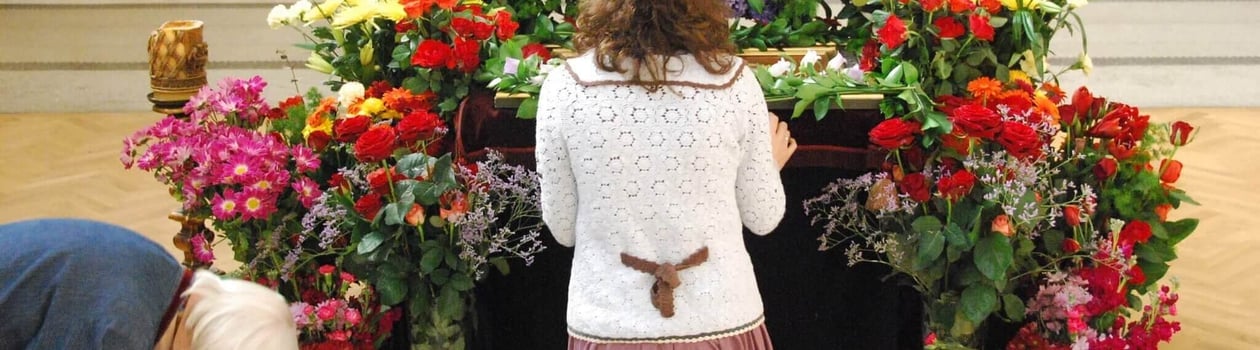
At a special point, the priest spreads bay leaves or flower petals around the church, symbolizing the victory over death and the opening of the tomb.
Orthodox Holy Saturday is a blend of solemnity and joy, a day when grief transforms into the promise of resurrection, and believers await Easter morning’s celebration of life reborn.
It’s a day marked not by despair but by profound, expectant hope.
Orthodox Holy Saturday Timeline
Early reflections on Christ’s descent to the dead
Church writers such as Irenaeus interpret 1 Peter 3:19 as Christ preaching to the spirits in the underworld, shaping early Christian belief that Holy Saturday recalls his saving work among the dead.
Descent to Hades in early Christian preaching
Apocryphal and patristic texts, including the Gospel of Peter and other Passion-related writings, vividly portray Christ breaking the gates of Hades and liberating the righteous, imagery that becomes central to the “Harrowing of Hell” associated with Holy Saturday.
Holy Saturday as day of rest and expectation
The Didascalia Apostolorum and other early church orders describe Holy Saturday as a Sabbath of rest and strict fasting, preparing catechumens for baptism at the Paschal vigil and highlighting the link between Christ’s rest in the tomb and new life.
Nicaea and the Paschal mystery framework
The First Council of Nicaea regulates the dating of Pascha for the universal Church, giving a unified framework in which Good Friday, Holy Saturday, and Pascha are kept as one continuous celebration of Christ’s death and resurrection.
Byzantine Holy Saturday Liturgy of St. Basil consolidated
Byzantine liturgical books such as the Typikon of the Great Church preserve Holy Saturday Vespers joined to the Divine Liturgy of St. Basil, including readings and hymns that move from sorrow to joy as a sign that Paschal light is already dawning.
How to Celebrate Orthodox Holy Saturday
Holy Saturday in the Orthodox Church holds a quiet but profound joy as believers await Easter. For those observing, this day offers meaningful ways to connect, prepare, and embrace the spirit of hope.
Here are some playful yet reverent ideas to enhance your Holy Saturday experience.
Attend the Morning Liturgy
Begin the day with the Divine Liturgy of Saint Basil. This special service symbolizes Christ’s victory over death, blending elements of solemnity with hints of celebration.
Watch as dark vestments are exchanged for bright ones and laurel leaves are sprinkled around, marking the promise of resurrection.
Prepare a Pascha Basket
Get creative with a traditional Pascha (Easter) basket! Choose treats you’ve missed during Lent—chocolates, meats, or even your favorite baked goods.
Adding candles, dyed eggs, and icons can also make your basket a beautiful and meaningful centerpiece for Easter celebrations.
Reflect with Family Prayers
Gather with family for moments of quiet prayer or reading. This can be a time to reflect on Christ’s descent into Hades, offering hope to the world.
Sharing the story of the resurrection with children through simple words or drawings can help make the day memorable.
Decorate Your Candle for Pascha
Personalize a candle for the midnight Paschal procession. Some people wrap their candles in decorative ribbons, while others add small flowers or a prayer card.
It’s a fun way to prepare for the evening and adds a personal touch to the vigil service.
Cook a Festive Dish for the Paschal Feast
Holy Saturday is the perfect time to start preparing food for Easter’s Paschal meal. Bake traditional breads or prepare a hearty stew to break the fast after midnight.
The anticipation of sharing a special meal can make the day feel even more meaningful.
History of Orthodox Holy Saturday
The history of Orthodox Holy Saturday goes back to the early days of Christianity. This day commemorates a crucial event: Christ’s descent into Hades. Here, he is said to have liberated souls and conquered death, marking it as the “Blessed Sabbath.”
By the 4th century, Christian communities were already holding special services for Holy Saturday, honoring this “Sabbath of rest” with liturgies that symbolized Christ’s own rest in the tomb.
The apostles and early Christians began observing Holy Saturday to remember Christ’s actions between his death and resurrection. They believed he descended into the underworld, bringing hope to those in darkness. Early liturgies likely included scripture readings and hymns, emphasizing both sorrow and victory over death.
Orthodox Holy Saturday remains filled with meaningful traditions, including the chanting of Psalm 119, which praises God for his faithfulness. This day’s ancient service, known as the Vespers and Divine Liturgy of Saint Basil, symbolizes Christ’s journey through death and back to life.
During this service, clergy change from dark robes to white, symbolizing the coming resurrection and the promise of new life
For centuries, the Orthodox Church has upheld this tradition, layering it with hymns and readings that celebrate Christ’s victory over death.
These include Old Testament passages foreshadowing resurrection and salvation, such as the story of Jonah. Each part of the service captures the expectation of resurrection, a theme passed down through the centuries.
In sum, Orthodox Holy Saturday is rooted in ancient Christian practices and highlights the triumph of life over death.
It has been observed with both solemnity and hope, marking a transformative period in Orthodox tradition and setting the stage for Easter celebrations.
Key Facts About Orthodox Holy Saturday
Orthodox Holy Saturday holds deep theological meaning within the Christian tradition, especially in Eastern Christianity.
The day reflects beliefs about Christ’s descent into the realm of the dead, the development of early creedal language, and the powerful symbolism used in Eastern Christian art.
These facts highlight how theology, scripture interpretation, and visual tradition shaped the understanding of the events between the Crucifixion and the Resurrection.
The Harrowing of Hell in Early Christian Thought
The belief that Christ descended into the realm of the dead is documented in some of the earliest Christian writings, long before it appeared in later art and hymnography.
Texts such as the apocryphal Gospel of Peter and the 2nd‑century Gospel of Nicodemus describe Christ breaking the gates of the underworld and liberating the righteous dead, portraying his death as an active victory rather than passive repose.
By the 4th century, preachers like John Chrysostom were already using vivid “Harrowing of Hell” imagery in Paschal homilies, indicating how deeply this idea had shaped Christian understandings of salvation and death.
“He Descended into Hell” and the Apostles’ Creed
The well‑known line “He descended into hell” in the Apostles’ Creed was not part of the earliest Roman baptismal formulas but developed gradually in Western Christianity.
Historical studies of the creed suggest that early versions spoke of Christ’s death and burial without this clause, and that a Latin form from about the 4th century added the descent phrase, which became standard by the early Middle Ages.
Eastern Orthodox churches never adopted the Apostles’ Creed as a liturgical text, relying instead on the Nicene‑Constantinopolitan Creed, yet they share the belief in Christ’s descent to the dead through scriptural interpretation and patristic writings rather than through this particular Western formula.
Anastasis Icons as the Central Eastern Image of the Resurrection
In Eastern Christian art, the primary visual representation of the Resurrection is not Christ stepping out of a stone tomb but the Anastasis, a composition that shows him standing over the shattered gates of Hades.
This image, which crystallized by the Middle Byzantine period, usually depicts Christ pulling Adam and Eve from their graves, with broken locks and chains scattered beneath his feet and a bound personification of Death or Hades below.
Art historians note that this icon encapsulates Eastern Christian theology by presenting the Resurrection as a cosmic liberation of humanity and a defeat of death, rather than simply a private miracle affecting Jesus alone.
Psalm 119 in Byzantine Funeral and Memorial Rites
Psalm 119 (numbered 118 in the Septuagint), the longest psalm in the Bible, took on a distinctive place in Byzantine liturgical life as a funeral and memorial text.
Known for its acrostic structure and sustained praise of God’s law, it was incorporated into services for the departed as a framework for lament and hope, with verses interspersed by hymns that interpret death in light of God’s promises.
This use of Psalm 119 in mourning rituals helped shape how Eastern Christians express grief and trust in God’s mercy when facing death and burial.
Early Christian Baptism and the Night Vigil Before Pascha
In the first centuries of Christianity, one of the principal times for administering baptism to catechumens was the night vigil before the feast of Pascha, a practice that emphasized a passage from darkness to light.
Candidates would spend the night listening to a long sequence of Old Testament readings that traced the history of salvation, renounce evil, and then be immersed in water as a sign of dying and rising with Christ before taking part in the Eucharist for the first time.
Historical accounts show that although baptisms later became more evenly distributed throughout the year, many Eastern churches retained the Paschal season as a favored context for initiating new members because of this ancient connection between baptism, death, and resurrection.
Laurel and Floral Symbols of Victory over Death
The use of laurel leaves and flowers in Eastern Christian worship draws on older Mediterranean and biblical symbols of victory and imperishability.
In Greco‑Roman culture, laurel wreaths were awarded to triumphant athletes and military leaders, while early Christian writers adopted the imagery of a “crown” or “wreath” to describe the reward of eternal life promised to the faithful.
Scholars of liturgy note that scattering laurel or petals in church visually expresses the belief that death has been overcome, echoing both classical triumphal processions and early Christian customs of adorning graves and martyrs’ shrines with greenery as a sign of hope.
Contrasting Eastern and Western Liturgical Approaches to the Day of Rest in the Tomb
Christian traditions developed distinct liturgical patterns for the day that commemorates Christ’s rest in the tomb, highlighting different theological accents.
In many Western rites, this day became comparatively quiet, with the faithful waiting in silence until the Easter Vigil that begins the celebration of the Resurrection.
Eastern churches, by contrast, developed a fuller morning Eucharistic service rich in Old Testament readings, resurrection‑themed hymns, and symbolic changes of vestments, followed by evening and midnight services that move directly into Paschal proclamation.
These contrasts reflect divergent historical developments in how East and West balanced themes of waiting, mourning, and cosmic victory within the same sacred interval.