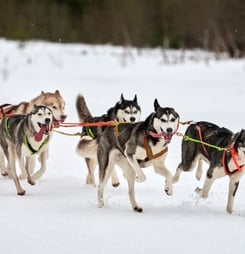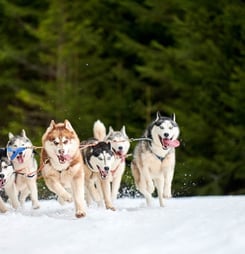
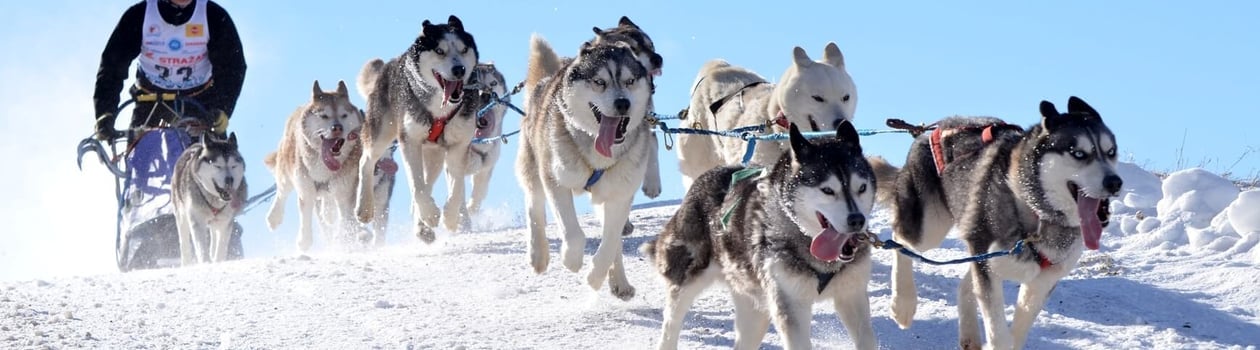
Running through snow all day, every day, pulling a sled that can weigh hundreds if not thousands of pounds—that’s a sled dog’s job.
Don’t you think they might deserve a little recognition? This is the official holiday of the sled dog!
How to Celebrate National Sled Dog Day
Sled dogs are celebrated for their role in polar expeditions, and a number of famous dog races are organised each year.
National Sled Dog Day is an opportunity to raise awareness of the animals’ dedication to the human race. Check out these ideas for enjoying the day:
Support Animal Organizations
National Sled Dog Day can be a time to raise money for dog charities taking care of homeless, or sick dogs, and those that have been cruelly abandoned by their owners.
There are also numerous opportunities to volunteer at your local animal shelter to spend time with some of the dogs living there, play with them, or take them out for walks.
Dogs are generally social, friendly creatures that love physical activity and playing games, so even the smallest gesture on your part to celebrate National Sled Dog Day will definitely be greatly appreciated by a dog that has nothing to do but sit in a cage or pen all day, every day.
Adopt a Former Sled Dog
Who knows, maybe you’ll meet a former sled dog, become friends and then decide to adopt the dog? That would be the ultimate gesture of respect towards the sled dogs that sacrificed their health and sometimes their lives, for the good of men.
Learn More Through PETA
Organizations like PETA take the opportunity to point out how many dogs are being abused and mistreated in the world and encourage people to take action if they happen to witness any kind of abuse being perpetrated on man’s best friend.
PETA is also strongly opposed to the runs that take place in Alaska every year, saying they exhaust the animals for no good reason, and implore of Alaskan tourists not to patronize the Iditarod annual commemorative race, or any tourist attractions that include dogsled rides.
History of National Sled Dog Day
Sled dogs are thought to have evolved in the mountainous regions of Northern Asia over 35,000 years ago, but are thought to have started actually pulling sleds for people about 3,000 years ago, when hunting and fishing communities were forced to move further up north to Siberia.
From there, they made their way to Lapland, Alaska, Canada and even Greenland. Historical references to actual dog harnesses far outdate the first European contact with the native peoples of Alaska and Canada.
In fact, it was the Alaskan gold rush that really got the American population interested in the use of sled dogs as a form of transportation, as most gold camps were only accessible by dogsled in the winter months.
In fact, for a long while, dogsleds were the only relatively dependable way of transporting anything in the harsh Alaska and Yukon weather conditions, until airplanes finally took over in the 1930s.
Dogsleds were also used to patrol western Alaska as late as World War II. After that, mushing became largely recreational.
One of sled dogs’ most impressive achievements was the 1925 serum run from Nome to Nenana. With a diptheria threatening the lives of people in Nome and the serum needed being 1,100 kilometers (700 miles) away in the town of Nenana, hundreds of people may have died if not for the 20 dogsled teams that worked together to relay the serum to Nome.
In the end, the serum reached Nome in only 6 days, saving the lives of many. Also, the first Arctic explorers were men with sled dogs.
National Sled Dog Day was founded to show appreciation for the unique cultural connection between animals and humans in the snow!
Facts About Ancient Arctic Sled Dogs and the Origins of Specialized Working Breeds
Research into early human–dog relationships shows that sled dogs were not a recent innovation but a carefully developed Arctic technology. Genetic and archaeological evidence from Zhokhov Island reveals that dogs were already being selectively bred for endurance, strength, and cold survival nearly 9,500 years ago. These findings highlight how essential specialized dogs were to mobility, hunting, and long-distance travel in extreme polar environments.
Ancient Arctic Sled Dogs Show Genetic Adaptations for Draft Work
Genomic analysis of 9,500-year-old dog remains from Zhokhov Island in Arctic Siberia shows that these early Arctic dogs already carried genetic variants associated with cold tolerance, intense physical activity, and fat metabolism, distinguishing them from both ancient and modern wolves. Researchers interpret these traits as early adaptations for tasks such as pulling loads and long-distance travel in extreme environments.
Zhokhov Island Dogs Reveal Deliberate Size Selection by Early Hunters
Archaeological work on Zhokhov Island has identified at least two standardized dog body types: medium-sized animals similar in size to modern Siberian Huskies, and larger, more robust dogs comparable to Alaskan Malamutes. The consistent size ranges within each group suggest that Mesolithic hunter-gatherers were intentionally selecting dogs for different roles, such as hauling sleds versus hunting large game.
Modern Sled Dogs Share Deep Ancestry With Siberian Dogs From 9,500 Years Ago
Comparative population genomics indicates that modern Arctic sled dogs, including Greenland sled dogs and Siberian Huskies, share a distinct lineage that can be traced back at least 9,500 years to dogs from Zhokhov Island. This Arctic/American lineage shows genetic continuity across millennia, implying a long-term partnership between humans and specialized working dogs in high-latitude environments.
Arctic Sled Dogs Differ Genetically From Both Wolves and Other Dog Breeds
Genome-wide studies show that Arctic sled dogs form a separate cluster from both gray wolves and most non-sled dog breeds, with relatively little recent wolf admixture. These dogs carry unique combinations of alleles linked to thermoregulation, cardiovascular function, and endurance, reflecting strong selection pressures for survival and work in polar climates.
Greenland Sled Dogs Preserve Ancient Arctic Dog Genetics
Research on Greenland sled dogs finds that, due to their geographic isolation and continued use as working animals, they retain a particularly high proportion of ancestral Arctic sled dog DNA compared with many modern pet breeds. Their genomes help researchers reconstruct migration patterns of Inuit peoples into Greenland and the spread of sled technology across the Arctic.