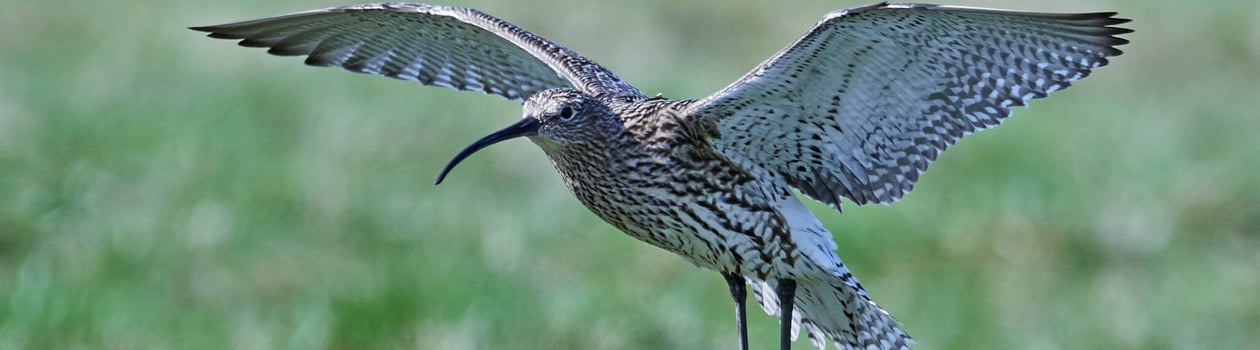
Get to know this, one of the world’s rarest birds, on the day dedicated to it: World Curlew Day! This iconic bird has inspired poets, artists, and songwriters for many generations. But, sadly, today the curlew bird is on the endangered list as “vulnerable”, with two species possibly extinct and expectations that three more will disappear in the next few decades if nothing is done to preserve them.
World Curlew Day Timeline
Scientific Description of Eurasian Curlew
Swedish naturalist Carl Linnaeus formally described the Eurasian curlew as Scolopax arquata in the 12th edition of Systema Naturae, providing one of the earliest scientific treatments of the species that would later be placed in the genus Numenius.
Genus Numenius Established
French zoologist André Marie Constant Duméril establishes the genus Numenius, grouping together species with the distinctive long, downcurved bill, which includes the Eurasian curlew and several other curlew species.
Curlew Hunting and Market Trade Expand
Throughout the 1800s, large curlews such as the Eskimo curlew were heavily hunted across North America for commercial markets, with accounts describing great flocks being shot in migration, a pressure later recognized as a major factor in their collapse.
Migratory Bird Treaty Act Framework
The United States and the United Kingdom (for Canada) signed the Migratory Bird Treaty, which is implemented by the 1918 Migratory Bird Treaty Act; curlews and many other shorebirds eventually benefited from this new legal framework restricting unregulated hunting.
Eskimo Curlew Gains Legal Protection
The Eskimo curlew was listed as endangered under the U.S. Endangered Species Preservation Act of 1966’s precursor processes and later carried onto the 1973 Endangered Species Act list, formalizing protection for a species already feared to be on the brink of extinction.
Slender-billed Curlew Listed as Critically Endangered
The International Union for Conservation of Nature (IUCN) classifies the slender-billed curlew as critically endangered, reflecting the collapse of its population and the absence of confirmed breeding records, and triggering targeted international conservation concern.
Eurasian Curlew Uplisted to Near Threatened
Following steep declines in breeding populations across Europe, the IUCN uplists the Eurasian curlew Numenius arquata from Least Concern to Near Threatened on the Red List, underlining the species’ growing vulnerability and the need for stronger conservation measures.
History of World Curlew Day
The first World Curlew Day was the brain-child of Mary Colwell in 2017, with the purpose of shining a light on the plight that this rare and unique bird faces. Mary Colwell was so disturbed by the disappearing Eurasian curlew that, starting on April 21, 2016, she walked 500 miles to find out why!
World Curlew Day is a grass-roots initiative that champions curlew throughout the world, coordinated by Curlew Action, a non-profit charitable organization in the UK dedicated to the preservation of the curlew bird. The group has a number of projects that encourage outreach and engagement related to the curlew, including the Junior Curlew Network for kids as well as research projects, international connections, natural history education and curlew conservation projects.
World Curlew Day is celebrated annually to raise awareness and tell the stories of the curlew birds. Each year on this day, Curlew Action stages various events and activities to celebrate, including local music nights, online webinars, nature walks and more.
How to Celebrate World Curlew Day
Get involved with saving this rare and unique bird by participating in and organizing activities for World Curlew Day. Get started with some of these ideas:
Learn Facts About the Curlew
Turn World Curlew Day into an exciting adventure by learning more about this fascinating bird and then sharing with others to raise awareness about the dangers that it faces. Consider some of these interesting facts about this bird and share them in person or on social media to increase interest:
The genus name of the curlew, numenius, (‘neos’ meaning new and ‘mene’ meaning moon) comes from its crescent shaped bill, resembling a new moon.
There are eight species of curlew, two of which may already be extinct. But of the remaining species, curlews are distributed in various places throughout the world.
The end of the curlew’s bill is very sensitive, helping it search for food and acting in a tweezer-like fashion to pick up the food. Because their tongues can’t reach down the bill, the curlew is adept at throwing its food up in the air and catching it to eat.
Organize Events for Curlews
People who are interested in helping to save the curlew can do so by arranging to host fund-raising or awareness-raising events in honor of World Curlew Day. Some groups have organized fund-raising walks in support of this incredible bird, while others might consider hosting a coffee morning, having a curlew-themed art display or celebrating the event with talks at a local school. It’s certainly fun to get the kids involved and there are plenty of opportunities to show support to curlews in honor of this day!