Baisakhi marks the Punjabi New Year, bringing vibrant energy and a fresh start for people in Punjab and beyond. It’s a day brimming with hope and joy as fields burst into life with golden crops ready for harvest.
Also called Vaisakhi (spellings vary) the festival captures the spirit of renewal and the bond between people and the land.
Families and friends gather, filling the air with laughter and song, celebrating not just the harvest but the community that nurtures it.
The day carries deep significance as it is also a time for spiritual reflection and gratitude. People visit temples and gurudwaras, offering thanks for the blessings of the past year.
The atmosphere is one of unity, where everyone comes together, regardless of background, to share in the festivities. Baisakhi isn’t just about crops or rituals; it’s a celebration of life, growth, and the connections that hold communities together.
Baisakhi Timeline
Early Spring Harvest Festivals in Northwest India
Agrarian communities in the Punjab region observe springtime harvest rituals tied to the solar cycle, which later inform the timing and spirit of the festival now known as Baisakhi or Vaisakhi.
Vaisakha Month and Solar New Year in Hindu Calendars
Texts and regional practices across North India associate the month of Vaisakha with auspicious rites, pilgrimages, and the solar new year, helping to fix mid‑April as a major religious and seasonal turning point.
Creation of the Khalsa at Anandpur Sahib
On the Vaisakhi festival, Guru Gobind Singh inaugurates the Khalsa order of initiated Sikhs at Anandpur Sahib, giving Sikhs a distinct identity and transforming Vaisakhi into a central date in Sikh religious history.
Vaisakhi as Marker of Sikh Identity in Punjab
After the formation of the Khalsa, Sikh communities increasingly gather on Vaisakhi at key shrines such as Anandpur Sahib and Amritsar to commemorate the Khalsa’s birth, strengthening communal bonds under Mughal and Afghan rule.
Institution of Organized Vaisakhi Gurdwara Celebrations
With the rise of reform movements like the Singh Sabha and the spread of urban Gurdwaras, Vaisakhi gains more structured observances, including kirtan programs, readings of the Guru Granth Sahib, and communal langar in cities across Punjab.
Jallianwala Bagh Tragedy on Vaisakhi in Amritsar
British troops fire on a large crowd gathered in Jallianwala Bagh near the Golden Temple on Vaisakhi, killing hundreds and linking the festival in public memory with the struggle against colonial rule in Punjab.
Globalization of Vaisakhi in the Sikh Diaspora
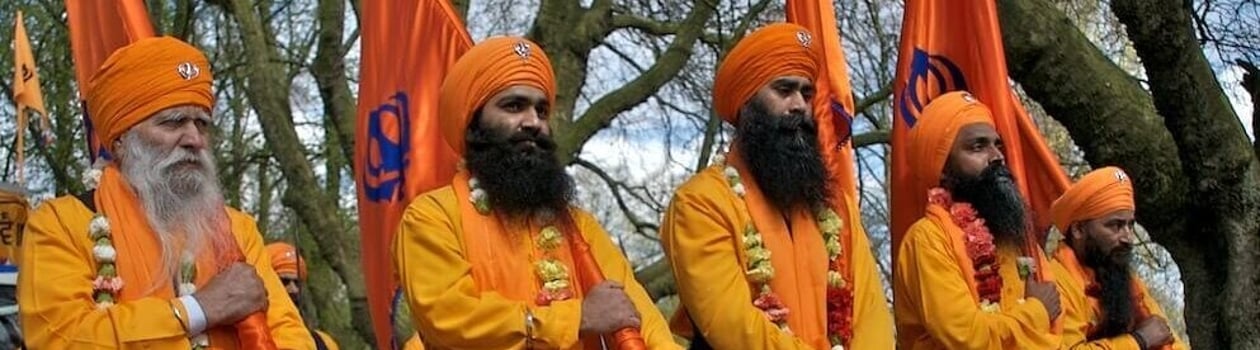
As Sikhs migrate to places like the United Kingdom, Canada, and the United States, Vaisakhi evolves into a prominent public celebration featuring Nagar Kirtan processions, community service, and cultural performances in cities around the world.
How to Celebrate Baisakhi
Dress in Bright Colors
Why not turn Baisakhi into a fashion fiesta? Dig out those vibrant clothes hiding in the closet. Bright yellows, reds, and oranges scream celebration.
These colors aren’t just for show; they represent the lively spirit of the festival. It’s time to let that inner fashionista shine. Who said you can’t look fabulous while celebrating?
Dance to the Beat
No Baisakhi is complete without some energetic bhangra and giddha. The beats of the dhol are irresistible.
Everyone should grab a friend and hit the dance floor—or the nearest patch of grass. The joy of dancing under the sun or stars, with the rhythm of the drums, is simply unmatched. Let the music take over, and just dance like nobody’s watching!
Feast Like Royalty
Baisakhi calls for a feast that’s fit for kings and queens. Traditional Punjabi dishes are a must on this day. Picture a table overflowing with buttery parathas, spicy curries, and sweet treats like kheer and jalebi.
Gather loved ones and dive into this delicious spread. After all, Baisakhi is a time to indulge!
Visit a Gurudwara
A trip to the local gurudwara adds a peaceful touch to the festivities. It’s a chance to reflect and give thanks.
The serene atmosphere and the sound of hymns create a sense of calm. Share in the community spirit by helping with the langar, the communal meal. It’s about feeding the soul as much as the body.
Decorate with Joy
Baisakhi isn’t just a time for personal celebration; it’s a chance to make homes look festive, too. Decorate with colorful flowers, fairy lights, and traditional Punjabi art.
Brighten up every corner to match the joyful mood. A beautiful home invites even more happiness and makes the day feel truly special.
History of Baisakhi
Baisakhi has deep roots in both agricultural and religious traditions, making it a festival rich in history and meaning. Originally, it began as a simple harvest celebration, marking the time when farmers in Punjab would gather their wheat crops.
This was a moment of great joy, as the harvest signified a successful season and the promise of prosperity. Over the years, this agricultural festival took on a much deeper significance, especially within the Sikh community.
In 1699, Baisakhi became a pivotal day in Sikh history. Guru Gobind Singh, the tenth Sikh Guru, chose this day to establish the Khalsa, a community of devout Sikhs committed to upholding justice, equality, and righteousness.
This event not only solidified the identity of the Sikh faith but also instilled a strong sense of unity and purpose among its followers.
Today, Baisakhi is celebrated as both a harvest festival and the anniversary of the Khalsa’s creation. It symbolizes renewal, community, and the deep connection between the people, their land, and their faith.
The festival is cherished by Sikhs and Punjabis worldwide, blending joyous agricultural traditions with profound spiritual significance.
Facts About Baisakhi Day
Solar New Year Tied to the Sun’s Entry into Aries
Baisakhi falls around April 13 or 14 each year because it is tied to the traditional solar calendar, marking the Sun’s entry into the zodiac sign Aries (Mesha Sankranti).
This solar transition is why related New Year or harvest festivals occur on the same date across South Asia, such as Pohela Boishakh in Bengal and Puthandu in Tamil Nadu, regardless of shifts in the lunar calendar.
Wheat Harvest and the “Granary of India”
Baisakhi coincides with the rabi (winter) wheat harvest in Punjab, a region often called the “granary of India” because it contributes a disproportionately high share of the country’s wheat and rice.
Following the Green Revolution of the 1960s, high‑yield wheat varieties, irrigation, and fertilizers turned Punjab’s Baisakhi‑time harvest into a backbone of India’s public food distribution system and national food security.
Origin of Bhangra in Village Harvest Work
The exuberant bhangra dancing seen around Baisakhi began as a folk dance performed by Punjabi farmers to celebrate a good harvest and to accompany strenuous field work.
Traditionally done by men to the beat of the dhol drum and inspired by tasks like sowing and harvesting, bhangra later moved from village threshing floors to urban stages and global pop culture while retaining its agrarian roots.
Giddha as Women’s Oral History of Rural Punjab
Giddha, often performed by women during Baisakhi, grew out of informal village gatherings where Punjabi women shared folk songs, jokes, and social commentary.
The dance uses clapping and circular formations rather than drums, and its boliyan (short lyrical verses) preserve everyday stories about marriage, family, and rural life, serving as a kind of oral history for Punjabi women.
The Khalsa and the Five Ks of Sikh Identity
On Vaisakhi in 1699, Guru Gobind Singh instituted the Khalsa, giving initiated Sikhs a distinct identity centered on five articles of faith known as the Five Ks: kesh (uncut hair), kangha (wooden comb), kara (steel bracelet), kachera (short breeches), and kirpan (ceremonial sword).
These were intended to symbolize discipline, remembrance of God, and readiness to defend justice, and they continue to shape Sikh religious and cultural life worldwide.
Langar as a Radical Practice of Equality
The communal kitchen, or langar, that many people experience at gurdwaras during Baisakhi began as a radical institution in the 15th and 16th centuries.
By requiring everyone to sit on the floor and eat the same simple food regardless of caste, gender, or wealth, the Sikh Gurus used langar to challenge entrenched social hierarchies and to model an egalitarian society in everyday practice.
A Shared New Year Moment Across South Asia
Although customs differ, Baisakhi is part of a broader cluster of regional New Year and harvest observances that occur when the Sun enters Aries.
Assam marks Bohag Bihu, Kerala celebrates Vishu, Sri Lanka observes Sinhala and Tamil New Year, and Bangladesh has Pohela Boishakh, all reflecting how agrarian communities across South Asia historically synchronized their calendars with the agricultural cycle and solar movements.