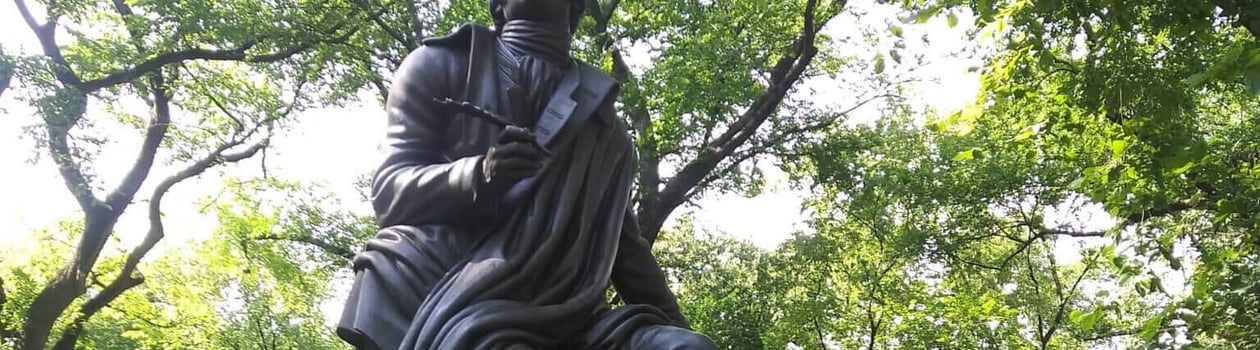
A celebration of the Scottish poet Robert Burns, Burns Night is held each year on his birthday, and typically includes a formal dinner, recitation of Burns’ poetry, toasts, speeches, music, and dancing.
It is traditionally celebrated in Scotland and by Scottish communities around the world.
History of Burns Night
Robert Burns was a Scottish poet and lyricist and is celebrated for his contributions to Scottish culture. Burns was born January 25th, 1759, in Alloway, Scotland, and was the oldest of seven children.
His father was a poor farmer, and Burns received little formal education. Despite this, he became well-versed in literature and was an avid reader from a young age.
Burns began writing poetry at an early age, and his first book of poems, “Poems, Chiefly in the Scottish Dialect,” was published in 1786.
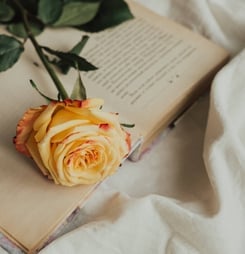
His poetry was characterized by its strong sense of place, its use of colloquial language, and its celebration of ordinary people and their lives. Burns’ most famous works include “A Red, Red Rose,” “A Man’s a Man for A’ That,” and “To a Mouse.”
In addition to his poetry, Burns also wrote songs, many of which have become traditional Scottish folk songs. He is also known for his translations of folk songs from other languages.
Burns’ work has had a lasting influence on Scottish literature and culture, and he is celebrated as a national hero in Scotland.
The first Burns Night was held on July 21st, 1801; the fifth anniversary of Burns’ death. It was organized by Burns’ friends and fellow poets, who wanted to honor his memory and celebrate his work.
Over the years, Burns Night has evolved and taken on many different forms. Some celebrations are formal and traditional, while others are more casual and modern.
However, the basic elements of the celebration have remained the same, and Burns Night continues to be a popular and enduring tribute to the life and work of Robert Burns.
Burns Night Timeline
Birth of Robert Burns
Robert Burns, regarded as Scotland’s national poet, was born in Ayrshire, Scotland.
His poetry and songs played a crucial role in preserving Scottish culture and language during a time of English linguistic dominance.
Publication of the Kilmarnock Edition
Burns published “Poems, Chiefly in the Scottish Dialect,” commonly known as the Kilmarnock Edition, which elevated his fame and reinforced Scottish cultural nationalism.
Influence on Romantic Writers
Burns influenced major Romantic poets such as Wordsworth and Coleridge, contributing to the Romantic literary movement with his emphasis on nature, emotion, and folk traditions.
Centenary of Robert Burns
The centenary of Burns’s birth was celebrated in 1859, coinciding with a resurgence in interest in his work, reinforcing his status as a symbol of Scottish identity and pride.
Influence on Cultural Identity
Burns’s works continue to shape Scottish cultural identity, symbolizing resilience and national pride, and influencing modern Scottish literature and arts.
How to Celebrate Burns Night
Burns Night is typically celebrated with a formal dinner, called a Burns Supper, which includes haggis as the main course.
Haggis is a traditional Scottish dish made from sheep’s offal, mixed with oatmeal and spices, and cooked inside a sheep’s stomach. The dinner may also include other Scottish dishes, such as Cullen skink (a soup made from smoked haddock).
During the dinner, there are also a number of traditional ceremonies and rituals that are performed. These may include:
- The Selkirk Grace
A prayer said before the meal, which is traditionally attributed to Burns. - The Address to a Haggis
A poem recited by the host or another guest, which was written by Burns and celebrates the haggis as a symbol of Scottish culture. - The Toast to the Lassies
A speech given by a male guest, in which he thanks the women in attendance for their contributions to the evening. - The Reply to the Toast to the Lassies
Given by a female guest, in response to the Toast to the Lassies. - The Toast to the Immortal Memory
A speech given by the host or a guest, in which they pay tribute to Burns and his contributions to literature and culture.
Other common elements of Burns Night celebrations may include speeches, dancing, and music. Some celebrations also include a cèilidh (a traditional Scottish dance party), as well as traditional Scottish music played on instruments such as the bagpipes or the fiddle.
Facts About Burns Night
Robert Burns: The National Poet of Scotland
Robert Burns is revered as the national poet of Scotland, renowned for transforming the Scots language into a respected literary medium, and for his influence on Scottish national identity and pride. His work continues to inspire Scottish literature, culture, and politics.
Influence on Romantic Poets
Burns played a critical role as a proto-Romantic poet, influencing prominent Romantic poets such as William Wordsworth, Samuel Taylor Coleridge, and Percy Bysshe Shelley.
His use of vernacular and focus on nature and emotion resonated with Romantic ideals, shaping their poetic expressions.
Preservation of Scottish Folk Music
Robert Burns made significant contributions to Scottish folk music by collecting and editing hundreds of songs for The Scots Musical Museum.
His efforts helped preserve traditional Scottish melodies and songs during a time when cultural assimilation threatened their existence.
Auld Lang Syne: A New Year’s Anthem
Burns’ adaptation of the traditional Scottish song “Auld Lang Syne” has become synonymous with New Year’s celebrations globally. The song, celebrating nostalgia and friendship, is often sung to reflect on the past year.
Burns as a Cultural Ethnomusicologist
Acting like an early ethnomusicologist, Burns documented orally transmitted Scottish songs, aiming to preserve his cultural heritage. This task was crucial, as it maintained the integrity and history of Scottish music in the face of external influences.