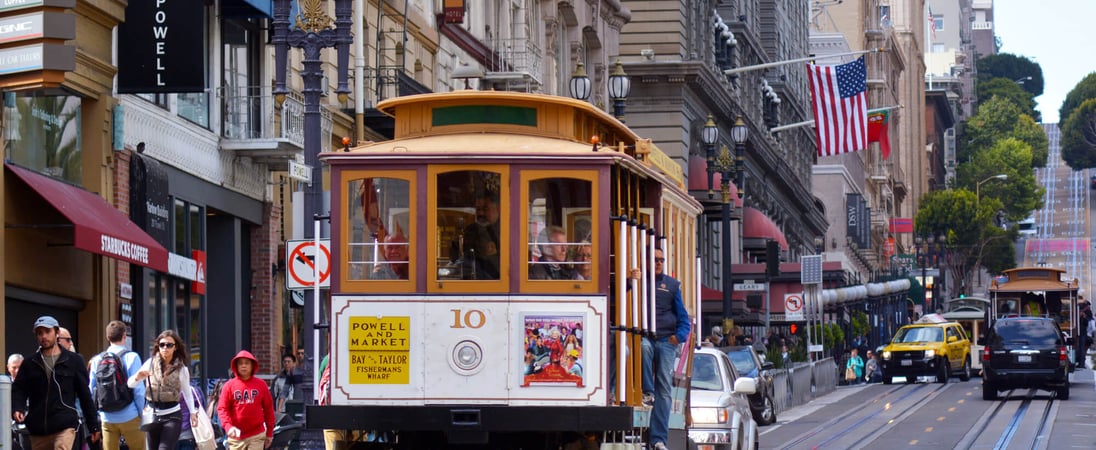
Cable Car Day
Hop on board the charming rides gliding through the city streets, offering a whimsical journey with breathtaking views and a touch of vintage charm!
Also known as trolleys, streetcars, or funiculars, cable cars are more than a means of transport—they are moving pieces of history. Designed to conquer steep streets and dramatic hillsides, they combine old-world charm with clever engineering, turning everyday travel into an experience.
From the historic slopes of Prague to the colorful hills of Valparaíso, cable cars glide through urban landscapes that might otherwise be difficult to navigate. Along the way, they offer sweeping views, rhythmic motion, and a sense of connection to the past that modern transport rarely provides.
Cable cars capture the imagination because they sit at the crossroads of necessity and romance. They remind us that innovation doesn’t always mean abandoning tradition—sometimes it means refining it. On Cable Car Day, we celebrate these iconic vehicles for their ingenuity, their beauty, and their enduring role in shaping cities with character and soul.
How to Appreciate Cable Car Day
Dive into the Engineering
One of the most rewarding ways to appreciate cable cars is to look beneath their charming exteriors and explore the engineering that keeps them moving. These vehicles rely on continuously running cables, powerful pulleys, braking systems, and precise timing. Regular maintenance and exact calibration are essential to ensure safety and smooth operation. Reading about these systems or watching documentaries reveals just how advanced—and elegant—this technology remains, even by modern standards.
Explore Global Cable Car Locations
While San Francisco is home to the most famous cable cars, it’s far from the only city shaped by this form of transport. Lisbon blends cable-driven systems seamlessly into its historic hills, while Wellington offers scenic rides that connect urban life with panoramic views. Exploring cable cars worldwide highlights how different cultures have adapted the same core technology to suit local geography and identity.
Enrich Your Knowledge with Cable Car Literature
Books are invaluable for anyone who wants a deeper understanding of cable cars. Titles such as The Cable Car Book by Charles Smallwood and The Cable Car in America by George W. Hilton document the rise, decline, and preservation of cable car systems. These works reveal not just technical details, but also the social and economic forces that shaped urban transport.
Appreciate Cultural Impact through Media
Beyond their functional role, cable cars have become powerful cultural symbols. They frequently appear in films, photography, and art, often representing nostalgia, romance, or the character of a city itself. Observing how cable cars are portrayed in media offers insight into why they continue to resonate emotionally with people around the world.
Visit Museums and Historical Exhibits
For a more immersive experience, transportation museums and historical exhibits bring cable car history to life. Original cars, mechanical models, and archival photographs allow visitors to see how these systems once represented cutting-edge innovation. Walking through such exhibits creates a tangible connection to the era when cable cars reshaped urban mobility.
By exploring cable cars through engineering, global travel, literature, culture, and history, appreciation grows far beyond their role as simple transport. These ingenious vehicles stand as enduring examples of how thoughtful design and necessity can create technology that lasts for generations.
Cable Car Day Timeline
1964
National Historic Landmark Designation
San Francisco’s cable cars were designated a National Historic Landmark—the first moving landmark in the United States.[9]
Share Fun Facts for Cable Car Day
Looking to show friends or family members how interesting cable cars are? Check out some of these interesting tidbits of cable car trivia, remember a few, and then bring them up in casual conversation in honor of Cable Car Day:
-
The signature cable for these cars is basically a rope that is made from steel, to offer strength and durability.
-
The technology for cable cars was originally used for hauling passengers and ore in a mining camp and it implemented the cable overhead as an “aerial tramway”. But the street version with tracks proved to be better.
-
In San Francisco, the first cable car line came at a hefty price tag of $85150, which translates to more than $1.6 million today.
-
Before an earthquake in 1906, San Francisco had more than 600 cable cars, but the fleet was sadly reduced to less than 100 by 1912. Today it only has 40 cars.
History of Cable Car Day
The story of cable cars is a compelling chapter in the evolution of urban transportation—one shaped by necessity, imagination, and bold engineering. In the late 19th century, rapidly growing cities struggled to manage steep streets that proved dangerous for horse-drawn carriages. Slippery inclines, exhausted animals, and frequent accidents made it clear that a safer, more reliable solution was urgently needed.
That turning point came thanks to Andrew Smith Hallidie, a British-born engineer living in the United States. After witnessing horses strain and collapse on the steep hills of San Francisco, Hallidie combined empathy with mechanical skill to design a cable-propelled transit system that removed animals from the equation entirely. His vision transformed both safety and efficiency in urban travel.
In 1873, Hallidie’s idea became reality with the opening of the world’s first cable car line on San Francisco’s Clay Street. Although the original route no longer exists, its impact was immediate and far-reaching. The success of this system demonstrated that cities with challenging terrain could be navigated smoothly and elegantly, inspiring similar solutions across the globe.
The technology behind cable cars was not entirely new. Its roots lay in mining, where rope and cable systems had long been used to move heavy materials across rugged landscapes. Adapting these industrial principles for public transport showcased remarkable ingenuity—transforming practical, labor-driven mechanics into a refined urban solution.
More than a century later, cable cars endure as both functional transport and living heritage. They are cherished symbols of the cities they serve, reminding us that innovation often grows from compassion, observation, and the creative reuse of existing ideas.
FAQs about Cable Car Day
Cable Car Day FAQs
How do cable cars function without onboard engines?
Cable cars operate using a continuously moving steel cable that runs beneath the street.
This cable is powered by electric motors housed in a central powerhouse rather than on the cars themselves.
Each car uses a mechanical grip to latch onto the moving cable, allowing it to be pulled forward or released as needed. This design is especially effective for navigating steep inclines.[1]
What engineering principles are essential to cable car systems?
Cable cars rely on high-tensile steel cables to withstand constant motion and heavy loads.
The system maintains consistent tension through large pulleys (sheaves) and weighted mechanisms.
Secure gripping devices allow cars to attach safely to the cable, while layered braking systems ensure controlled stopping under all conditions.[2]
How did cable cars influence urban development historically?
Cable cars transformed city growth by making steep and uneven terrain accessible for daily commuting.
In cities like San Francisco, they enabled residential and commercial expansion into hilly areas that were previously difficult or dangerous to reach using horse-drawn transport or early streetcars.[3]
Why are cable cars considered cultural landmarks in San Francisco?
Cable cars are deeply embedded in San Francisco’s identity due to their longevity, historical importance, and survival through major events such as earthquakes and urban redevelopment.
Today, they serve both as functional transit and as a symbol of the city’s heritage, attracting millions of visitors each year.[4]
What safety features are built into cable cars?
Cable cars are equipped with multiple independent braking systems, including wheel brakes, track brakes, and emergency grip brakes.
These redundancies ensure that cars can stop safely even if one system fails, making cable cars one of the most carefully engineered historic transit systems still in operation.[5]
Also on ...
View all holidays

Kid Inventors’ Day
These young minds are like mini scientists, creating ingenious solutions to everyday problems with their boundless curiosity and creativity.

Benjamin Franklin Day
A polymath with many talents, from inventing to writing, Franklin's contribution to American history will never be forgotten.

Soup Swap Day
There's nothing better than a warm bowl of homemade soup on a chilly day! Swap your soup with friends for a fun way to mix up your meals.