

Children’s Book Day celebrates these and the thousands of other books that parents have read and shared with their children to encourage literacy, and stimulate the growth of their imagination.
International Children’s Book Day Timeline
Jan Amos Comenius Publishes “Orbis Pictus”
Czech educator Jan Amos Comenius publishes “Orbis Sensualium Pictus,” often regarded as the first children’s picture book, combining simple Latin text with woodcut images to teach reading and the nature of the world to children.
John Newbery Issues “A Little Pretty Pocket-Book”
London publisher John Newbery releases “A Little Pretty Pocket-Book,” widely considered the first modern children’s book created primarily for entertainment, helping to establish children’s publishing as a distinct commercial field.
Birth of Hans Christian Andersen
Hans Christian Andersen is born in Odense, Denmark; his later fairy tales, such as “The Little Mermaid” and “The Ugly Duckling,” become central works of children’s literature and are translated into many languages worldwide.
“Alice’s Adventures in Wonderland” Is Published
Lewis Carroll’s “Alice’s Adventures in Wonderland” appears in London, marking a shift toward imaginative, nonsensical narratives for children and becoming a defining work of the so‑called Golden Age of children’s literature.
“Peter Pan” First Appears in Print
M. Barrie introduces Peter Pan in the book “The Little White Bird,” later adapted into the play and novel “Peter Pan,” giving children’s literature one of its enduring symbols of childhood and imagination.
First Newbery Medal for Children’s Books
The American Library Association awards the inaugural Newbery Medal to Hendrik Willem van Loon’s “The Story of Mankind,” the first major literary prize in the United States dedicated to distinguished contributions to children’s literature.
Founding of the International Board on Books for Young People
Jella Lepman and colleagues establish the International Board on Books for Young People (IBBY) in Zurich, creating a global network devoted to promoting quality literature and reading opportunities for children around the world.
How to Celebrate Children’s Picture Book Day
Here are some excellent ways to write a whole new chapter of fun on Children’s Picture Book Day:
Organize a Picture Book Read-a-thon
Organize a community picture book read-a-thon. You’ll transport children into a world of wonderful, colorful stories. Transform some space into a storybook wonderland with colorful decorations and cozy reading nooks.
Invite children to dress as their favorite characters to add excitement to the event. Offer a large selection of books – children can pick their favorite. Reading out loud to younger children?
Bring stories alive with character voices and sound effects. This event can be a memorable experience in classrooms or libraries. You can scale it back and make it an in-home opportunity for your own child.
Visit Your Local Library… or a Bookstore
Local libraries and bookstores come to life for Picture Book Day. These venues may host special storytelling sessions, where tales leap off the pages through the voices of animated storytellers.
You might even find some local author meet-and-greets. Children at these events get to interact with the creators of their favorite books.
Workshops may also offer activities like illustration lessons or story crafting. Hands-on events help children enjoy reading even more.
Encourage Children to Make Their Own Picture Books
Encourage children to become authors and illustrators. How? By guiding as they create their own picture books.
This Children’s Picture Book Day activity can include a range of creative tasks like writing original stories, drawing illustrations, or even using digital tools for a modern twist.
Parents and teachers can help them along in this process, by translating their creative ideas into real book pages. This activity boosts creativity. It also gives children a sense of accomplishment as they hold their self-made books.
Donate Children’s Books to Children’s Hospitals
Celebrate the joy of reading by sharing it with those who need some encouragement. Organize a book donation drive in your community. Collect new or gently used titles for children’s hospitals.
This act of kindness ensures that the magic of reading reaches children who might enjoy reading while recovering. By donating, you help positively impact young lives. You also teach your children how to show compassion to those who need a smile.
Explore Picture Books from Around the World
Turn Children’s Picture Book Day into a global adventure by exploring books from various cultures. This activity can be a wonderful way to teach children about diversity and inclusivity. Select picture books that represent different countries, traditions, and stories.
Discuss the unique illustrations and narratives and incorporate related cultural activities or crafts. This exploration broadens children’s literary horizons and fosters an appreciation for global perspectives.
Hold a Book-Themed Party
Host a party inspired by a beloved picture book. Choose a book and base the party’s theme, decorations, and activities on its story and characters. Create themed snacks and games that reflect elements of the book.
For instance, a party based on “The Very Hungry Caterpillar” could feature fruit-shaped treats and a butterfly craft activity. Storytelling can be the party’s highlight, bringing the theme full circle. This experience deepens children’s connection to the story. It may also enhance their reading enjoyment.
Celebrate Children’s Picture Book Day by opening up the colorful world of storytelling. It’s a day to reminisce about the joys of childhood reading. It also helps ignite a passion for reading in the new generation!
Learn About Children’s Book Day
Children’s Book Day was founded so that people all around the world can enjoy a good book! It is a day to inspire others to read, as well as calling attention to children’s books especially.
Every year, a different IBBY Section has the chance to be the international sponsor of Children’s Book Day. The sponsor of the day is able to choose a theme, as well as a prominent author from the host country being invited to write a message to the children all across the world. A well-known illustrator will also be chosen to put together a poster, which will be used to advertise and market the event.
Because of this, we certainly recommend heading to the IBBY website in the build-up to this day. You will be able to find all of the information you need about the host country and anything specific that is going on for this Children’s Book Day.
Of course, you do not need to be associated with the IBBY in any way to celebrate Children’s Book Day. Libraries and schools also participate! If you have children yourself, simply reading a book with your child is the perfect way for you to get involved in this day.
After all, we should not underestimate how important Children’s Book Day is. There are a number of benefits that are associated with reading as a whole.
This includes fostering imagination and empathy. Reading opens up children to new horizons. It helps them to think outside of the box, engaging with the outside world in manners they had not previously done.
Reading will also help your child to enhance their vocabulary. The amount of terminology used by a child will increase with frequent reading. Reading is also an important brain exercise. It engages and exercises the brain so that it can make improved neural connections.
We shouldn’t forget about the morale boost your child will get either. When your child is able to read something successfully and you applaud them for doing so, this will give them the confidence they need to keep improving.
History of Children’s Book Day
We all have our favorite books from childhood, ones that set the tone for our imaginations and that bring back memories of home when we remember them, and some small comfort when we run our fingers over the well-worn and loved spines of the stories of our youth.
The International Board on Books for Young People (IBBY) founded Children’s Book Day in 1967. The International Board on Books for Young People, or IBBY, was formed in Switzerland in 1953. Its founder was German author and newswriter Jella Lepman. IBBY’s mission was simple – to inspire children to read more books.
As an international non-profit organization promoting the importance of literacy and reading to our children, IBBY works tirelessly to promote children’s books and authors, and organize events in schools and libraries all over the world to get children reading.
Facts About International Children’s Book Day
Early Picture Books Were Designed as “Talking Visual Encyclopedias”
Long before modern storybooks, early children’s picture books such as John Amos Comenius’s 1658 Orbis Sensualium Pictus were built as visual catalogs of the world, pairing simple Latin and vernacular words with woodcut illustrations of everyday objects, trades, animals, and Bible scenes.
They were intended to be read aloud and discussed with adults so that children could connect printed words, images, and real-life experience, a format that helped lay the groundwork for both language learning and scientific observation in childhood.
Children’s Fiction Can Physically Shape the Developing Brain
A large study of more than 10,000 children in the United States found that those who read for pleasure most days between ages 2 and 9 had measurably thicker brain regions associated with cognitive functions such as attention, memory, and imagination by early adolescence.
These avid readers also performed better on tests of verbal learning and reasoning and showed fewer mental health difficulties, suggesting that regular engagement with stories can alter brain structure in ways that support both thinking and emotional well‑being.
Storybooks Are a Major Source of Vocabulary Children Never Hear in Conversation
Natural adult–child conversation tends to recycle a limited set of everyday words, but children’s books routinely use rarer and more complex vocabulary.
Studies comparing speech and children’s literature have found that picture books and storybooks expose young readers to more low‑frequency words per thousand than even educated adult talk, which helps explain why regular shared reading is strongly linked with larger vocabularies and later reading comprehension.
Fiction Helps Children Rehearse Empathy in a “Safe Sandbox”
Psychologists studying how children understand others’ minds have shown that frequent engagement with stories, especially those featuring complex characters, correlates with stronger “theory of mind,” or the ability to infer what others think and feel.
By following characters through conflicts and resolutions, young readers practice taking different perspectives and recognizing emotions, which over time is associated with higher empathy and more prosocial behavior in real life.
Multilingual Picture Books Support Both Heritage Languages and Inclusion
Bilingual and multilingual children’s books are increasingly used in classrooms and libraries to validate home languages while teaching a dominant national language.
For example, titles that present text in English alongside Cree, Spanish, or other languages give children a chance to see their family tongue in print, while also inviting monolingual classmates into that culture, a practice librarians and educators credit with boosting both literacy and a sense of belonging among minority-language children.
Most of the World’s Children Still Have Very Few Books at Home
Global surveys by children’s publisher Scholastic have highlighted stark contrasts in access to books: while children in Australia reported an average of about 159 books at home, children in India reported an average of 89, and those in Canada about 80.
Large numbers of children in every country surveyed said they had fewer than 10 books of their own, underscoring why schools, libraries, and book-donation programs remain critical for giving many young readers any meaningful contact with children’s literature at all.
Illustration Has Become a Recognized Art Form Through Children’s Books
Over the 20th century, illustration for children’s books shifted from being seen as mere decoration to a respected artistic discipline in its own right, with international awards such as the Hans Christian Andersen Award for Illustration recognizing lifetime achievement in the field.
Illustrators are now judged on visual storytelling, emotional nuance, and cultural authenticity, and their artwork is collected by major museums and libraries, reflecting how central images have become to the way children experience and interpret stories.
International Children’s Book Day FAQs
More About Children’s Literature
Children’s literature has a history that’s long and, appropriately enough, storied. It started with a Bohemian educator, Jan Komensky. Komensky wrote a picture book, “Orbis Sensualium Pictus,” or “Visible World in Pictures,” in 1658.
It was a reading primer with copperplate printed images. It was a far cry from today’s colorful, modern children’s books. Still, it started a movement. Fast forward to the next great advancement – John Newbery’s “A Little Pretty Pocket-Book” in 1744. It gained fame for being the first children’s storybook.
Newbery’s book was purely for enjoyment, unlike the earlier primers, which were intended expressly for teaching reading. Newbery received accolades posthumously earned recognition as “The Father of Children’s Literature.”
The children’s literature movement continued the upward trajectory during the middle to late 1800s. Those were the days when iconic authors like Hans Christian Anderson and Lewis Carroll wrote whimsical tales.



You may also like

National Donate a Book Day
Books open doors to new worlds, and National Donate a Book Day invites everyone to share that magic. It’s a moment when readers become givers, turning gently loved stories into gifts for others. Shelves at schools, shelters, hospitals, and libraries can always use fresh titles, but they also need the...
- United States

Read Across America Day
Read Across America Day bursts with enthusiasm as it brings the joys of reading to the forefront of communities nationwide. This special day encourages everyone, young and old, to dive into books and discover the diverse tapestry of stories that mirror and reshape our world. How to Celebrate Read Across America...
- Canada
- United Kingdom
- United States

National Comic Book Day
Read some comic books or enjoy any of the many television adaptations of comic book characters, from Marvel to DC and more, on National Comic Book Day.
- Canada
- Japan
- United Kingdom
- and 1 more

Library Snapshot Day
Step into a library on any regular day, and you’ll see more than just books. People gather to learn, explore, and connect. Library Snapshot Day captures all of this in one lively sweep. It’s a chance to freeze a single day and show how much happens behind those quiet walls...
- United States
National days and holidays on April 2 2027

March Madness
Get your game face on for March Madness! This high-energy tournament is a slam dunk of excitement, passion, and heart-pumping action. So grab your team colors, gear up for the showdown, and let the madness begin!
- United States

National Love Your Produce Manager Day
Year-round berries, citrus, veggies, and more all at once would have once been impossible. But Produce managers give you all of these options, carefully selected.
- Canada
- United Kingdom
- United States
Pascua Florida Day
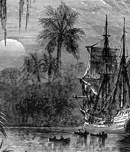
Pascua Florida Day is a distinctly Floridian observance that spotlights a moment when language, landscape, and exploration collided in a very poetic way. It commemorates the Spanish expedition led by Juan Ponce de León and the naming of “La Florida,” a phrase tied both to the Easter season and to...
- United States

International Fact-Checking Day
Make sure information is accurate and reliable — always double-check sources and question things that sound too good to be true!
- Australia
- Canada
- India
- and 3 more
Seize Every Day
Join free for personalised recommendations, email reminders and exclusive guides. Never miss a day.