
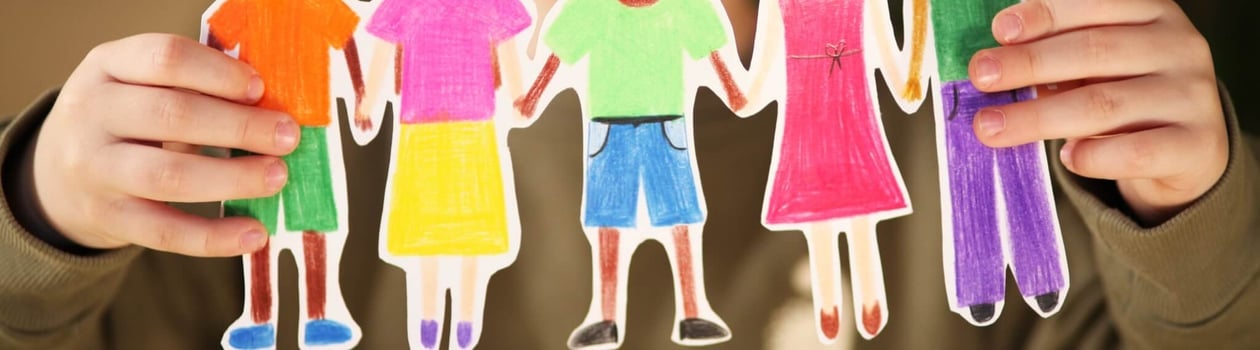
Have a Heart Day is a special event that focuses on promoting the well-being and rights of First Nations children in Canada.
At its core, it asks a simple question with a not-so-simple answer: what would it look like if every child could count on the same standard of care, no matter where they live or which community they come from? The goal is to build a country where every child has the chance to succeed, stay connected to family and culture, and be proud of their identity.
In addition, Have a Heart Day inspires positive change and awareness. It motivates individuals and communities to take action and advocate for the rights of First Nations children.
While it’s warm and heart-shaped on the surface, it is also practical and policy-focused: participants learn, speak up, and ask decision-makers to match kind words with fair services.
How to Celebrate Have a Heart Day
Craft Heartfelt Letters
Writing a heartfelt letter or card to government officials is a simple but powerful way to show care and concern for First Nations children. When friends, families, classrooms, or community groups take part together, the message grows stronger.
Sharing these messages and encouraging others to join helps turn individual voices into a collective call for change. Adding colorful designs, drawings, or thoughtful details can make each letter feel personal and memorable—because everyone appreciates a message that’s clearly written with care.
To make these letters more meaningful, it helps to be clear about what “support” really means. Rather than a general “please do better,” writers can ask for specific actions: equitable access to safe and culturally respectful schools, appropriate health care, mental health services, and child welfare systems that keep children safe while supporting families to stay together whenever possible. Specific requests show thought, awareness, and genuine concern.
A strong letter often balances warmth with clarity:
- Begin with a respectful greeting and a brief explanation of why this issue matters to you.
- Include one or two concrete requests, such as improving access to essential services, closing funding gaps, or removing barriers that delay help.
- End with an encouraging closing that reflects fairness, compassion, and a belief that positive change is possible.
For classrooms, clubs, or families, this can also become a small writing workshop. Start by brainstorming what a “good life for every child” looks like. Choose one theme—health, education, safety, or belonging—and build the message around it.
Keep the language age-appropriate, honest, and sincere. Hearts and decorations are welcome, but so are facts, personal reflections, and thoughtful questions. The most powerful letters don’t sound like slogans; they sound like real people speaking from the heart.
Host a Community Event
Organizing a community gathering in your local area can be a warm, meaningful way to bring people together around care, learning, and shared responsibility.
Activities like storytelling, singing, and poetry readings help create a welcoming atmosphere where everyone feels included, while also opening space to learn more about the needs of First Nations children.
When children are involved through art projects and creative play, the event naturally becomes joyful as well as thoughtful—because learning doesn’t have to feel heavy to matter.
A community event is most effective when it blends learning with action. Have a Heart Day is often described as child- and youth-led, so giving younger voices a visible role fits the spirit perfectly.
Children might read their letters aloud, display heart-themed artwork, or present a simple “what we learned” poster about fairness and access to services. These moments remind adults why the day exists in the first place.
Here are a few practical ideas to shape the gathering:
- Story circles: Create a relaxed space where participants can share stories about kindness, fairness, and what it means to feel supported. Participation should always be voluntary, with clear respect for different comfort levels.
- Listening and learning space: Set up a small table or corner with clear, plain-language information about the inequities the day highlights. The goal is understanding and reflection, not overload.
- Creative stations: Make heart garlands with supportive messages, paint rocks with encouraging words, or build a wall of paper hearts where people can write commitments such as “I will learn more” or “I will speak up.”
- Youth facilitator roles: Invite young people to host, introduce activities, or lead a craft station. This keeps the event collaborative rather than lecture-style and reinforces that their voices matter.
If First Nations voices are part of the gathering, the most respectful approach is to invite participation without expectation or pressure.
No one should feel obliged to educate or speak on behalf of an entire community. When offered freely, lived experience can be powerful—but the event itself can still center on learning, solidarity, and action, guided by care, respect, and shared responsibility.
Share on Social Media
Posting about Have a Heart Day on social media is a powerful way to extend the impact beyond your own circle. A single post can spark curiosity, start conversations, and encourage others to take part.
Using hashtags like #HaveAHeartDay helps connect individual voices into a wider movement. Sharing photos, short stories, or snapshots from your activities makes the message feel real and relatable—and invites others to join in.
Online sharing can do more than showcase heart crafts. At its best, it spreads understanding and keeps attention focused on what participants are actually calling for: fairness in services and real accountability. Posts that tend to resonate often include one clear element:
- A photo of a handmade heart or letter, paired with a short caption explaining what it asks for.
- A brief personal reflection on why equal access to health care, education, and child welfare matters.
- A simple challenge that invites action, such as “Write one letter,” “Make one heart,” or “Learn one thing and share it.”
Tone matters, too. Keeping posts respectful and purpose-driven helps maintain the meaning of the day. Avoid turning it into a vague “be kind” message. The idea behind “have a heart” is compassion, but compassion with follow-through—care that leads to learning, speaking up, and asking leaders to do better.
Bake and Share Treats
Bake heart-shaped cookies or other treats to share. Decorate them with icing and sprinkles. Deliver these goodies to neighbors or local schools. Include a note about the significance of Have a Heart Day. Who can resist a sweet treat with a sweet message?
Baking can be a surprisingly effective doorway into conversation, especially for people who feel unsure about discussing public policy or child welfare issues.
The key is pairing the treat with a clear, bite-sized explanation. A small tag attached to a bag of cookies can say something like: “These hearts are a reminder that all children deserve equal access to the services that help them grow up safe, healthy, and supported.”
For group activities, treats can also be used as a fundraiser or donation drive for organizations that support child and family well-being, or as a way to thank community members who are doing hands-on work in education, social services, or youth programs. Keeping the focus on the day’s purpose ensures the sweetness doesn’t distract from the message.
Create Art and Crafts
Making arts and crafts that symbolize love and support is a simple, inclusive way to spread awareness and invite reflection. With basic materials like paper, paint, markers, or glitter, people of all ages can take part—no special skills required.
Displaying these creations at home, in schools, or in community centers helps turn private care into a visible message: people are paying attention, and people want fairness.
Art is especially powerful because it allows expression without needing the “right” words. A wall filled with handmade hearts can transform an abstract issue into something tangible. It quietly says that children matter, communities care, and support should be real and shared.
To give craft time more depth, participants can link each creation to a value or action:
- Write a single word on each heart, such as equity, safety, family, belonging, or respect.
- Add a short sentence on the back explaining what that word looks like in everyday life.
- Create a “chain of care,” where each link represents a practical need—clean water, safe housing, culturally grounded education, accessible health care, or family support.
Group art projects can also spark meaningful conversations. A mural, collage, or banner naturally invites questions: What is this about? Why these words? That moment of curiosity is where awareness begins to turn into understanding. Let creativity lead the way—it often speaks louder than explanations ever could.
Have a Heart Day Timeline
First church-run residential school opens in Canada
The Mohawk Institute in Brantford, Ontario, begins operating as a boarding school for Indigenous children, marking the start of a state-supported system that separates First Nations children from their families and cultures. [1]
Compulsory attendance at residential schools is imposed
Amendments to the Indian Act make it compulsory for many First Nations children to attend residential or industrial schools, entrenching federal policies that disrupt Indigenous family life and undermine children’s language, identity, and well-being. [1]
The Sixties Scoop accelerates Indigenous child removals
Child welfare authorities dramatically increase the apprehension of Indigenous children, placing thousands in non-Indigenous foster and adoptive homes, a practice now known as the Sixties Scoop that deepens intergenerational trauma and identity loss. [1]
The UN Convention on the Rights of the Child was adopted
The United Nations General Assembly adopts the Convention on the Rights of the Child, affirming children’s rights to non-discrimination, culture, and family life—principles later used to critique inequitable services for Indigenous children in Canada. [1]
First Nations Child & Family Caring Society is founded
Delegates at a national meeting of First Nations child and family service agencies on Squamish territory create the First Nations Child & Family Caring Society to advocate for equitable services and culturally grounded care for First Nations children. [1]
A human rights complaint on First Nations child welfare is filed
The First Nations Child & Family Caring Society and the Assembly of First Nations file a complaint to the Canadian Human Rights Commission, alleging that Ottawa’s underfunding of on-reserve child welfare discriminates against First Nations children. [1]
Canadian Human Rights Tribunal finds discrimination
On January 26, the Canadian Human Rights Tribunal ruled that the federal government had discriminated against more than 160,000 First Nations children by underfunding child welfare services, ordering reforms to uphold their fundamental rights. [1]
History of Have a Heart Day
Have a Heart Day started in 2012. The First Nations Child & Family Caring Society of Canada initiated it. This organization, founded in 1998, focuses on ensuring First Nations children receive the same opportunities and services as other children in Canada.
The event is closely associated with the Society’s broader advocacy for equity in child welfare, health, and education, and it reflects a long-standing concern that essential services for First Nations children have too often been delayed, under-resourced, or treated as negotiable.
The event emerged from the Society’s ongoing efforts to address the inequities faced by First Nations children and promote public awareness about their challenges.
In the early years, Have a Heart Day was tied to a visible moment of civic engagement: during hearings related to a human rights complaint about discrimination in the funding of First Nations child welfare services, children and supporters gathered and created Valentine-style cards.
The symbolism was intentionally simple. Hearts and friendly messages made space for young people to speak directly to leaders and to the public about fairness, without requiring a law degree or a long speech.
Have a Heart Day encourages children and youth across Canada to advocate for equal rights and services. That youth-led emphasis matters. When children write to leaders, the message lands differently. It is harder to dismiss a child asking why some kids have what they need, and other kids do not.
The day, in effect, gives young people permission to practice citizenship: learning about an issue, expressing empathy, and requesting change through respectful channels.
Although the heart theme may look similar to other Valentine season activities, Have a Heart Day’s focus is distinct. It highlights that well-being is not just about individual kindness.
It is also shaped by systems: how schools are funded, how health services are delivered, how child welfare agencies are supported, and whether families can access help early instead of only when a crisis hits. By putting those system-level realities into kid-friendly actions, the event bridges the gap between compassion and policy.
On February 14 each year, participants send letters and cards to government officials. These messages urge leaders to uphold the rights of First Nations children and improve their living conditions.
Common themes include the need for equitable access to education, appropriate health care and mental health supports, safe housing, and community-based services that help children thrive close to home.
Some participants also use the day to learn about principles and approaches that aim to prevent children from being denied or delayed services because of jurisdictional disputes, emphasizing that a child’s needs should come first.
This lively day encourages children and youth to speak up for fairness and equality. It brings together people from all walks of life to support the idea that children should grow up safely, have access to strong schooling, and feel proud of their heritage.
Many observances intentionally include learning about respect, reconciliation, and the importance of listening to First Nations voices, especially in matters that affect families and children directly.
The day emphasizes the importance of creating a better future for First Nations children. Celebrations highlight the need for equal opportunities in education, health, and overall well-being.
In practical terms, that can mean calling attention to gaps between communities, advocating for culturally grounded services, and supporting approaches that keep children connected to family, language, and community whenever it is safe to do so.
It can also mean recognizing that “child well-being” is not a single service. It is a whole web of supports, from prenatal care and early childhood programs to schools, recreation, and mental health resources.
Participants engage in various activities to show their support, making it a vibrant and heartwarming event. But it is also a steady reminder that fairness is measurable.
If one group of children consistently faces more obstacles to basic services, a society can choose to treat that as a background problem, or it can choose to fix it.
Have a Heart Day nudges the conversation toward the second option, using creativity, youth leadership, and a simple symbol to keep attention on a serious goal: equal care, equal respect, and equal opportunity for First Nations children.
The day also involves various activities that highlight the importance of fairness and equity. Whether it takes the form of letter-writing, art walls filled with hearts, classroom discussions, or community gatherings, the common thread is the same: children’s rights and children’s needs should not depend on geography, bureaucracy, or who has the loudest voice in the room. Have a Heart Day makes space for everyone, especially young people, to be that voice.
Facts About Have a Heart Day
Have a Heart Day highlights the ongoing inequalities faced by First Nations children in Canada, particularly in child welfare, education, and access to essential services. The facts below show how long-standing underfunding and systemic barriers continue to affect children and families, and why advocacy and accountability remain necessary.
Chronic Underfunding in First Nations Child Welfare
In 2016, the Canadian Human Rights Tribunal found that the federal government had been discriminating against an estimated 163,000 First Nations children by underfunding on-reserve child and family services compared to services for other children in Canada, a pattern rooted in historic policies and persisting despite earlier federal awareness of the gap.
Education Gaps on First Nations Reserves
For decades, education for many First Nations children living on reserves has been funded at significantly lower per-student levels than provincially funded schools, leading to fewer supports such as libraries, special education, language programs, and counseling—conditions repeatedly documented by the Auditor General of Canada as contributing to lower graduation rates.
“Jordan’s Principle” and Access to Services
Jordan’s Principle, named after Jordan River Anderson of Norway House Cree Nation, is a legal rule that says First Nations children should get the public services they need without delay because of jurisdictional disputes over who pays; the Canadian Human Rights Tribunal has issued multiple non-compliance orders since 2016 because governments continued to deny or delay services such as health care, equipment, and social supports.
Overrepresentation in Foster Care
Although First Nations, Inuit, and Métis children represent about 7–8% of all children in Canada, they account for more than half of children in foster care, a disparity the Truth and Reconciliation Commission and subsequent federal reports have linked to systemic discrimination, poverty, and the legacy of residential schools and other colonial policies.
Intergenerational Impacts of Residential Schools
Survivors of Canada’s residential school system, in which more than 150,000 First Nations, Inuit, and Métis children were separated from their families between the 1880s and 1990s, have reported long-term harms including loss of language and culture, high rates of trauma, and disrupted parenting practices that continue to affect the well-being and identity of Indigenous children and youth today.
UNDRIP and Indigenous Children’s Rights
The United Nations Declaration on the Rights of Indigenous Peoples affirms that Indigenous children have the right to all levels and forms of education and health services without discrimination and the right to be raised in their own cultures and languages; Canada has endorsed UNDRIP and passed federal legislation to implement it, yet monitoring bodies continue to highlight gaps between these standards and the lived reality of many First Nations children.
Language Revitalization and Child Well-Being
Research from Indigenous communities and Canadian universities has found that First Nations youth in communities with strong Indigenous language knowledge and use show better mental health outcomes and lower youth suicide rates, underscoring how supporting language and cultural continuity is a protective factor for children rather than merely a cultural “add-on.”
Have a Heart Day FAQs



You may also like

Canada’s National Indigenous Peoples Day
Learn about the various cultures and traditions of Canada’s Indigenous People, or join an event or ceremony to see how they have been preserved over time.

Canada Day
Have a Canadian cook-out, research the history of this wonderful country, or plan a trip to see first-hand what the vast and diverse place has to offer.
American Indian Citizenship Day
Explore the history and impact of American Indian Citizenship Day, honoring Native rights, identity, and ongoing struggles for equality, respect, and recognition.

National Close the Gap Day
National Close the Gap Day draws attention to the stubborn health and life expectancy gap between Indigenous and non-Indigenous Australians, with a particular focus on Aboriginal and Torres Strait Islander peoples. It is a day built around a simple, practical idea: when a community can access culturally safe health care...
National days and holidays on February 14 2027

National Nest Box Week
If you want to invite more birds to your yard, consider putting up some cozy little homes for these feathered friends!

Ramadan
During this holy month, Muslims fast from sunrise to sunset, focusing on spiritual reflection and community. Ramadan is a time for self-improvement and bringing people together in celebration of faith.

League of Women Voters Day
League of Women Voters Day celebrates the vital role the organization has played in empowering voters and defending democracy for more than a century. While the League of Women Voters began as a practical response to a major expansion of voting rights, its modern mission reaches far beyond any single...

Autism Sunday
Show support for those individuals who have autism spectrum disorder, as well as their families, by bringing the community together in honor of Autism Sunday! This observance invites people to combine compassion with practical action, creating space for reflection, learning, and better inclusion in everyday community life. How to Celebrate Autism...
Seize Every Day
Join free for personalised recommendations, email reminders and exclusive guides. Never miss a day.