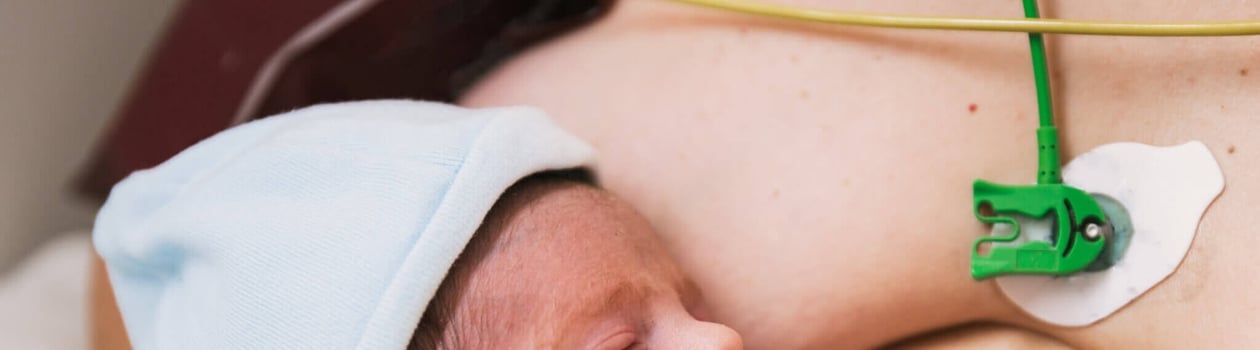
International Kangaroo Care Awareness Day focuses on the power of skin-to-skin contact between parents and newborns. In its simplest form, kangaroo care means placing a diapered baby upright on a parent’s bare chest and covering them both with a blanket or shirt for warmth. It looks like a quiet cuddle, but it functions like a remarkably effective support system for a newborn’s body.
Holding a baby against bare skin helps regulate body temperature, breathing, and heart rate while also promoting weight gain. A parent’s chest can help a baby stay warm more steadily than a crib environment, especially for premature infants who have less body fat and a harder time maintaining temperature.
Many caregivers also notice that babies settle into more even breathing patterns and a calmer heart rate when they are held skin-to-skin, as if the baby is borrowing the parent’s rhythm until their own systems mature.
This gentle touch calms tiny bodies and strengthens emotional bonds. Newborns are wired to seek safety through closeness, and skin-to-skin contact offers familiar sensations: warmth, the rise and fall of breathing, and the heartbeat that surrounded them before birth.
Parents often describe the experience as grounding. Even when everything else feels clinical or overwhelming, a quiet stretch of kangaroo care can feel like something they can do well, right away, for their baby.
Hospitals worldwide encourage this practice because of its incredible benefits for both premature and full-term babies. In neonatal intensive care units, kangaroo care is often integrated into treatment plans alongside monitoring and specialized feeding support.
In postpartum rooms or at home, it can be part of daily life, especially in the early weeks when babies crave closeness, and caregivers are learning cues. The core idea stays the same across settings: the parent’s body is not “extra,” it is part of the baby’s environment.
This special day reminds families and caregivers how vital these moments are for a baby’s development. Kangaroo care is not only about comfort, although comfort matters. It also supports breastfeeding and feeding readiness by keeping babies near the smell and sound of their caregiver, which can encourage instinctive rooting and latching behaviors.
Skin-to-skin time may also reduce stress signals in the baby’s body, helping conserve energy for growth and healing.
Simple yet profound, kangaroo care creates warmth, comfort, and security in ways no machine ever could. Technology can measure oxygen saturation and deliver heat, but it cannot replicate the sensory package of a caregiver’s presence: scent, voice vibrations, heartbeat, and the tiny adjustments a body makes without thinking. For infants who have had a rocky start, those small biological “votes” for stability can add up.
It’s more than a medical practice, it’s a loving embrace that builds a strong foundation for life. Raising awareness encourages more parents to experience its benefits, giving newborns the best possible start.
It also helps reshape expectations so that caregivers understand that kangaroo care is not reserved for a specific kind of family or a specific kind of baby. It can be practiced by mothers, fathers, adoptive parents, grandparents, and other trusted caregivers, as long as the baby’s medical team agrees it is safe and the adult can hold the baby securely.
How to Celebrate International Kangaroo Care Awareness Day
International Kangaroo Care Awareness Day offers a delightful opportunity to celebrate the magic of skin-to-skin bonding between parents and newborns. It can also be a practical day for learning.
Many people have heard the term “kangaroo care” without realizing how it is done, how long sessions can last, or how to make it comfortable for the adult holding the baby. These ideas keep the tone light while still honoring that this practice often takes place in tender, high-stakes circumstances.
Snuggle Sessions Galore
Embrace the spirit of the day by organizing cozy snuggle sessions. Hospitals and birthing centers can invite parents to enjoy uninterrupted skin-to-skin time with their little ones. This nurturing practice strengthens bonds and promotes infant well-being, and it often works best when it is protected like an appointment, not squeezed into leftover minutes.
A “snuggle session” can be set up thoughtfully. A comfortable chair with good back support, a footstool, and an extra blanket can turn an awkward hold into a restful one. In a clinical setting, staff can help position monitors and tubes so a baby can still be observed and supported while being held. At home, caregivers can treat it as a mini ritual: phone silenced, water bottle within reach, and a plan for what happens when the baby falls asleep on the chest.
It also helps to remember the goal is steady, safe contact, not perfection. Some families prefer a wrap or snug shirt designed to hold the baby in place, while others use a robe or button-down top. The baby is typically upright, chest to chest, with the head turned to one side so the airway stays clear. Comfort for the adult matters because a relaxed holder is less likely to fidget, and stillness is part of what makes the contact soothing.
Kangaroo-a-thon Extravaganza
Host a friendly Kangaroo-a-thon competition to see which baby racks up the most cuddle time. Families can participate by logging their kangaroo care hours, fostering a sense of community and shared purpose. Celebrating these moments together adds a touch of fun to the profound benefits of this practice.
A Kangaroo-a-thon can also highlight flexibility. Not every family can do long sessions, especially if there are older children at home, work schedules, or a baby who needs frequent care routines. The point is consistency and intention.
Even short, repeated sessions can help parents build confidence and help babies associate the caregiver’s chest with safety. Participants can set goals that make sense for their lives, such as “one calm session per day” or “skin-to-skin after the baby’s bath.”
Groups can include caregivers beyond the birthing parent. When another parent, partner, or trusted adult practices kangaroo care, it gives the primary caregiver time to rest, and it allows the baby to bond with more than one safe person. That can be especially meaningful in families navigating postpartum recovery, multiple births, or time in a neonatal unit.
Wear Your Support
Encourage everyone to sport kangaroo-themed attire or accessories. From t-shirts adorned with adorable marsupials to kangaroo-shaped pins, wearing these items sparks conversations and raises awareness about the importance of kangaroo care. A lighthearted graphic can open the door to a serious topic without making the conversation feel heavy.
This can also be a good prompt for workplaces that support parents. A simple “Ask me about skin-to-skin care” sticker on a badge or a kangaroo pin on a lanyard gives nurses, doulas, and community health workers an easy way to invite questions. For parent groups, matching shirts can turn a room full of sleep-deprived adults into a team, which is sometimes exactly what people need.
Storytime with a Kangaroo Twist
Gather children and parents for a special storytime featuring tales about kangaroos and the joys of close bonding. Reading together not only entertains but also reinforces the significance of nurturing connections.
Storytime can be more than a children’s activity. It can help siblings feel involved when a new baby is getting lots of attention. A sibling can pick the book, sing a song, or sit close while the baby is held skin-to-skin. That reduces the chance that kangaroo care becomes a “grown-up only” moment that leaves other children feeling shut out.
For parent education groups, storytime can pair a playful theme with practical teaching. A facilitator can discuss what babies “say” with their bodies, such as relaxed hands, steady breathing, and soft facial features, and how skin-to-skin can help a baby reach that calm state. The goal is to make the practice feel approachable, not intimidating.
Share the Love Online
Invite parents to share their kangaroo care experiences on social media platforms. Posting photos, videos, or heartfelt stories with hashtags like #KangarooCareDay spreads awareness and inspires others to embrace this loving practice.
Sharing can be especially powerful when it normalizes the wide range of experiences. Some babies are full-term and simply love contact. Some are premature, tiny, and surrounded by medical equipment.
Some parents feel immediate ease; others feel nervous at first and grow more confident session by session. When stories include small practical details, like how a parent stayed comfortable during a long hold or how they worked with nurses to time a session, it becomes usable information rather than a highlight reel.
Privacy matters, too. Families can share without showing a baby’s face, can focus on a hand holding a tiny foot, or can write a short reflection without any image at all. The heart of awareness is not the photo. It is the message that closeness is beneficial, doable, and worth supporting.
International Kangaroo Care Awareness Day Timeline
Kangaroo Mother Care Introduced in Bogotá
Dr. Edgar Rey and Dr. Héctor Martínez at the Instituto Materno Infantil in Bogotá, Colombia formally introduced “kangaroo mother care” as a low‑cost alternative to incubators for premature infants, centering on continuous skin‑to‑skin contact and breastfeeding support.
First Randomized Trial Shows Survival Benefits
A randomized controlled trial in Bogotá compares kangaroo mother care with conventional incubator care and finds significant reductions in severe illness and earlier hospital discharge among low‑birth‑weight infants, helping legitimize the method in academic pediatrics.
Lancet Review Highlights Global Potential
A landmark review in The Lancet concludes that kangaroo mother care can substantially reduce mortality and severe infection among stable preterm infants, especially where incubators and staffing are limited, and calls for wider adoption in both low‑ and middle‑income countries.
AAP Backs Skin‑to‑Skin Contact
The American Academy of Pediatrics’ policy statement on breastfeeding and the use of human milk explicitly encourages early skin‑to‑skin contact between mothers and infants, including in neonatal intensive care settings, helping integrate kangaroo‑style care into U.S. hospital routines.
WHO Issues Global Kangaroo Mother Care Guidance
The World Health Organization publishes “Kangaroo Mother Care: A Practical Guide,” providing standardized protocols for continuous skin‑to‑skin contact and exclusive breastfeeding for preterm and low‑birth‑weight babies, which accelerates uptake of the practice worldwide.
Neonatal Network Recommends Routine Use in NICUs
An updated clinical guideline in the journal Neonatal Network recommends routine kangaroo care for stable preterm and term infants in neonatal intensive care units, citing evidence for improved thermoregulation, breastfeeding, and parent‑infant bonding.
WHO Recommends Immediate Kangaroo Care for Tiny Preemies
New WHO guidelines advise initiating kangaroo mother care immediately after birth for very small and unstable preterm infants instead of waiting for clinical stabilization, reflecting growing evidence that early continuous skin‑to‑skin contact further reduces mortality and infection.
History of International Kangaroo Care Awareness Day
International Kangaroo Care Awareness Day was established on May 15, 2011, by Dr. Yamile Jackson. Her personal experience with kangaroo care inspired her to promote its benefits worldwide. For many families, kangaroo care is learned during an intense chapter of life, often connected to prematurity, hospitalization, or feeding challenges.
Awareness efforts help ensure the practice is not treated as a “nice extra,” but as something that can be planned for, taught, and protected within newborn care.
In 1978, Dr. Edgar Rey and Dr. Hector Martinez introduced kangaroo care in Bogotá, Colombia. They sought an alternative to incubators for preterm infants. At the time, many neonatal units faced limited resources, and incubators were not always available for every baby who needed them.
The approach was refreshingly direct: use the caregiver’s body as a source of warmth and regulation, and keep the baby close to support feeding and stability.
Their method involved continuous skin-to-skin contact between mother and baby. This approach improved survival rates and health outcomes for premature infants. It also shifted how clinicians and families thought about care.
Instead of separating a fragile infant from the parent in order to “protect” the baby, the method recognized that separation has its own costs. Being held close supports physiologic stability and helps caregivers learn their baby’s signals early, which can influence care long after discharge.
As the practice spread, it evolved from a resource-driven solution into a widely respected standard of supportive newborn care. Modern kangaroo care is used in high-tech neonatal units as well as in community settings, and it is often combined with careful monitoring, lactation support, and developmental care practices that reduce stress for the infant.
The basic principle remains consistent: skin-to-skin contact is not only emotionally meaningful, it is also biologically supportive.
Today, International Kangaroo Care Awareness Day highlights the importance of this nurturing practice. It encourages families and healthcare providers to embrace skin-to-skin contact, fostering healthier beginnings for newborns.
The day also underscores that kangaroo care is not limited to one kind of parent. While early descriptions emphasized mother-infant contact, current practice recognizes that another parent or caregiver can often provide safe skin-to-skin time as well, helping share the workload and deepening family bonding.
Since its inception, International Kangaroo Care Awareness Day has grown into a global event. Communities worldwide come together to promote and celebrate the practice of kangaroo care. In hospitals, it may look like staff organizing education sessions, setting unit goals for skin-to-skin hours, or redesigning spaces to make holding easier and more private.
In parent groups, it may look like swapping tips for comfortable positioning, discussing how to advocate for kangaroo care in a busy medical environment, or simply reminding one another that quiet, consistent touch is meaningful care.
Awareness also creates room for important safety conversations. Kangaroo care should be done in a way that keeps the baby’s airway clear and the baby well supported. Adults should stay awake during a session, especially when sitting in a soft chair or when exhausted. If a baby has complex medical needs, staff guidance helps determine timing and positioning.
Bringing these practical details into the public conversation strengthens the practice rather than complicating it. When families know both the benefits and the basics of safe technique, kangaroo care becomes easier to start and easier to sustain.
At its heart, International Kangaroo Care Awareness Day celebrates something wonderfully simple: a baby held close, a caregiver present and steady, and a shared moment that supports growth. The day’s message is both tender and practical. Skin-to-skin care is a human tool, available without fancy equipment, and powerful enough to earn a place alongside the most advanced newborn medicine.
Important Facts About Kangaroo Care and Newborn Health
Kangaroo care is a simple yet powerful method that supports the health and survival of newborns, especially those born prematurely or with low birth weight.
These facts highlight how close, continuous contact between parent and baby can improve outcomes, reduce risks, and even save lives.
Thermal Regulation Comparable to an Incubator
Early work on kangaroo mother care in Bogotá found that continuous skin-to-skin contact between mothers and very low birth weight infants could keep babies’ body temperatures in the normal range as reliably as, and sometimes more consistently than, standard incubator care in overcrowded, resource-limited hospitals, reducing the risks of both hypothermia and overheating in these fragile newborns.
Reduced Mortality in Low-Birth-Weight Babies
A large randomized trial in several low- and middle-income countries reported that low-birth-weight infants given kangaroo mother care had significantly lower mortality by 28 days of life, along with fewer severe infections and shorter hospital stays, compared with infants who received conventional care that relied primarily on incubators.
Continuous Kangaroo Care for Unstable Newborns
In a multicountry trial published in 2021, very low birth weight infants received almost continuous kangaroo mother care beginning soon after birth rather than after full stabilization, and mortality by 28 days was about 25 percent lower in the immediate kangaroo-care group than in those stabilized in incubators, indicating that very early, prolonged skin-to-skin contact can be lifesaving even for clinically unstable preterm babies.
Impact on Breastfeeding and Milk Production
Systematic reviews of early skin-to-skin contact show that mothers who hold their newborns skin-to-skin in the first hours and days after birth are more likely to start breastfeeding, to be exclusively breastfeeding at hospital discharge, and to continue breastfeeding at one to four months, an effect thought to be mediated by increased oxytocin release and stronger newborn feeding reflexes that improve milk transfer.
Stabilizing Heart Rate, Breathing, and Stress Hormones
Physiologic studies of preterm infants have found that periods of kangaroo care are associated with more stable heart rates, fewer episodes of apnea, higher oxygen saturation, and smoother respiratory patterns than time spent in incubators, while salivary cortisol levels in both infants and parents often fall and oxytocin levels rise, suggesting that skin-to-skin contact helps buffer stress and support early bonding.
Pain Relief During Medical Procedures
Clinical trials in neonatal intensive care units have shown that preterm infants held skin-to-skin during minor procedures, such as heel lances, display lower behavioral pain scores, shorter crying times, and quicker recovery of heart rate and oxygen saturation than infants left in incubators, so kangaroo care is widely used as a simple nonpharmacologic method to reduce procedural pain.
Long-Term Developmental Benefits into Adulthood
A long-term follow-up of the original Colombian kangaroo mother care cohort into young adulthood found that participants who had received prolonged skin-to-skin care as preterm infants showed better fine motor skills, stronger executive function, and larger volumes in brain regions related to attention and social processing than controls, along with fewer school absences and more supportive home environments, suggesting that early tactile nurturing can have durable cognitive and social benefits.