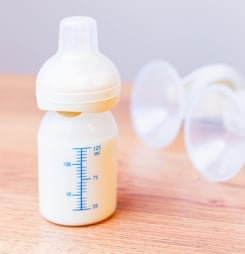

Of course infants need to eat. Everyone does. The difference is that newborns and young babies eat often, grow rapidly, and depend completely on caregivers to recognize cues, prepare feeds safely, and keep the whole process calm and comfortable.
Add in sleep deprivation, strong opinions from strangers, and the very real medical and practical curveballs that early parenthood can throw, and feeding can become one of the most emotional parts of caring for a baby.
Infant Feeding Day exists to replace judgment with understanding and to celebrate everyone who helps a baby get nourished. Whether feeding happens by breast, bottle, supplemental nursing system, or tube, the goal is the same: a fed baby and a supported caregiver. It is a day that encourages communities to be kinder, workplaces to be more accommodating, and families to be more curious before they offer unsolicited advice.
How to Celebrate Infant Feeding Day
The way a family feeds their baby is a personal choice shaped by health, culture, finances, work, mental well-being, and simple practicality. Infant Feeding Day invites the wider community to rally around parents and caregivers in ways that actually make life easier, not harder. Celebrate in ways that center respect, privacy when requested, and practical support.
Make Feeding Friendly Spaces
One of the most meaningful ways to honor Infant Feeding Day is to help create spaces where feeding is welcome, safe, and normal. A “feeding-friendly” environment is not only about permitting breastfeeding in public, though that matters.
It is also about making room for the full range of feeding realities: bottle feeding, pumping, combo feeding, donor milk, and tube feeding for babies who need medical support.
A feeding-friendly space tends to share a few qualities:
- Comfort without pressure. Some caregivers prefer a quiet corner; others are fine feeding at a table. The key is that either choice is accepted without commentary.
- Clean basics. Access to clean water for handwashing, a spot to set down supplies, and a trash can for wipes or packaging can turn a stressful outing into a manageable one.
- Practical seating. A sturdy chair with back support and enough space for a diaper bag is a small detail with a big impact.
- Privacy as an option, not a requirement. Offering a private room can be helpful, as long as it does not send the message that feeding must be hidden.
- Staff awareness. A welcoming sign is great, but a calm, informed staff response is even better. A simple policy that says caregivers can feed their baby without being asked to move goes a long way.
Community leaders, business owners, and organizers can also think beyond retail spaces. Libraries, community centers, sports facilities, airports, museums, and event venues can all become more feeding friendly with thoughtful layout and staff training.
Even informal groups, like a neighborhood club or a parent-and-baby meetup, can adopt ground rules: no shaming, no photographing others without consent, and no commentary about what’s in the bottle.
For workplaces, feeding friendly support often means protecting time and space for pumping or feeding during the workday. A truly supportive setup respects privacy, includes a clean and non-bathroom space when possible, and acknowledges that returning to work can affect supply, feeding plans, and mental health.
Share Infant Feeding Stories
Feeding stories are rarely simple. They can include pride, relief, disappointment, grief, joy, and a whole lot of logistics. Sharing them thoughtfully is a powerful way to soften the sharp edges of stigma.
Stories can be shared in many ways:
- In parent groups. A local meet-up, a postpartum support circle, or a hospital-based group can provide a place where new caregivers can speak honestly about what is working and what is hard.
- With friends and family. Loved ones often want to help but do not know how. A story that explains what support actually looks like can shift a relative from “You should try…” to “What would make this easier?”
- Online, with boundaries. Social media can help people find community, but it can also invite judgment. Caregivers can share what they are comfortable sharing while keeping details private, especially around medical issues.
A helpful storytelling mindset is to focus on experience rather than advice. “This is what worked for us” lands better than “This is what everyone should do.” It also makes space for caregivers whose feeding journeys include unexpected detours, such as low supply, latch difficulties, allergies, prematurity, postpartum depression, NICU stays, or medical conditions that require tube feeding.
Stories are also a reminder that feeding a baby rarely involves only one person. Partners wash parts. Grandparents prepare bottles. Friends drop off snacks. Siblings bring diapers. When the story includes the village, it becomes easier for others to see how they can be part of the support system.
Learn More About Infant Feeding
Learning about infant feeding is not about memorizing a “perfect” method. It is about understanding options, recognizing common challenges, and knowing when to seek support. Infant Feeding Day is a good prompt for caregivers and communities to build practical knowledge that reduces stress and increases safety.
A few areas where learning can make a real difference:
- Understanding feeding methods. Babies may be fed by nursing at the breast, expressed milk in a bottle, infant formula, a combination of milk and formula, donor milk when available and appropriate, or via medical devices such as a nasogastric tube or gastrostomy tube. Each method has its own learning curve and set of supplies.
- Recognizing hunger and fullness cues. Babies often show early cues like rooting, lip smacking, bringing hands to mouth, and fussing. Crying is usually a later cue. Learning these signals can make feeding feel less frantic.
- Knowing what “normal” can look like. Many caregivers worry their baby eats too little or too often. Feeding patterns change with growth, sleep, illness, and developmental leaps. Some babies snack; others take larger, less frequent feeds.
- Getting help early. Lactation consultants, pediatric clinicians, feeding therapists, and postpartum doulas can help troubleshoot latch, positioning, bottle refusal, reflux, tongue-tie concerns, pain, and weight gain questions. For tube-fed babies, specialized medical teams can teach safe handling and help caregivers feel confident outside a hospital setting.
- Supporting caregiver well-being. Feeding choices and challenges can affect mental health. Education that includes emotional realities helps caregivers feel less alone and more empowered to ask for help.
Communities can participate, too. Friends, relatives, and coworkers can learn what support sounds like: asking permission before offering suggestions, respecting feeding boundaries, and understanding that a caregiver’s plan may change. Learning can also include practical safety reminders for anyone who may prepare a bottle or feed a baby, like following preparation instructions, keeping supplies clean, and storing milk appropriately.
Even simple knowledge can prevent hurtful moments. For example, a caregiver feeding formula may be doing so for medical reasons, mental health reasons, or because it is what works for their family. A caregiver breastfeeding may be doing so while managing pain, pumping exhaustion, or a return-to-work schedule. A tube-fed baby is still being fed with love and effort, even if the setup looks unfamiliar.
Infant Feeding Day Timeline
First Commercial Infant Formula Patented
German chemist Justus von Liebig patents and markets one of the first commercial infant formulas, “Liebig’s Soluble Food for Babies,” signaling the beginning of industrially produced infant foods as an alternative to breastfeeding.
American Academy of Pediatrics Issues Early Formula Guidance
The American Academy of Pediatrics publishes an early policy statement on artificial feeding, addressing the composition and medical supervision of infant formula in comparison with breastfeeding.
WHO and UNICEF Meeting on Infant and Young Child Feeding
WHO and UNICEF convene an international meeting in Geneva to review evidence on breastfeeding, infant formula, and marketing practices, and the participants call for a global code to protect appropriate infant feeding.
International Code of Marketing of Breast-milk Substitutes Adopted
The World Health Assembly adopts the International Code of Marketing of Breast-milk Substitutes, setting global rules on the marketing of formula and related products to support breastfeeding and safeguard infant nutrition.
Global Strategy for Infant and Young Child Feeding Released
WHO and UNICEF release a Global Strategy that links breastfeeding, safe complementary feeding, counseling, and community support, guiding countries in developing comprehensive policies for optimal infant and young child feeding.
History of Infant Feeding Day
Infant Feeding Day was founded in 2019 by an independent charity in the UK called Feed. The day was created as a way to shine a light on how many different paths exist to the same destination: nourishing a baby.
It also responds to a modern reality that many caregivers encounter, which is that feeding decisions are often treated like public property. People comment, compare, and criticize, sometimes in the name of “help,” and often without understanding the full context.
Infant Feeding Day aims to celebrate feeding in all its forms and to encourage compassionate support rather than competition. That message matters because infant feeding is not just a nutritional task. It is also a physical experience, a relational experience, and for many, an identity-laced experience.
When a baby struggles to latch, when milk supply does not meet expectations, when a caregiver experiences pain, or when a medical condition changes the plan, the emotional load can be heavy. A day that explicitly validates different feeding methods helps reduce isolation.
The phrase often associated with the day, “bottle, boob or tube,” captures the central point: babies can thrive through a variety of feeding methods, and caregivers deserve respect for the work they put in, regardless of the route. It also highlights something the public does not always see.
Feeding is labor. It involves planning, time, equipment, and problem-solving. Pumping parts must be cleaned. The formula must be prepared correctly. Tube equipment must be maintained. Appointments, weight checks, and supply runs fill the calendar. Infant Feeding Day acknowledges the sheer effort behind the scenes.
Another important aspect of the day is community design. Feeding does not happen in a vacuum, and supportive environments can remove obstacles that have nothing to do with parenting skills. A caregiver who cannot find a clean, comfortable place to feed may avoid outings and become isolated.
A person who is shamed for breastfeeding in public may rush feeds or stop leaving the house. Someone who needs to pump may cut sessions short due to a lack of time or privacy. A family managing tube feeds may worry about stares or misunderstandings. In each case, the community’s reaction can make feeding either easier or harder.
Each year, the folks over at Feed choose a unique theme that encourages people to celebrate and consider different aspects of this topic in honor of Infant Feeding Day. Themes help keep the conversation broad and practical, moving beyond abstract support into specific action, reflection, and inclusion. Some themes that have been named for past years’ celebrations include:
- Compassionate Feedership in 2023
This theme points to the idea that “support” is not just a warm feeling. It is a set of behaviors: listening without correcting, offering help without taking control, and recognizing that caregivers may carry grief alongside gratitude.
Compassionate feedership also includes being gentle with oneself. Many caregivers internalize feeding struggles as personal failure, even when circumstances are out of their control. Compassion reframes the story as effort, adaptation, and care. - Feed It Forward in 2022
Feeding support is contagious in the best way. When someone receives judgment-free help, they are more likely to extend it to others. “Feed it forward” can look like passing along unused supplies, sharing a meal with a postpartum family, babysitting an older sibling during a feeding appointment, or simply being the person who says, “You’re doing a good job,” and means it. The theme also highlights that community support should be practical, not performative. - Feeding Friendly in 2021
This theme emphasizes spaces and systems, not just individual choices. It encourages businesses and public venues to become places where feeding is accepted and accommodated. It also nudges the wider public to treat feeding like any other basic caregiving task: normal, necessary, and not open for debate. - Feeding Forecasts in 2020
Feeding plans often start with a forecast, and then reality arrives. A baby may be premature, sleepy, refluxy, allergic, or medically complex. A caregiver may heal more slowly than expected or need medication that changes the plan. A job schedule may require pumping sooner than planned. “Feeding forecasts” recognizes that flexibility is not a failure. It is often the most caring response to real-life needs.
Across these themes, the central thread stays steady: feeding a baby is not a competition. It is caregiving. Infant Feeding Day makes room for the whole picture, including breastfeeding, formula feeding, combination feeding, exclusive pumping, donor milk arrangements where appropriate, and medically necessary tube feeding.
It encourages communities to trade commentary for compassion and to treat caregivers like capable adults doing demanding work during a tender season of life.
Infant Feeding Day Facts
Human Milk Exclusively Meets Infant Needs for About Six Months
Extensive research shows that healthy, full‑term infants who are exclusively fed human milk for about their first six months receive all the water and nutrients they need for normal growth, without other foods or fluids.
After that point, most babies require nutrient‑dense complementary foods, especially sources of iron and zinc, alongside continued milk feeding.
Commercial Infant Formula Is Designed to Mimic Breast Milk but Not Replicate It
Modern infant formulas are carefully regulated to provide appropriate amounts of protein, fat, carbohydrates, vitamins, and minerals, and can support normal growth when prepared correctly.
However, breast milk contains living cells, antibodies, and complex bioactive components that formula cannot fully reproduce, which is why health authorities still treat formula as a safe alternative rather than a biological equivalent.
The WHO Code Was Created to Curb Aggressive Formula Marketing
In 1981, the World Health Assembly adopted the International Code of Marketing of Breast‑milk Substitutes after evidence showed that aggressive promotion of formula, especially in low‑income countries, contributed to a decline in breastfeeding and higher infant illness.
The Code restricts direct advertising to the public, free samples to families, and certain promotional tactics in health facilities, although its enforcement varies widely by country.
Donor Human Milk Reduces Serious Complications in Very Preterm Infants
For very premature or very low‑birth‑weight babies whose own parents’ milk is unavailable, pasteurized donor human milk from regulated milk banks is associated with a lower risk of necrotizing enterocolitis, a life‑threatening intestinal disease, compared with preterm formula.
Because donor milk has lower protein and energy content than some specialized formulas, many neonatal units use it alongside targeted fortification to support growth.
Responsive Feeding Helps Shape Healthy Eating Behaviors
Regardless of whether an infant is fed at the breast, by bottle, or by cup, “responsive feeding” practices, in which caregivers notice and respond to a baby’s hunger and fullness cues, are linked to more self‑regulated eating and healthier weight trajectories.
Overriding cues, such as pressuring an infant to finish a bottle, has been associated with a higher risk of rapid weight gain in early life.
Returning to Work Strongly Influences Feeding Choices
Studies in high‑income countries show that shorter paid maternity leave and lack of workplace protections for expressing milk are consistently associated with earlier weaning from breastfeeding or greater reliance on formula.
Policies such as paid parental leave, flexible scheduling, and adequate lactation spaces in workplaces increase the likelihood that parents can continue their preferred feeding method after returning to work.
Public Breastfeeding Protections Vary Widely by Country
Legal protections for feeding infants in public differ around the world: some countries explicitly guarantee the right to breastfeed anywhere a parent is otherwise allowed to be, while others have no specific laws and rely on broader anti‑discrimination provisions.
Research indicates that where public breastfeeding is legally protected and socially accepted, breastfeeding duration tends to be higher, particularly for older infants.