

International Redefining Wealth Day invites people to take a fresh look at a word that often gets treated like a number. It nudges the conversation away from a single-minded focus on income and possessions and toward a fuller picture of prosperity that includes well-being, relationships, purpose, and peace of mind.
At its heart, this day asks a simple question with surprisingly big consequences: if money disappeared from the scoreboard, what would “rich” still mean? The answers tend to be wonderfully human. Time, health, supportive friendships, meaningful work, and a home environment that feels safe and inspiring suddenly start sounding like the real luxury items.
This observance also highlights how closely the parts of life are connected. Financial stability matters, but it does not exist in a vacuum. Stress, burnout, loneliness, or feeling stuck can affect earning power and spending habits just as much as a budget can. International Redefining Wealth Day encourages a more balanced approach, where money is a tool that supports life rather than the definition of life.
By widening the lens, people can make choices that feel aligned with their values instead of constantly chasing the next “more.” That shift can reduce comparison, increase gratitude, and create space for intentional goals that actually fit the person living them.
International Redefining Wealth Day encourages everyone to explore what truly enriches life beyond material possessions. The most meaningful celebrations tend to be simple, reflective, and practical. Rather than grand gestures, the day is often best honored through small actions that reveal what matters and strengthen it.
How to Celebrate International Redefining Wealth Day
Reflect on Personal Values
Start by getting clear on what “wealth” means on a personal level. Values are the quiet drivers behind most decisions, even when people do not realize it. A helpful approach is to pick a handful of categories and ask what “enough” looks like in each one.
Some prompts that can make reflection more concrete:
- Health: What habits support energy and stability? What habits drain it?
- Time: What deserves more time each week? What can be reduced or delegated?
- Learning: What skills or knowledge would create more freedom later?
- Peace of mind: What worries keep looping, and what would reduce them?
Writing answers down matters because it turns a vague feeling into a usable compass. Once values are named, it becomes easier to notice when a goal is truly desirable versus when it is borrowed from social pressure.
Strengthen Relationships
Relationships are one of the most underestimated forms of wealth because they cannot be bought at the last minute. International Redefining Wealth Day is a great excuse to invest in connection deliberately, not just when schedules allow.
Ways to strengthen relationships without making it complicated:
- Send a message that includes a specific memory or appreciation instead of a generic “checking in.”
- Plan a shared activity that invites conversation, such as a walk, cooking together, or playing a game.
- Practice “listening to understand,” where the goal is not to fix anything but to be present.
It can also be a good time to take an honest look at boundaries. Sometimes redefining wealth includes creating distance from relationships that consistently drain energy or undermine well-being.
Prioritize Well-being
Health is often treated as something to “get back to” after everything else is handled. Redefining wealth flips that script. Physical and mental well-being are foundational, affecting mood, focus, resilience, and even financial decisions.
Celebration ideas that support well-being:
- Choose a form of movement that feels sustainable, not punishing. A walk counts. Stretching counts.
- Make a meal that supports energy and satisfaction, aiming for nourishment rather than perfection.
- Build a small recovery ritual into the day, such as a screen-free hour, a nap, journaling, or breathwork.
Mental well-being deserves the same respect. If stress has been running the show, a meaningful way to honor the day is to identify one source of avoidable pressure and take a single step to reduce it.
Pursue Personal Growth
Personal growth is a long-term wealth builder. It expands choices and creates confidence that does not depend on external validation. The goal is not constant self-improvement as a project, but steady development that supports a life that feels more capable and more free.
Ideas for pursuing growth:
- Revisit a hobby that once brought joy, especially one that does not involve spending much money.
- Learn something practical that reduces future stress, such as basic meal planning, home maintenance skills, or negotiation.
- Explore a creative outlet with no expectation of being “good” at it. Play is part of wealth too.
A helpful mindset is to choose growth activities that fit real life. The best plan is the one a person can keep.
Give Back to the Community
Generosity is a powerful reminder that wealth includes impact and connection. Giving back can also reduce the feeling of scarcity by shifting focus from what is missing to what is possible.
Simple, accessible ways to give back:
- Volunteer time in a way that matches strengths, such as organizing, mentoring, cooking, or listening.
- Support a local cause with a small, planned contribution rather than an impulsive one.
- Offer practical help to someone nearby, like sharing a skill, making introductions, or helping with errands.
Giving back is not about overextending. It is about choosing contribution intentionally, in a way that supports both the giver and the community.
International Redefining Wealth Day Timeline
Aristotle linked true wealth to human flourishing
In the Nicomachean Ethics, Aristotle argued that money-making was only a means and that the good life could be found in eudaimonia, or flourishing, which depends on virtue and rational activity rather than material riches alone.
Adam Smith separates wealth from the simple accumulation of money
In The Wealth of Nations, Adam Smith describes a nation’s wealth in terms of the annual production of goods and services and the living standards of its people, shifting attention from gold and silver to real prosperity and well-being.
WHO defines health as complete well-being, not just the absence of disease
The Constitution of the World Health Organization adopts a pioneering definition of health as “a state of complete physical, mental, and social well-being,” helping broaden ideas of human prosperity beyond economic or medical measures alone.
Bhutan introduces Gross National Happiness
Bhutan’s fourth king, Jigme Singye Wangchuck, declares that “Gross National Happiness is more important than Gross National Product,” launching a policy vision that treats cultural values, environmental conservation, and good governance as core national wealth.
UN Human Development Index reframes development
The first Human Development Report introduces the Human Development Index, combining life expectancy, education, and income so that a country’s success is judged by people’s capabilities and choices, not just its GDP.
Amartya Sen’s “Development as Freedom” centers on capabilities
Economist Amartya Sen publishes Development as Freedom, arguing that true development is the expansion of human freedoms and capabilities, influencing global debates about poverty, inequality, and the meaning of wealth.
OECD launches the Better Life Index
The Organisation for Economic Co-operation and Development unveils the Better Life Index, an interactive tool that lets people compare countries across dimensions such as health, work–life balance, community, and life satisfaction, reflecting a multidimensional view of well-being.
History of International Redefining Wealth Day
International Redefining Wealth Day began as a modern pushback against a very old idea: that success can be measured primarily by money. The day was created by Patrice Washington, a personal finance expert, author, and voice in the financial education space who has long encouraged people to pursue purpose alongside prosperity.
Washington’s message stood out because it did not dismiss money, but it refused to put money in charge. She popularized the idea that wealth should be understood in a broader sense, closer to well-being than to accumulation. In her work, wealth is not a single bucket. It is a set of interconnected areas of life that together shape a person’s stability, satisfaction, and freedom.
A key part of that framing is Washington’s “six pillars” approach, which encourages people to evaluate wealth through multiple dimensions:
- Fit: mental and physical well-being
- People: relationships and community
- Faith: beliefs, values, and inner grounding, often described in a flexible, personal way rather than a single tradition
- Space: the environment where life happens, including home, work setup, and daily surroundings
- Work: purpose, contribution, and how a person spends productive time
- Money: financial management and resources, placed within the bigger picture rather than above it
This framework helped give the day structure. It turned a feel-good concept into something people could actually practice. Instead of simply saying “money isn’t everything,” it offered categories that make it easier to notice what is thriving and what is neglected.
The timing of the observance also reflects Washington’s personal connection to the message. International Redefining Wealth Day aligns with her birthday, reinforcing the theme that redefining wealth is personal, lived, and reflective rather than purely academic. Over time, the observance has spread because many people recognize the same pattern in their own lives: working harder and earning more does not automatically create peace, health, or strong relationships.
The day resonates in particular because it addresses a common modern tension. Many people feel pressure to look successful, even while privately feeling exhausted, disconnected, or uncertain about what they are working toward. International Redefining Wealth Day gives that tension a name and offers an alternative: build a definition of wealth that supports the whole person.
In practice, this observance has become a prompt for honest self-assessment. People use it to check in on the areas that rarely appear on a bank statement but heavily influence quality of life. Is the schedule sustainable? Is the home environment supportive or chaotic? Are relationships being nurtured or postponed? Is work aligned with strengths and values, or is it only about survival?
Because it is not tied to a single culture or economic level, the concept travels well. Redefining wealth does not require a specific income. Someone can have very little money and still be wealthy in connection, purpose, and resilience. Someone else can have a high income and realize they are poor in time, sleep, or joy. The observance makes room for both truths, without judgment.
International Redefining Wealth Day continues to grow as more people look for a healthier relationship with success. It supports a shift from hustle for hustle’s sake toward intentional living, where goals are chosen with care and measured by real-life outcomes, not just by financial milestones. It also encourages conversations that are often overdue, such as the hidden costs of burnout, the importance of community, and the idea that financial decisions are deeply tied to emotional and physical well-being.
Ultimately, the history of International Redefining Wealth Day is the story of a cultural reframe. It is an invitation to stop treating money as the only proof of a life well lived and start recognizing the many forms of wealth that make life feel full.
Redefining Wealth: Why Well-Being Matters More Than Money
International Redefining Wealth Day invites a fresh look at what prosperity truly means.
These facts explore how the idea of wealth has long been connected to well-being, purpose, relationships, and life satisfaction—reminding us that a rich life is measured by more than financial success alone.
The Old Meaning of “Wealth” Focused on Well-Being, Not Money
In medieval English, “wealth” originally meant a state of well-being or prosperity in life as a whole, not just an abundance of money.
Linguists trace it to the Old English word “weal,” meaning welfare or happiness, and early uses in the 13th and 14th centuries referred broadly to health, happiness, and prosperity.
Only later, as commercial societies grew, did the word narrow toward financial riches.
Aristotle Linked a “Good Life” to Virtue and Meaningful Activity
Long before modern economics, Aristotle distinguished between “chrematistics” (the pursuit of money) and “oikonomia” (the art of living well in a household and community).
In the Nicomachean Ethics and Politics, he argued that true flourishing, or eudaimonia, depended on virtue, friendships, and purposeful activity in civic life, and that treating wealth as an end in itself distorted human priorities.
The World Happiness Report Shows Money Matters Less After a Point
Analyses in the World Happiness Report, which combines survey data from more than 140 countries, find that while income increases improve well-being at very low levels, life satisfaction eventually depends more on factors like social support, trust, health, and freedom to make life choices.
The report’s standard model includes GDP per capita but also weighs non-monetary elements such as healthy life expectancy, generosity, and perceived corruption.
Strong Relationships Predict Health Better Than Cholesterol Levels
The Harvard Study of Adult Development, which has followed participants since 1938, found that the quality of people’s close relationships in midlife was a better predictor of their health in older age than their cholesterol levels.
Participants who reported warmer, more supportive relationships at age 50 were more likely to be physically healthier and happier decades later than those who were wealthier but socially isolated.
Purpose in Life Is Linked to Lower Mortality Risk
Large cohort studies in the United States and Japan have shown that people who report a strong sense of purpose in life have a significantly lower risk of death from all causes, even after accounting for income, education, and health behaviors.
One analysis of older adults in the Health and Retirement Study found that those in the highest category of life purpose had about a 15 percent lower mortality risk over several years of follow-up compared with those in the lowest in purpose.
Time, Not Just Income, Determines “Time Affluence” and Well-Being
Psychological research has introduced the idea of “time affluence,” the feeling of having enough time, as a distinct form of wealth.
Studies led by researchers like Ashley Whillans and Elizabeth Dunn show that people who prioritize time over money and who spend money to buy back time (such as outsourcing chores) report higher life satisfaction and lower stress across income levels, suggesting that how time is used can be as important as how much money is earned.
Social Trust and Generosity Help Economies Thrive
Chapters in recent World Happiness Reports highlight that societies with higher levels of interpersonal trust and everyday generosity tend to be more resilient in crises and sustain higher overall life satisfaction, even when their average incomes are modest.
Acts such as donating to charity or helping strangers correlate with greater reported happiness both for givers and for communities, indicating that social capital can function as a form of collective wealth.
International Redefining Wealth Day FAQs



You may also like

Global Holistic Wealth Day
Complete well-being, weaving prosperity across life facets, encompasses fulfillment, health, and purpose in a seamless tapestry of existence.
- International

International Day of Happiness
Finding joy in the little moments, and appreciating life's simple pleasures are key ingredients to a fulfilling life.
- Australia
- Canada
- International
- and 2 more

National Financial Freedom Day
Discover National Financial Freedom Day, a celebration inspiring smart budgeting, investing, and financial literacy to build independence, security, and peace of mind.
- Australia
- Canada
- United Kingdom
- and 1 more

National I Want You To Be Happy Day
There's a certain joy in knowing you made someone smile. It could be as simple as a kind word or gesture. Let's spread happiness!
- Australia
- Canada
- United Kingdom
- and 1 more
National days and holidays on March 15 2027

National Groundwater Awareness Week
A vital resource, groundwater is a hidden treasure beneath our feet. Its protection is crucial for our future and the planet's.
- United States
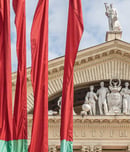
Belarus Constitution Day
Belarus Constitution Day celebrates the country's legal foundation and honors the principles that guide its governance. It reminds people of the core values that unite them, emphasizing national unity, sovereignty, and citizens' rights. On this day, Belarusians reflect on the importance of their Constitution, which ensures social justice, political stability...
- Belarus
- Russia
- Ukraine
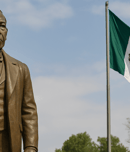
Benito Juarez Day
Why Benito Juárez Day still matters is tied to what he achieved during a time of conflict and change. He helped shape Mexico’s laws and pushed to limit the power of the military and the church in politics. His leadership supported equal rights and pushed for public education. Many saw...
- Mexico

International Teach Music Week
International Teach Music Week is a vibrant celebration that lights up every year's third week of March, and unites over 750 music schools and various organizations globally. They offer free 30-minute lessons to new students, encouraging everyone from kids to adults to explore the joy of music. It's a time when...
- Canada
- Italy
- Philippines
- and 4 more
Seize Every Day
Join free for personalised recommendations, email reminders and exclusive guides. Never miss a day.