
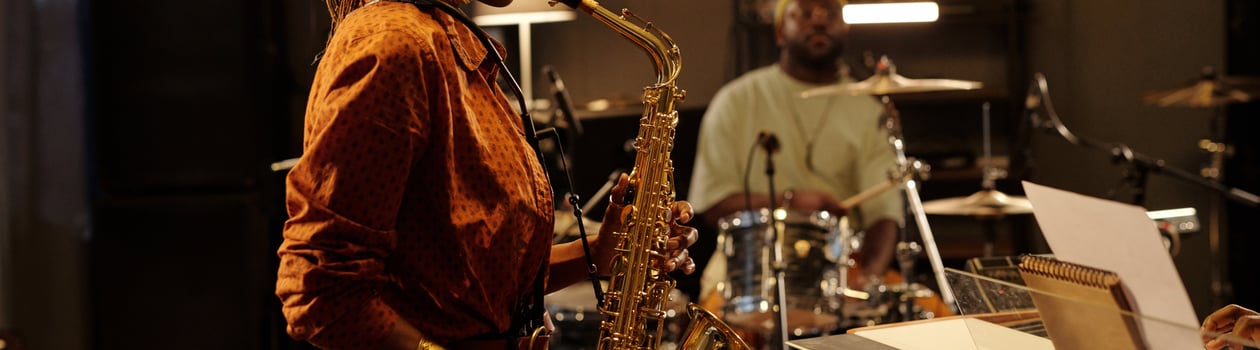
National Black Women in Jazz and the Arts Day honors the powerful contributions of Black women who have shaped the world of music and the arts.
This celebration highlights achievements across genres, including jazz, dance, visual arts, and theater.
Through performances, exhibits, and other events, communities come together to celebrate creativity that has enriched the cultural landscape and continues to inspire future generations.
Beyond recognizing individual accomplishments, this day confronts the challenges that Black women face in the arts. It sheds light on ongoing barriers, such as unequal representation and access to opportunities, which many still navigate.
It also acknowledges how these women have used their art to challenge norms and advocate for social change, making their influence felt far beyond the stage or canvas.
National Black Women in Jazz and the Arts Day Timeline
Mamie Smith Helps Open Recording Doors
Mamie Smith begins recording in the late 1910s and, with her 1920 hit “Crazy Blues,” proves the commercial power of Black women’s voices, helping create space for later jazz and blues women on record.
Bessie Smith and Ma Rainey Become “Empress” and “Mother” of the Blues
Touring the Black vaudeville circuit, Ma Rainey mentors Bessie Smith, whose 1923 Columbia recordings make her one of the best‑paid Black entertainers and a foundational influence on jazz singing.
Ella Fitzgerald Wins Amateur Night at the Apollo
As a teenager, Ella Fitzgerald wins first prize at Amateur Night at Harlem’s Apollo Theater, a break that launches a career that will redefine jazz singing and later earn her multiple Grammy Awards.
Mary Lou Williams Records “The Zodiac Suite” Era Works
Pianist and composer Mary Lou Williams, already writing for leading swing bands, begins creating ambitious works that culminate in pieces like “Zodiac Suite,” showing how a Black woman can be a major jazz modernist.
Hazel Scott Breaks Barriers on Stage and Screen
Pianist Hazel Scott becomes one of the highest‑paid Black women in Hollywood and, in 1943’s “I Dood It,” insists on dignified roles, using her jazz and classical prowess to challenge racist film stereotypes.
Nina Simone Turns Jazz into Civil Rights Protest
Nina Simone responds to racist violence with songs like “Mississippi Goddam” (1964), using her jazz‑rooted piano and voice as explicit protest and helping define the role of Black women artists in the freedom struggle.
Esperanza Spalding Wins Historic Grammy for Best New Artist
Bassist, singer, and composer Esperanza Spalding becomes the first jazz artist to win the Grammy Award for Best New Artist, signaling new recognition for contemporary Black women innovating in jazz.
How to Celebrate National Black Women in Jazz and the Arts Day
Celebrating National Black Women in Jazz and the Arts Day is a wonderful opportunity to honor creative contributions and spread awareness of their impact. Here are some fun and meaningful ways to join in the celebration:
Listen to Legendary Tunes
Fire up a playlist featuring icons like Billie Holiday, Nina Simone, and Sarah Vaughan. Their voices changed music forever. Let their melodies inspire your day, whether you’re dancing or just vibing with their timeless art.
Support a Local Artist
Check out local performances by Black women in jazz or other arts. Many cities host events around this day, so find a concert, gallery opening, or theater show nearby.
If nothing’s happening, find artists to follow online or in your community.
Create Your Own Masterpiece
Feeling artistic? Try creative activities like painting, writing, or even composing music. Take inspiration from.
Black women artists who have used their talents to express complex emotions, challenge norms, and advocate for change.
Watch a Jazz Documentary
Stream a documentary to explore jazz history and its key figures. You’ll learn more about the genre’s deep roots and how Black women like Ella Fitzgerald and Mary Lou Williams shaped the sound we know today.
Share on Social Media
Post about your favorite Black women in jazz and the arts. Use your platform to highlight their work and their contributions. Sharing their art will introduce new generations to the beauty and brilliance of their creations.
History of National Black Women in Jazz and the Arts Day
National Black Women in Jazz and the Arts Day began on March 1, 2016, as a tribute to the contributions of Black women in jazz and broader artistic fields.
The Black Women in Jazz organization wanted to honor the talents and achievements of Black female artists.
The day shows the unique challenges these women have faced in male-dominated fields while celebrating their undeniable impact on music and the arts.
The holiday was started by the Black Women in Jazz & the Arts Awards, an organization based in Georgia. They sought to provide a platform for these remarkable artists to gain recognition, often highlighting those who were overlooked.
The celebration is timed perfectly with the start of Women’s History Month, further emphasizing the powerful role Black women have played in shaping culture through their artistic expressions.
From music to dance and visual arts, their influence extends far and wide, with artists like Ella Fitzgerald, Nina Simone, and Faith Ringgold paving the way for future generations. National Black Women in Jazz and the Arts Day continues to inspire and bring attention to this incredible legacy.
Facts About National Black Women in Jazz and Arts Day
Trailblazing All-Woman Jazz Bands Challenged Segregation and Sexism
During the 1930s and 1940s, all-woman swing and jazz bands such as the International Sweethearts of Rhythm, the Prairie View Coeds, and the Darlings of Rhythm toured segregated America, often playing one-night stands in Southern towns where Jim Crow laws explicitly restricted both their race and gender.
These largely Black or racially integrated ensembles drew huge crowds, broke professional barriers for women instrumentalists, and forced venues and promoters to confront their own discriminatory booking practices.
Black Women Composers Helped Shape American Concert Music
Black women have been composing notated concert music in the United States since at least the mid‑19th century, yet music histories long ignored their work.
Florence Price became the first Black woman to have a symphony performed by a major American orchestra in 1933, and later composers such as Margaret Bonds and Undine Smith Moore wrote choral, chamber, and orchestral works that blended spirituals, blues inflections, and European forms, quietly reshaping the American classical canon.
Jazz Was a Global Megaphone for Black Women’s Voices
For many Black women vocalists in the mid‑20th century, jazz performance functioned as a public platform to speak about race, gender, and political injustice at a time when few Black women held institutional power.
Scholars note that singers such as Billie Holiday and Abbey Lincoln used lyrics, phrasing, and stage presence to critique lynching, colonialism, and sexism, turning the jazz club into a space where Black women could circulate their own analyses of power to audiences around the world.
Black Women Remain Drastically Underrepresented in Major Art Museums
Data from the Burns Halperin Report show that Black American women artists accounted for only about 0.5 percent of acquisitions and 0.1 percent of exhibition history in major U.S. museums between 2008 and 2020, despite Black women making up roughly 6.6 percent of the U.S. population.
The report concludes that the combination of race and gender dramatically compounds exclusion, with white male artists overrepresented by a factor of more than two.
Auction Markets Largely Overlook Work by Black American Women Artists
In the global auction market from 2008 to mid‑2022, works by Black American artists generated about $3.6 billion in sales, or roughly 2 percent of the overall total.
Within that already small slice, works by Black American women artists represented only about $204 million, which is 0.1 percent of worldwide auction sales, revealing how rarely their art reaches the high‑value secondary market compared with their male and non‑Black peers.
Black Women Drive Popular Music but Rarely Hold Executive Power
Research from the USC Annenberg Inclusion Initiative found that over a nine‑year period, artists from underrepresented racial and ethnic groups, including many Black women, accounted for nearly half of the performers on the popular music charts.
Yet Black women held as few as 3 to 5.3 percent of executive roles at major music companies and an even smaller share of leadership positions in radio, underscoring a sharp disconnect between who makes the music and who controls the industry’s economic and creative decisions.
Women Dominate Arts Degrees but Not Artistic Recognition
According to the National Museum of Women in the Arts, women in the United States earn about 70 percent of Bachelor of Fine Arts degrees and between 65 and 75 percent of Master of Fine Arts degrees, yet they make up only around 46 percent of working artists across disciplines.
Because Black women also face racial discrimination, their visibility in galleries, museums, and leadership roles often lags even further behind their high levels of training and participation in arts education.
National Black Women in Jazz and the Arts Day FAQs



You may also like

National Jazz Appreciation Month
Learn about the history and heritage of jazz, listen to the greats, or find a local jazz club to engage with one of the United States’ richest musical movements.

International Jazz Day
Join your community in appreciating and recognizing the rich culture and heritage of jazz. Visit a local jazz club, or revisit some of the greatest musicians in history.
- Australia
- Brazil
- France
- and 4 more

International Blues Music Day
Soulful melodies echoing stories of resilience, pain, and joy, transcending generations with raw emotion and powerful rhythm.
- Canada
- United Kingdom
- United States

Baku Jazz Festival
The Baku Jazz Festival is an annual celebration that fills the streets of Azerbaijan's capital with vibrant sounds and rhythms. It attracts jazz enthusiasts from around the world with a diverse lineup of both renowned and emerging artists. This event showcases a unique fusion of traditional Azerbaijani music with contemporary...
- Azerbaijan
National days and holidays on March 1 2027

World Seagrass Day
World Seagrass Day is a worldwide reminder that some of the planet’s most important landscapes are the ones most people never see. Beneath calm, shallow coastal waters, underwater meadows quietly perform outsized work: feeding marine life, clearing the water, buffering shorelines, and locking away carbon for the long haul. World Seagrass...
- Australia
- International
- United Kingdom
- and 1 more

Zero Discrimination Day
Imagine a world where everyone is free to be themselves without fear of being judged or treated unfairly. Sounds amazing, right? Zero Discrimination Day points toward that world by encouraging people to notice where bias shows up, learn what dignity looks like in everyday life, and take practical steps that...
- Canada
- India
- International
- and 3 more

National Horse Protection Day
Giving a second chance to majestic creatures that were once overlooked and neglected is both rewarding and inspiring.
- Australia
- Canada
- United Kingdom
- and 1 more

Baba Marta Day
Baba Marta Day, celebrated in Bulgaria, is a lively and colorful tradition that marks the transition from winter to spring. People exchange and wear red and white bracelets called martenitsas. These simple yet meaningful tokens symbolize good health, happiness, and the hope for a fruitful year ahead. The festive spirit fills...
- Bulgaria
- Greece
- North Macedonia
- and 2 more
Seize Every Day
Join free for personalised recommendations, email reminders and exclusive guides. Never miss a day.