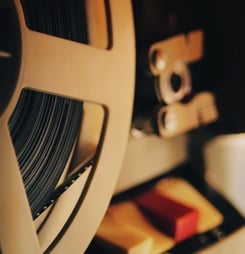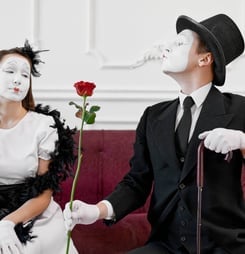

Longing for days past when movies were captured on strips of film, lit with hot studio lamps, and projected with the soft clatter of a reel? National Classic Movie Day is made for anyone who loves the craft, charm, and sheer movie magic of earlier cinema.
This day invites film fans to step back into the first great eras of moviemaking, from silent masterpieces to the star-powered studio years and beyond, celebrating the storytelling and artistry that shaped so much of what audiences still watch and quote.
National Classic Movie Day offers a chance to appreciate the performances, writing, directing, costumes, music, and practical effects that classic films delivered long before digital tools became standard.
National Classic Movie Day Timeline
First Public Film Screenings
The Lumière brothers presented some of the first public screenings of projected motion pictures in Paris, helping to launch cinema as a mass entertainment medium and laying the groundwork for what later became known as classic film.
Early Narrative Classic “The Great Train Robbery”
Edwin S. Porter’s The Great Train Robbery debuted in the United States, pioneering narrative editing and cross-cutting and becoming one of the first widely popular story films later regarded as an early classic.
“The Jazz Singer” Ushers in the Talkies
Warner Bros. released The Jazz Singer, the first feature-length film with synchronized dialogue sequences, triggering the rapid shift from silent films to sound pictures and redefining the era now considered classic Hollywood.
Technicolor Classics Transform Cinema
The Wizard of Oz and Gone with the Wind were released, demonstrating the artistic and commercial power of three-strip Technicolor and becoming enduring reference points for what audiences call “classic movies.”
Paramount Decree Reshapes the Studio System
In United States v. Paramount Pictures, Inc., the Supreme Court ordered major studios to divest their theater chains, weakening the vertically integrated studio system that had dominated Hollywood’s classic era production model.
Creation of the U.S. National Film Registry
The U.S. Congress established the National Film Registry, directing the Library of Congress to select films “culturally, historically, or aesthetically significant,” which formalizes the preservation of many works now labeled classic movies.
Turner Classic Movies Launches
Turner Classic Movies (TCM) debuts as a cable channel devoted to uncut, commercial-free older films, helping popularize and preserve classic cinema for new generations through curated programming and archival presentations.
How to Celebrate National Classic Movie Day
Considering ideas on how to get involved with this particular day? Here are a few ways to mark it that work for newcomers and longtime movie lovers alike.
Watch a Classic Film
The most satisfying way to celebrate is also the simplest: pick a classic and press play. Classic films often move at a different pace than modern movies. Scenes may linger a little longer, dialogue may shine instead of rush, and the camera may stay steady long enough to let actors build a moment. Approaching it with that mindset makes the experience far more enjoyable.
A fun approach is to choose a theme for your viewing:
- A “firsts” night: try an early sound film, an early color film, or a groundbreaking special-effects film.
- A stars night: explore the range of one performer, such as a romantic role in one film and a dramatic role in another.
- A genre sampler: pair a classic comedy with a noir, or a musical with a courtroom drama.
To make a home screening feel more special, recreate a small theater atmosphere:
- Dim the lights and silence phones.
- Turn on subtitles if the audio is unclear or accents are fast.
- Watch the opening credits instead of skipping them. Classic credits often set the tone, introduce themes, and showcase design as an art form.
- If it is a long film, plan an intermission. Many epic movies were created with a break in mind.
A helpful tip is to focus on what the movie is doing, not just what it is saying. In many older films, lighting and framing carry meaning. A character stepping into light, a slow zoom to a close-up, or a sudden cut can deliver the real emotional impact.
Take a look at a few well-known classics to get started:
- Casablanca (1942) starring Ingrid Bergman and Humphrey Bogart
A tightly crafted drama with unforgettable lines, emotional depth, and a perfect balance of chemistry and atmosphere. - The Wizard of Oz (1939) starring Judy Garland
A milestone in fantasy filmmaking, blending music, vibrant color, and imaginative storytelling that still inspires films today. - Some Like It Hot (1959) starring Marilyn Monroe, Tony Curtis, and Jack Lemmon
A lively and clever comedy built on strong performances, timing, and sharp humor that continues to entertain modern audiences. - Seven Samurai (1954) directed by Akira Kurosawa
A powerful action drama known for its character development and storytelling, influencing generations of filmmakers worldwide.
Anyone looking to explore further can dive into different styles: a fast-talking screwball comedy, a shadowy noir, a golden-age musical with grand choreography, or a silent film that proves storytelling does not need dialogue.
Throw a Classic Movie Day Party
A classic movie gathering is a simple way to turn a viewing into an experience. The key is creating an atmosphere that reflects the era without making it complicated.
Start with a basic plan:
- Pick the movie (or a double feature) and ensure the total runtime suits the group.
- Set expectations: is it a relaxed hangout or a focused, quiet screening?
- Add one fun detail: costumes, themed snacks, or a photo spot.
Encourage guests to dress as their favorite classic character or keep it simple with an “Old Hollywood” vibe: pearls, scarves, suits, elegant dresses, or black-and-white outfits. The goal is to have fun, not to be perfect.
Food can be nostalgic and practical. Popcorn is essential, but a few extra touches make it more engaging:
- Candy bowls with classic-style treats.
- Mocktail station inspired by vintage soda fountains: sparkling water, flavored syrups, citrus, and cherries.
- Savory snacks that stay quiet during the film, like pretzels, nuts, or small sandwiches.
For a light activity, give guests a “bingo” sheet with classic movie moments: a dramatic close-up, a hat tip, a musical number, a shadowy scene, a door slam, or an inspiring speech. It adds fun without interrupting the film.
If guests are new to classic cinema, choose something easy to enjoy: a comedy, a fast-paced thriller, or a musical with catchy songs. Save more experimental films for smaller, dedicated groups.
Join a Classic Movie Club
Classic films become even more meaningful when discussed. Joining a club adds the social experience that early audiences naturally had.
Many communities offer film societies, library screenings, campus programs, or small theaters showing classic films. These often feature high-quality restorations and introductions that explain what makes the film special.
If there is no group nearby, starting one is easier than it seems. A simple format includes:
- Choose a schedule that works, such as once a month.
- Rotate hosts so responsibilities are shared.
- Vote on themes like “classic courtroom dramas,” “international films,” “movie monsters,” or “comedies that still work today.”
- Give a short introduction before the film about the director, era, and importance.
- Keep discussions open and friendly: enjoying classic films is not about knowing everything.
A great approach for new clubs is to mix famous titles with lesser-known ones. Well-known films attract interest, but hidden gems often lead to the most engaging conversations.
Learn Fun Facts About Classic Movies
Get more connected with this day by checking out a few interesting tidbits of trivia that can be learned and shared with others:
After the silent film era of the 1910s, “Talkies”, or talking films, started in the mid-1920s and included a recorded dialogue to go with the story of the film
Walt Disney mortgaged his home and borrowed money to finish the classic animated movie, Snow White and the Seven Dwarfs in the 1930s
The 1963 movie Cleopatra was so expensive to make that it nearly bankrupted 20th Century Fox and they had to sell off some of their land to recover
History of National Classic Movie Day
National Classic Movie Day is a modern observance built around a timeless habit: revisiting films that helped define the art of cinema. It spotlights movies commonly considered “classics,” often spanning the early decades of filmmaking through later landmark periods that still feel foundational to today’s storytelling.
While the idea of honoring classic films is contemporary, the movies themselves chart an unusually fast evolution of an art form. Silent-era filmmakers had to invent a visual language almost from scratch. Techniques now taken for granted, such as cross-cutting between simultaneous events, close-ups to emphasize emotion, and montage to compress time, became part of a shared grammar.
Because dialogue could not carry a scene, directors and performers learned to communicate through gesture, rhythm, and careful staging, supported by title cards and live or recorded music.
When sound arrived, it did not simply add speech. It changed how scripts were written, how actors performed, and how scenes were blocked. Early microphones were limited, and cameras could be noisy, so some productions briefly became more stage-like.
As technology improved, filmmakers found their freedom again and new pleasures emerged: fast verbal comedy, layered performances built around tone of voice, and musical storytelling that could not exist in the same way before synchronized sound.
The studio era that followed refined the crafts that still define film production. Genres became recognizable, stars became public personas, and behind-the-camera roles grew more specialized. Costume designers created silhouettes that influenced fashion.
Cinematographers learned how to sculpt faces and settings with light. Editors sharpened the emotional impact of a scene through timing alone, whether by snapping quickly through a comic misunderstanding or stretching a suspense sequence until the audience can hardly stand it.
Classic cinema also holds the roots of many beloved styles. Film noir developed its signature look of high contrast lighting, urban tension, and morally complicated characters. Musicals turned choreography, camera movement, and set design into a kind of joyful spectacle.
Westerns explored mythmaking, community, and personal codes. Epic dramas aimed for scale with towering sets and crowd scenes that relied on planning and choreography rather than computer-generated imagery.
Later decades that are often folded into “classic” status brought their own breakthroughs. Filmmakers experimented more openly with tone, antiheroes, and realism. Dialogue loosened up, stories became more character-driven in new ways, and cinematography sometimes embraced a rougher, more immediate look. In that sense, “classic” does not describe a single style or a single pace. It describes a continuing conversation across generations of artists, where each era reacts to the last and leaves tools for the next.
A major reason a day like this resonates is preservation. Physical film can fade, shrink, or deteriorate if it is not stored properly. Restoration can involve cleaning and repairing damaged frames, stabilizing the image, correcting color or contrast, and rebuilding sound so modern audiences can experience the film as intended.
Watching classic movies and talking about them helps keep attention on that work. It also honors the thousands of artists, technicians, and craftspeople whose names roll by in those opening credits, many of whom never became famous but helped build the medium piece by piece.
National Classic Movie Day ultimately celebrates more than nostalgia. It highlights enduring storytelling, inventive filmmaking, and performances that still connect across time. For longtime fans, it is a reason to revisit favorites with fresh eyes. For newcomers, it is an invitation to discover that “old” does not mean “outdated” and that a great movie can travel remarkably well across generations.