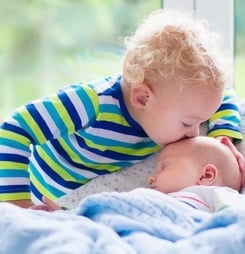

Celebrate the sense of independence and high achievement that often comes from being the one and only kid in the family by getting involved with National Only Child Day! For some, being an only child means having the whole back seat to themselves and never negotiating whose turn it is to pick the TV show.
For others, it means becoming an expert at making friends, entertaining themselves, and learning to talk comfortably with adults. National Only Child Day offers a cheerful reason to notice single-child families, appreciate the unique dynamics at home, and retire a few tired stereotypes along the way.
History of National Only Child Day
As modern trends change and families lean toward having fewer children, the only child is becoming more common in society. In many places, parents choose to have one child for a long list of practical reasons: the cost of housing and childcare, career demands, health concerns, later-in-life parenting, or simply the desire to focus time and resources on one child.
In other cases, having one child is not a choice but the outcome of fertility challenges, pregnancy loss, or complicated medical realities. National Only Child Day fits comfortably into this landscape because it recognizes a family structure that can be intentional, circumstantial, or somewhere in between.
Researchers and social observers have been tracking smaller household sizes for decades, and one-child families show up more frequently in that data. A popular way to summarize the shift is to note that the share of parents raising an only child has grown markedly over the past several decades.
That change has helped reshape what “typical” looks like at school pick-up lines, on playdates, and in friend groups. When only children were less common, they sometimes stood out as the exception. As they become more visible, the conversation has shifted from “How unusual” to “How do different family sizes shape daily life?”
Only children who function as the sole kid in their families may come into this place with a number of advantages as well as disadvantages, just as every situation in life does. Ask only children about the upside, and many will describe deep closeness with parents or caregivers. They might remember long conversations at dinner, family vacations that were easier to plan, or the feeling of being taken seriously at a young age because adults were their main companions.
Some only children develop confidence speaking with adults, comfort with solitude, and a tendency to pursue interests intensively, whether that is music, reading, sports, collecting, or building elaborate imaginary worlds out of couch cushions.
But the trade-offs are real, too. Talk to some only children, and they might say how amazing it was to not have to compete with a sibling for their parents’ attention or that they always got to choose the movie. But other only children might also remember being lonely and jealous of their friends who had siblings to play with.
In many homes, there is no built-in playmate, no sibling to blame for the broken vase, and no one else who shares the exact same childhood memories. That can make some only children feel pressure, too: when there is just one kid, it can seem like every expectation lands on one set of shoulders.
There is also the cultural baggage that follows only children around. They are sometimes labeled “spoiled,” “selfish,” or “socially awkward.” Those labels stick because they are easy, not because they are accurate.
Personality is shaped by far more than sibling count: temperament, parenting style, community, school environment, friendships, and life events all matter. Many only children become generous sharers because they learn it is the best way to keep friends close.
Many become adaptable because they spend time in adult spaces and learn to read the room. And many grow up to be excellent collaborators, particularly when they have opportunities for teamwork through clubs, sports, group projects, or neighborhood friendships.
National Only Child Day is set aside as a friendly reminder that a family with one child is a complete family. It also creates space for only children, whether young or grown, to feel seen without being treated like a curiosity.
The first National Only Child Day was established in 2010 with the purpose of celebrating and appreciating single-child families. Since then, the day has served as a gentle nudge to celebrate the strengths of only children, to acknowledge the challenges they might face, and to encourage supportive communities around them.
National Only Child Day Timeline
Early Pathologizing of Only Children
Psychologist G. Stanley Hall published “The Study of Children,” describing being an only child as “a disease in itself” and helping cement negative stereotypes in early child psychology.
Adler Challenges Only-Child Stigma
Austrian psychiatrist Alfred Adler’s work on birth order, translated and popularized in English by the late 1920s, frames only children as a distinct type with both strengths and vulnerabilities rather than inherently “damaged.”
First Major Review of Only-Child Outcomes
Psychologist Toni Falbo publishes one of the first systematic reviews of research on only children, finding little evidence that they are more spoiled or maladjusted than those with siblings.
Meta-Analysis Dispels the “Lonely, Spoiled” Myth
Toni Falbo and Denise Polit released a large meta-analysis of only children and children with siblings, concluding that only children often equal or surpass peers in achievement, intelligence, and adjustment.
China’s One-Child Policy Shapes Global Debate
China’s one-child policy, formally introduced nationwide in 1979 and relaxed beginning in 2015, has produced the world’s largest cohort of only children and has prompted extensive research on their development and family dynamics.
Pew Documents Rise of One-Child Families in the U.S.
Pew Research Center reports that the share of U.S. mothers at the end of their childbearing years with only one child has roughly doubled since 1976, highlighting the growing prevalence of single-child families.
How to Celebrate National Only Child Day
Show some love and appreciation for the only child in your life (perhaps it’s yourself!) and celebrate National Only Child Day with some of these ideas:
A good celebration does not require balloons or a marching band, although no one is stopping an only child from enjoying both. The best celebrations tend to focus on the themes that matter most to single-child families: connection, confidence, and being understood. It can be as simple as a thoughtful message, an afternoon spent doing a shared activity, or a small change that makes everyday life feel a little more balanced.
For parents and caregivers, National Only Child Day can be a great time to check in on the “only” experience at different ages. A preschooler might be perfectly content playing solo and still need help practicing sharing skills. A school-age child might enjoy independence but also crave more peer time.
A teenager might appreciate privacy while simultaneously feeling like every family expectation lands squarely on them. A quick conversation can reveal a lot: Who do they go to when they want to talk? Do they feel included in friend groups? Do they ever feel like they have to be “the responsible one” all the time?
For friends, teachers, and extended family, celebrating can be as easy as noticing the child’s interests and inviting them into group activities in a way that feels natural. Only children often have strong friendships, and one of the kindest things adults can do is make it easier for those friendships to happen.
Offering to host a low-key hangout, planning a group outing with a few classmates, or simply being flexible about playdate logistics can help fill the social space that siblings sometimes occupy.
For adults who are only children, the day can be equal parts nostalgia and recognition. Some adults cherish their upbringing and feel deeply bonded to their parents.
Others carry complicated feelings about loneliness, family pressure, or the experience of being the sole person responsible for aging-parent decisions. Marking the day can mean calling a parent, sharing a childhood story with a partner, or connecting with friends who “get it” without needing much explanation.
Celebrate Some Famous Only Children
One interesting way to celebrate National Only Child Day might be to look into a number of different famous people who were raisedOne interesting way to celebrate National Only Child Day might be to look into a number of different famous people who were raised as an only child. It is a fun reminder that there is no single “only child personality.”
Some are class clowns, some are quiet observers, some are fearless performers, and some are devoted behind-the-scenes builders. Fame does not prove anything scientifically, but it does help puncture the myth that all children all grow up the same way.
- Betty White. This beloved comedian and performer, known for her sharp timing and warm on-screen presence, grew up as an only child. Her long career is often admired for its adaptability and professionalism, traits that many only children recognize as familiar: being comfortable with adults, listening carefully, and learning quickly.
- Daniel Radcliffe. Not only was Harry Potter’s character an only child who lived in a cupboard, the actor who played Harry was also an only child. That connection makes a playful talking point for fans, and it also highlights something common among only children: many find imaginative worlds in books, film, and hobbies, turning curiosity into a real skill set over time.
- Sammy Davis, Jr. This American entertainer started his career in Vaudeville at the age of three and was raised as an only child. A performer’s life requires discipline and focus, and celebrating notable only children can be a good excuse to watch a classic performance and appreciate what consistent practice can produce.
To extend this celebration idea, consider making it interactive. An only child could pick a favorite famous only child and explore a small “mini biography” activity: watch an interview, listen to a performance, or read a few highlights about their career. The point is not to compare lives, but to notice how many different paths are possible and how family size is only one detail in a much bigger story.
Host a National Only Child Day Gathering
Only children, unite! When other people are getting together or going home for the holidays with their brothers and sisters, it might feel different for an only child to go it alone. But National Only Child Day is a great time to take stock of the people in life who are only children and have a little party just for them!
A gathering does not have to be large to feel meaningful. In fact, many only children prefer smaller groups where conversation is easy, and the vibe is relaxed. A simple “Only Child Club” get-together could be as casual as pizza and board games, a craft night, or a group outing for bowling or mini golf. The charm is in the theme, not the spectacle.
If the group includes kids, consider planning activities that naturally build connection without putting anyone on the spot. Team games can be great, especially cooperative ones where people work together instead of competing.
A scavenger hunt, a build-a-structure challenge with recycled materials, or a cooking project like decorating cupcakes can keep hands busy and help conversation flow. For a quieter option, set up a “choose your own corner” hangout with a few stations: puzzles, art supplies, and a comfy reading nook.
For adults, a gathering might look like a potluck with a funny rule like “bring the dish you never had to share as a kid,” or a dinner where everyone brings a childhood photo and a short story about it. Another idea is a “friendship family” night that celebrates chosen community. Only children often build strong support networks outside the sibling structure, so a gathering that honors friends can feel particularly fitting.
At the party, perhaps for entertainment, it would be fun to watch some classic films that feature only child characters, like any Spider-Man movie, Willy Wonka and the Chocolate Factory (featuring only child Charlie Bucket), or The Neverending Story (with only child Bastian).
To make a movie night feel special, lean into a playful theme. Serve snacks inspired by the film, set up a cozy blanket “fort,” or host a short intermission chat about what the characters’ home life looks like. It can be surprisingly interesting to notice how stories portray solitude, independence, and imagination.
Many only-child characters are written as adventurers because they have to initiate their own fun, which can be a pretty accurate reflection of real life.
Beyond parties, National Only Child Day can also be celebrated with small, meaningful gestures that support the only child experience:
- Create a “cousin and friend” tradition. If a child does not have siblings, recurring time with cousins or close family friends can become their version of sibling connection. A monthly game day or shared activity can turn into a cherished ritual.
- Practice the life skills siblings sometimes teach. Only children do not have daily at-home practice with negotiating, compromising, and handling minor conflicts with peers. Those skills can still be learned, just more intentionally. Cooperative games, group projects, and playdates with mixed ages can provide great practice.
- Balance together time with independent time. Only children can be very comfortable solo, but they can also become “tiny adults” if the home environment is heavily adult-centered. A healthy mix helps: time with adults, time with peers, and time alone.
- Make room for big feelings about being the only. Some children love it, some dislike it, and many feel both, depending on the day. Validating those feelings without rushing to fix them can be surprisingly powerful. A child can be grateful for their life and still wish for a sibling sometimes.
- Celebrate the family as it is. A single-child family is not a “starter version” of a larger family. Marking National Only Child Day can simply mean doing one thing that says, clearly and kindly, “This is our team, and it is enough.”
For folks who are not only children but who have siblings, other events can be celebrated throughout the year, such as National Siblings Day in April or National Brothers and Sisters Day in May.
Surprising Facts About Only Children
Only children have long been surrounded by myths and stereotypes, but research and social trends tell a far more nuanced story.
From scientific studies challenging the idea that only children are selfish to major demographic shifts in family size around the world, these facts reveal how single-child families have become an important and evolving part of modern society.
The following insights highlight what research, history, and demographics show about the lives and experiences of only children.
Only Children Are No More Selfish Than Others
A landmark 1986 meta-analysis of 115 studies comparing only children with those who had siblings found that only children generally scored at least as well as, and often higher than, their siblings on measures of achievement, intelligence, character, and sociability, and did not exhibit higher levels of selfishness, contradicting a long‑standing stereotype.
One-Child Families Have Become Far More Common in the U.S.
In the United States, the share of mothers at the end of their childbearing years who have had only one child roughly doubled between 1976 and 2015, from about 11% to 22%, reflecting later marriage, economic pressures, and changing attitudes toward family size.
China’s One-Child Policy Created Generations of Only Children
China’s one-child policy, in effect nationwide from 1980 to 2015, contributed to the rise of more than 150 million only children, reshaping family structures, accelerating population aging, and intensifying the focus of parental resources, expectations, and pressure on a single child.
Only Children Often Receive More Parental Investment
Research in economics and sociology has found that parents of only children frequently invest more time and financial resources per child, which can translate into advantages such as higher educational attainment and better health outcomes compared with children in larger families, after controlling for background factors.
Sibling-Free Upbringing May Influence Personality Structure
A 2017 brain imaging study in China comparing only children with those who had siblings found structural differences in regions related to social behavior and personality, along with higher scores on creativity but lower agreeableness in only children, suggesting that growing up without siblings can subtly shape both brain and personality development.
Only Children Are Especially Common in Some European Countries
In several European nations, particularly Southern and Eastern Europe, one-child families represent a substantial share of households; for example, Eurostat data show that in countries like Italy and Portugal, more than half of families with children have just one child, influenced by economic uncertainty, housing costs, and delayed parenthood.
Historical Fears About “Only Child Syndrome” Date Back Over a Century
Concerns about the supposed psychological harm of being an only child are not new; in 1896, American psychologist G. Stanley Hall famously described being an only child as “a disease in itself,” a view that strongly shaped early public opinion even though later research found little evidence supporting such alarm.