
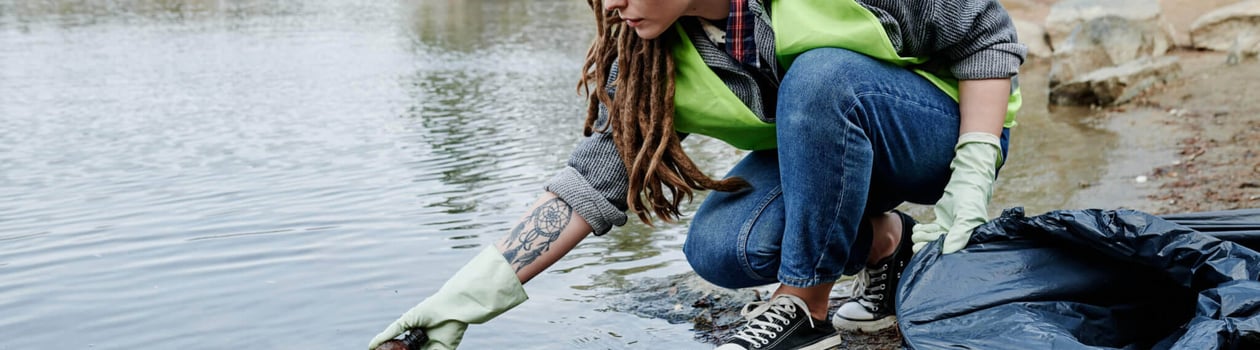
National River Cleanup Day is all about rolling up sleeves and giving rivers a fresh start. It invites people to trade scrolling for strolling, head to the water’s edge, and do something wonderfully practical: remove the stuff that never belonged there in the first place. Gloves go on, bags open up, and suddenly a riverbank becomes a shared project.
The debris can be oddly revealing, like a snapshot of everyday life that took a wrong turn. Drink bottles, snack wrappers, rusty cans, tangled fishing line, and stray foam bits show up in the same places again and again, wedged under roots or tucked into reeds.
Pulling them out is satisfying in the most down-to-earth way. Each piece removed helps the river run cleaner, keeps shorelines safer to walk, and lowers the risk of animals mistaking plastic for food.
It is also hard not to feel the ripple effect of a simple action. Rivers connect neighborhoods, parks, farms, and cities. What lands on one bank rarely stays put. A cleanup is not only about tidiness, it is also about the health of a living system that supports fish, birds, insects, and plants, plus the people who love being near water.
And then there is the social magic. People who have never met end up comparing the weirdest item found or coordinating like a well-practiced team: one person holds the bag, another reaches under a log, and someone else keeps count for the organizer’s tally sheet.
Kids ask excellent questions about where the trash came from. Adults share stories about swimming in the river years ago or how the shoreline changed after a flood. For a few hours, strangers become teammates with a common goal and a muddy sense of humor.
With each bit of litter gone, the river looks more like itself. The waterline clears. The banks look less stressed. The whole area feels more inviting to the wildlife that depends on it and the humans who do, too. It is not a grand gesture so much as a chain of small ones, and that is what makes it powerful.
How to Celebrate National River Cleanup Day
Here’s a lively and simple guide with five creative ways to take part in National River Cleanup Day. Each idea helps make a real difference while keeping things fun and easy.
Join a Local Cleanup
Find a group near your area. Many communities plan cleanup events by rivers, creeks, and streams. These are often run by local environmental groups, schools, paddling clubs, park teams, or neighborhood associations, and they usually choose a stretch of shoreline that is safe and accessible.
A group cleanup tends to have a few helpful extras: a check-in table, a quick safety talk, and a plan for where full bags should be placed for pickup. Organizers may provide gloves, grabbers, or bags, but it is smart to bring sturdy work gloves that fit well, plus sunscreen, insect repellent, and plenty of water. Closed-toe shoes are a must, and boots are even better if the ground is soft or the route includes mud.
Working at an easy pace is part of the point. People can focus on what they are comfortable with: some prefer the dry trail edge, others carefully work closer to the waterline. Staying aware of footing matters, since riverbanks can be slippery and uneven. Volunteers also do better when they treat the day like a light workout and take breaks. A cleanup is not a race, and a thoughtful approach keeps everyone safe and effective.
Start Your Own Group
Can’t find an event nearby? Create one. A small, well-planned cleanup can be just as valuable as a big one, and it has the advantage of being tailored to a specific spot that needs attention. A handful of neighbors or friends can make a noticeable dent in litter in a single afternoon, especially along popular walking paths and picnic areas.
The secret ingredient is planning, not size. Pick a public area with safe access and clear parking. Choose a stretch with good visibility and room to spread out, and avoid steep banks or fast-moving water.
Bringing a simple supply kit helps: heavy-duty trash bags, a few buckets for glass or sharp items, a basic first-aid kit, hand sanitizer, and extra gloves. If possible, add a couple of trash grabbers so people are not tempted to reach into the brush or under rocks.
A basic sorting plan makes cleanup smoother. Many groups separate recyclables (like aluminum cans and plastic bottles) from general trash, but local rules vary, so it helps to decide how sorting will work before anyone starts collecting.
Another good practice is to designate a “do not touch” category. Anything that looks hazardous, such as medical waste, chemical containers, or unknown liquids, should be left alone and reported to the proper local authority or site manager. A cleanup should make a place safer, not add risk.
Create River Art
Use found objects to build a temporary art piece. This idea turns cleanup into a creative challenge, and it can be especially fun for families and school groups. The goal is not to glamorize trash, but to make the problem visible in a way that sticks in people’s minds.
A simple approach is to choose one type of litter and arrange it into a shape, word, or pattern on a tarp or flat rock. Plastic bottle caps can become a colorful mosaic. Twisted fishing line can be placed in a clear jar to show how quickly it accumulates. Even a “most common items” display can feel like art when it is arranged thoughtfully and photographed.
The key is to keep it temporary and responsible. Take photos instead of keeping the items. Share the image with a short note about how many pieces were collected and where they were found. Then dispose of everything properly. The best river art leaves no trace, except a cleaner bank and a story that prompts someone else to bring a bag on their next walk.
Educate and Inspire
Teach younger kids why clean water matters. Rivers are a perfect outdoor classroom because they make big environmental ideas feel real. It is easier to understand “habitat” when a child can point to a bird, an insect, and a patch of reeds all in one glance. A cleanup adds a hands-on lesson about responsibility and community.
For younger kids, start with simple questions. What lives here? What does it need to survive? What happens if a duck eats a wrapper, or if a turtle gets tangled in a loop of plastic? Pair the cleanup with a short nature activity, like spotting different leaves, listening for bird calls, or sketching the shoreline. Even a small bag of litter collected by a child can feel heroic when it is connected to protecting an animal they just observed.
Older kids and teens can go deeper. They can sort what was collected into categories and record counts. They can notice patterns: lots of drink containers near a bench, lots of fishing tackle near a popular spot, lots of foam near a launch area.
This kind of observation turns cleanup into problem-solving. It also encourages prevention, which is the real win. When people understand what is showing up and why, they can suggest practical changes, like adding a trash bin, placing a reminder sign, or bringing reusable bottles and containers.
Walk the River Trail
Take a quiet walk along a river path, bring a bag, and pick up litter as you go. This “solo cleanup” style is low-pressure and surprisingly effective. It fits into a normal walk, and it works well for people who prefer a calm pace or want to help without joining a larger group.
A simple setup makes it easier: a small bag for trash, a second bag for recyclables if local rules allow, and a grabber or gloves to keep hands clean. Choosing a time when the trail is less busy can make it easier to stop and collect without feeling rushed. It also makes it easier to notice the details that are easy to miss, like tiny plastic fragments near the waterline or food wrappers caught in tall grass.
A solo walk can be mindful, not just productive. Notice how the river moves, how birds use the shoreline, and how plants stabilize the bank. Those details make it clear that a river is not just scenery; it is an active system. Picking up litter becomes a quiet act of stewardship that doubles as a reset for the mind.
History of National River Cleanup Day
National River Cleanup Day Timeline
Cuyahoga River Fire Spurs National Outrage
An oil-slicked stretch of Ohio’s Cuyahoga River caught fire, drawing national media attention and symbolizing the severe pollution choking American rivers and urban waterways.
Passage of the U.S. Clean Water Act
The United States enacted the Clean Water Act, setting ambitious goals to restore and maintain the chemical, physical, and biological integrity of the nation’s waters, including rivers and streams.
Launch of the National Wild and Scenic Rivers System
The Wild and Scenic Rivers Act began to protect select free-flowing rivers from dams and harmful development, recognizing their outstanding natural, cultural, and recreational values.
First International Coastal Cleanup Inspires Waterway Efforts
The Ocean Conservancy organized the first International Coastal Cleanup, creating a model of citizen science and volunteer litter collection that later inspired similar cleanup efforts on rivers and lakes worldwide.
UN Declares International Year of the World’s Freshwater
The United Nations proclaimed 1993 as the International Year of the World’s Freshwater, emphasizing the importance of protecting rivers, lakes, and aquifers from pollution and overuse.
EU Water Framework Directive Transforms River Management
The European Union adopted the Water Framework Directive, requiring member states to achieve “good status” for all waters and promoting integrated river basin management across national borders.
Launch of The Ocean Cleanup’s Interceptor for Rivers
The Ocean Cleanup announced and began deploying its solar-powered Interceptor systems, designed specifically to remove floating plastic from rivers before it can flow into the ocean.
National River Cleanup Day began in 1991. It was created by the organization American Rivers with a straightforward goal: bring people together to remove trash from waterways and build long-term care for rivers.
The timing made sense. Public awareness about pollution and waste had been growing, and many communities were seeing firsthand how litter piles up along banks and gets carried downstream.
From the beginning, the day was designed around volunteer energy. Cleanups offered a practical entry point for people who cared but did not know where to start. Instead of requiring special expertise, they relied on common sense, teamwork, and a willingness to pick up what others left behind.
That accessibility helped the idea spread. Local organizers could adapt it to their own waterways, whether the site was a wide river, a narrow creek, or a marshy tributary that feeds a larger system.
The problem it addressed was not abstract. Trash and waste in rivers can injure wildlife through entanglement, block sunlight from reaching aquatic plants, and break down into smaller pieces that are harder to remove. Some items, like foam and thin plastic, fragment quickly and can linger for a long time.
Other items, like tires and large metal objects, can shift during storms and become hazards on shorelines. Even when litter seems small, it adds up fast, especially in places where foot traffic is heavy or where wind and rain funnel debris toward the water.
Volunteer turnout was strong, and participation grew as community groups, schools, and businesses joined in. Over time, the day became known not only for removing visible debris but also for what it revealed.
Cleanup data often shows patterns in consumption and disposal: lots of beverage containers, food packaging, cigarette butts, and plastic bags, plus the occasional truly baffling item like a shopping cart or an old chair. Those “how did this get here?” moments are funny, but they also highlight the need for better habits and better infrastructure.
National River Cleanup Day also helped reinforce an important idea: rivers are connected. What happens upstream affects what happens downstream, and what is tossed near a parking lot can end up far away after one heavy rain.
A cleanup makes that connection visible. People see how trash collects at bends, around bridge supports, and in vegetation that acts like a net. They also see how quickly a place can look healthier when the waste is removed.
Today, National River Cleanup Day is more than a one-time sweep of the shoreline. It is a repeating reminder that clean water and thriving habitats are supported by everyday choices and community effort.
It encourages people to treat rivers as shared spaces worth protecting, not just backdrops for photos. When neighbors work side by side, results show up quickly: safer banks, clearer edges, healthier conditions for wildlife, and a stronger sense that stewardship is something regular people can do well.
Important Facts About Rivers and Why They Matter
Rivers play a vital role in sustaining life on Earth, supporting ecosystems, human communities, and global water systems.
These facts highlight how rivers provide essential freshwater, how pollution impacts both nature and people, and why protecting them is critical for the future.
Rivers Supply Most Accessible Freshwater
Although oceans hold about 97 percent of Earth’s water, rivers and their connected lakes and wetlands provide a large share of the freshwater people can actually use.
The United Nations estimates that over 2 billion people depend directly on surface water from rivers and lakes for drinking, sanitation, agriculture, and industry, making river health a central piece of global water security.
Most Ocean Plastic Is Carried There by Rivers
Scientists have found that rivers act as conveyor belts for mismanaged plastic waste on land.
A 2017 study estimated that between 0.41 and 4 million metric tons of plastic enter the oceans each year via rivers, with a relatively small number of heavily polluted river systems in Asia and Africa contributing the majority of that flow.
River Litter Harms Wildlife Far Beyond the Water
Trash in rivers does not just look bad; it can injure or kill wildlife through entanglement, ingestion, or habitat damage.
The U.S. Environmental Protection Agency reports that animals such as turtles, fish, and birds often mistake plastic bags and fragments for food, which can block their digestive tracts or reduce feeding, while abandoned fishing line and six-pack rings can cause strangulation, drowning, or loss of limbs.
Clean Water Regulations Transformed U.S. Rivers
In the mid-20th century, many American rivers were so polluted with industrial waste and sewage that stretches were effectively dead.
The 1972 Clean Water Act set nationwide limits on pollutant discharges and funded wastewater treatment, and the U.S. Environmental Protection Agency credits the law with dramatic improvements in river quality, including a sharp reduction in untreated sewage releases and a resurgence of fish and other aquatic life in once-degraded waterways.
Healthy Rivers Naturally Reduce Flood Risks
Rivers with intact floodplains, wetlands, and vegetated banks can absorb and slow down high flows, which reduces flood peaks and erosion.
The Ramsar Convention and other wetland experts note that when rivers are straightened, confined by levees, or stripped of vegetation, floodwaters move faster and hit downstream communities harder, while restored floodplains act like natural sponges that store and gradually release excess water.
River Restoration Can Quickly Boost Biodiversity
Removing obsolete dams and barriers allows fish and other aquatic species to recolonize long-blocked habitat.
The removal of the Elwha and Glines Canyon dams on Washington State’s Elwha River, completed in 2014, reopened more than 70 miles of habitat to salmon.
Monitoring by the National Park Service and U.S. Geological Survey has documented the return of multiple salmon runs, recovery of estuary and beach habitats, and increases in birds and mammals that depend on those fish.
Urban Rivers Can Become Ecological Assets Again
Many city rivers were historically treated as open sewers or industrial corridors, but long-term cleanup efforts have shown they can recover.
In London, the once “biologically dead” River Thames now supports over 100 species of fish and regular sightings of seals and porpoises, according to the Zoological Society of London, which credits better wastewater treatment, stricter pollution controls, and habitat restoration for the river’s ecological comeback.
National River Cleanup Day FAQs



You may also like

International Plastic Free Day
International Plastic Free Day encourages ditching single-use plastics, protecting wildlife, and inspiring reusable habits for a cleaner, healthier planet.
- United States
International Day of Action for Rivers
Every year, on March 14th, people around the globe observe the International Day of Action for Rivers. This day highlights the vital role rivers play in everyday life, from supplying drinking water and irrigating crops to supporting fisheries, recreation, and spiritual and cultural traditions. Rivers are not just moving water, either...
- Brazil
- China
- India
- and 2 more

World Rivers Day
They carve their way through the earth, providing a playground for adventure seekers and a peaceful refuge for nature lovers.
- Canada
- India
- International
- and 2 more
National River Day
These winding natural pathways, carving through the earth, play a vital role in sustaining diverse ecosystems and human life.
- Canada
- United States
National days and holidays on May 16

Preakness Stakes
The Preakness Stakes, staged at Pimlico Race Course in Baltimore each year, sits at the heart of American thoroughbred racing tradition. It is the middle jewel of the Triple Crown, which means it carries all the pressure of a “what happens next?” chapter: contenders arrive with big reputations, some chasing...
- United States

Cannes Film Festival
The Cannes Film Festival is one of the most glamorous and important events in the film industry. Held annually in the beautiful city of Cannes on the French Riviera, this festival draws the biggest names in cinema, from directors to actors. The red carpet is a dazzling display of style...
- France

National Barbecue Day
From hot dogs and hamburgers to pineapple and vegetables, there’s something for everyone at a barbecue. Gather your friends and family and get grilling.
- Australia
- Canada
- South Africa
- and 2 more

National Stationery Week
Sharpen your pencils and break out your fine pens, and take this excuse to use some fancy stationery. Write a loved one, find a pen pal, or even make your to-do list.
Seize Every Day
Join free for personalised recommendations, email reminders and exclusive guides. Never miss a day.