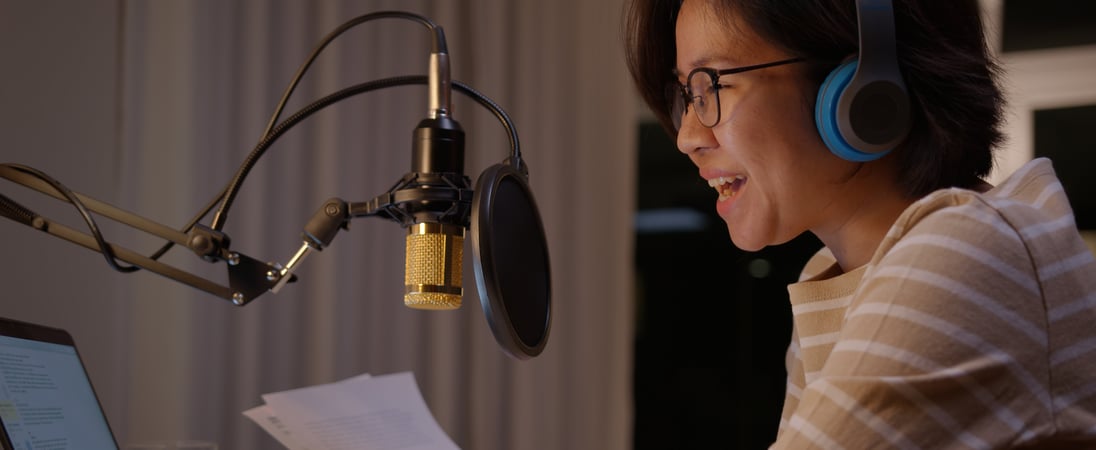
National Voice Over Day
National Voice Over Day celebrates the unique world of voice acting, shining a spotlight on the voices that bring characters, commercials, and narratives to life!
National Voice Over Day Timeline
1906
First Radio Voice Broadcast by Reginald Fessenden
Canadian inventor Reginald Fessenden makes a Christmas Eve transmission that includes spoken word and music, often cited as the first radio broadcast to feature a human voice to a general audience.
1928
Steamboat Willie Introduces Synchronized Cartoon Voice Performance
Walt Disney’s Steamboat Willie premieres with synchronized sound, featuring Disney’s own voice for Mickey Mouse and helping establish character voice performance as a core part of animated storytelling.
1937
Mel Blanc Begins Defining Modern Character Voice Acting
Voice actor Mel Blanc starts work with Warner Bros. on Looney Tunes, soon becoming famous as “The Man of a Thousand Voices” for characters like Bugs Bunny and Daffy Duck, and helping professionalize cartoon voice acting.
1938
War of the Worlds Showcases Dramatic Radio Voice Performance
Orson Welles and the Mercury Theatre on the Air broadcast War of the Worlds, using convincing narration and character voices that some listeners mistake for real news, demonstrating the emotional power of voice-only drama.
1942
Voice of America Launches International Spoken-Word Broadcasting
The first broadcast of Voice of America airs in German during World War II, using announcers and narrators to deliver news and commentary worldwide and cementing voice-led informational broadcasting as a diplomatic tool.
1960s
ADR Becomes Standard Practice in Film Production
By the 1960s, automated dialogue replacement (ADR) is widely adopted in film, allowing actors to re-record lines in the studio for clarity, performance adjustment, or language versions, expanding the creative scope of voice work in cinema.
1970s–1990s
Rise of Commercial, Trailer, and Promo Voice Icons
In the late twentieth century, recognizable voices such as movie trailer legend Don LaFontaine and American radio commentator Paul Harvey become cultural fixtures, highlighting voice-over as a distinct and influential performance specialty.
How to Celebrate National Voice Over Day
Celebrating National Voice Over Day invites everyone to recognize the unsung voices that bring our favorite media to life.
Whether at home or online, these activities make appreciating voice-over talent fun and engaging. Here are some quirky ways to celebrate!
Listen to the Classics
Dive into the roots of voice-over with classic radio dramas or early animated features. Famous productions like The War of the Worlds by Orson Welles will transport listeners to another era of storytelling.
Explore how voices alone created suspense, humor, and depth. With just headphones and imagination, experience the rich world these early voice-over pioneers crafted.
Try Your Own Voice-Over
Testing your own voice-over skills can be a fun, eye-opening way to appreciate the craft. Choose a favorite scene from an animated show or even a commercial and record your take on it.
Discover just how challenging — and rewarding — creating a convincing character voice can be. Many people are surprised by how much effort voice actors put into timing, tone, and personality.
Host a Movie Night
Pick a film or show known for its iconic voice acting and gather friends for a cozy viewing. Animated movies or documentaries with powerful narrations are perfect choices.
Discuss what makes each voice performance memorable. These viewings often lead to fascinating conversations about how a great voice-over can shape the entire story’s feel.
Share Your Favorite Voice Actor’s Work
Social media is an ideal place to celebrate National Voice Over Day. Share clips or scenes featuring your favorite voice actors and let friends know why you appreciate them.
Tagging voice actors or using a National Voice Over Day hashtag can spread awareness and maybe even earn a response from the artists themselves. It’s a great way to let them know their work matters.
Take a Behind-the-Scenes Tour
Look for documentaries or online videos that show how voice-overs are made.
Many studios and creators post content that pulls back the curtain on the recording process, highlighting the precision and artistry involved. Discovering these inside details can deepen appreciation for the skill and dedication each voice actor brings to their craft.
Why Celebrate National Voice Over Day?
This special day recognizes the talent, skill, and creativity behind voice-over work. These artists breathe life into animated characters, narrate documentaries, and add dramatic flair to movie trailers.
Their voices guide audiences through emotions, stories, and even products, yet they often remain behind the scenes, largely unseen by fans who connect with their work. This day invites the public to appreciate the talent behind memorable performances that shape much of the world’s media and entertainment experiences.
Voice-over work demands a unique mix of skills, from expressive tone control to impeccable timing, often requiring multiple takes to capture the perfect sound. These artists’ versatility extends across media, covering video games, audiobooks, advertising, and animated series.
With increasing demand in the digital era, voice-over artists continue to transform storytelling across different formats. National Voice Over Day celebrates not only the profession but also its significant role in enriching the way we experience stories and information every day.
History of National Voice Over Day
National Voice Over Day began as a tribute to the talents of voice-over artists who work behind the scenes to make characters, commercials, and stories come alive. Launched by the National Association of Voice Actors (NAVA), the day highlights both the art and the hard work involved in this unique profession.
Voice actors give life to countless media projects. Ranging from animated movies and video games to audiobooks and advertisements, their contributions often go unnoticed by the public. This day aims to change that, offering a platform to celebrate their creativity and skill.
By establishing National Voice Over Day, NAVA created an opportunity to acknowledge the essential role voice actors play in media. This day invites the public to appreciate the precision and emotion that skilled voice acting brings to storytelling.
NAVA and other supporters hope that this celebration will raise awareness about the dedication it takes to create memorable characters and impactful narrations that audiences enjoy daily.
Facts About National Voice Over Day
Invisible Voices Built Early Radio
One of the first widely reported instances of a “voice over” in broadcast history came on Christmas Eve 1906, when Canadian inventor Reginald Fessenden transmitted readings from the Bible and music to ships at sea using amplitude‑modulated radio.
At a time when wireless was mostly used for Morse code, hearing a disembodied human voice floating over the static astonished listeners and hinted at how central unseen voices would become to mass communication.
Animation Helped Normalize Professional Voice Acting
Synchronized-sound cartoons in the late 1920s and 1930s, such as Walt Disney’s “Steamboat Willie,” turned character voicing into a repeatable craft rather than a novelty.
As studios realized that consistent vocal personalities sold characters, they began hiring specialists for recurring roles, which laid the groundwork for the modern animation voice-acting profession and long‑running vocal “brands” like those later perfected by Mel Blanc.
A Single Broadcast Proved How Powerful Voice Alone Can Be
On October 30, 1938, Orson Welles and the Mercury Theatre on the Air aired a radio adaptation of “The War of the Worlds” that mimicked live news bulletins.
Although later research showed that mass panic was overstated, contemporary surveys found that many listeners took the fictional bulletins at face value. The event became a classic case study in how narration style, pacing, and sound design can lend astonishing credibility to pure audio storytelling.
Voice-Over and Dubbing Are a Multi‑Billion‑Dollar Market
Modern dubbing and voice-over services have grown into a global industry worth several billion dollars annually, driven by streaming platforms, gaming, and e‑learning.
One recent market analysis estimated the combined dubbing and voice-over sector at about 4.2 billion USD in 2024, with forecasts of more than doubling in value over the following decade as demand for localized and multilingual content continues to rise.
North America Leads, But Localization Needs Are Global
Industry reports consistently show North America holding the largest share of the dubbing and voice-over market, helped by its film, TV, and advertising output.
At the same time, the fastest growth often comes from regions where localization is critical, such as Europe, Asia, and Latin America, where international series, games, and instructional media must be voiced in multiple languages to reach local audiences effectively.
Human Voices Still Dominate Despite AI Advances
Despite rapid progress in synthetic speech, recent market research indicates that human-based dubbing and voice-over services still account for a clear majority of revenue in the sector, with estimates placing human work at well over half of all projects.
Studios and brands often prefer human performers for nuanced emotional delivery, cultural sensitivity, and improvisation, especially in character-driven animation and high-profile advertising.
National Voice Over Day FAQs
How is voice-over different from regular acting on camera?
Voice-over focuses entirely on vocal performance, so actors must convey character, emotion, and context without relying on facial expressions or body language that audiences can see.
This often means heightened control over breath, diction, pacing, and tone, as well as the ability to quickly switch between characters or styles within a single session.
On-camera actors can use physical movement and visual presence to support a role, while voice actors work in an isolated booth and depend heavily on the script, imagination, and direction to build a believable world through sound alone.
What does a typical professional voice-over recording session involve?
In a professional session, a voice actor usually records in an acoustically treated booth using a high-quality microphone and headphones, guided remotely or in person by a director, producer, or client.
The team may record multiple takes of each line, experimenting with timing, emphasis, and emotional delivery, while an engineer monitors audio quality and levels.
After recording, audio is edited to remove mistakes and noise, then processed with tools like equalization and compression before being synced to picture or delivered as clean audio files.
What equipment is commonly used in a home voice-over studio?
A typical home voice-over setup includes a large-diaphragm condenser microphone, an audio interface, a computer with recording software, and closed-back headphones.
Equally important is acoustic treatment, such as sound-absorbing panels or a vocal booth, to reduce reflections and background noise.
Many professionals also use pop filters, microphone stands, and isolation shields, along with reliable internet connections for remote sessions using platforms that allow real-time direction and recording from studios around the world.
How is voice-over used differently in animation, video games, and audiobooks?
In animation, voice-over often centers on creating distinct, stylized characters that match visual designs and exaggerated movement.
Video game voice acting tends to emphasize interactive storytelling and requires recording many alternate lines, reactions, and branching dialogue for player choices.
Audiobook narration usually calls for long-form, consistent performance, where a single narrator may voice all characters while maintaining clarity and a steady pace over many hours, following standards for pronunciation and audio quality set by publishers.
Why do some voice actors use stage names or remain uncredited?
Voice actors sometimes use stage names to keep their branding consistent across different markets, protect privacy, or separate union and non-union work where permitted by law and contracts.
In other cases, they may appear uncredited because of contract terms, budget constraints, or established practices in certain types of advertising and localization where individual performers are not routinely listed.
This can contribute to the profession being less visible to the public compared with on-screen acting, even when the work reaches large audiences.
Is it true that anyone with a “good voice” can easily become a voice actor?
Having a pleasant or distinctive voice can help, but professional voice acting usually requires extensive practice in acting, script interpretation, microphone technique, and business skills such as marketing and client management.
Training often includes voice and dialect coaching, breath control, and learning to sustain performance over long sessions without strain.
Industry organizations emphasize that success typically comes from consistent practice, demos that showcase range, understanding of contracts and usage rights, and the ability to take direction efficiently.
How do voice actors protect their vocal health when working regularly?
Professional voice actors manage vocal health by warming up before sessions, staying hydrated, and avoiding excessive throat clearing, shouting, or whispering that can strain the vocal folds.
Many follow guidance from voice specialists or speech-language pathologists on posture, breath support, and recovery after heavy use, and they schedule rest periods between demanding sessions.
Organizations in voice care recommend monitoring symptoms like persistent hoarseness or pain and seeking medical evaluation early to prevent long-term damage.
Also on ...
View all holidays
World Speech Day
From "I have a dream" to "Ask not what your country can do for you," speeches can inspire and change the world.


Buzzards Day
Gracefully soaring high above, this majestic bird is a master of the skies, captivating observers with its effortless flight and keen eyesight.
We think you may also like...

Job Action Day
Discovering vocations that perfectly align with ambitions, where aspirations meet reality, is like uncovering a treasure trove of purpose.

Crackers Over The Keyboard Day
Tip your computer keyboard over and gently tap all around it in order to see what kinds of nasty crumbs, eraser shavings, and who knows what else falls out.

Work Harder Day
Diving into tasks with an unwavering determination, embracing challenges and pushing beyond the ordinary for rewarding accomplishments.