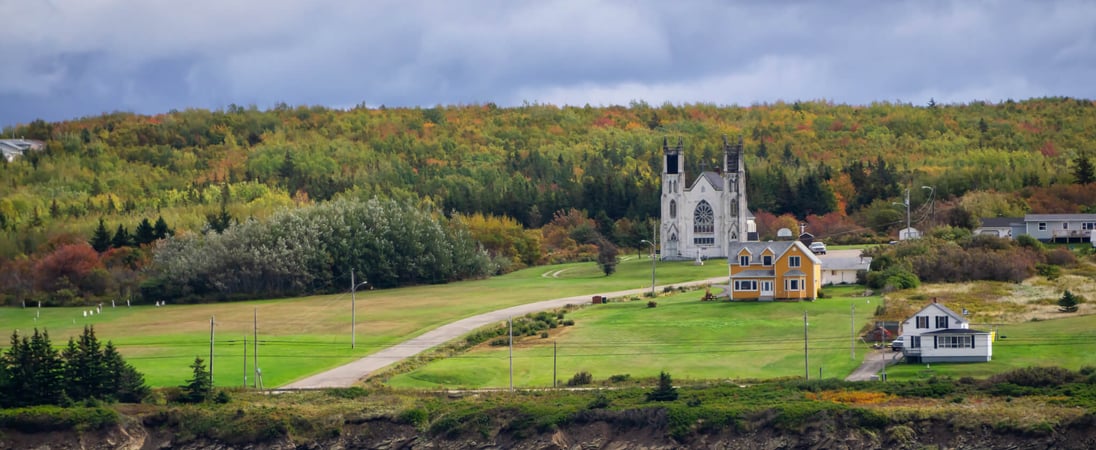
Nova Scotia Heritage Day
Nova Scotia Heritage Day is a lively and meaningful holiday celebrating the province’s rich cultural history.
Honoring different facets of Nova Scotia’s past, Heritage Day helps foster a sense of unity and respect among its residents. It encourages learning about the diverse backgrounds that make up the community, from Indigenous traditions to African Nova Scotian legacies.
This annual celebration is not just about remembering the past but also about embracing the present and looking forward to a future of inclusivity and diversity.
How to Celebrate Nova Scotia Heritage Day
Discover Local History
Dive into Nova Scotia’s past by visiting museums and historical sites. Many offer free admission on Heritage Day.
This includes the Maritime Museum of the Atlantic and the Museum of Natural History. Exploring these places will give a vivid glimpse into the province’s vibrant history.
Enjoy Cultural Performances
Attend live performances showcasing local music, dance, and storytelling. These events highlight the province’s diverse cultural heritage.
Look for shows featuring Mi’kmaq drummers, Acadian musicians, and African Nova Scotian artists. They bring history to life in the most entertaining ways.
Sample Traditional Foods
Celebrate Heritage Day by indulging in traditional Nova Scotian foods. Try some fresh seafood, like lobster or scallops.
Remember the beloved Nova Scotian treat: blueberry grunt. Cooking and sharing these dishes can be a delicious way to honor the province’s culinary traditions.
Participate in Community Activities
Join local events and activities organized in your community. Many towns host parades, craft fairs, and workshops.
These gatherings provide a fun way to connect with others while learning more about Nova Scotia’s rich heritage.
Explore the Outdoors
Take advantage of the holiday by enjoying Nova Scotia’s natural beauty. Go for a hike, visit a provincial park, or stroll along the coast.
The stunning landscapes are a big part of what makes this province special. Fresh air and beautiful scenery make for a perfect Heritage Day outing.
Why Celebrate Nova Scotia Heritage Day?
Each year on this day, people across Nova Scotia take a break to honor significant individuals, places, or events that have shaped the region. This holiday provides a unique opportunity to reflect on the diverse heritage that contributes to the province’s identity.
The reasons behind celebrating Heritage Day are deeply rooted in recognizing and appreciating the contributions of various communities.
For instance, past honorees include African Nova Scotian civil rights activists, Indigenous leaders, and notable historical sites like the Grand Pré. These honorees are selected to highlight their remarkable impact on Nova Scotia’s culture and history.
Nova Scotia Heritage Day Timeline
1605
Port Royal and the Birth of European Nova Scotia
French colonists established Port Royal, the first permanent European settlement in what became Nova Scotia, laying the foundations for Acadian culture and long-term Mi’kmaq–European relations. [1]
1713
Treaty of Utrecht Cedes Acadia to Britain
By the Treaty of Utrecht, France cedes peninsular Acadia (most of present-day Nova Scotia) to Britain, initiating a new phase of British rule over largely Acadian and Mi’kmaq lands. [2]
1725–1726
Peace and Friendship Treaties with the Mi’kmaq
The British Crown and Mi’kmaq and Maliseet signed Peace and Friendship treaties in 1725, ratified at Port Royal in 1726, forming the basis of ongoing treaty relationships in Nova Scotia. [3]
1755
Expulsion of the Acadians (Le Grand Dérangement)
British authorities begin the forced deportation of thousands of Acadians from Nova Scotia, reshaping the province’s demographic and cultural landscape and scattering Acadian communities. [4]
1783
Black Loyalists Arrive and Found Birchtown
Following the American Revolutionary War, thousands of Black Loyalists resettled in Nova Scotia, with Birchtown becoming one of the largest free Black communities outside Africa at the time. [5]
1796–1797
Jamaican Maroons Deported to Nova Scotia
Hundreds of Jamaican Maroons are exiled by British authorities and transported to Nova Scotia, where they work on public projects and add to the emerging African Nova Scotian community.
2012
Landscape of Grand Pré Named UNESCO World Heritage Site
UNESCO designates the Landscape of Grand Pré, an iconic Acadian settlement area and memorial to the Expulsion, as a World Heritage Site recognizing its outstanding universal value. [6]
History of Nova Scotia Heritage Day
Nova Scotia Heritage Day recognizes the rich cultural and historical contributions within the province. The push for a mid-winter holiday led to the introduction of this day in December 2013. By 2015, the first official Heritage Day was celebrated, marking the start of a new tradition in Nova Scotia.
The creation of Heritage Day involved a unique approach. The Department of Labour and Advanced Education engaged students from primary to grade 12 across Nova Scotia. These students were asked to propose names and suggest notable individuals, places, or events that have shaped the province.
A panel reviewed the submissions and selected honorees for the next twelve years. This process not only gave the holiday its name but also ensured that each year, a different facet of Nova Scotia’s heritage is celebrated.
Over the years, honorees have included influential figures like Viola Desmond, a pioneering businesswoman and civil rights activist, and significant sites like the Landscape of Grand Pré.
These selections reflect the diverse and rich history of Nova Scotia, showcasing contributions from various communities and historical periods.
Heritage Day thus serves as a platform to educate and unite residents by highlighting the province’s storied past!
Nova Scotia Heritage Day FAQs
Why does Nova Scotia Heritage Day honor different themes annually?
The idea behind highlighting a new theme each year is to showcase the depth of Nova Scotia’s diverse heritage.
By celebrating various historical figures, communities, or landmarks, the province ensures that lesser-known contributors get recognition alongside iconic names.
For instance, the Landscape of Grand Pré, honored in 2022, underscores Acadian resilience and agricultural ingenuity, while Viola Desmond’s commemoration in 2015 brought attention to civil rights.
This rotating focus keeps the holiday fresh and educational, encouraging the public to explore different chapters of Nova Scotia’s story.
Are there any fascinating traditions tied to Nova Scotia Heritage Day?
Communities host unique celebrations, blending education and entertainment.
Halifax museums offer free entry, presenting exhibits tied to the year’s theme. Local storytellers revive historical events, and musicians play traditional Acadian, Mi’kmaq, or African Nova Scotian tunes.
Some towns even recreate old-time fairs with crafts, food, and games that reflect Nova Scotia’s cultural mosaic.
These immersive experiences bridge the gap between past and present, making history accessible and fun.
Is there a surprising story behind the founding of Nova Scotia Heritage Day?
The holiday’s origins tie back to a practical need for a mid-winter holiday, coupled with a desire to recognize the province’s rich history.
In 2013, public consultations sparked the idea to dedicate this holiday to Nova Scotia’s cultural legacy.
Interestingly, students played a crucial role by suggesting honorees, making it one of the rare holidays shaped partly by youth input. This participatory approach ensures the day reflects community values.
Has Nova Scotia Heritage Day ever honored the Indigenous Mi’kmaq culture?
Yes, Mi’kmaq contributions have been celebrated. For instance, the 2023 honoree Rita Joe was a Mi’kmaq poet known as the “voice of her people.”
Her work captures Indigenous resilience and pride, offering insight into Mi’kmaq traditions.
Events that year highlighted their songs, dances, and crafts. Honoring Mi’kmaq culture reinforces the province’s commitment to reconciliation and recognition of its Indigenous roots.
How do rural communities celebrate Nova Scotia Heritage Day?
In smaller towns, the day becomes a grassroots celebration. Volunteer-led events include quilting bees that replicate historical designs, or potluck dinners featuring Acadian and Scottish dishes.
Some villages host heritage walks, where residents share oral histories about local landmarks.
These intimate gatherings create a sense of connection and ensure that even remote areas participate in preserving Nova Scotia’s past.
Are there any amusing myths related to Nova Scotia Heritage Day?
One common misconception is that Nova Scotia Heritage Day is only for historians or museum-goers.
In reality, the day has evolved to include everything from cooking competitions to live performances.
Another amusing myth suggests that the holiday’s date was chosen to break up the monotony of February—not entirely untrue!
Its placement was partly inspired by other provinces’ Family Day celebrations but given a uniquely cultural twist.
How does Nova Scotia Heritage Day inspire future generations?
By involving students in choosing themes and creating projects, the holiday fosters early engagement with history.
Schools organize essay competitions, art projects, and reenactments tied to the honoree. In 2023, students across the province explored Rita Joe’s poetry, creating visual art inspired by her verses.
These activities help young people see themselves as part of an ongoing story, encouraging them to preserve and expand Nova Scotia’s legacy.
Have any honorees been surprisingly modern figures?
While many honorees are historical, some are surprisingly modern. Viola Desmond, celebrated in 2015, gained posthumous fame after becoming the face of Canada’s $10 bill in 2018.
Honoring figures like her bridges the gap between history and contemporary social movements. This modern relevance makes the holiday resonate more deeply with today’s audience.
Are there unique foods prepared during Nova Scotia Heritage Day?
Nova Scotia’s food heritage shines during celebrations. Seafood chowder, a staple, reflects the province’s maritime identity.
Blueberry grunt, a dessert made with local berries, often appears at potlucks. Some events feature bannock, a traditional Indigenous bread.
These dishes bring communities together, blending culinary traditions from Acadian, Mi’kmaq, and Scottish cultures.
Could Nova Scotia Heritage Day expand beyond the province?
While unique to Nova Scotia, the holiday has inspired interest in creating similar observances elsewhere in Canada.
Advocates suggest expanding it nationally to celebrate each province’s heritage, similar to how Family Day started regionally.
This idea reflects growing awareness of the importance of preserving local histories.
Nova Scotia Heritage Day FAQs
How is Nova Scotia’s cultural heritage typically defined beyond its main tourist images?
Nova Scotia’s heritage goes far beyond picturesque lighthouses and seascapes; it encompasses layered histories of Mi’kmaq communities, Acadian and French settlers, African Nova Scotian communities with roots in enslavement and Black Loyalist migrations, and diverse European immigration, along with more recent newcomers.
Provincial education frameworks describe “cultures of Nova Scotia” as multiple, overlapping cultural groups whose languages, spiritual traditions, foodways, and local stories continue to shape daily life rather than existing only in the past. [1]
What are some common misconceptions about Indigenous history in Nova Scotia?
A frequent misconception is that Mi’kmaq presence in Nova Scotia is mainly historical or limited to reserves and ceremonial events.
Treaty Education materials from the province emphasize that the Mi’kmaq are the original Peoples of Mi’kma’ki, continue to live throughout the province, and are party to nation‑to‑nation treaty relationships that still carry legal and moral responsibilities today.
Another misunderstanding is that treaties “gave” land to Indigenous Peoples; official frameworks clarify that these Peace and Friendship Treaties recognized Mi’kmaq land rights and did not involve land surrender. [2]
How do schools in Nova Scotia teach local history and heritage throughout the year?
Nova Scotia’s curriculum integrates local history and heritage into multiple subject areas rather than confining it to a single unit.
The provincial curriculum site notes that social studies, Canadian history, Mi’kmaw Studies, African Canadian Studies, and English Language Arts all include outcomes focused on understanding local communities, historical injustices, and diverse cultural contributions.
Teacher handbooks provide classroom activities that use regional case studies, biographies of Nova Scotians, and community research projects so students connect provincial heritage to contemporary issues. [3]
Why is Treaty Education considered central to understanding Nova Scotia’s heritage?
Treaty Education is treated as a foundational lens for learning about Nova Scotia because the province sits within Mi’kma’ki, where historic Peace and Friendship Treaties continue to shape relationships between Mi’kmaq and settlers.
The Treaty Education Framework explains that all students—Indigenous and non‑Indigenous—are expected to learn about treaty history, Mi’kmaq worldviews, and shared responsibilities arising from these agreements. This approach presents Nova Scotia’s heritage as an ongoing treaty relationship rather than a completed chapter in colonial history. [4]
How does African Nova Scotian history fit into the broader story of the province?
African Nova Scotian history is interwoven with nearly every major period in the province’s past, from early enslavement in Atlantic Canada to the arrival of Black Loyalists, Black Refugees, and Caribbean migrants.
Government heritage and education materials highlight figures such as William Hall, a Victoria Cross recipient of African descent, and civil rights advocates like Viola Desmond and Carrie Best to show how Black communities have shaped labor, culture, religion, and social justice movements.
This history challenges the myth of a uniformly white, European‑settled Nova Scotia and underscores the province’s long‑standing Black presence. [5]
What role do museums and historic sites play in preserving Nova Scotia’s heritage?
Museums and historic landscapes in Nova Scotia serve as primary public classrooms for understanding the province’s layered histories.
The provincial Heritage Day resources and municipal heritage pages encourage residents to visit sites such as the UNESCO‑recognized Landscape of Grand Pré, which interprets Acadian agricultural innovation and displacement, and regional museums that document maritime industries, Mi’kmaq culture, and African Nova Scotian communities.
These institutions combine artifacts, archival material, and community partnerships to preserve stories that might otherwise be lost or remain isolated within families. [6]
How does Nova Scotia’s early learning framework introduce young children to the idea of heritage?
Nova Scotia’s early learning curriculum framework introduces heritage through play, family stories, and community connections rather than through formal history lessons.
The framework’s appendix on “cultures of Nova Scotia” asks educators to help children recognize multiple cultural identities, challenge stereotypes, and see their own families reflected in classroom materials.
It emphasizes equity, anti‑racism, and respect for Mi’kmaq and other communities so that concepts like language, tradition, and belonging are experienced as part of everyday life from a young age.
Also on ...
View all holidays
National Almond Day
This small but mighty nut is packed with protein and healthy fats, making it a great snack to keep you fueled throughout the day.

Innovation Day
Unleash your creative spark and brainstorm ideas that will shake things up! Be the one to make a difference and ignite change.
We think you may also like...


Santa’s List Day
Imagine being Santa, knowing who's been naughty or nice. Bring cheer to your family this Christmas season by making it to the nice list!