Palm Sunday in the Orthodox Church bursts with color and meaning.
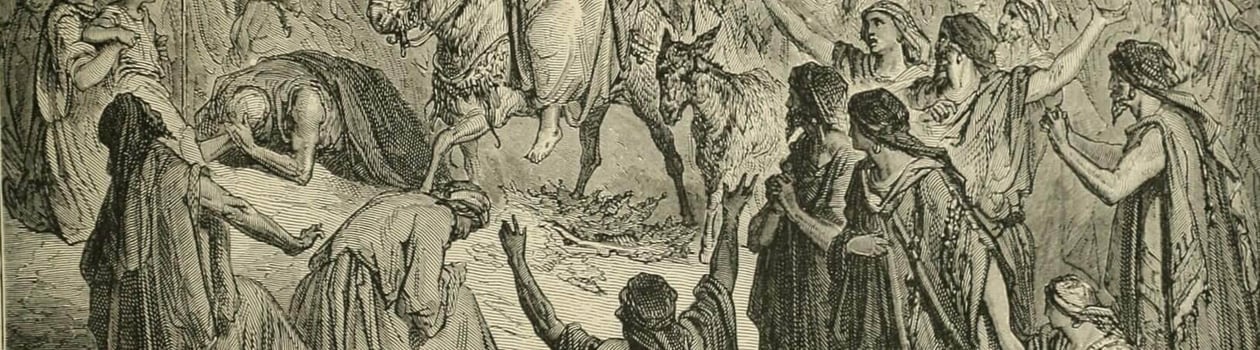
It marks the moment Jesus rode into Jerusalem, welcomed by cheering crowds waving branches and laying them on the road. People greeted Him with joy, believing He brought hope and peace.
This event stands as a highlight in the church calendar, filled with both celebration and reflection. The day bridges the joy of His arrival with the solemn days that follow. It invites believers to look inward while joining in a shared moment of faith.
This feast holds a special place in Orthodox tradition. It signals the start of Holy Week, a time of deep spiritual focus. The story of Jesus entering the city on a humble donkey speaks of humility and purpose.
It reminds the faithful of His journey toward sacrifice. The day’s message blends joy with anticipation, setting the tone for the days ahead. It encourages hearts to open, preparing for the mystery and depth of the Resurrection.
How to Celebrate Palm Sunday in the Orthodox Church
Palm Sunday in the Orthodox tradition invites believers to honour Christ’s entry into Jerusalem with joy and reverence. Here are several meaningful ways to observe this special day.
Join the Church Service
Begin the day by attending the Divine Liturgy at your local Orthodox church. This service commemorates Jesus’ arrival in Jerusalem, where He was greeted with palm branches and praises.
Participating in the liturgy allows you to connect deeply with the spiritual significance of the day.
Receive and Display Blessed Branches
During the service, the faithful receive blessed palm or willow branches, symbolizing victory and peace.
Take these branches home and place them in a visible spot, such as near an icon or on a wall, as a reminder of Christ’s triumph and your faith.
Reflect Through Scripture Reading
Spend time reading the Gospel accounts of Jesus’ entry into Jerusalem. Reflecting on these passages can deepen your understanding of the events leading up to Holy Week and strengthen your spiritual journey.
Prepare a Festive Meal
After the service, gather with family or friends to share a meal. In many Orthodox traditions, fish is permitted on Palm Sunday, making it a suitable main dish.
This meal serves as a joyful celebration before the solemnity of Holy Week begins.
Engage in Acts of Kindness
Emulate Christ’s humility and compassion by performing acts of kindness. Whether it’s helping a neighbour, donating to those in need, or offering words of encouragement, these actions embody the spirit of the day.
Palm Sunday in the Orthodox Church Timeline
First recorded Jerusalem Palm procession
The pilgrim Egeria describes a Palm Sunday vigil and afternoon procession from the Mount of Olives to the Anastasis, with the bishop on a donkey and crowds carrying branches and singing, “Blessed is He who comes in the name of the Lord.”
Procession formalized in Byzantine practice
Jerusalem’s Palm Sunday procession moves to the morning and becomes more elaborate, with structured hymns and readings that lay the groundwork for later Byzantine and Orthodox liturgical forms.
The feast spreads to Constantinople
The rite is adopted in Constantinople, where the patriarch, emperor, and faithful process with branches from various churches to Hagia Sophia, integrating the Entry into Jerusalem into imperial and urban religious life.
Earliest Orthodox blessing prayers attested
The Barberini Greek Euchologion records specific prayers for the blessing of palms and branches, establishing the basic Orthodox pattern of incensing, blessing, and distributing branches to the faithful.
One of the Twelve Great Feasts
In the Byzantine rite, the Entry of the Lord into Jerusalem is firmly counted among the Twelve Great Feasts, paired theologically and liturgically with Lazarus Saturday at the threshold of Holy Week.
Development of regional branch customs
As the feast spreads through Orthodox lands, palms remain standard in the eastern Mediterranean, while willow, olive, bay, and flowering branches become local substitutes in Slavic and Balkan regions with colder climates.
Codified Orthodox liturgical observance
Contemporary Orthodox churches celebrate Palm Sunday with Matins and the Divine Liturgy of St. John Chrysostom, including the blessing of branches and processions that consciously echo the ancient Jerusalem and Constantinopolitan rites.
History of Palm Sunday Orthodox
Palm Sunday in the Orthodox Church celebrates Jesus Christ’s entry into Jerusalem. This event is described in all four Gospels.
As He approached the city, people greeted Him with palm branches and praises. They recognized Him as the Messiah, fulfilling ancient prophecies.
The earliest recorded celebration of Palm Sunday dates back to the 4th century in Jerusalem. Pilgrims reenacted Jesus’ entry by processing with palm branches. This tradition spread to other regions, including Egypt, Syria, and Asia Minor.
By the 5th century, Constantinople held grand processions involving the emperor and clergy. In areas without palm trees, such as parts of Europe, believers used willow or other local branches.
Over time, Palm Sunday became one of the twelve major feasts in the Orthodox liturgical year. It marks the beginning of Holy Week, leading up to Easter.
The day combines joy and solemnity, reflecting on Christ’s kingship and His impending passion. The use of palm branches symbolizes victory and peace, themes central to the celebration.
Historical Traditions Behind Palm Sunday in the Orthodox Church
Palm Sunday in the Orthodox Church carries centuries of rich tradition that reflect both biblical events and the cultural practices of Christian communities throughout history.
From ancient processions in Jerusalem to elaborate imperial ceremonies in medieval Russia, the celebration has long blended liturgical symbolism with public devotion.
These historical details reveal how palm branches, processions, and even linguistic interpretations deepened the meaning of the feast, connecting believers to Christ’s triumphant entry into Jerusalem and the promise of resurrection.
Imperial “Donkey” Processions Once Involved the Tsar on Foot
In medieval Russia, Palm Sunday was marked by elaborate “donkey processions” in cities such as Novgorod and Moscow, in which the patriarch, representing Christ, rode a white-draped horse while the tsar walked on foot leading it.
The ritual began in the Kremlin and ended at the Trinity Church (now near St. Basil’s Cathedral), was reversed in 1658 by Patriarch Nikon, and was eventually abolished by Peter the Great in the early 18th century.
A Fourth‑Century Pilgrim Recorded an Early Jerusalem Palm Procession
One of the earliest detailed accounts of a Palm Sunday celebration comes from the diary of Egeria, a Spanish pilgrim who visited Jerusalem in the late 4th century.
She describes Christians processing from the Mount of Olives into the city at about the eleventh hour of the day, carrying branches and singing psalms, in a clear, intentional reenactment of the Gospel narrative.
Palms Gained a Resurrection Meaning Through a Greek Wordplay
By the end of the 4th century, Orthodox writers were already linking palm branches not only with victory but also with resurrection, partly through a linguistic play on the Greek word “foinix,” which can mean both “date-palm” and “phoenix.”
Since the mythical phoenix symbolized rising from the ashes, the shared term helped deepen the association between palm branches and Christ’s triumph over death.
St. Kosmas of Maiuma and Other Hymnographers Shaped the Feast’s Theology
Many of the Palm Sunday hymns sung in Orthodox churches today were composed during the Byzantine period by renowned hymnographers and bishops.
St. Kosmas of Maiuma wrote the canon sung at Matins, while figures such as St. Andrew of Crete, St. John of Damascus, St. Theodore the Studite, and St. Joseph the Studite contributed stichera and other hymns that interpret Christ’s entry into Jerusalem in rich theological and poetic language.
The Oldest Known Palm-Branch Blessing Prayers Date to the 8th Century
The specific prayers used by Orthodox priests to bless palm or other branches on Palm Sunday can be traced in manuscript form to the Barberini Euchologion, an 8th‑century Byzantine liturgical book.
Scholars consider the two branch‑blessing prayers in this codex to be among the earliest surviving textual witnesses to a rite that had been developing for centuries in Jerusalem and Constantinople.
Pussy Willows Replace Palms in Northern Orthodox Lands
In many Slavic Orthodox communities, the climate made true palms impossible to obtain, so pussy willow branches became the traditional substitute.
Blessed willow twigs are carried during the services, taken home afterward, and often placed behind icons, reflecting both practical adaptation to local botany and continuity with the biblical image of people greeting Christ with branches.
Bay Laurel and Olive Branches Carry Protective Folk Beliefs in Greece
Greek Orthodox practice often supplements or replaces palms with bay laurel and olive branches, which are gathered by villagers and brought to church for blessing.
In some regions, the blessed bay leaves are kept in homes, burned during storms or illness, or even used to protect livestock, reflecting a blend of Orthodox liturgy with older Mediterranean folk beliefs about laurel’s power against misfortune and the “evil eye.”