
In a world that loves neat categories, pansexuality offers a reminder that attraction does not always follow tidy lines. Pansexual Awareness and Visibility Day centers pansexual and panromantic people, invites others to learn without assumptions, and encourages everyday respect in language, relationships, and representation.
It is a day for recognition, for clearing up misconceptions, and for making space for people whose identities are too often talked over, re-labeled, or treated as an afterthought.
Pansexuality is often described as attraction that is not limited by gender. Some pansexual people explain it as being attracted to people of many genders, including men, women, nonbinary people, genderqueer people, agender people, and others.
Others phrase it more simply: attraction to humans, with gender playing little or no role in whether attraction happens. The experience varies from person to person, but the common thread is that gender is not a barrier or a strict “rule” for who might be attractive.
Visibility matters because pansexual people are frequently misunderstood, erased, or treated as a “phase.” Some are told they are “actually bisexual,” “just confused,” or “seeking attention,” which can push people into silence.
Awareness days like this one offer a counterweight: a chance for pan people to be seen as they are, and for others to learn the basics without putting the burden of education on a single friend, coworker, or family member.
How to Celebrate Pansexual Awareness and Visibility Day
Looking for ideas on how to get involved with Pansexual Awareness and Visibility Day? Check out a few of these ideas to get started:
Wear the Pansexual Flag Colors
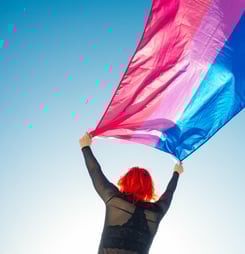
One of the simplest ways to show support is to wear bright pink, yellow, and blue, the colors of the pansexual flag. For people who enjoy symbolism, the colors can be an easy conversation starter, and conversations are often where visibility begins.
Wearing them can be as bold as a full outfit or as subtle as a pin, bracelet, shoelaces, makeup, a phone wallpaper, or a small ribbon on a bag.
In shared spaces like workplaces, schools, or clubs, small touches can be especially meaningful because they signal safety without putting anyone on the spot. If someone asks about the colors, a brief, respectful explanation is enough, followed by an invitation to learn more from pan voices, books, or community resources.
When celebrating publicly, it helps to keep the focus on pansexual people rather than on performative “ally points.” Support should not require an audience, and visibility is not the same thing as spectacle. It is also worth remembering that not everyone is out in every part of life.
For pansexual people who need to be careful, visibility can be private: decorating a room, making art in the flag colors, journaling, or saving a supportive message to share when it feels safe.
Understand Pansexuality Better
Learning the basics can clear up common misconceptions quickly. A frequent misunderstanding is the idea that pansexuality means “attraction to everyone.” In reality, pansexual people still have preferences, boundaries, and types. Pansexuality describes the scope of potential attraction, not a promise of attraction to every person they meet.
Another misconception is that pansexuality is the same as being “promiscuous.” Orientation does not dictate behavior. A pansexual person can be monogamous, polyamorous, casually dating, celibate, married, or anything else. The orientation describes who someone can be attracted to, not what they do with that attraction.
Many people also ask about the difference between pansexuality and bisexuality. There can be overlap, and that is not a problem. Some bisexual people define bisexuality as attraction to two or more genders, or attraction to one’s own gender and other genders.
Some pansexual people prefer “pan” to emphasize that gender is not a deciding factor for them, or to clearly include people beyond the male-female binary. Others identify with both labels, or choose one based on comfort, community, or what feels most accurate. The respectful approach is simple: believe the label a person chooses for themselves.
It can also help to distinguish sexual and romantic orientation. A person may be pansexual (sexually attracted regardless of gender) and panromantic (romantically attracted regardless of gender), but these do not always match. Someone might be panromantic but asexual, or pansexual but aromantic.
Some people keep one label for years; others refine their words over time as they understand themselves better. That process is not automatically “confusion.” It is self-knowledge development, often in a culture that does not make room for nuance.
A practical way to deepen understanding is to focus on lived experience instead of debates. What does it feel like to have others rename one’s orientation?
How does it affect someone to be told their relationship is “straight now” or “gay now,” depending on how outsiders read their partner? Paying attention to those day-to-day realities builds empathy faster than memorizing definitions.
Use Correct Language
Language is one of the most everyday ways people feel seen. Using the label and pronouns someone shares sends a simple message: “You don’t need to defend your reality here.” This can reduce social pressure and ease the burden many pan people feel to constantly explain who they are.
A few simple habits can make a real impact:
- Ask instead of assuming. When someone mentions a partner, it is easy to default to gendered language or assumptions about orientation. Neutral wording keeps things respectful until more is shared.
- Avoid questions like “so which do you prefer?” Pansexuality is not about choosing between genders, and framing it that way can feel dismissive.
- Don’t make pansexuality the subject of jokes. Even light comments can signal that someone is not being taken seriously.
- Keep identity separate from behavior. Suggesting someone is “really pan” only if they have dated certain genders turns identity into a checklist.
If you make a mistake, a brief apology and correction is usually enough. Over-apologizing can shift the emotional weight onto the pan person, who may feel the need to reassure you. Correct it, learn, and move forward.
Using respectful language also means knowing when not to turn someone’s identity into a discussion topic. Thoughtful questions can be appropriate, but no one should have to justify their existence to be treated with respect. If a conversation becomes too abstract, bring it back to basics: use the terms people prefer, respect relationships, and avoid assumptions.
Choose to Listen
Listening is one of the most meaningful forms of support because it is quieter than posting online, wearing symbols, or attending events.
Many pansexual people describe a specific kind of invisibility: being told their identity is unnecessary, redundant, or “just bi.” Listening without interrupting, correcting, or comparing can be deeply affirming in ways big gestures are not.
To listen effectively, keep a few ideas in mind:
- Let pan people define their own experiences. Two individuals can describe pansexuality differently, and both can be valid.
- Ask before asking personal questions. Topics like dating history, sexual behavior, or “how do you know?” can feel intrusive, especially in casual settings.
- Be aware of whose voices are missing. If LGBTQ+ discussions include everyone except pan people, create space for their perspectives rather than letting them be overlooked.
- Support doesn’t require perfect knowledge. You don’t need all the right words—being open, respectful, and consistent matters more.
For those who want to move beyond listening, small changes in everyday environments can help. Use inclusive forms that allow for more than limited identity options, give space for self-defined labels, and avoid assumptions in relationship discussions.
In schools, workplaces, and communities, support can also mean addressing stereotypes, responding seriously to harassment, and including pansexuality in broader inclusion efforts rather than treating it as too niche to mention.
Pansexual Awareness Day Timeline
Freud Describes Neurosis as “Pansexual” in Scope
In his correspondence and psychoanalytic writings, Sigmund Freud characterizes neurosis as “pansexual” in origin, using the term to argue that many psychological conflicts stem from repressed sexual drives, long before “pansexual” is used as a sexual identity label.
BiNet USA Founded to Support Non-Monosexual Communities
BiNet USA was established as a national bisexual network in the United States, offering organizing space and language resources for people attracted to more than one gender, which later helped some individuals articulate identities such as pansexual.
Pansexual Pride Flag Gains Recognition Online
A three-stripe pink, yellow, and blue pansexual pride flag spreads across Tumblr and other social media platforms, with colors commonly interpreted as representing attraction to women, nonbinary people, and men, giving pansexual communities a distinct visual symbol.
Facebook Expands Custom Gender and Attraction Terms
Facebook rolls out custom gender and related options that allow users to specify terms such as “pansexual,” enabling many people to more accurately describe their orientation on a major social media platform and helping normalize the word in everyday use.
GLAAD/Harris Poll Notes Pansexual Identification in U.S. Adults
The GLAAD-commissioned Harris Poll report “Accelerating Acceptance 2016” finds that a portion of U.S. adults, especially younger respondents, identify with terms such as pansexual, offering early quantitative evidence of pansexuality’s visibility in survey research.
History of Pansexual Awareness and Visibility Day
Pansexual Awareness and Visibility Day was founded to bring attention to the pansexual community and improve public understanding of the issues pansexual and panromantic people often face.
While the words people use for identity change over time, pan people have long existed. What has often been missing is clear recognition, especially in conversations that default to a limited set of labels.
The day grew out of a broader push within LGBTQ+ communities for more precise, inclusive language. As more people found terms that fit their experiences, it became clear that pansexual and panromantic identities were frequently overlooked even in spaces that were otherwise accepting.
That lack of visibility can show up in small ways, such as people skipping over pansexuality when talking about orientation, and in larger ways, such as media narratives that flatten complex identities into something easier to categorize.
The “awareness” part of the day focuses on education and clarity. That includes explaining what pansexuality is, but it also means naming common challenges: being told the identity is not real, being treated as indecisive, having one’s orientation rewritten by others, or being presumed to be attracted to everyone at all times.
Awareness also includes recognizing that pan people may experience discrimination differently depending on gender identity, relationship status, race, religion, disability, and culture. Visibility is not one-size-fits-all, and neither is safety.
The “visibility” part of the day emphasizes presence. It challenges the idea that pan people are too rare to mention or too complicated to include. Visibility can be public, such as participating in community events, sharing stories, or highlighting pan creators. It can also be interpersonal, such as a friend or family member using the right language, defending someone from a stereotype, or making it clear that pansexuality is not up for debate.
When community events are held, they often balance celebration with learning. Film screenings, book discussions, and workshops can provide shared language for complicated topics like identity, attraction, and stereotypes. Panels can be especially effective when they include a range of pan voices across different genders and relationship styles, since pansexuality is sometimes incorrectly treated as a single story with a single “look.”
Visibility also includes representation in everyday culture. When pansexual people are portrayed as whole, ordinary humans rather than as a twist, a punchline, or a trend, it reduces the sense that pansexuality needs to be justified. That kind of representation can help someone recognize themselves, and it can help others understand that pansexuality is a normal part of human diversity.
At its best, Pansexual Awareness and Visibility Day offers pansexual and panromantic people a chance to feel recognized without having to explain themselves from scratch. For everyone else, it offers a clear, practical path: learn, use respectful language, listen more than speak, and show support in ways that make daily life a little easier and more welcoming.
Other important events on the calendar to celebrate in relation to this day are International Day Against Homophobia, Transphobia and Biphobia, as well as Christopher Street Day.
Understanding Pansexual Identity and Its Historical Foundations
Alfred Kinsey’s landmark 1948 study, “Sexual Behavior in the Human Male,” introduced a 0–6 scale of sexual behavior that showed many people did not fit exclusively heterosexual or homosexual categories, with a significant proportion reporting some level of attraction to more than one gender.
This early empirical evidence laid the groundwork for questioning rigid binaries and later helped create space for identities like pansexual, which explicitly recognize attraction beyond the gender binary.
Pansexual Identity Emerged Visibly Online in the Early 2000s
While the word “pansexual” had appeared in psychological and psychoanalytic writing much earlier, it gained widespread use as a self-identified sexual orientation in the early 2000s, particularly through online forums, blogging platforms, and social media, where young people experimented with labels that felt more inclusive than “bisexual.”
Researchers studying digital queer communities have noted that the internet played a crucial role in popularizing pansexual as a term for attraction that is not limited by others’ gender identities.
The Pansexual Pride Flag Originated in 2010 with Specific Color Meanings
The pansexual pride flag, which appeared online around 2010, was designed with three horizontal stripes: pink, yellow, and blue.
According to the creator’s explanation shared on early LGBTQ+ web forums, the pink stripe represents attraction to women, the blue stripe represents attraction to men, and the yellow stripe in the center symbolizes attraction to people whose gender falls outside the male–female binary, such as nonbinary or genderqueer individuals.
Younger Generations Report Higher Rates of Pansexual Identification
Large-scale surveys show that younger adults are much more likely to identify as pansexual compared with older age groups.
For example, a 2021 report from the Williams Institute at UCLA School of Law found that among U.S. adults who identified as LGB, 14% of those ages 18–24 described themselves as pansexual, a proportion notably higher than in older cohorts, reflecting generational shifts in language and understanding around gender-inclusive attraction.
Pansexuality Is Often Grouped Under “Plurisexual” Orientations in Research
In academic work, pansexual people are frequently included under the broader umbrella of “plurisexual” orientations, a term used to describe attraction to more than one gender and which also includes bisexual and queer-identified individuals.
Studies of plurisexual populations have found that they can face unique forms of stigma, including stereotypes that they are “confused” or “indecisive,” which may shape how openly people identify specifically as pansexual in different social contexts.
Survey Data Reveal Limited Public Understanding of Pansexuality
Attitudinal research suggests that while public awareness of LGBTQ+ identities has grown, specific understanding of terms like “pansexual” remains relatively low.
A 2016 Ipsos survey across multiple countries found that substantial portions of respondents either could not define or had never heard of several non-monosexual identities, including pansexual, indicating that pansexual people often must educate others about what their orientation means.
Nonbinary and Gender-Diverse Communities Have Influenced Pansexual Discourse
The rise in visibility of nonbinary, genderqueer, and gender-nonconforming people has significantly influenced how pansexuality is discussed.
LGBTQ+ scholars and activists note that pansexual identity is often framed in explicit solidarity with gender-diverse communities, emphasizing attraction that is independent of, or not constrained by, another person’s gender identity, which distinguishes it conceptually from older language that presumed only two genders.