Parinirvana Day
Parinirvana Day, also called Nirvana Day, is a significant occasion for many Buddhists. It marks the moment when Shakyamuni Buddha entered parinirvana, the final “complete nirvana” that follows the death of an awakened being.
Rather than centering on loss, the day invites steady contemplation of liberation, the end of suffering, and the truth that everything conditioned is impermanent.
Buddhists around the world reflect on his teachings and the path to enlightenment. The day is not only about remembering Buddha’s final moments but also appreciating the peace associated with awakening and renewing a personal commitment to living with wisdom and compassion in everyday life.
How to Celebrate Parinirvana Day
Reflect and Reconnect
Parinirvana Day offers a quiet opportunity to reflect on impermanence and to reconnect with inner growth. In many Buddhist traditions, remembrance is practical rather than nostalgic. It is less about looking back and more about asking honest questions: What am I clinging to? And what might change if I loosened that grip, even slightly?
A helpful way to approach the day is through a few themes that appear again and again in Buddhist practice:
- Impermanence (anicca): Everything changes—moods, relationships, circumstances, and the body itself.
- Suffering and dissatisfaction (dukkha): Much of our stress comes from trying to make changing things stay fixed.
- Non-clinging: Peace grows when the mind stops insisting that life follow a rigid script.
- Compassion: Insight is meant to soften the heart, not inflate the ego.
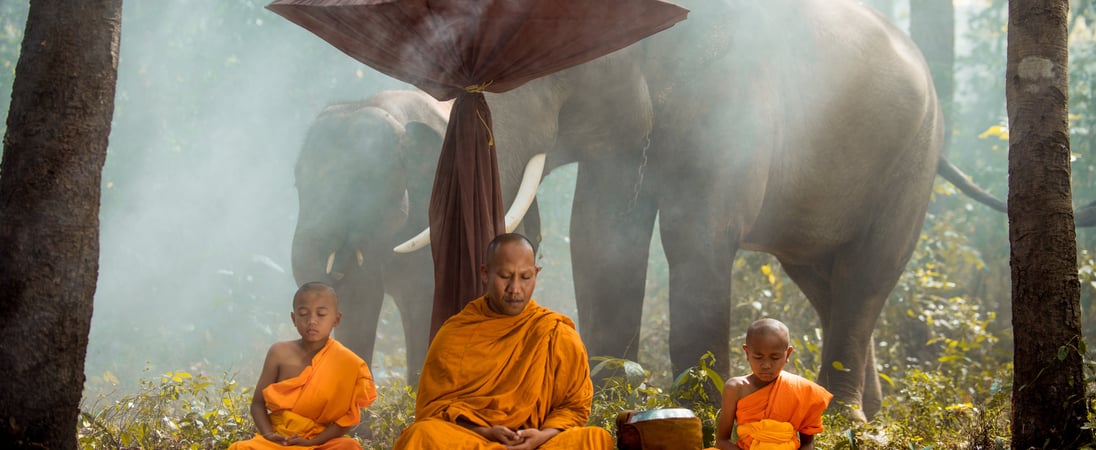
Some communities mark Parinirvana Day with formal services at temples or meditation centers. Others observe it quietly at home, through reflection or meditation. Both approaches can be deeply meaningful when guided by sincerity rather than display.
Meditate in a Peaceful Spot
Find a quiet space and settle into mindfulness meditation. Let the focus be simple: the teachings of the Buddha and a gentle reflection on the idea of nirvana. Even a few moments of stillness can soften the mind and invite a sense of calm.
For a Parinirvana Day meditation, many practitioners choose a theme that matches the day’s reflective tone:
- Breath awareness: Sit comfortably and rest your attention on the breath. When the mind wanders, return without judgment. This gentle repetition builds steadiness and patience.
- Contemplation of impermanence: Notice sensations in the body, the rise and fall of sounds, and the way thoughts appear and dissolve. The practice becomes a lived lesson: nothing stays the same.
- Loving-kindness practice: Silently repeat phrases of goodwill toward yourself and others. Compassion is not separate from wisdom; it is one of its most visible expressions.
Even those who do not identify as Buddhist can approach this meditation in a respectful, non-appropriative way by focusing on its universal qualities: attentive presence, kindness, and a willingness to see experience as it truly is.
Read or Share Buddhist Texts
Pick up a book of Buddhist teachings or share inspiring quotes with others. Reading about Buddha’s journey can offer fresh insight into your own life and encourage others to reflect as well.
Parinirvana Day is often associated with teachings about the Buddha’s final days and last instructions to his community. Many traditions read or chant passages from texts that describe the Buddha’s parinirvana and the guidance he offered to monks and lay followers. The emphasis is typically practical: the teachings are meant to be used, not simply admired.
At home, reading can be structured like a mini retreat:
1. Read a short passage slowly.
2. Pause to reflect on a single line that stands out.
3. Consider one real-life application, such as speaking more gently, practicing patience in conflict, or reducing a habit of comparison.
4. Close with a few minutes of quiet sitting.
Sharing can be done thoughtfully, too. Instead of posting long quotations for applause, a person might share one sentence along with a simple reflection on how it affects the way they handle anger, uncertainty, or grief.
Practice Compassionate Acts
Spend the day helping others. Volunteer at a local charity, offer a kind word, or lend a hand to someone in need. These simple actions mirror Buddha’s teachings on compassion and kindness.
Compassionate action on Parinirvana Day does not have to be dramatic. In Buddhist ethics, intention matters. A small act done with care can be a serious practice. Options include:
– Preparing food or supplies for someone who is struggling
– Checking in on a person who tends to be overlooked
– Offering patient listening without rushing to fix or advise
– Practicing generosity, such as donating resources, time, or skills
Some Buddhists consider generosity and ethical conduct as foundations for meditation. The mind settles more easily when it is not tangled in guilt, harshness, or self-centered habits. Compassionate acts, then, are not merely “good deeds.” They are part of training the mind toward freedom.
Create a Peaceful Space at Home
Set up a small area in your home dedicated to peace and reflection. Light incense, place a few flowers, or hang a calm, meaningful image. This space can act as a gentle reminder of Buddha’s journey toward enlightenment and release.
A home space for Parinirvana Day does not need to be elaborate. Simple, symbolic choices are often the most powerful. Common elements include a candle or lamp for clarity, flowers to reflect beauty and impermanence, and a comfortable place to sit. The real purpose is practical: to make reflection easy by reducing friction—less searching, less arranging, more presence.
A few ideas that align naturally with the day’s themes:
- Reclining Buddha imagery (when appropriate to the tradition): This posture is widely associated with the Buddha’s final moments and serves as a visual reminder of parinirvana.
- A bowl of water: A quiet symbol of calm, clarity, and stillness.
- A short written intention: Simple phrases such as “Today I practice letting go” or “May I meet change with kindness.”
The space does not need to look a certain way. It only needs to function as a refuge for attention—a small, reliable cue to pause, reflect, and return to what matters.
Host a Discussion Group
Invite friends or family to discuss the meaning of nirvana. Share personal reflections, listen to others’ thoughts, and create a supportive environment for learning together. This shared experience can deepen one’s understanding of the day’s significance.
A discussion group works best when it stays grounded and respectful. Since Parinirvana Day can be spiritually significant, it helps to set a tone of curiosity rather than debate. A simple structure might include a short reading or moment of silence, followed by guided questions such as:
– What does “letting go” mean in everyday terms?
– What changes are hardest to accept, and why?
– How can compassion be practiced when someone feels overwhelmed or irritated?
– What teachings, practices, or habits actually reduce suffering in real life?
In many Buddhist communities, collective practice is valued because it strengthens consistency. A group creates accountability and warmth, and it reminds participants that insight is not a solo trophy. It is something that ripens in relationship with others.
Parinirvana Day Timeline
c. 5th century BCE
The Buddha’s Final Nirvana at Kushinagar
Tradition holds that Siddhartha Gautama, the historical Buddha, attained parinirvana—final nirvana at death—at about age 80 in Kushinagar after 45 years of teaching, ending the cycle of rebirth. [1]
4th–3rd centuries BCE
Composition of the Mahāparinibbāna Sutta
Early Buddhists compiled the Mahāparinibbāna Sutta (DN 16), the longest biographical discourse on the Buddha, preserving detailed narratives of his last year, teachings on impermanence, and the meaning of parinirvana. [2]
3rd century BCE
Ashoka Promotes Veneration of the Buddha’s Passing
Emperor Ashoka’s patronage of Buddhism includes marking sites linked to the Buddha’s life, such as Kushinagar, and spreading teachings about nirvana and liberation across his empire and beyond. [3]
1st–2nd centuries CE
Mahayana Sutras Reinterpret Nirvana
Emerging Mahayana texts, including versions of the Mahāparinirvāṇa Sūtra, deepen philosophical reflections on nirvana and parinirvana, emphasizing the Buddha’s eternal dharmakaya and compassion beyond physical death. [4]
1st millennium CE
Spread of Parinirvana Teachings Across Asia
As Buddhism travels along trade routes into Central, East, and Southeast Asia, stories of the Buddha’s death and parinirvana shape local doctrines, rituals, and artistic depictions of the reclining Buddha. [5]
11th–13th centuries CE
Zen Traditions Integrate Parinirvana Narratives
Chan and later Japanese Zen schools adopt parinirvana stories and images in their liturgy, using the Buddha’s final teachings on impermanence and “be a lamp unto yourselves” as core contemplative themes. [6]
20th–21st centuries CE
Scholars Reassess Nirvana and Parinirvana
Modern Buddhist studies analyze early Pali and Mahayana sources, viewing accounts of the Buddha’s parinirvana as both historical memory and theological narrative, and exploring nirvana as a transformative freedom from suffering rather than a simple “annihilation.” [7]
History of Parinirvana Day (Nirvana Day)
Parinirvana Day, also known as Nirvana Day, is an important event for Buddhists. It commemorates the day when Shakyamuni Buddha passed away and entered parinirvana—the final nirvana that occurs at the end of an enlightened person’s life.
To understand why this matters, it helps to clarify a key distinction. In Buddhist thought, the Buddha attained nirvana during his lifetime at the moment of awakening, when the causes of suffering were uprooted.
Parinirvana, by contrast, refers to the complete passing beyond the conditions of embodied life. It marks the end of the cycle of rebirth (samsara) for a fully awakened being. In many traditions, this is not treated as a tragedy but as the ultimate expression of freedom.
According to long-held Buddhist tradition, the Buddha spent decades teaching after his awakening, traveling and instructing monks, nuns, and laypeople. Accounts of his final days appear in major Buddhist scriptures, including texts often known in translation as the Mahaparinirvana Sutra and, in the Pali tradition, the Maha-parinibbana Sutta.
These narratives describe a teacher who, even at the end of life, emphasizes practice over personality. The message is direct: liberation is not granted by proximity to a figure, but realized through understanding and disciplined living.
Traditional accounts place the Buddha’s passing in Kushinagar (also rendered Kushinara in older sources). The imagery associated with this event became deeply influential in Buddhist art and ritual. One of the most recognizable representations is the reclining Buddha, depicting the Buddha lying on his side in the posture associated with parinirvana.
For many practitioners, this image is not meant to be gloomy. Instead, it functions as a visual teaching on impermanence and serenity—a reminder that the goal is not to avoid change, but to meet it with clarity.
As Buddhism spread across regions and cultures, communities developed different ways of remembering the Buddha’s parinirvana. In many Mahayana contexts, Parinirvana Day is observed as a distinct occasion, often in mid-February. Some communities mark it on one date and others on another, reflecting differences in regional calendars and lineages.
In other traditions, remembrance of the Buddha’s life events may be combined into broader observances rather than separated into individual days. Such variation is normal in a global religion shaped by many histories and languages.
Over time, Parinirvana Day became a moment not only to honor the Buddha, but also to contemplate teachings especially relevant to endings and change. The central theme is impermanence: the understanding that all conditioned things—including one’s own body, roles, and circumstances—arise and pass away.
This contemplation is not meant to produce despair. Instead, it is used to soften clinging. When the mind fully accepts that nothing can be held forever, it often becomes less frantic about controlling or defending what cannot last.
In many communities, Parinirvana Day services include meditation, chanting, and the reading of texts recounting the Buddha’s final teachings. The tone may be solemn, but it is rarely mournful in the conventional sense.
Respect is paired with quiet confidence in the Dharma—the teaching that continues beyond the life of any single teacher. In this way, the day directs attention away from personality and toward practice: ethical conduct, mental training, and wisdom.
For Buddhists, Parinirvana Day holds lasting meaning because it places a mirror in front of ordinary life. The Buddha’s passing reminds practitioners that time moves, circumstances change, and every life contains endings.
Rather than treating this reality as an enemy, Buddhist practice invites people to face it directly, reducing suffering by reducing denial.
The day also highlights the compassionate dimension of the path. Wisdom without kindness can become cold; kindness without wisdom can become exhausted. Parinirvana Day encourages both seeing clearly and responding gently.
Through meditation and reflection, practitioners look inward—examining how craving, aversion, and confusion create distress, and how mindfulness, generosity, and insight can gradually loosen those bonds.
Facts About Parinirvana Day
Parinirvana Day, also known as Nirvana Day, marks the passing of Shakyamuni Buddha and his entry into parinirvana, the final release from the cycle of rebirth. Observed in many Buddhist traditions, the day focuses on impermanence, compassion, and the importance of practice over attachment—inviting reflection on how to meet change with clarity and calm.
-
Impermanence as a Core Buddhist Insight
The Buddha’s teaching on impermanence (anicca) holds that all conditioned things—including bodies, emotions, and even civilizations—arise, change, and pass away, and that clinging to what cannot last is a root cause of suffering; this idea is emphasized throughout early discourses such as the Anicca-lakkhaṇa Sutta and is treated as one of the “three marks of existence” in mainstream Buddhist philosophy.
-
Contemplation of Death as a Formal Meditation Practice
In early Buddhist tradition, maranasati (mindfulness of death) is not a morbid reflection but a structured meditation: practitioners are encouraged in texts like the Aṅguttara Nikāya to recollect the possibility of dying at any moment in order to cut through complacency, deepen concentration, and cultivate urgency (saṃvega) for ethical and spiritual practice.
-
Nirvana as “Unconditioned” Rather Than a Place
Buddhist scholastic traditions describe nirvana (Pali: nibbāna) not as a heaven or physical realm, but as an “unconditioned” state characterized by the cessation of greed, hatred, and delusion; the Pali Canon and later Abhidharma classify it as unique because, unlike all other phenomena, it is not produced by causes and conditions.
-
Parinirvana and the Idea of “Nirvana Without Remainder”
Classical Theravāda analysis distinguishes between nirvana “with remainder” (experienced during an awakened person’s lifetime) and parinirvana, “without remainder,” which occurs at that person’s physical death when all residual mental and physical aggregates cease; this distinction is explained in commentarial texts such as Buddhaghosa’s 5th‑century Visuddhimagga drawing on passages from the Pali Canon.
-
The Mahāparinirvāṇa Sūtra’s Last-Teaching Scene
The Mahāparinirvāṇa Sūtra in the Pali Canon (Mahāparinibbāna Sutta, Dīgha Nikāya 16) provides a detailed narrative of the Buddha’s final days, including his last instructions on communal harmony, reliance on the Dharma rather than any single leader, and the importance of monastic discipline—guidelines that later shaped how Buddhist monastic communities organized themselves after his death.
-
Reclining Buddha Statues and Their Symbolism
Large “Reclining Buddha” images found across South and Southeast Asia—such as the 46‑meter statue at Wat Pho in Bangkok—are iconographic depictions of the Buddha at the moment of parinirvana; art historians note that features like the serene facial expression and the right-hand support of the head are meant to convey both physical repose and the mental peace of final liberation.
-
Kushinagar as an Early Buddhist Pilgrimage Center
Kushinagar in present-day Uttar Pradesh, India, is identified in early texts like the Mahāparinibbāna Sutta as the site of the Buddha’s passing, and archaeological remains—such as the Ramabhar Stupa and a 5th‑century reclining Buddha statue—indicate that it developed into a major pilgrimage center by at least the Gupta period, attracting devotees from many Buddhist regions.
Also on ...
View all holidays
World Whale Day
Gigantic creatures that sing, dance, and swim in the vast blue sea, whales are majestic beings that fill our hearts with wonder and awe.

Singles Awareness Day
Enjoying the freedom to focus on personal goals, hobbies, and friendships without the compromise of a partner's preferences or schedule.


We think you may also like...

Christmas Day
Jingle all the way! Deck the halls with boughs of holly, indulge in delicious treats, and make unforgettable memories with loved ones.

Day of the Dead
Embrace a vibrant celebration where vivid colors, captivating altars, and joyful gatherings pay homage to ancestors with deep respect and cherished memories.

St. David’s Day
Embracing traditions with daffodils and lively festivities — a celebration weaving Welsh culture into joyous community gatherings.