
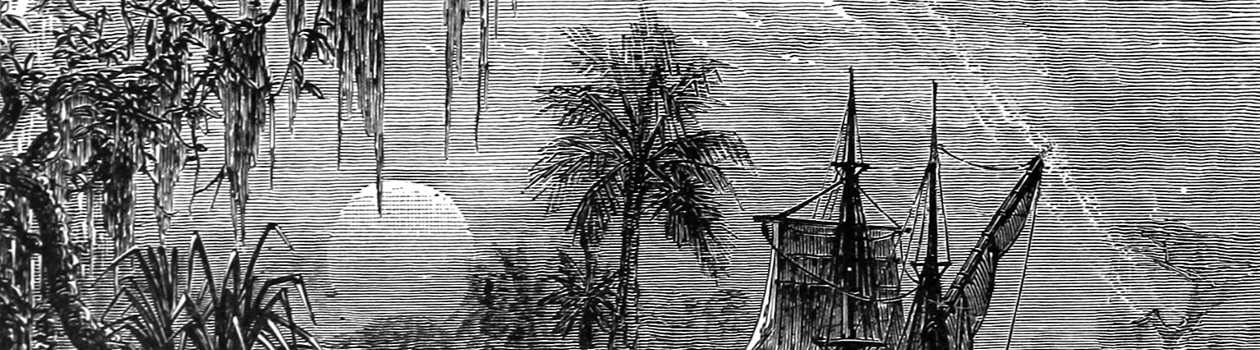
Pascua Florida Day is a distinctly Floridian observance that spotlights a moment when language, landscape, and exploration collided in a very poetic way. It commemorates the Spanish expedition led by Juan Ponce de León and the naming of “La Florida,” a phrase tied both to the Easter season and to the impression of abundant plant life.
The result is a day that feels part history lesson, part love letter to flowers. It invites people to look at Florida not only as a place on a map, but as an environment with a deep past, layered cultures, and a reputation for lush beauty that still holds up.
How to Celebrate Pascua Florida Day
Flower Power Walk
A flower-spotting walk sounds simple, but it can turn into a surprisingly satisfying scavenger hunt. The “Feast of Flowers” idea behind Pascua Florida Day is a reminder that Florida’s identity has long been linked to what grows there, from wild blooms to cultivated gardens.
To make the walk feel like an event rather than a quick lap around the block, try adding a little structure:
- Pick a theme: native wildflowers, flowering trees, backyard garden plants, or “anything that smells good.”
- Look up and look down: flowering vines and trees often get ignored, and ground-level blooms can be tiny masterpieces.
- Bring a notebook: jot down colors, shapes, and where each plant was found. Even if no one knows the name of a particular flower, describing it is half the fun.
- Try a respectful ID challenge: use a plant identification book or an app, but avoid picking flowers in protected areas or disturbing natural habitats.
Photographs make excellent souvenirs, especially close-ups of petals, leaf patterns, or pollinators at work. Butterflies, bees, and birds are part of the story too, since Florida’s plant life thrives alongside a busy ecosystem.
Picnic in the Park
A picnic fits Pascua Florida Day beautifully because it places the celebration where the theme lives: outdoors. A good picnic is not about fancy food, it’s about taking time to notice surroundings and share them with other people.
For a Pascua Florida twist, a picnic can lean into Florida-inspired flavors and colors:
- Citrus-forward snacks like orange slices, grapefruit, or lemonade
- Bright salads featuring berries, tomatoes, or tropical fruit
- Flower-themed treats such as frosted cupcakes decorated with simple edible designs
Comfort matters, too. A picnic blanket, water, sunscreen, and a trash bag for cleanup go a long way toward keeping the day enjoyable and leaving the area better than it was found. Add a frisbee, a deck of cards, or a nature bingo sheet and it becomes a relaxed group activity instead of just lunch on the grass.
History Hunt
Pascua Florida Day is anchored in a specific historical narrative, but it opens the door to many connected stories. A “history hunt” can mean visiting a museum or historical site, but it can also be done with books, local archives, documentaries, or educational exhibits.
The most rewarding approach is to treat it like detective work: start with the headline event, then follow the threads.
Ideas for a deeper history hunt include:
- Explore early exploration routes and navigation realities. Maritime travel in the 1500s relied on skilled pilots, knowledge of currents, and a lot of patience. The seas around Florida are strongly shaped by major currents, which affected how ships moved and how explorers interpreted what they were seeing.
- Look at naming as a historical practice. “La Florida” was not simply a label. Naming land was a way European expeditions described, claimed, and categorized new places from their perspective, often using religious calendars, geography, or descriptive impressions.
- Compare perspectives. The story of “discovery” is also the story of people who already lived in Florida. A good history hunt includes learning about Indigenous communities and recognizing that European arrival was a turning point with serious consequences.
If visiting in person is possible, guided tours can add helpful context, especially when docents or interpreters explain how historians piece together what happened from ship logs, maps, and later accounts.
Floral Crafts
Crafts are a perfect match for Pascua Florida Day because they turn the “Feast of Flowers” idea into something tangible. Floral crafting can be as easy as doodling a hibiscus on scrap paper or as detailed as a pressed-flower frame.
A few approachable options:
- Pressed flowers: Place flowers or leaves between paper inside a heavy book for a couple of weeks. The flattened shapes can be used in cards, bookmarks, or journal pages.
- Floral wreath: A wreath can be made from paper, fabric, or artificial flowers. It offers the look without the worry of wilting.
- Botanical sketching: Even beginners can draw what they see. A basic outline of petals and leaves becomes a personal “field guide” of the day.
- Scent-focused crafts: Sachets with dried lavender or citrus peels can nod to Florida’s fragrant side.
The best crafts keep nature in mind. If gathering materials outdoors, it is wise to avoid taking from protected land or removing large amounts from any one area. Fallen leaves, yard clippings, or store-bought stems can do the job without harming habitats.
Explore a Garden
A botanical garden visit is like stepping into an organized, curated version of “Feast of Flowers.” Gardens also do something important that fits Pascua Florida Day’s educational spirit: they label plants, explain ecosystems, and show how climate shapes what can grow.
Exploring a garden can be more engaging with a few intentional stops:
- Look for native plant sections, which often highlight species adapted to local conditions and supportive of wildlife.
- Pay attention to pollinator areas, where flowering cycles and insect activity are on full display.
- Notice water features, since Florida’s environment is deeply tied to wetlands, springs, and coastal systems.
Even without a formal botanical garden nearby, the same spirit works in smaller places: community gardens, arboretums, nature centers, or thoughtfully landscaped public spaces. The goal is immersion in plant life and an appreciation of how much variety can exist within one region’s climate.
Share the Joy
Sharing Pascua Florida Day is an easy way to help the observance feel alive, especially since many people outside Florida have never heard the phrase “Pascua Florida.” It is one of those historical names that sounds like it should be on a postcard.
Social sharing can be more meaningful than a quick “happy day” post. A few ideas that add substance:
- Share a photo and include one historical detail about the name “La Florida.”
- Post a flower collage from a walk and invite others to guess which blooms are native.
- Share a favorite Florida nature memory: a beach sunrise, a mangrove trail, a butterfly garden, or a thunderstorm that rolled in like theater curtains.
For classrooms, libraries, or community groups, a short presentation or bulletin board with maps, flower illustrations, and a simple explanation of the name can help people connect the dots between language and place.
Beach Day Bash
Florida’s coastline often becomes the default setting for celebration, and for good reason. A beach day highlights the environment that shaped exploration, including the practical reality that many arrivals happened by sea, with coastlines as the first visible “welcome sign.”
A Pascua Florida beach day can balance fun with a little curiosity:
- Shell and stone spotting: look for patterns, shapes, and textures. The best beach “collecting” can be done with photos, leaving living shells and animals undisturbed.
- Sandcastle challenge: build a “flowery” sand sculpture or create a small sand garden with driftwood patterns.
- Coastal nature appreciation: dunes, seagrasses, and shorebirds are part of Florida’s natural story. Observing them from a respectful distance keeps wildlife safe.
A simple cleanup effort, even if it is just picking up a few pieces of litter, fits the theme of appreciating natural splendor and treating it as something worth protecting.
Significance of Pascua Florida Day
Pascua Florida Day honors the naming of “La Florida,” a name commonly linked to the Easter season and to the impression of flourishing plant life.
In Spanish, “Pascua” is associated with Easter, and “Florida” evokes flowers and blooming landscapes. Put together, “Pascua Florida” is often interpreted as “Feast of Flowers” or “Flowery Easter,” capturing both the timing of the voyage and the environment described by the expedition.
The observance also reflects how place names can preserve history in plain sight. “Florida” is familiar enough to feel inevitable, but Pascua Florida Day encourages people to pause and consider that the name came from a specific cultural lens and a specific historical moment. It is a reminder that the way land is described, mapped, and named can shape identity for centuries.
At the same time, the day’s significance is not only about one explorer. It points toward broader themes:
- Exploration and navigation: voyages depended on winds, currents, ships, and experienced pilots, and the seas around Florida could be both helpful and hazardous.
- Cultural layering: Florida’s story includes Indigenous societies with deep roots, European expeditions and settlements, and later waves of migration and change. Pascua Florida Day can be a prompt to learn with a wider lens.
- Natural heritage: the “Feast of Flowers” translation gives the day an environmental heart. It frames Florida as a place defined not just by history books, but by living landscapes.
Because it blends language, nature, and history, Pascua Florida Day has a built-in versatility. It can be observed through education, outdoor activities, or simple appreciation of beauty. No reenactment required.
Pascua Florida Day Timeline
Ponce de León names La Florida
Spanish explorer Juan Ponce de León sights land on April 2 and names the region “La Florida,” likely in reference to the Spanish Easter season called Pascua Florida and the area’s flowery landscape.
“Pascua Florida” in Spanish Religious Use
Early sixteenth-century Spanish religious texts and calendars use the phrase “Pascua Florida” for the Easter season, reflecting a long-standing Catholic tradition that associates Easter with blossoms and renewal.
St. Augustine Founded in La Florida
Pedro Menéndez de Avilés establishes St. Augustine in the Spanish province of La Florida, reinforcing the use of the name first given during the Pascua Florida season for Spain’s North American outpost.
Spain Cedes Florida to the United States
Under the Adams–Onís Treaty of 1819 and the formal transfer in 1821, Spain relinquished La Florida to the United States, ending centuries of Spanish rule rooted in Ponce de León’s early Pascua Florida–era exploration.
Florida Becomes the 27th U.S. State
On March 3, Congress admits Florida as the 27th state, transforming the former Spanish province whose name dates back to the Pascua Florida season into a full member of the Union.
History of Pascua Florida Day
The historical event behind Pascua Florida Day centers on Juan Ponce de León’s expedition to the region in the early 1500s and the naming of “La Florida.” Accounts often associate the name with the Easter season and with the impression of a flowering landscape, which gave rise to the enduring phrase “Pascua Florida.”
Some historical timelines distinguish between sighting land and formally naming it, which is why different retellings sometimes emphasize slightly different moments during the voyage. The core idea remains consistent: the expedition’s arrival and naming helped place Florida into European maps and narratives.
As an official observance, Pascua Florida Day was promoted in the mid-20th century. A commonly repeated piece of the story credits Mary A. Harrell, a social studies teacher in Jacksonville, with advocating for a special day recognizing Florida’s early recorded European exploration and the meaning behind its name.
The observance became part of Florida’s civic calendar and is recognized in state law, which sets aside the day as “Florida State Day,” known as Pascua Florida Day. The statute also allows for an annual proclamation encouraging schools and citizens to mark the occasion, emphasizing its educational and civic character.
That official recognition matters because it frames Pascua Florida Day as more than trivia. It signals that the state considered the naming of Florida and the narratives tied to it important enough to teach, revisit, and discuss.
In practice, it gives schools and communities permission to celebrate local heritage without requiring an elaborate ceremony. A classroom might explore early maps, ship routes, and Spanish vocabulary.
A museum might highlight Florida’s long historical arc. A family might simply go outside, notice flowers, and talk about why a place might be called “Flowery Easter.”
Pascua Florida Day also sits in the larger reality that Florida’s past is complex. European exploration was connected to competition among empires, economic ambition, and settlement efforts that reshaped lives and landscapes.
Remembering the day responsibly means acknowledging that “discovery” is a European framing, while also recognizing that the act of naming “La Florida” became historically influential. The observance can be a springboard for learning that is both celebratory and thoughtful, letting people enjoy the beauty implied by “Feast of Flowers” while engaging honestly with the broader story behind the name.
Lesser-Known Historical Facts About Pascua Florida and the Naming of Florida
The name “Pascua Florida” carries layers of meaning that go beyond a simple reference to flowers or springtime.
These facts highlight the religious roots of the term, how early Spanish explorers used it to describe a vast region of North America, and the ongoing historical debates about the exact landing site of Juan Ponce de León’s expedition.
Together, they reveal how language, exploration, and interpretation shaped the story behind Florida’s name.
Religious Meaning of “Pascua Florida”
In early modern Spain, “Pascua Florida” was not a poetic nickname but a specific term in the Catholic liturgical calendar that referred to the Easter season, especially Palm Sunday and the weeks around it.
The word “Florida” in this context meant “flowery,” recalling both springtime blossoms used in religious processions and the spiritual “flowering” associated with the Resurrection, which is why Spanish writers of the period commonly paired Easter with images of abundant flowers.
“La Florida” Once Referred to a Vast Region, Not Just Today’s State
When Juan Ponce de León used the name “La Florida,” he was naming a huge, vaguely known territory rather than the peninsula that would become the state of Florida.
Sixteenth‑century Spanish maps and royal documents applied “La Florida” to much of the southeastern North American coast and interior, from at least present‑day Florida up through parts of what are now Georgia and the Carolinas, reflecting Spain’s claim to a broad swath of the continent.
Historians Still Debate Ponce de León’s Exact Landing Site
Although textbooks often associate Ponce de León’s 1513 landfall with the area around modern St. Augustine, historians and cartographers continue to disagree about where he first came ashore.
By comparing his surviving log data, currents, and coastal descriptions, scholars have proposed sites ranging from the vicinity of Ponte Vedra Beach to locations farther south along Florida’s Atlantic coast, and no consensus has been reached.
The Fountain of Youth Was Likely a Later Legend
The popular story that Ponce de León sailed to Florida mainly in search of a “Fountain of Youth” is widely viewed by historians as a legend that solidified decades after his voyage.
Surviving royal contracts and contemporary documents emphasize more conventional motives such as claiming land for Spain, expanding trade, and finding wealth, while the youth‑granting spring appears mainly in later chroniclers’ writings and later still in Anglo‑American retellings.
Early Spanish Exploration Helped Fix Florida’s Coastline on European Maps
Ponce de León’s voyage, followed by later Spanish expeditions, played a major role in turning Florida from a speculative shape on European charts into a mapped coastline.
By sailing up the Atlantic side of the peninsula, looping through the Florida Keys, and tracing part of the Gulf coast, Spanish pilots gradually corrected earlier cartographic guesses and established the peninsula’s outline on sixteenth‑century maps used throughout Europe.
Florida’s Native Peoples Had Long‑Established Societies Before 1513
Long before Ponce de León arrived, the peninsula was home to complex Indigenous cultures such as the Timucua, Calusa, and Apalachee, who managed fisheries, farmed, and built ceremonial centers across different regions.
Archaeological and ethnohistoric evidence shows that these communities maintained extensive trade networks and distinct political systems, so the Spanish “discovery” marked the beginning of European intrusion into already well‑organized societies rather than the start of Florida’s human history.
Springtime Wildflowers Still Shape Florida’s Identity
The idea of a “flowery” land that influenced the name “La Florida” still matches what ecologists see each spring, when native wildflowers create colorful displays across the state.
Species such as coreopsis (Florida’s state wildflower), blanketflower, and beach sunflower bloom along roadsides and coastal dunes, and conservation groups use these naturally occurring shows to highlight how much of Florida’s original floral diversity has been lost to development and why remaining habitats matter.
Pascua Florida Day FAQs



You may also like

Easter Monday
Easter Monday is the perfect time to relax and spend quality time with family and friends. Enjoy a leisurely brunch, hunt for hidden Easter eggs, or take a leisurely stroll in the sunshine.
- Australia
- Austria
- Canada
- and 21 more

National Leon Day
Discover the meaning of National Leon Day, the halfway-to-Christmas celebration that inspires early decorating, crafting, gifting, and charitable giving.
- Canada
- United States

Coptic Easter
Coptic Easter, also called Pascha, is one of the most meaningful celebrations in the Coptic Orthodox year. It centers on the resurrection of Jesus Christ and the belief that life ultimately triumphs over death. For the faithful, the message is not abstract or distant. It is personal, lived, and sung...
- Australia
- Canada
- Egypt
- and 2 more

Easter
Easter is here, bringing with it joy, chocolate, and time with loved ones. Celebrate the holiday with egg hunts, delicious meals, and maybe even a visit from the Easter Bunny!
- Argentina
- Australia
- Austria
- and 41 more
National days and holidays on April 2

March Madness
Get your game face on for March Madness! This high-energy tournament is a slam dunk of excitement, passion, and heart-pumping action. So grab your team colors, gear up for the showdown, and let the madness begin!
- United States

Semana Santa
Semana Santa, or Holy Week, is a profound time of reflection and devotion in many Christian communities. Streets come alive with solemn processions, participants carry religious icons, and traditional music fills the air. This period focuses on the final days of Jesus Christ, drawing believers together in shared faith and contemplation...
- Guatemala
- Mexico
- Portugal
- and 1 more

Passover Begins
Among the most solemn and meaningful observances in the Jewish calendar, Passover marks the beginning of an eight-day journey. This holiday, known as Pesach in Hebrew, commemorates the Israelites' liberation from slavery in ancient Egypt. The term "Passover" refers to the divine act of sparing the Israelites during the final plague...
- Egypt
- Israel
- United States

National Love Your Produce Manager Day
Year-round berries, citrus, veggies, and more all at once would have once been impossible. But Produce managers give you all of these options, carefully selected.
- Canada
- United Kingdom
- United States
Seize Every Day
Join free for personalised recommendations, email reminders and exclusive guides. Never miss a day.