Presidents’ Day
Leaders' achievements are celebrated, flags fly high, and a break from the usual hustle gives everyone a moment to relax.
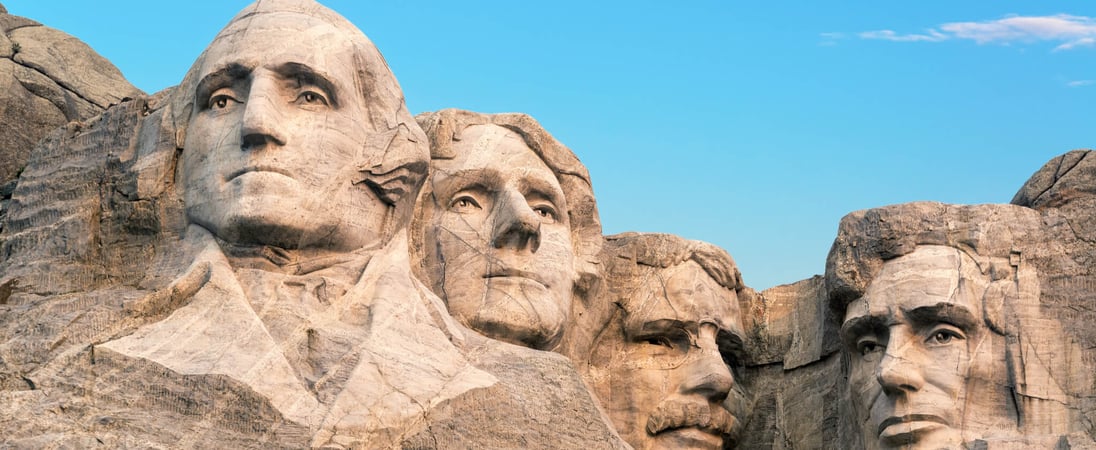
Celebrated annually, Presidents’ Day is a federal holiday to pay tribute to the presidents of the United States, including George Washington, the country’s first president, and Abraham Lincoln, who served during the Civil War.
The holiday was originally established to honor Washington, but over time it has come to be a day to recognize all of the nation’s presidents. This is a day when many businesses and government offices are closed and people have the day off from work or school.
Some people celebrate Presidents’ Day by participating in parades or other events, while others use it as a time to relax and spend time with family and friends.
How to Celebrate Presidents’ Day
There are many ways to celebrate Presidents’ Day. Some people choose to honor the holiday by taking part in parades or other events that are held in honor of the presidents.
Others use the day as an opportunity to learn more about the presidents and their contributions to the country. Here are a few ideas for celebrating Presidents’ Day:
Attend a Parade, or Visit a Presidential Museum or Library
Many cities and towns hold parades on Presidents’ Day to celebrate the presidents of the USA. Look for one in your area and join in the celebration.
There are also many museums and libraries dedicated to the presidents of the United States.
Read a Book About a President
There are many books available about US presidents. Consider reading one of these to learn more about a particular president or the history of the presidency:
- Washington: A Life by Ron Chernow: This Pulitzer Prize-winning biography provides an honest portrait of George Washington, the man who became the United States’ first president.
- Team of Rivals: The Political Genius of Abraham Lincoln by Doris Kearns Goodwin
This book chronicles the life and presidency of Abraham Lincoln, focusing on his ability to lead and manage a diverse group of advisors and cabinet members. - John F. Kennedy: A Biography by Michael O’Brien: A comprehensive biography of JFK, examining the life and legacy of the 35th president, from his childhood and education to his assassination in 1963.
- The Reagan Diaries edited by Douglas Brinkley: A collection of diary entries written by President Ronald Reagan during his two terms in office, this book provides a unique, behind-the-scenes look at the Reagan presidency.
- Barack Obama: The Story by David Maraniss: Offering a detailed and nuanced portrait of Barack Obama, the 44th president of the United States, it covers Obama’s early life, political career, and presidency, and offers insight into the man and his leadership style.
Watch a Movie or Documentary
There are many films and documentaries about US presidents, but here are a few to get you started:
- Lincoln (2012) – A biographical drama that stars Daniel Day-Lewis as Abraham Lincoln, the 16th president of the United States. It focuses on Lincoln’s role in the abolition of slavery and the passage of the 13th Amendment to the Constitution.
- Truman (1995) – Starring Gary Sinise as the 33rd president of the United States, Harry S. Truman, the film covers Truman’s life, career, and presidency, including his role in the dropping of the atomic bombs on Japan and the Korean War.
- JFK (1991) – A biographical drama starring Kevin Costner as President John F. Kennedy, this film examines the events leading up to Kennedy’s assassination and the investigations that followed.
- Nixon (1995) – Stars Anthony Hopkins as President Richard Nixon. The film covers Nixon’s political career, the Watergate scandal and his eventual resignation from office.
- The President (2019) – A documentary profiling President Barack Obama, covering his life, career, and presidency.
Participate in a Service Project
Presidents’ Day is a good time to think about ways to serve your community. Consider participating in a service project or volunteering your time to help others!
History of Presidents’ Day
Presidents’ Day has its roots in the celebration of George Washington’s Birthday, which has been observed as a national holiday in the United States since the late 18th century.
Washington was born on February 22, 1732, and his birthday was first officially recognized as a national holiday by an act of Congress in 1879. The holiday was originally called Washington’s Birthday, and it was observed on February 22 each year.
In the 20th century, Congress passed the Uniform Monday Holiday Act, which was designed to create more three-day weekends for the nation’s workers by moving several holidays to Mondays.
As part of this act, the holiday honoring Washington was moved to the third Monday in February and was renamed Presidents’ Day to recognize not just Washington, but all of the presidents of the United States. The holiday has been observed on the third Monday in February since 1971.
Presidents’ Day is not only a time to honor US presidents, but also a time to reflect on the important role that they have played in shaping the nation’s history.
Facts About the U.S. Presidency
The office of the U.S. president has evolved through debate, compromise, and tradition since the nation’s founding. From the structure of executive power to the backgrounds of those who have held the role, these facts highlight how the presidency was shaped and how it continues to function today.
-
Designing a Single President Was a Controversial Choice
At the 1787 Constitutional Convention, delegates fiercely debated whether the new nation should have a single president or a multi-person executive, with opponents like Edmund Randolph and George Mason warning that a single executive could resemble a monarchy; on June 4, 1787, state delegations nevertheless voted 7–3 in favor of a single president, establishing the basic structure of the U.S. presidency.
-
The U.S. President Combines Roles Often Split in Other Countries
Unlike many democracies that separate the symbolic head of state from the head of government, the U.S. Constitution vests both roles in the president, who simultaneously serves as chief of state for diplomatic and ceremonial functions and as head of government directing the executive branch and federal agencies.
-
Presidential Power Is Broad but Tightly Checked
Article II of the U.S. Constitution grants the president powers such as commanding the armed forces, vetoing legislation, negotiating treaties, and appointing top officials, but each comes with structural checks—Congress declares war and controls funding, a two-thirds vote can override vetoes, the Senate must ratify treaties and confirm many appointments, and courts can review executive actions.
-
Most Presidents Have Had Military or Legal Careers Before Office
Professional backgrounds of U.S. presidents cluster heavily in the military and the law: a Statista analysis found that 31 of the first 45 presidents had military experience, while the legal profession dominated early on, with 22 of the first 32 presidents having worked as lawyers before reaching the White House.
-
A Majority of U.S. Presidents Attended College, but Not All Graduated
Although early American leaders are often imagined as self-taught, historical records show that most U.S. presidents received some form of higher education; for example, five of the first seven presidents were college graduates, and across all presidents, Wikipedia’s compiled scholarship notes that a notable minority never completed a college degree.
-
The Presidency Was Created to Fix a Major Weakness of the Articles of Confederation
One of the chief defects of the pre-Constitution system was the absence of a national executive capable of implementing laws and responding quickly to crises; framers at the Constitutional Convention explicitly cited this weakness when they designed a separate presidency to provide “energy” and accountability while still being constrained by checks and balances.
-
Presidents’ Unusual Pre-White House Jobs Reflect a Wide Social Range
While law and the military are the most common backgrounds, U.S. presidents have also come from unusually varied occupations, including a haberdasher (Harry S. Truman), a peanut farmer (Jimmy Carter), a Hollywood film actor (Ronald Reagan), and a career in community organizing and law teaching (Barack Obama), highlighting how diverse career paths can lead to the presidency.
Presidents’ Day FAQs
Did any U.S. presidents share a birthday?
Yes! James Polk and Warren G. Harding were both born on November 2, though 70 years apart (Polk in 1795, Harding in 1865).
This rare coincidence makes November 2 the only date shared by two presidents in U.S. history.
Despite this connection, their presidencies were vastly different in focus and legacy.
How did the term “O.K.” become associated with a U.S. president?
The term “O.K.” is linked to President Martin Van Buren, who was nicknamed “Old Kinderhook” after his hometown in New York.
During his presidential campaign, supporters formed the “O.K. Club,” popularizing the term as a slogan meaning “all correct.”
Which U.S. president was the first to not own slaves?
John Adams, the second president of the United States, was the first among the initial twelve presidents who did not own slaves.
How do some states uniquely celebrate Presidents’ Day?
In Alabama, the holiday is officially known as “George Washington/Thomas Jefferson Birthday,” honoring both presidents.
Arkansas celebrates “George Washington’s Birthday and Daisy Bates Day,” recognizing the civil rights leader alongside Washington.
Is it true that Presidents’ Day is not a federal holiday in all states?
Yes, while Presidents’ Day is a federal holiday, some states do not officially observe it. For example, Delaware does not recognize the day as a state holiday.
What is the significance of the third Monday in February for Presidents’ Day?
The Uniform Monday Holiday Act of 1968 moved several federal holidays to Mondays, including Washington’s Birthday, to provide workers with more three-day weekends.
This act established the third Monday in February as the official date for the holiday.
How did Presidents’ Day evolve to honor all U.S. presidents?
Originally established to honor George Washington, the holiday’s scope expanded over time.
The shift to the third Monday in February and the proximity to Abraham Lincoln’s birthday led to a broader recognition of all U.S. presidents.
Are there any myths or misconceptions about Presidents’ Day?
A common misconception is that Presidents’ Day is officially named to honor all presidents. In reality, the federal holiday is still officially called “Washington’s Birthday.”
How do retailers in the U.S. utilize Presidents’ Day?
Retailers often hold significant sales during Presidents’ Day weekend, making it a major shopping event. This tradition has become a key part of the holiday’s modern observance.
Which U.S. president was the last to own slaves?
Ulysses S. Grant, the 18th president, was the last U.S. president to have owned slaves.
Also on ...
View all holidays
National Almond Day
This small but mighty nut is packed with protein and healthy fats, making it a great snack to keep you fueled throughout the day.