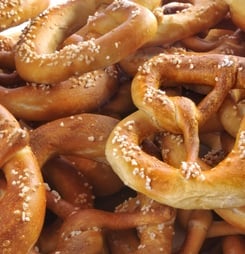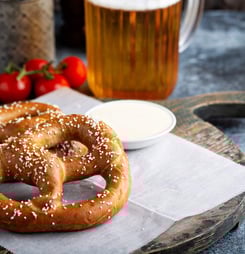
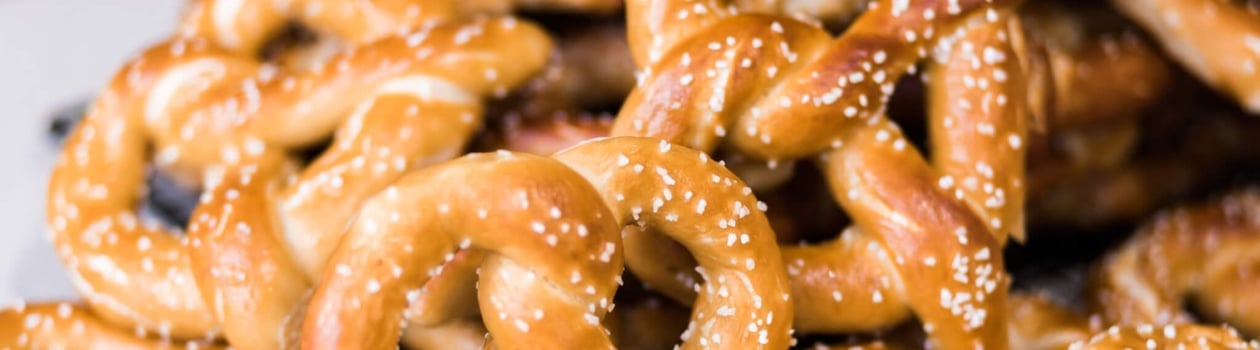
Pair a soft pretzel with a bit of mustard or some squeezy cheese, or dip some crunchy pretzel in a caramel sauce for that sweet and savory combo. No matter how they are enjoyed, the guest of honor is always tasty. It’s time for Pretzel Sunday!
In its native German, Pretzel Sunday is called “Bretzelsonndeg”, and this traditional day is notable because it lands right at the center of the religious season of Lent.
How to Celebrate Pretzel Sunday
Have tons of fun celebrating this delightful day with some traditional customs or new activities. Mark Pretzel Sunday by enjoying the day in some of these ways:
Give a Pretzel to Your Sweetie
Pretzel Sunday is a great time to keep the Luxembourg tradition alive by offering a sweet, soft pretzel to the person you love. Though it is specifically meant to be the boy giving the pretzel to the girl, it’s certainly okay for a girl to break tradition and gift a pretzel to the boy she loves.
Of course, modern times can mean modern traditions, and it might be fun to spread the wealth from just romantic love and, instead, give out delicious soft pretzels to anyone that is loved!
Try Making Soft Pretzels
One fun and tasty way to enjoy celebrating Pretzel Sunday might be to learn how to make these yummy treats at home. Choose a recipe that is made from puff pastry reminiscent of the traditional Luxembourg style, complete with fondant icing and sliced almonds. Or try out a salty soft pretzel recipe that can be enjoyed with more savory dips. In any case, get creative in the kitchen in honor of this excellent day!
Take a Trip to Luxembourg
Because the Pretzel Sunday tradition originated in the European country of Luxembourg, this might be a great time to plan a trip to visit this unique and interesting country. Luxembourg is nestled just between the countries of France, Germany and Belgium. The main city and capital of this small nation is Luxembourg City, which is located in the south central portion of the country.
Visitors to Luxembourg can enjoy a variety of sights, ancient castles, and architecture, as well as beautiful natural scenery. In addition, the country has a unique blend of cultures and holds three national languages: French, German and the national language that is called Luxembourgish. Many people there also can speak English very well, so it’s a great place for people all over the world to visit!
Get Creative with Eating Pretzels
Enjoy Pretzel Sunday by enjoying some unique and creative ways to eat pretzels. For instance, pretzel dough can be made into buns and eaten with burgers or chicken patties to create a delicious sandwich. Or, use some savory dips such as hummus, mustard dip or guacamole to make a delicious and somewhat healthy snack. Or they can even be enjoyed when made into mini cheese ball bites.
Of course, it would certainly also be a smart way to go to make pretzels into some sweet, dessert style snacks. Cover them in a sweet yogurt frosting. Crunch them up and put them in ice cream. Or make them into caramel and chocolate turtles for a tasty treat.
Throw a Pretzel Sunday Party!
Perhaps a new and fun way to celebrate Pretzel Sunday would be to host a little party for family and friends. Invite guests to bring their favorite type of pretzels, whether soft or crunchy, and then have a gathering of dips, spreads and sauces to enjoy them with. Use some of the ideas from above to serve pretzels in a myriad of sweet and savory ways.
Pretzel Sunday FAQs
History of Pretzel Sunday
Pretzels date back hundreds of years, with some historians believing that the first pretzels were created by monks in either Northern Italy or Southern France in the 7th century AD. These pretzels were probably made from scraps of dough that were left over after the bread-making process. The legend has it that the long strips of pretzel dough were twisted around and across to symbolize the shape of a child’s arms that were folded in prayer. Another story goes that the religious symbolism is also related to the three holes representing the three persons of the Christian trinity.
Particularly celebrated in the small European country of Luxembourg, Pretzel Sunday is a celebration of love that falls on the fourth Sunday of Lent. Lent takes place for the days prior to Easter (not counting Sundays) and is a time of fasting for those in the Christian faith. Pretzel Sunday is an exciting time that marks the halfway point between the beginning of the Lenten Season and the end.
Pretzel Sunday comes from a fun folk custom that originated in Luxembourg where the tradition is that boys are invited to present girls they like with a pretzel. This type of pretzel might be a slightly sweeter version that is made from puff pastry, covered in fondant icing and topped off with sliced almonds.
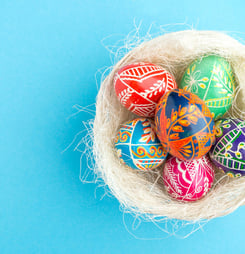
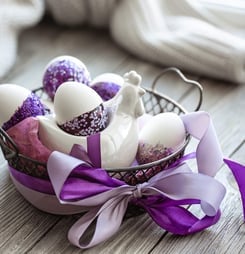
Then, if the girl likes the boy in return, she is invited to reciprocate by giving the boy a decorated egg a few weeks later, on Easter Sunday. In a more disappointing turn of events, if she is not interested in him, the girl will give him an empty basket as a sign that he should look elsewhere for love.
This exchange is a delightful tradition that brings lots of fun and affection, even for married couples who participate. And in leap years? The roles are reversed so that the girl gives the sweet pretzel on Pretzel Sunday and boys have the option to give an egg or an empty basket on Easter.
Today, Pretzel Sunday can be enjoyed and celebrated by anyone, whether using it for that special someone or simply by giving away pretzels to those who are loved!
Pretzel Sunday Timeline
Pretzels are created
The story goes that pretzels are created by monks either in Italy or France.
Pretzels make it to the US
German immigrants bring pretzels to Pennsylvania.
First commercial pretzel bakery in the US
Julius Sturgis founds his pretzel bakery in Lititz, Pennsylvania.
First Auntie Anne’s Pretzel’s opens
In Downington, Pennsylvania, Auntie Anne’s is opened in a farmers’ market, and this will eventually become the largest pretzel chain in the United States.
Pretzel Sunday Facts
Pretzel Sunday comes with more history and meaning than its simple shape suggests. Behind the familiar twist lies a story that connects faith, tradition, romance, and regional identity across parts of Europe.
From medieval monasteries to courtship customs and local baking styles, these facts reveal how a humble pastry became a symbol of devotion, celebration, and cultural pride.
Luxembourg’s Pretzel Love Language
In Luxembourg, the pretzel has long worked as a kind of “love letter.” Historically, the romantic exchange did not stop with a single pastry and an egg at Easter.
Regional customs once extended the courtship through a whole spring calendar: after the pretzel came a small tart known as a “Fliederchersdag” cake, a few weeks after Easter, and sometimes a wreath-shaped pastry at Pentecost, all tied to village dances that helped young people pair up.
These extra stages of the ritual have largely faded, but the idea of a pretzel as a coded sign of affection is still widely understood in Luxembourgish culture.
From Monks’ Reward to Lenten Symbol
The oldest pretzel legends connect the pastry to early medieval monks in northern Italy, who supposedly twisted leftover bread dough into a shape resembling arms crossed in prayer and called the treats “pretiola,” or “little rewards,” for children who learned their catechism.
Because early versions were made only from simple Lenten ingredients like flour, water, and salt, the pretzel became strongly associated with Lent in parts of Catholic Europe and still appears in religious artwork and folk customs tied to the season.
Why German and Luxembourgish Pretzels Taste Different
Pretzels across the German-speaking world share a twisted shape, but their textures and toppings vary by region.
In much of Germany, the classic “Laugenbrezel” is a yeast dough dipped in lye, baked to a mahogany crust, and sprinkled with coarse salt, while in Luxembourg, the festive Bretzel for springtime courtship is typically a sweet, laminated puff pastry glazed with fondant and almonds.
Food historians note that this sweet, cake-like style likely evolved as the custom moved from simple Lenten bread toward more elaborate bakery specialties suited for gift giving.
A Courtship Custom Rooted in River Villages
Luxembourg’s pretzel courtship tradition did not originate in the capital but in rural communities along the Moselle and Sûre rivers, where dialect terms like “Leinesonndeg” survived in local speech.
Ethnographers and linguists have traced how these village customs around fires, shouted declarations of love, and later pretzel exchanges gradually spread and were standardized as a national spring ritual.
The pattern mirrors how many European folk practices moved from small, agricultural regions into broader urban culture over the nineteenth and twentieth centuries.
The Science Behind a Pretzel’s Shiny Crust
What makes a pretzel’s surface so dark, glossy, and distinct from ordinary bread is a quick dip in a strong alkaline bath before baking.
Commercial bakers often use a 3–4% lye (sodium hydroxide) solution, which raises the pH on the dough’s surface, breaks down some proteins, and turbocharges the Maillard reaction during baking.
Food scientists have shown that this high-pH environment produces more intense browning, a slightly bitter, “toasty” flavor, and the characteristic chewy crust that people recognize as uniquely pretzel-like.
Baking Soda as the Home-Baker’s Alkali
Because food-grade lye must be handled carefully, many home bakers rely on baking soda as a gentler stand-in for pretzel making.
When baking soda is dissolved in water or even pre-baked in the oven to convert it to more alkaline sodium carbonate, it raises the dough’s surface pH enough to promote browning without the caustic strength of true lye.
Tests by culinary educators and food scientists show that the result is still distinctly pretzel-like, though typically lighter in color and milder in flavor than pretzels treated with a traditional lye bath.
Why Pretzels Seem “Healthier” Than They Are
Hard pretzels are often marketed as a better snack choice than chips because they tend to be lower in fat and calories per serving, but nutrition analyses tell a more mixed story.
A typical 1.5‑ounce serving provides around 160 calories and very little fat, yet it also delivers more than 20 percent of the daily sodium value and only about 1 gram of fiber, since most are made from refined white flour.
Health educators point out that this combination of high sodium, fast-digesting starch, and low nutrient density means pretzels can spike blood sugar and are best treated as an occasional snack rather than a truly wholesome staple.