
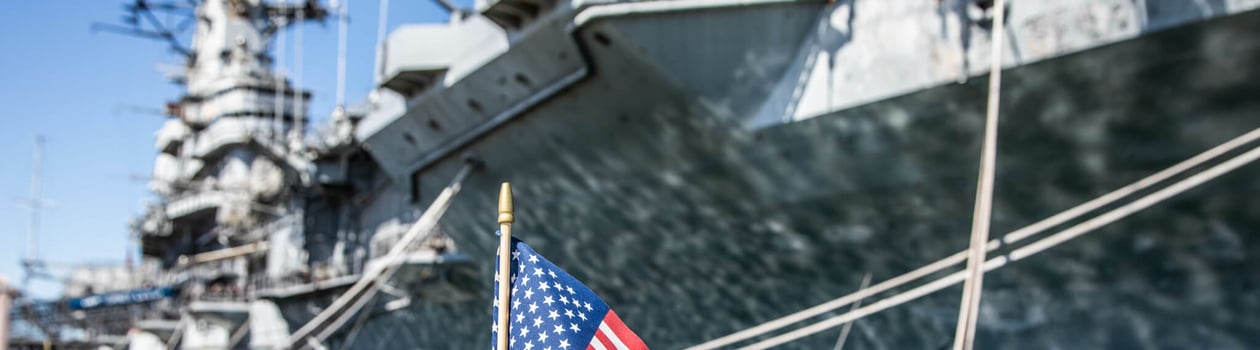
Remember the Maine Day is a remembrance day centered on the U.S.S. Maine, a U.S. Navy battleship whose sudden destruction in Havana Harbor claimed the lives of 266 sailors.
The event became more than a single maritime tragedy: it shaped public opinion, altered diplomacy, and helped set the stage for a short but consequential war.
Observing the day invites people to honor those who died and to think carefully about how nations react to crisis, uncertainty, and emotion.
People observe Remember the Maine Day to recognize the ship’s crew as individuals, not just a number in a history book. It offers space to reflect on service and sacrifice, and also on how quickly a confusing disaster can become a powerful national symbol.
The slogan “Remember the Maine!” captured grief, anger, and unity all at once, showing how memory can fuel action for better or worse.
How to Celebrate Remember the Maine Day
Visit Memorial Sites
A visit to a memorial can turn an abstract story into something immediate and personal. The U.S.S. Maine Memorial at Arlington National Cemetery is among the best-known tributes, featuring a mast salvaged from the ship and a setting that encourages quiet reflection.
Another notable monument is the Battleship Maine Monument in Bangor, which connects the memory of the ship to civic space and community identity.
For visitors who cannot travel, a “virtual visit” can still be meaningful. Many memorials and museums share photographs, inscriptions, and interpretive text that help explain what the symbols mean, why certain artifacts were preserved, and how public remembrance has changed over time.
Reading the names, noticing the dates, and understanding what was recovered from the wreck can be a surprisingly grounding way to engage with history.
Dive into History
Remember the Maine Day pairs well with a deep historical dive because the story includes technology, diplomacy, media, and human drama. Learning can begin with the basics: the ship’s mission in Havana, the explosion, the loss of life, and the public reaction.
From there, it can widen into the larger context of tensions surrounding Cuba’s fight for independence from Spanish rule and the international pressures that put naval forces in close quarters.
One particularly engaging approach is to explore the competing explanations for the explosion. Early investigations leaned toward an external blast, while other inquiries argued for an internal cause. Later studies suggested a coal bunker fire might have ignited nearby ammunition.
The details can feel like a mystery novel, but the stakes were real: in an era before modern forensic standards, a single interpretation could tilt public understanding and policy decisions. Studying the debate encourages critical thinking about evidence, bias, and how conclusions are reached when information is incomplete.
Host a Themed Gathering
A themed gathering can be both respectful and fun if it’s built around learning rather than spectacle. Decorations in naval blues, whites, and reds can set the tone, but the heart of the event can be conversation and discovery.
A host might put together a simple display area with printed photos of the ship, a map showing Havana Harbor, and a short list of “conversation starters” that keep the focus on people and historical context.
Trivia works well here because the story has many memorable details: the ship’s name, the location, the number of sailors lost, the famous slogan, and the broader conflict that followed.
To keep it thoughtful, include questions that prompt discussion rather than just right-or-wrong answers, such as how headlines can shape public emotion or what responsible leadership looks like in moments of uncertainty.
Food can be handled in an easy, neutral way: classic comfort items, mock “ship’s mess” snacks, or anything that encourages guests to linger and talk. The goal is a gathering that feels like a shared remembrance, not a reenactment.
Share Stories Online
Online posts can help keep the story from fading into a single catchy phrase. Instead of sharing only the slogan, people can share a short narrative that includes human detail: how many crew members were lost, why the ship was in Havana, and how families and communities responded afterward.
A meaningful post can also acknowledge complexity. The explosion’s exact cause has been debated for more than a century, and that uncertainty is part of what makes the story important. Sharing a balanced summary encourages readers to think about how easily assumptions can harden into “facts” when emotions run high.
Those who enjoy creative formats can share a simple infographic, a short thread explaining the sequence of events, or a photo of a candle or handmade tribute. The best online commemorations tend to be clear, respectful, and focused on learning rather than arguing.
Visit a Museum
Museums give the U.S.S. Maine story its broader setting. Exhibits about late 19th-century naval technology can help explain why battleships were built the way they were, how coal-powered ships operated, and what daily life aboard might have felt like.
Displays about the Spanish-American War can show how quickly events moved from tragedy to mobilization and how the conflict reshaped the United States’ relationship with territories and overseas power.
Even when a museum does not have artifacts specifically tied to Maine, many have interpretive sections on the era: newspapers, political cartoons, uniforms, and ship models that reveal what the public saw and believed at the time.
These materials also highlight how the media worked in a period of intense competition for readers. Understanding that environment makes it easier to see why a slogan could spread so fast and become a rallying cry.
Craft a Tribute
A tribute does not need to be elaborate to matter. Writing a poem, sketching the ship, or building a simple model invites people to slow down and sit with the story, rather than scrolling past it. For families, a shared craft session can also open gentle, age-appropriate conversations about service, loss, and remembrance.
Ideas that balance creativity with historical awareness include:
- A handwritten memory card honoring the crew, noting the ship’s name, the location, and the lives lost.
- A small paper or poster display showing a harbor scene, designed around themes of peace and reflection.
- A model or drawing that highlights the ship’s silhouette and includes one clear fact about the event.
Sharing a tribute—whether in a classroom, a community group, or online—helps others learn and encourages thoughtful, respectful conversation.
Reflect and Remember
Quiet reflection is at the center of the day. That can be as small as taking a few minutes of silence or as structured as reading a brief account of the event and then sitting with what it means.
People who prefer symbolic actions might light a candle, place flowers near a memorial plaque, or write down a short message of gratitude for those who serve in dangerous conditions.
Reflection can also include a wider lens: remembering the Maine means remembering how quickly grief can turn into certainty, and how certainty can drive national decisions. Holding both compassion and caution at the same time is part of what makes remembrance mature rather than merely sentimental.
Remember the Maine Day Timeline
Keel of USS Maine Laid at Brooklyn Navy Yard
Construction of USS Maine (ACR-1), a pioneering steel warship of the modern U.S. Navy, begins at the Brooklyn Navy Yard, marking a shift toward armored, steam-powered battleships.
USS Maine Launched
USS Maine is launched from the Brooklyn Navy Yard, embodying new naval design ideas that blur the line between armored cruiser and second-class battleship in the emerging steel fleet.
USS Maine Commissioned into the U.S. Navy
After years of fitting out and delays, USS Maine is commissioned, joining the North Atlantic Squadron and symbolizing U.S. ambitions for a blue-water navy.
Explosion of USS Maine in Havana Harbor
An explosion rips through USS Maine at anchor in Havana Harbor, Cuba, killing 260–266 sailors; the disaster becomes a turning point in U.S.–Spanish relations and naval history.
U.S. Naval Court of Inquiry Issues Maine Report
The Sampson Board concludes that an external submarine mine destroyed USS Maine, a finding widely publicized in the U.S. and central to debates over the ship’s loss and its political consequences.
Salvage of USS Maine Begins in Havana
Engineers complete a cofferdam around the wreck in Havana Harbor and begin pumping operations, exposing Maine’s hull and enabling detailed examination and recovery of remains and artifacts.
Wreck of USS Maine Scuttled at Sea
After the after-section is refloated and towed to deep water, the remains of USS Maine are ceremonially sunk in the Strait of Florida, while salvaged elements later form the core of major memorials.
History of Remember the Maine Day
Remember the Maine Day commemorates a pivotal event in U.S. history: the explosion and sinking of the U.S.S. Maine in Havana Harbor in 1898. The ship had been sent during a period of intense unrest, when Cuba was fighting for independence from Spanish rule, and international attention was fixed on the region.
American leaders wanted to protect U.S. citizens and interests, and a warship in port served as a visible statement of concern and readiness. It was also, unavoidably, a pressure point: a large military vessel anchored in a tense environment concentrates anxieties on both sides.
The explosion struck suddenly, tearing through the forward part of the ship and killing 266 sailors. The scale of the loss was devastating.
Beyond the number itself was the reality behind it: individuals who had jobs on deck, in engineering spaces, and in the ship’s internal compartments, many of whom had little chance to escape once the blast and flooding began.
Survivors and rescuers faced a chaotic scene in the harbor, and the tragedy immediately became a public story, carried far beyond the waterfront.
In the wake of the sinking, the central question was obvious and urgent: what caused the explosion? At the time, investigative tools were limited compared with modern accident analysis, and the wreck lay underwater, complicating any attempt to reconstruct events.
Early official inquiries tended to support the idea of an external blast, such as a mine, which fit public fears and suspicions.
Spanish authorities, meanwhile, were inclined to argue for an internal accident. In later decades, additional analyses suggested that a fire in a coal bunker might have generated enough heat to trigger the ship’s ammunition magazine.
Coal can self-heat under certain conditions, and navies of the era were familiar with the risk of bunker fires. Even so, certainty remained elusive, and the Maine became a case study in how hard it can be to untangle cause and effect when evidence is damaged, incomplete, or interpreted through political tension.
While investigators debated, public emotion surged. Newspapers competed fiercely for readers and influence, and dramatic reporting helped turn the sinking into a national rallying point. “Remember the Maine!” became a slogan with remarkable speed.
It was short, forceful, and easy to repeat, turning a complicated incident into a single line of moral clarity. For many, it expressed genuine grief and a desire for accountability. For others, it became a convenient tool for persuasion, sharpening anger and reducing uncertainty into blame.
That wave of public reaction mattered because it helped build support for the war against Spain. The Spanish-American War that followed was brief, but its consequences were lasting. It changed how the United States approached foreign policy and military power beyond its borders, influencing debates about influence, responsibility, and expansion.
Maine’s destruction did not operate in isolation. It sat inside a larger set of pressures: sympathy for Cuban suffering, economic interests, political calculations, and the rising belief that great powers projected strength overseas. The sinking became the spark that many people could point to, even as the underlying tinder had been collecting for years.
Remember the Maine Day endures because it is not only about an explosion in a harbor. It is about memory and what societies do with it. It honors the sailors who died and recognizes the families and communities changed by the loss.
It also highlights a timeless challenge: how to respond to tragedy when facts are still forming. In that sense, the day serves both as a tribute and as a prompt for careful citizenship, encouraging people to hold compassion for victims alongside a commitment to evidence and responsible judgment.
By observing Remember the Maine Day, communities keep alive the human story behind a famous phrase. It helps ensure that the crew is remembered not as a footnote to a war, but as the center of the event itself.
It also provides a chance to think about the relationship between public feeling and public action, and how a single incident, interpreted through the lens of its time, can redirect the course of history.
Remember the Maine Day FAQs



You may also like

Navy Reserve Birthday
The Navy Reserve Birthday is a special occasion that honors the dedication and service of the Navy Reserve, a force built for flexibility, expertise, and readiness. This day celebrates the vital contributions of Reserve Sailors who support the active-duty Navy. These reservists step in to fill critical capability gaps, reinforce units...
- Australia
- Canada
- United Kingdom
- and 1 more

Don’t Give Up the Ship Day
Every year on this day, Don’t Give Up the Ship Day brings a salty, sea-spray reminder that grit can be louder than bad odds. It is part maritime history lesson, part motivational motto, and part invitation to stand a little taller when the waters get choppy. The phrase comes from a...
- United States
USS Liberty Remembrance Day
Honor USS Liberty Remembrance Day by remembering the 1967 attack, learning about its victims and survivors, and reflecting on truth, sacrifice, and accountability.
- Israel
- United States
National Maine Day
National Maine Day invites everyone to explore Maine's beauty and heritage! This day marks a moment to reflect on Maine's contributions to America's landscape, from its vast forests to its iconic coastline. It honors Maine's statehood and all the unique traits that set it apart. The day encourages exploration of Maine's great...
- United States
National days and holidays on February 15 2027

National Nest Box Week
If you want to invite more birds to your yard, consider putting up some cozy little homes for these feathered friends!
- United Kingdom

Ramadan
During this holy month, Muslims fast from sunrise to sunset, focusing on spiritual reflection and community. Ramadan is a time for self-improvement and bringing people together in celebration of faith.

Islander Day
Islander Day is a midwinter pause built especially for Prince Edward Island, Canada, when the pace slows and the word “busy” gets gently escorted out the door. It is designed for rest, reconnection, and a little seasonal fun, whether that means bundling up for outdoor adventures or leaning hard into...
- Canada

National Football Hangover Day
The party was legendary, the game was epic, but the hangover's no joke. Rally with comfort food, hydrate, and make the memories last!
- United States
Seize Every Day
Join free for personalised recommendations, email reminders and exclusive guides. Never miss a day.