

Sally Ride Day celebrates the life and achievements of Dr. Sally Ride, the first American woman to travel into space. It is a day that invites people to look up at the night sky with a little extra wonder while also looking around at classrooms, science labs, and workplaces to see who gets encouraged to belong there.
This day honors her groundbreaking journey aboard the space shuttle Challenger in 1983. It serves as a tribute to her role in breaking gender barriers in the field of space exploration, at a time when many people still treated astronauts as a boys-only club. Her flight was not just a personal milestone. It was a visible, televised reminder that talent and determination do not come in one “approved” shape.
Beyond her historic flight, Ride was a physicist, educator, and advocate for science education, especially encouraging young girls to pursue careers in science, technology, engineering, and mathematics (STEM).
She had a practical, no-nonsense way of talking about science: it was challenging, yes, but it was also learnable, teachable, and genuinely fun. She helped make curiosity feel like something to be proud of, not something to hide.
The significance of Sally Ride Day extends beyond commemorating a single event; it highlights the ongoing impact of her contributions to science and education.
Ride’s story is often told through the headline “first American woman in space,” but the fuller picture includes the teamwork and preparation behind that moment, the scientific work she supported, and the way she later used her public platform to widen the pipeline for future scientists and engineers.
After her time with NASA, Ride co-founded Sally Ride Science, an organization aimed at promoting STEM literacy among students. Her legacy continues to inspire future generations to explore the wonders of science and space.
In many ways, Sally Ride Day is about learning to ask better questions: How does a spacecraft work? What does Earth look like from orbit? Who gets invited to participate in discovery? And what happens when more people are welcomed into the adventure?
How to Celebrate Sally Ride Day
Sally Ride Day offers a chance to honor a trailblazing astronaut and inspire curiosity about space and science. Celebrations do not need to involve rocket engines or zero-gravity training. The most fitting tributes are the ones that make science feel approachable, hands-on, and open to everyone.
Dive into Sally’s Story
Begin by exploring Sally Ride’s remarkable journey. Visit the National Air and Space Museum’s Sally’s Night page for a comprehensive celebration guide.
This resource offers insights into her life and contributions to space exploration. Additionally, the Sally Ride Science website provides detailed information about her historic spaceflight and ongoing legacy.
Engage in Hands-On Activities
Begin by exploring Sally Ride’s remarkable journey, but go beyond a simple biography. Focus on the choices and abilities that shaped her path: strong preparation in math and science, confidence in problem-solving, and the courage to enter spaces where she was often the “only” person in the room.
A useful approach is to read a child-friendly biography alongside a more detailed adult profile and compare their focus. Materials for younger readers usually highlight the key moments, while adult accounts tend to explore her training, technical roles, and later contributions to education.
Looking at both perspectives shows that becoming an astronaut is not just one dramatic moment. It involves years of study, practice, teamwork, and continuous learning.
To make her story more concrete, try mapping her journey as a set of skills instead of a timeline. For example:
- Academic skills: foundations in physics, confidence with calculus, and scientific thinking
- Technical skills: understanding tools, procedures, and systems
- Personal skills: staying calm under pressure, communicating clearly, and working as part of a team
This method is especially effective for students. It transforms an inspiring story into a clear pathway made of steps that can be practiced and developed.
Engage in Hands-On Activities
Sally Ride Day naturally invites hands-on experiments. Space captures attention, but the real value is that it connects directly to everyday physics.
Here are some activity ideas that can be adapted for different ages and budgets:
- Explore basic rocketry: Use a balloon rocket on a string to demonstrate thrust and Newton’s third law. Older learners can measure distance and compare variables such as balloon size or string tension.
- Experiment with heat and insulation: Build a simple “spacecraft” container using materials like foil, foam, or fabric and test which one slows temperature changes the most. This reflects real challenges in protecting equipment and people in space.
- Try “mission planning”: Give a small group a task, such as collecting “samples” (paper clips), with limits like time pressure, delayed communication, or using only one hand. This highlights that space missions rely heavily on planning and coordination.
For families, simple activities at home can work just as well. Creating a star chart, learning key constellations, or tracking the Moon’s phases helps build observation skills, which are essential in science.
Hands-on activities also reinforce one of Ride’s key messages: science is not about personality. It is a set of skills that anyone can learn.
Attend or Host an Event
Public events are a great way to celebrate Sally Ride Day, especially since much of her impact came from visibility. A community gathering can be as simple as an evening of stargazing with a telescope or binoculars, combined with a short explanation of what astronauts actually do.
If you are organizing an event, consider using stations so participants can explore different areas:
- Astronaut training station: balance challenges, reaction-time games, or teamwork exercises
- Earth from space station: compare satellite images with local maps and discuss how space observation helps with weather, geography, and environmental monitoring
- Women in STEM display: showcase scientists and engineers from different backgrounds and specialties
Online events can also be effective if they include interactive elements. Live demonstrations, Q&A sessions with experts, or creative tasks like designing a mission patch can keep participants engaged.
The aim is not perfection, but creating a shared experience around science.
Support STEM Education
One of the most meaningful ways to honor Sally Ride is to support the kind of education she believed in: challenging, inclusive, and encouraging.
Support can take many forms:
- Providing resources for classrooms or libraries, such as science books, biographies, and experiment guides
- Funding experiences like science center visits, robotics clubs, or astronomy events
- Mentoring by helping with science teams, judging projects, or giving talks about STEM careers
On a personal level, small changes can have a big impact. Focus on effort and strategy instead of “natural talent.” Encourage curiosity and questions. Allow space for experimenting and making mistakes. Ride’s message was clear: confidence grows through action, not by waiting to feel ready.
Supporting STEM also means ensuring inclusivity. Are all students encouraged? Do activities reflect diverse interests, from coding to environmental science to healthcare? Sally Ride Day is an opportunity to open more doors.
Share Her Legacy
Sharing Sally Ride’s legacy is most powerful when it is specific. Instead of general statements, focus on what she achieved and why it matters.
Some meaningful angles include:
- The reality of spaceflight: preparation, teamwork, and technical skill
- Lessons from space: studying Earth, conducting experiments, and understanding complex systems
- Her work after NASA: promoting science education and expanding access
Communities can create a “legacy board” where participants share what they learned—whether it’s a new fact, a question, or a stereotype they want to challenge. This turns inspiration into action.
In discussions, it helps to highlight both sides of her impact. Symbolically, she showed that women belong in space. Practically, she helped create opportunities for more students to pursue science. That combination is what makes her legacy so powerful and lasting.
Sally Ride Day Timeline
Birth of Sally Ride
Sally Kristen Ride is born on May 26, 1951, in Los Angeles, California, and will grow up to become the first American woman in space and a leading physicist and educator.
NASA Selects First Women Astronaut Candidates
NASA announces Astronaut Group 8, the first class to include women; among the six women chosen is physicist Sally Ride, marking a turning point in the U.S. space program.
Sally Ride Becomes First American Woman in Space
Aboard space shuttle Challenger on mission STS-7, Sally Ride operates the shuttle’s robotic arm and helps deploy satellites, becoming the first American woman in space and a role model for women in STEM.
Second Shuttle Flight and Support of Historic Spacewalk
On shuttle mission STS-41G, Sally Ride returns to orbit, conducts Earth observation and technology experiments, and helps support the first spacewalk by an American woman, mission specialist Kathryn Sullivan.
Launch of KidSat, Precursor to EarthKAM
Working with NASA and education partners, Sally Ride helps create KidSat, a program that lets middle school students request photographs of Earth from orbit, which later evolves into the EarthKAM educational project.
History of Sally Ride Day
Sally Ride Day began in 2003 to honor the first American woman to fly into space. The celebration happens each year on her birthday, May 26. Over time, it has been embraced by educators, science organizations, and communities that see in her story a powerful way to talk about opportunity, persistence, and discovery.
Sally Ride’s most widely recognized milestone came with her flight aboard the space shuttle Challenger in 1983. It was a major cultural moment, but it was also a professional one: Ride was not on the shuttle as a passenger. She was part of a mission team, trained for the work, and entrusted with responsibilities that required technical skill and calm execution.
Her path to that mission was built on education and determination. Ride studied physics, earned advanced degrees, and joined NASA’s astronaut program as part of a new wave of recruits that expanded who could become an astronaut. That shift mattered. Space programs rely on problem-solvers from many disciplines, and broadening participation strengthens the entire effort.
Sally Ride flew more than once, reinforcing that her presence in space was not a one-off publicity moment. Repeat missions highlight something important about her career: she was a working astronaut in an era of complex shuttle operations, where each crew member trained intensely on procedures, equipment, and contingencies. Spaceflight, after all, is a controlled dance between humans and machines, and everyone on board has to know the steps.
After her time with NASA, Ride continued shaping space science from the ground. She contributed to science communication and education, focusing on how to make STEM subjects feel engaging rather than intimidating. That work reflected a simple truth she understood well: inspiration is useful, but access is essential. A student might be thrilled by a rocket launch, but without encouragement, resources, and role models, that thrill can fade.
Ride’s educational efforts emphasized real participation. She helped create materials that connected science to everyday life and to big, exciting questions. She also supported initiatives that used space as a classroom, including programs that invited students to engage with Earth imagery and observation, helping them see the planet as a system worth understanding.
Sally Ride Day grew in popularity after her passing in 2012, as more people revisited her full legacy: astronaut, physicist, educator, and advocate for expanding who feels welcome in STEM. Her story is often used in classrooms not only to highlight a historic “first,” but to discuss the structures behind achievement: training, mentors, opportunities, and the courage to take on challenges in spaces that may not expect someone like you.
Communities, schools, and science centers mark the day in different ways. Some host space-themed events, while others hold classroom activities that focus on engineering design, scientific observation, or the careers that make missions possible. The best celebrations reflect the reality of space exploration: it is not only astronauts. It is engineers, technicians, mission controllers, educators, and researchers working together.
Sally Ride didn’t just ride a shuttle into orbit. She also worked hard to open doors for others. By investing in science education and in programs that welcomed students into real scientific thinking, she helped make the idea of “future scientist” feel more reachable. Her legacy has a distinctly practical flavor: wonder paired with work, dreams paired with tools.
Sally Ride Day isn’t just about remembering the past. It’s also about sparking new dreams and building the skills to chase them. When students learn her story, they start to see science as something they can do too, whether that means studying the stars, designing a tiny experiment, or simply getting comfortable saying, “I have a question, and I want to test it.” That steady, curious mindset is what keeps her spirit flying high each year.
Fascinating Facts About Sally Ride and Her Journey to Space
Sally Ride’s story goes far beyond being the first American woman in space.
These facts highlight her scientific contributions, unique path, and the impact she made both during and after her NASA career, showing how skill, determination, and curiosity shaped her remarkable journey.
Ride Helped Develop the Space Shuttle’s Robotic Arm
Before ever flying in space, Sally Ride was part of the NASA team that helped design and test the Space Shuttle Remote Manipulator System, better known as the Canadarm.
On her first mission, STS-7 in 1983, she operated the arm to deploy and retrieve satellites, demonstrating how the shuttle could serve as an in‑orbit construction and repair platform and proving the value of robotic systems for future space operations.
Investigating Microgravity’s Effects on Materials and Fluids
During her shuttle flights STS-7 (1983) and STS-41G (1984), Ride helped run experiments that used the microgravity environment to study how fluids, metals, and other materials behave without the pull of Earth’s gravity.
These early investigations supported later advances in space-based manufacturing and provided data for understanding phenomena such as crystal growth, combustion, and fluid mixing in orbit.
From Tennis Player to Astrophysicist
Long before NASA, Ride was a nationally ranked junior tennis player and briefly considered turning professional.
Instead, she chose science, earning a Ph.D. in physics from Stanford University in 1978 with research on the interaction of X‑rays with interstellar matter.
Her path highlighted that top-tier athletic discipline and advanced scientific training can intersect in a single career, a combination that later served her well during astronaut training.
The First Shuttle Mission with Two Women Aboard
On STS-41G in 1984, Ride flew with fellow astronaut Kathryn Sullivan in what became the first spaceflight to include two women on the crew.
The mission also featured Sullivan’s historic spacewalk, while Ride worked inside the shuttle on remote sensing and Earth observation experiments, reflecting NASA’s growing reliance on diverse crews to manage complex scientific workloads in orbit.
Pioneering Satellite Remote Sensing of Earth
During STS-41G, Ride oversaw experiments that used the shuttle as a platform to study Earth’s atmosphere, oceans, and land surfaces with cameras and sensors.
These early shuttle-based remote sensing efforts helped refine techniques later used by dedicated Earth-observing satellites to monitor everything from deforestation and crop health to ocean currents and pollution.
Architect of the Post‑Challenger Safety Overhaul
After the 1986 Challenger disaster, Ride served on the Presidential Commission that investigated the accident, one of the few members with direct shuttle flight experience.
She pressed for deeper examination of NASA’s decision-making culture and technical risks, helping drive reforms in engineering review, communication, and launch criteria that reshaped how human spaceflight programs manage safety.
Creating EarthKAM to Let Students Photograph Earth from Space
In the mid‑1990s, Ride led the development of KidSat, later renamed EarthKAM, which placed a digital camera on orbiting spacecraft that middle school students could control to request photographs of specific locations on Earth.
The program not only produced a large archive of Earth imagery for scientific and educational use but also introduced students worldwide to remote sensing, orbital mechanics, and data analysis using real space-based observations.
Sally Ride Day FAQs

You may also like

National Astronaut Day
Blast off into an out-of-this-world celebration! Learn about space, astronauts, and explore the cosmos. It's time to reach for the stars!
- United States

International Tatting Day
International Tatting Day celebrates the art of tatting, a delicate form of lace-making built from tiny knots and loops that somehow add up to airy, intricate beauty. Tatting enthusiasts across the globe use the day as a friendly excuse to show off works in progress, swap patterns, compare tools, and...
- Canada
- International
- United Kingdom
- and 1 more
National Women in Aerospace Day
National Women in Aerospace Day celebrates women shaping aviation and space, promotes diversity in STEM careers, and inspires future generations to soar.
- United States
Yuri’s Night
The first person to orbit the Earth, this trailblazer showed us the potential of humanity's spirit and our drive to explore the unknown.
- Antarctica
- Finland
- Germany
- and 6 more
National days and holidays on May 26
Vivid Sydney
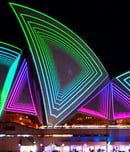
Vivid Sydney is a dazzling celebration that transforms the city into a vibrant playground of lights, music, and creativity. For weeks, iconic landmarks and urban spaces glow with stunning light installations and 3D projections, captivating both locals and tourists. This festival draws millions of visitors each year, offering an enchanting...
- Australia

World Redhead Day
Celebrate World Redhead Day, honoring the rare beauty, genetics, and culture of red hair with fun events, community pride, and redhead-positive history.

World Lindy Hop Day
Celebrate World Lindy Hop Day by honoring Frankie Manning, exploring Harlem’s swing heritage, and enjoying energetic jazz-fueled social dance worldwide.
- Singapore
- South Africa
- Sweden
- and 2 more
National Sorry Day
Discover the meaning of National Sorry Day, honoring the Stolen Generations, promoting reconciliation, and encouraging learning, reflection, and community support.
- Australia
Seize Every Day
Join free for personalised recommendations, email reminders and exclusive guides. Never miss a day.