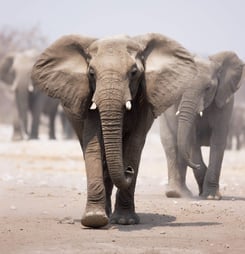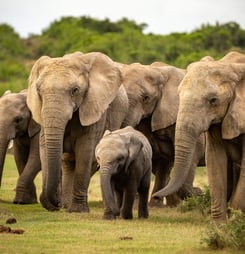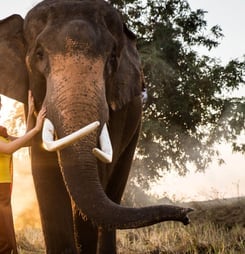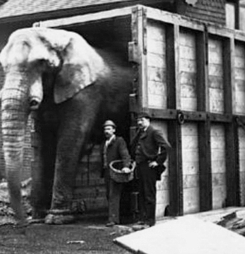
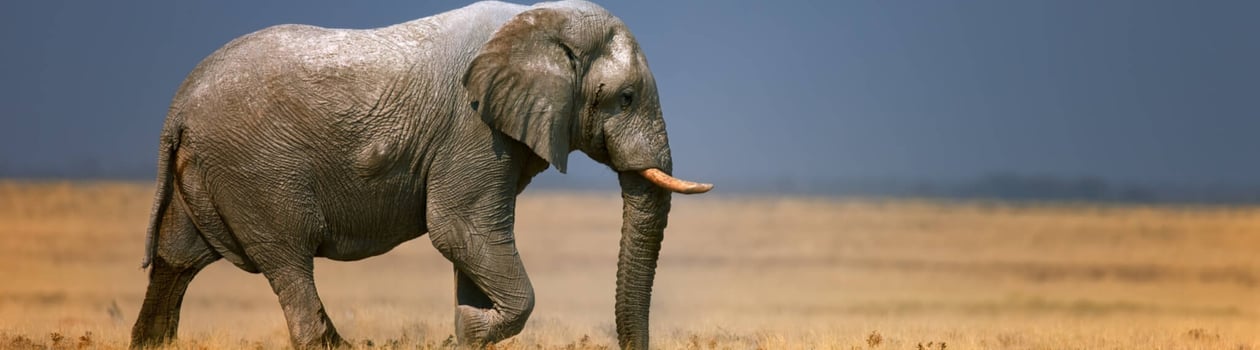
Elephants are known as the most enormous land animal and a surprisingly gentle giant in the animal kingdom.
Emotional, intelligent and beautiful in the wild, sadly elephant populations have been rapidly decreasing due to various threats, perhaps most significantly poaching.
Save The Elephant Day aims to change this alarming trend by educating people about elephants and the plights they face, encouraging everyone to do their bit and help save them from extinction.
Save The Elephant Day Timeline
Domestication of Asian Elephants
Archaeological evidence from the Indus Valley and early South Asian cultures shows people capturing and training Asian elephants for labor, warfare, and ceremonial purposes, beginning a long history of human–elephant interaction.
War Elephants in Ancient Empires
Alexander the Great’s army encounters large numbers of war elephants used by Indian rulers, while around the same era other powers like the Persians and later the Carthaginians deploy elephants in battle, cementing their military and symbolic importance.
Religious Elevation of Elephants in South Asia
Texts and temple art from this period more fully establish the Hindu god Ganesha, depicted with an elephant head, and Buddhist traditions that revere white elephants, embedding elephants deeply in religious iconography and ritual.
Industrial Ivory Trade Expands
European and American demand for piano keys, billiard balls, and decorative items made from ivory fuels massive hunting of African elephants, with colonial-era trade networks exporting tusks at a scale that begins to devastate wild populations.
Modern Elephant Conservation Emerges
As poaching intensifies, newly independent African nations and conservation scientists launch national parks, game reserves, and early anti-poaching units, and international concern over the fate of elephants starts to build.
Global Ivory Trade Ban Under CITES
Parties to the Convention on International Trade in Endangered Species of Wild Fauna and Flora (CITES) vote to list African elephants on Appendix I, effectively banning most international commercial ivory trade and marking a turning point in coordinated elephant protection.
China Implements Domestic Ivory Ban
China, historically the world’s largest legal ivory market, closes its domestic ivory trade, a move conservation groups credit with sharply reducing legal ivory sales and changing market incentives that had driven poaching of African elephants.
How to Celebrate Save The Elephant Day
Support a Conservation Charity
One of the best ways to celebrate Save The Elephant Day is to support or even volunteer for an organization that focuses its efforts on the conservation of these creatures, for example by helping to prevent poachers from killing elephants for their ivory tusks.
Organizations such as the World Wide Fund for Nature (WWF), Fauna & Flora International (FFI) and the Elephant Crisis Fund (ECF) do a great job protecting these creatures and there are plenty of ways you can get involved, for example by adopting an elephant for yourself or a loved one.
Visit an Animal Sanctuary
You can even save up some money and take a trip to an animal sanctuary that cares for elephants.
These projects can help with the rehabilitation of abused animals that have been rescued from exploitation, as well as with the housing of wild elephants that are sick or orphaned. You could also go and see some elephants in the wild by visiting Africa or Asia.
Promote the Day
Save The Elephant Day is all about raising awareness, so take the time to learn more about these creatures by researching facts about the elephant, and then take an active effort in educating other people.
For example, you could post flyers, share information on social media and show your support for the elephant through events and fundraisers.
There are plenty of ways you could help raise funds for elephant conservation. How about a themed bake sale or a ‘pin the tail on the elephant’ contest? Why not try auctioning off some elephant artwork or other memorabilia?
Or you could organize an ‘elephant walk’ and compete to see who can plod their way the farthest!Whatever you do to celebrate, be sure to share this important day with your friends, family neighbors and colleagues and help save the elephants together!
A Brief Education in Elephants
There are currently three species of elephant spread across Africa and Asia: the African bush elephant, the African forest elephant and the Asian elephant.
Characterized by their enormous size and highly adept trunks, these creatures are intelligent, social and largely gentle giants.
They’ve been shown to display a range of emotions such as joy, anger and grief and live in complex social structures – matriarchal herds for the female cows and calves and a solitary lifestyle or bachelor herds for the male bulls.
Elephants are highly communicative animals, producing various noises including infrasonic, creating seismic vibrations over long distances and greeting each other through touch.
Their impressive trunks provide them with an excellent sense of smell, a handy snorkel when swimming and even a delicate nutcracker.
History of Save The Elephant Day
Elephants are what is known as a keystone species due to their effect on their environment and the flora and fauna around them.
Their size and strength allow them to shape the habitats they live in, for example by digging new watering holes. They are also vital for spreading seeds, facilitating the reproduction of various plant and tree species.
They have also long been valued in human culture, admired for their wisdom, strength and sociable natures. In addition, elephants have commonly featured in architecture, whether engravings on cave walls, sculptures in Buddhist temples or stone carvings on Gothic churches.
These fascinating creatures have also been revered in various world religions, believed to house the souls of ancestors and linked with thunder and lightning, for example. Perhaps the best-known example is the Hindu god Ganesha, who is depicted as having the head of an elephant.
Elephants are frequently used as working animals in Asia, with people drawing on their incredible strength to carry heavy loads in construction projects or provide a mode of transport. In ancient times they were even used in various wars.
Yet despite our affinity with and indebtedness to these amazing animals, our treatment of them has sadly led to a decline in numbers and a proliferation of abused and exploited elephants.
The main culprit in population decline is the ivory trade – although it has largely been banned since the late 1980s, illegal poaching continues to this day, with one African elephant killed every 30 minutes for its tusks.
Other threats to the elephant include habitat loss and fragmentation, usually caused by increased urbanization, and conflicts with humans over crops. There are also numerous instances of maltreated and neglected elephants in captivity, for example those used in circuses or as tourist attractions.
Sadly, African bush elephants and Asian elephants are both listed as an endangered species by the International Union for Conservation of Nature (IUCN), while African forest elephants are classed as critically endangered, with their population rapidly declining.
While these facts are certainly sobering, all hope is not lost! Various organizations are working hard to increase the number of wild elephants and to rehabilitate those rescued from unpleasant circumstances.
And real change is possible – lobbying efforts recently induced China, previously the biggest ivory market globally, to ban the trade in 2018, helping reduce the threat to elephants.
To celebrate Save The Elephant Day, people learn about the awesome elephant and make an effort to improve the worrying statistics regarding their numbers by donating to conservation organizations.
Together we can work to protect these precious creatures, and that’s what Save The Elephant Day is all about!
Facts About Save The Elephant Day
Elephant Brains Rival Some Great Apes
Elephants have the largest brains of any land animal, and brain structures linked to emotion and memory are particularly well developed.
Research has shown that elephants can recognize themselves in mirrors, remember the locations of water sources for many years, and distinguish between different human languages, suggesting a level of cognition comparable in some respects to great apes.
Forest Elephants Are Major “Gardeners” of African Rainforests
Central African forest elephants are crucial to maintaining dense, carbon-rich rainforests. By selectively eating and dispersing seeds, and by trampling or removing smaller plants, they favor slow-growing tree species with dense wood.
Studies estimate that the loss of forest elephants could reduce aboveground biomass in some rainforests by more than 7 percent, making these habitats less effective at storing carbon.
Elephants Engineer Water Sources in Dry Landscapes
In arid regions, elephants dig into dry riverbeds with their trunks and feet to reach groundwater, creating small wells that are then used by many other species, from antelopes to birds.
Field studies in African savannas have documented that these elephant-dug wells can significantly increase access to water for wildlife during droughts and can even influence where other animals choose to move and forage.
Elephants Communicate Using Infrasound Over Miles
Elephants produce very low-frequency rumbles, some below the range of human hearing, that can travel several kilometers through the air and ground.
Researchers using acoustic recordings and field observations have shown that these infrasonic calls help coordinate movements between distant family groups, signal reproductive status, and warn of threats, functioning as a kind of long-distance social network.
African and Asian Elephants Face Different Primary Threats
While poaching for ivory has driven dramatic declines in African elephant populations, Asian elephants are more strongly impacted by habitat loss and fragmentation.
The International Union for Conservation of Nature notes that most Asian elephants now live in highly fragmented landscapes where they frequently encounter people, leading to crop-raiding, injuries, and deaths on both sides, even in areas with relatively little ivory poaching.
Beehive Fences Can Reduce Crop-Raiding by Elephants
One practical way to reduce conflict between farmers and elephants involves hanging beehives along fence lines around fields.
Experiments in Kenya have shown that elephants, which are wary of stinging bees around their eyes and inside their trunks, avoid entering farms protected by such “beehive fences,” cutting crop-raiding incidents while also providing farmers with honey as an additional income source.
War Elephants Once Changed the Course of Battles
For thousands of years, elephants were used as powerful instruments of war across Asia, the Middle East, and parts of Europe.
Historical records describe war elephants breaking enemy lines, trampling infantry, and carrying archers or spearmen on their backs, with notable use by Indian kingdoms, Carthaginian general Hannibal during his campaign across the Alps, and various Hellenistic armies before the tactic declined with the spread of firearms.