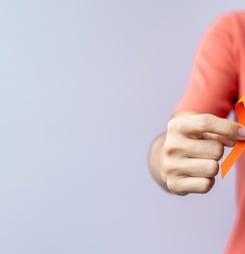

Sometimes, a tiny mark can carry a huge message. That’s the idea behind World Semicolon Day. Instead of ending a sentence, a semicolon lets it keep going, just like people do after tough times.
The day uses this symbol to highlight the strength it takes to live with mental health struggles. For many, it’s a quiet but powerful sign that says, “I’m still here.” That message has spread far beyond grammar books and into real lives.
People wear it, draw it, even tattoo it to speak without words. World Semicolon Day invites everyone to recognize the weight behind silent battles. It opens space for real talk about things often left unsaid.
You don’t need perfect words to support someone; sometimes, presence is enough. This day calls for kindness, honesty, and care that goes deeper than surface smiles. It also encourages people to see mental health the way they see physical health: something that can be supported, treated, talked about, and taken seriously without shame.
In practice, the semicolon has become a kind of shared shorthand. It can mean survival after depression or anxiety. It can mean continuing after grief, trauma, addiction, or self-harm. It can also represent standing beside someone else who is struggling, even if the supporter does not share the same experience.
The mark does not diagnose, label, or “sum up” a person’s life. It simply offers a reminder that a story can pause, change direction, and still move forward.
How to Celebrate World Semicolon Day
World Semicolon Day offers a chance to support mental health awareness and show solidarity with those facing emotional challenges. Here are several meaningful ways to participate:
Wear a Semicolon Symbol
Incorporate the semicolon into your attire, whether through clothing, accessories, jewelry, enamel pins, or a temporary tattoo. Some people choose subtle designs that sit close to the skin, while others go bold with shirts or hats meant to start conversations. Either approach works. The point is not to “prove” anything but to signal openness.
A semicolon worn in public can prompt a gentle check-in from someone who recognizes it, or it can give a struggling person a moment of relief when they realize they are not the only one carrying something heavy. For workplaces, clubs, and schools, a semicolon-themed dress day can be a low-pressure way to show support, especially when paired with clear information about where people can turn for help.
For those who want to participate privately, the symbol can be worn under clothing, drawn on a wrist with a washable marker, placed on a phone lock screen, or used as a small token on a keychain. It still counts. World Semicolon Day is about meaning, not visibility.
Share Your Story
Open up about your experiences with mental health by writing a blog post, recording a video, creating a poem, or speaking in a community setting. Personal stories can inspire others and foster a sense of community, especially when they include details that make recovery feel real rather than polished.
Sharing a story does not require revealing everything. It can be as simple as describing what helped during a difficult season: starting therapy, adjusting medication, learning coping skills, setting boundaries, joining a support group, returning to routines, or asking for help before things became a crisis. Some people share the “messy middle,” not just the triumphant ending, because that is where many listeners currently live.
It also helps to share responsibly. Avoid presenting one strategy as a cure-all, and avoid graphic descriptions of self-harm or suicide attempts. The goal is to reduce stigma and increase hope, not to overwhelm. A thoughtful story can end with a reminder that help exists and that reaching out is a sign of strength, not failure.
Those who are not ready to share their own story can amplify someone else’s message, recommend a book that taught them empathy, or simply say, “I’m learning, and I’m here.” That kind of honesty goes a long way.
Reach Out to Others
Make time to check in with friends, family members, neighbors, or colleagues. A simple message or call can have a meaningful impact on someone who may be struggling, especially when it feels thoughtful and genuine. Instead of saying, “Let me know if you need anything,” try something more specific, such as: “I’ve been thinking about you. Do you want to talk for a bit?” or “Would it help if I brought you dinner, or would you prefer some quiet time?” or “Would you like some company for a walk?”
The most supportive check-ins usually include three key elements:
- Permission to be open: “You don’t have to pretend you’re okay with me.”
- Patience: “Take your time—there’s no pressure to explain everything.”
- Practical help: “Is there one small thing I can help you with today?”
If someone says they feel unsafe, treat it seriously. Stay calm, listen without judgment, and encourage them to seek professional help. It can also be helpful to ask direct but caring questions, such as whether they are having thoughts of harming themselves. Many mental health professionals emphasize that respectful honesty can reduce feelings of isolation and create space for immediate support.
Even outside of urgent situations, reaching out still matters. Many people who seem to be coping well may still feel alone. World Semicolon Day reminds us that a kind check-in is not intrusive when it comes from genuine care.
Support Mental Health Organizations
Think about donating to or volunteering with organizations that focus on mental health awareness and suicide prevention. Your contribution can support essential services such as helplines, community education, support groups, caregiver training, and programs that improve access to therapy.
Volunteering does not have to involve crisis response roles. Many organizations need help with event organization, social media, fundraising, administrative work, translation, or community outreach. Some also offer peer support opportunities after training. If giving time or money is not possible, there are still ways to help—such as sharing reliable information, supporting mental health initiatives at work, or helping local schools or community centers compile useful resources.
Another meaningful way to contribute is by promoting a culture that makes seeking help easier. This might involve encouraging workplaces to offer mental health days, supporting better insurance coverage for treatment, or helping normalize therapy as a standard part of healthcare rather than a last resort.
Educate Yourself and Others
Take part in workshops, read books and articles, or join discussions to deepen your understanding of mental health. Sharing knowledge helps reduce stigma and encourages empathy, but learning itself is equally valuable. Many people hesitate to speak up because they worry about saying the wrong thing. Education can replace that uncertainty with confidence and practical skills.
Useful topics to explore include:
- Common signs of depression and anxiety, and how symptoms can vary between individuals.
- The impact of stress, sleep, trauma, and substance use on mental health.
- What therapy typically involves, and why finding the right therapist can take time.
- How medication can support some individuals, how side effects work, and the importance of medical supervision.
- How to respond when someone shares experiences of self-harm or suicidal thoughts, including how to stay present without trying to immediately fix the situation.
It is also important to use language that reduces stigma. For example, replacing “They’re just seeking attention” with “They’re asking for connection,” or replacing “What’s wrong with you?” with “What happened, and how can I support you?” Small changes in wording can make the difference between someone feeling judged or understood.
In group settings, consider organizing simple, approachable educational activities. A book club focused on mental health stories, a discussion group about managing stress, or a presentation on coping strategies can help make mental health a normal topic of conversation. Education is not only about information—it creates space for open dialogue.
History of World Semicolon Day
Semicolon Day began in 2013. Amy Bleuel created it to honor her father, who died by suicide. She also wanted to speak up for people who struggle with mental health. Amy had battled depression and self-harm herself.
The semicolon became her chosen symbol because, in writing, it means the sentence isn’t over. That message felt powerful. It matched her belief that life could keep going, even after dark times.
In grammar, a semicolon is a connector. It links two related thoughts, letting them stand on their own while still belonging together. That nuance is part of why the symbol resonates. It suggests a pause without erasure, a break that still leaves room for what comes next. It also carries a gentle message about complexity: a person can hold pain and hope at the same time. They can struggle and still keep moving.
Amy shared the idea online. It spread fast. People started drawing semicolons on their arms or getting them as tattoos.
They wanted to show support for those facing similar struggles. The mark said, “My story isn’t finished.” It became a quiet way to speak out and stand with others.
As the symbol traveled, it took on layers of meaning. For some, the semicolon represented survival after a single crisis moment. For others, it stood for the ongoing work of recovery, the kind that includes relapses, restarts, and ordinary days that still feel like accomplishments. Many people chose the semicolon because it did not require a long explanation. It offered a respectful way to acknowledge pain without making it a public spectacle.
This is one reason the semicolon became popular as body art. Tattoos can serve as personal anchors, reminders of promises made to oneself, and markers of identity. A semicolon tattoo is often described as a commitment to continue, or as a tribute to someone lost.
Importantly, it can also be a statement that mental health struggles do not cancel a person’s worth. The design is typically small, but small does not mean insignificant. For many, it is a daily, visible reminder to keep writing the next line.
Over time, the movement grew beyond one person’s initial message into a broader community response. The semicolon began appearing in support groups, on social media posts, in classroom discussions, and in workplace awareness efforts.
People used it as a conversation starter, an invitation to check in, or a way to recognize someone’s courage without demanding details. The symbol offered a rare blend of privacy and solidarity: it could be deeply personal, yet widely understood.
In 2016, the first World Semicolon Day was held. Since then, it has become an international event. On this day, many talk more openly about depression, anxiety, and suicide prevention. The symbol still carries a deep message: you’re not alone, and things can get better.
The growth of World Semicolon Day reflects a wider cultural shift toward discussing mental health more openly, while still acknowledging that stigma remains. Many people live with conditions that are invisible to others.
They may be managing panic attacks, intrusive thoughts, eating disorders, bipolar disorder, PTSD, or the long aftermath of grief. Some function outwardly while feeling disconnected inside. World Semicolon Day creates a shared language for that invisible reality, reminding communities that someone’s smile is not always the full story.
The day also highlights a key truth: support is not only clinical. Professional care like therapy, medication management, and crisis services can be lifesaving, but so can consistent human connection.
A reliable friend, a supportive teacher, a compassionate manager, or an attentive family member can make it easier for someone to seek treatment and stick with it. In that sense, the semicolon is not just a symbol of personal endurance. It is also a prompt to build environments where people do not have to hide.
Amy’s effort turned a small sign into a global voice. Each year, the day reminds people to listen, care, and offer hope in simple but strong ways. Her vision lives on through every person it reaches, whether they carry the semicolon as a tattoo, a doodle, a piece of jewelry, or simply an idea that helps them choose the next sentence over the ending.
The Semicolon: A Small Mark with a Powerful Role in Writing
The semicolon may look simple, but it carries a rich history and a precise function in language.
From its introduction during the Renaissance to its role in shaping complex, flowing sentences today, this punctuation mark helps connect ideas with clarity and nuance.
Understanding how and why it is used reveals not only how writing has evolved but also how meaning can be structured more thoughtfully and effectively.
The Renaissance Birth of the Semicolon
The semicolon first appeared in 1494 in the work of Venetian printer Aldus Manutius, who introduced it in his edition of Pietro Bembo’s “De Aetna.”
Manutius used this new mark to indicate a pause stronger than a comma but weaker than a period, helping readers follow complex humanist prose at a time when punctuation conventions in printed Latin and vernacular texts were still in flux.
Semicolons and the Architecture of Complex Sentences
Modern grammars describe the semicolon as a mark that links two closely related independent clauses without a coordinating conjunction, signaling that the ideas belong together in a single larger unit of thought.
This role allows writers to create complex, flowing sentences that preserve nuance and continuity while avoiding the choppiness of multiple short sentences or the ambiguity that can arise from stringing ideas together with commas alone.
A Punctuation Mark in Uneven Retreat
Corpus studies of contemporary American English show that semicolons appear far more often in edited prose, such as books and academic journals, than in informal digital communication like emails, text messages, and social media posts.
Researchers attribute this uneven distribution to the rise of conversational writing styles and shorter sentence structures online, which reduce the perceived need for a mark that specializes in linking longer, carefully balanced clauses.
Style Guides Split on Semicolon Use
Major style guides give markedly different advice about semicolons, revealing how punctuation choices are shaped by professional norms.
The Associated Press Stylebook generally favors brief, simple sentences and often suggests periods where semicolons might otherwise appear, whereas the Chicago Manual of Style and the MLA Handbook provide detailed rules for using semicolons to join related clauses or manage intricate series, especially in scholarly and literary contexts.
Project Semicolon and the “Story Isn’t Over” Metaphor
Project Semicolon, founded in 2013, adopted the semicolon as a metaphor for continuing life after mental health crises, echoing the punctuation mark’s role in signaling that a sentence will go on.
The organization’s campaigns encouraged people to draw or tattoo semicolons on their bodies as a personal statement against self-harm and suicide, and international media coverage helped popularize the symbol within mental health and recovery communities.
Tattoos as Psychological Coping and Identity Markers
Research summarized by the American Psychological Association notes that tattoos can serve as tools for coping and meaning-making, especially for people who have experienced trauma, bereavement, or major life transitions. Studies in mental health and sociology report that memorial or symbolic tattoos often help individuals reclaim their bodies, externalize difficult experiences, and communicate personal narratives nonverbally, which may explain the appeal of certain mental health–related tattoo designs.
Storytelling and Contact as Anti-Stigma Strategies
Evidence from psychiatric and public health research shows that contact-based and storytelling interventions, where people share lived experiences of mental illness and recovery, can be more effective at reducing stigma than education alone.
Reviews cited by the World Health Organization and meta-analyses in psychiatric journals find that hearing personal narratives tends to increase empathy, improve attitudes toward treatment, and encourage help-seeking behavior among audiences.