The facts below highlight the unique role of the U.S. Coast Guard Reserve across different periods of history, from its citizen-sailor model and specialized Port Security Units to its major contributions during World War II and peak strength in the Vietnam era. Together, they show how reservists have consistently combined civilian expertise with military readiness to support maritime security at home and abroad.
U.S. Coast Guard Reserve Birthday
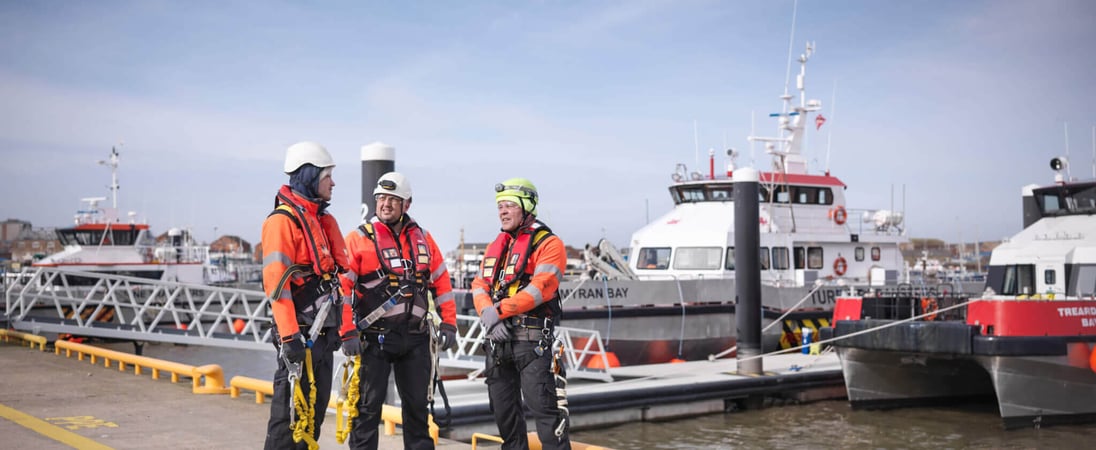
The U.S. Coast Guard Reserve Birthday is a special day honoring the vital contributions of the Coast Guard Reserve.
This day celebrates the dedicated individuals who support national security, maritime safety, and disaster response. Their work ensures that our waterways remain safe and that the Coast Guard can fulfill its mission effectively.
By celebrating this day, we recognize the Reservists’ hard work and encourage a greater appreciation for their vital contributions to our country’s safety and security.
How to Celebrate U.S. Coast Guard Reserve
Throw a Themed Party
Celebrate the U.S. Coast Guard Reserve Birthday by hosting a nautical-themed party. Decorate with blue and white colors, anchor motifs, and life preservers.
Guests can wear sailor hats and enjoy seafood dishes. Add some beach-themed games for extra fun.
Share Stories Online
Create a buzz on social media by sharing stories and photos of Reservists in action. Use hashtags related to the Coast Guard Reserve to connect with others.
Encourage friends and family to share their own experiences or messages of appreciation.
Watch a Coast Guard Movie
Host a movie night featuring films that showcase the bravery and dedication of Coast Guard Reservists. “The Guardian” and “The Finest Hours” are great choices. Pop some popcorn, dim the lights, and enjoy the action-packed stories.
Visit a Maritime Museum
Spend the day exploring a maritime museum. Many museums have exhibits dedicated to the Coast Guard’s history and missions. It’s a great way to learn more about the role of Reservists and see artifacts up close.
Write Thank-You Notes
Gather friends and family to write thank-you notes to Reservists. Expressing gratitude for their service can brighten their day. Send the notes to local Coast Guard units or share them online with relevant hashtags.
Participate in a Local Event
Look for local events celebrating the Coast Guard Reserve Birthday. Parades, ceremonies, or community gatherings can be fun to honor Reservists. Check community boards or local news for event listings.
Support a Coast Guard Charity
Donate to a charity that supports Coast Guard families and Reservists. Organizations like the Coast Guard Foundation provide resources and assistance. Every little bit helps and shows appreciation for their hard work.
Significance of U.S. Coast Guard Reserve Birthday
Celebrating the Coast Guard Reserve Birthday highlights the Reserve’s role in national defense and community service.
Reservists are crucial in responding to natural disasters, like hurricanes and floods, and providing essential support during military operations. Their readiness and dedication help protect our nation’s waters and enhance the Coast Guard’s capabilities.
This day is important because it honors the Reservists’ commitment and sacrifice. It also reminds us of the Coast Guard Reserve’s unique history and ongoing mission!
U.S. Coast Guard Reserve Birthday Timeline
1790
Creation of the Revenue-Marine, Forerunner of the Coast Guard
The First Congress authorizes a fleet of ten cutters to enforce tariff laws and prevent smuggling, laying the foundation for the modern U.S. Coast Guard and its future reserve components.[1]
23 June 1939
Civilian Coast Guard Reserve Established
Congress passes legislation creating a non-military Coast Guard Reserve of unpaid civilian boat owners to promote boating safety and support Coast Guard missions, a precursor later redesignated as the Coast Guard Auxiliary.
19 February 1941
Coast Guard Reserve and Auxiliary Act Creates Military Reserve
The Coast Guard Reserve and Auxiliary Act reorganizes the 1939 civilian reserve, renaming it the Auxiliary and establishing a new, uniformed Coast Guard Reserve as the service’s military reserve component.[2]
1942
Women’s Reserve “SPARs” Formed
The Coast Guard establishes its Women’s Reserve, known as SPARs (“Semper Paratus—Always Ready”), allowing women to take shore-side billets and freeing male Coast Guardsmen and reservists for sea duty during World War II.[3]
1948–1950
Postwar Rebuilding and Paid Drilling Reserve
Following World War II demobilization, a 1948 presidential directive to strengthen reserve forces led Congress by 1950 to fund organized, paid drilling Coast Guard Reserve units focused on port security and mobilization readiness.[4]
1965–1969
Cold War and Vietnam-Era Expansion
During the Vietnam era, the Coast Guard Reserve grows into a major mobilization force, with selected reserve strength peaking at more than 17,000 members by 1969 and supporting overseas and homeland security missions.[5]
Post-1970s
Shift to Operational Augmentation and Disaster Response
As Cold War mobilization needs change, the Coast Guard Reserve increasingly focuses on augmenting daily Coast Guard operations and responding to disasters, from major floods to mass migrations and maritime emergencies.[6]
History of U.S. Coast Guard Reserve Birthday
The U.S. Coast Guard Reserve was officially established by Congress in 1941. This act created the Reserve as a branch of the Coast Guard.
Initially, the Reserve included both civilian volunteers and military personnel. The volunteers used their own boats for patrol duties along the coast.
The Coast Guard Reserve played a significant role during World War II. Over 90% of the 214,000 Coast Guard members were Reservists. They performed various duties, including coastal patrols, port security, and support for military operations. Their efforts contributed greatly to national security during the war.
After the war, the Reserve continued to evolve. Congress funded a paid drilling Reserve in 1950, enhancing the Reserve’s capabilities.
The Coast Guard Reserve has since supported numerous missions, including disaster response and homeland security. Today, it remains essential to the Coast Guard’s mission to protect and serve the nation’s maritime interests.
U.S. Coast Guard Reserve Birthday Facts
-
Citizen-Sailors With Dual Civilian and Military Careers
Coast Guard reservists typically serve in a part-time “drilling” status while holding full-time civilian jobs, creating a uniquely dual-tracked career path.
Many bring specialized civilian skills—such as engineering, law enforcement, medicine, or information technology—directly into Coast Guard missions, which allows the service to access niche expertise without maintaining those specialties full-time on active duty.
-
Reserve Port Security Units Deploy With the Navy and Allies
One of the Coast Guard Reserve’s most specialized capabilities is its Port Security Units (PSUs), which are largely reserve-manned and designed to deploy rapidly worldwide.
Since the 1990–1991 Gulf War, PSUs have routinely operated alongside the U.S. Navy and coalition partners to protect ports, ships, and critical maritime infrastructure in conflict zones and contingency operations.
-
Reservists Made Up Over 92% of the WWII Coast Guard
During World War II, the Coast Guard became a predominantly reserve force: more than 92% of the 214,000 people who served in the service were reservists, including both regular and temporary categories.
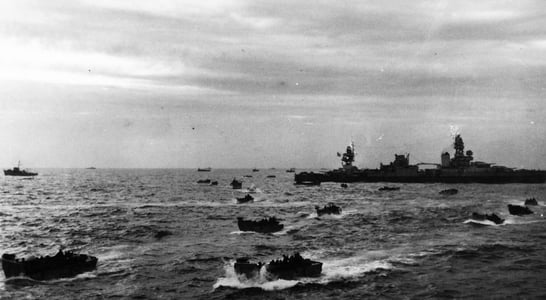
These reservists carried out everything from Atlantic convoy escort missions and beach patrols to manning amphibious landing craft during major Allied invasions.
-
Reserve Strength Peaked During the Vietnam Era
The Selected Reserve—those who drill regularly and are most ready for mobilization—reached its post–World War II peak during the Vietnam conflict. By the mid-1960s, the Coast Guard’s Selected Reserve climbed to more than 18,000 members, reflecting the service’s expanded support to military operations and maritime security during that period.
-
Reservists Have Been Critical in Major Environmental Disasters
Coast Guard reservists have repeatedly been mobilized to respond to maritime environmental crises, including major oil spills. During the 1989 Exxon Valdez disaster in Alaska, reserve personnel made up a majority of the Coast Guard’s on-scene force, helping coordinate cleanup operations, enforce safety zones, and support investigations into one of the most serious marine spills in U.S. history.
-
A Reserve “Surge Force” After the 9/11 Attacks
Following the September 11, 2001, terrorist attacks, the Coast Guard Reserve rapidly expanded its active-duty presence to help secure American ports and waterways.
Within days, up to 1,100 reservists were on duty, bolstering harbor patrols, waterside security for critical infrastructure, and protection of military and commercial shipping under the newly intensified homeland security mission.
-
The Reserve and Auxiliary Serve Side by Side but Differ in Status
The Coast Guard Reserve is a military reserve component, while the Coast Guard Auxiliary is a uniformed but civilian volunteer organization—yet they often work alongside each other.
Reservists can be mobilized under federal military authority for defense and security operations, whereas Auxiliarists focus on boating safety education, vessel safety checks, and non-law-enforcement missions that support the Coast Guard’s presence in local communities.
U.S. Coast Guard Reserve Birthday FAQs
What was the original purpose of the Coast Guard Reserve when it was established in 1939?
Initially, the Coast Guard Reserve, established in 1939, served as a civilian volunteer force.
Its primary mission was to promote safety at sea, enhance boater efficiency, assist with law compliance, and support active-duty Coast Guard members.
This civilian reserve laid the groundwork for the modern Coast Guard Auxiliary.
How is the U.S. Coast Guard Reserve different from the Coast Guard Auxiliary?
During World War II, over 90% of the 214,000 Coast Guard personnel were Reservists.
They performed various duties, including coastal patrols, port security, and support for military operations. Their efforts significantly bolstered national security during the war.
What is the significance of the acronym “SPARs” in Coast Guard history?
“SPARs” stands for “Semper Paratus—Always Ready.” It was the nickname for the U.S. Coast Guard Women’s Reserve during World War II.
Established in 1942, SPARs allowed women to serve in roles that freed men for sea duty, marking a pivotal moment in the Coast Guard’s history.
What types of missions do Coast Guard Reservists typically support in peacetime?
In peacetime, Coast Guard Reservists serve as a trained surge force that augments active-duty units in missions such as search and rescue, port and waterways security, marine safety inspections, environmental protection, and maritime law enforcement support.
They train locally but can be deployed nationally or internationally when additional capacity is needed for operations, contingencies, or large-scale exercises. [1]
How are Coast Guard Reservists mobilized during emergencies or national security crises?
Coast Guard Reservists can be mobilized under various legal authorities that allow the federal government to activate members of the Ready Reserve for domestic emergencies, disasters, or national defense operations.
Depending on the situation, they may be called up voluntarily or involuntarily for limited domestic emergency duty, partial mobilization, or full mobilization, with Coast Guard policy and federal statutes specifying time limits and the roles of the Department of Homeland Security and Department of Defense in approving activation. [2]
How does the Coast Guard Reserve support environmental protection efforts?
The Coast Guard Reserve plays a crucial role in environmental protection by participating in oil spill response operations, conducting maritime pollution investigations, and enforcing environmental laws.
Their efforts help safeguard marine ecosystems and ensure compliance with environmental regulations.
What commitment and training are involved in joining the Coast Guard Reserve?
Most enlisted Coast Guard Reservists complete the same eight-week recruit basic training at Training Center Cape May as active-duty members, followed by specialized technical training for their rating.
After initial training, typical service involves drilling one weekend a month and about two weeks of annual training, with additional periods of active duty possible for exercises, missions, or mobilizations. [3]
How has the role of women in the Coast Guard Reserve changed over time?
Women have been permitted to serve in the regular Coast Guard since 1973.
In 2022, Linda L. Fagan became the first woman named commandant of the Coast Guard and the first woman to lead one of the U.S. armed forces.
In what ways has the Coast Guard Reserve contributed to disaster response in recent decades?
Since the early 2000s, Coast Guard Reservists have been heavily involved in hurricane and disaster response, providing surge manpower for search and rescue, port reopening, pollution response, and logistical support.
They have also supported homeland security and migrant interdiction operations, including thousands of reserve duty days in missions like Operation Vigilant Sentry, which focuses on irregular maritime migration in the Caribbean region. [4]
How has the Coast Guard Reserve responded to major natural disasters?
The Coast Guard Reserve has played a vital role in responding to natural disasters like Hurricane Katrina in 2005.
Reservists helped with search and rescue missions, medical evacuations, and delivering supplies to affected areas.
During Hurricane Harvey in 2017, they assisted in rescuing over 11,000 people and provided crucial logistical support.
Their readiness and adaptability in disaster situations demonstrate their essential role in emergency management and humanitarian aid.
What career fields are available to members of the Coast Guard Reserve?
Coast Guard Reservists can serve in a wide range of enlisted and officer specialties that mirror those on active duty, including maritime law enforcement, boat operations, marine safety and inspections, environmental response, engineering, information technology, health services, and logistics.
Many reservists gain skills and credentials that are transferable to civilian careers, and some join through programs tailored to prior-service members or civilians with existing professional qualifications. [5]
Also on ...
View all holidays
International Tug of War Day
Two teams fiercely pull a rope in opposite directions in this exciting competition that has been around for centuries.



We think you may also like...
D-Day
On this day, Allied forces launched a massive invasion of Normandy, France during World War II, resulting in a pivotal victory that helped turn the tide of the war.