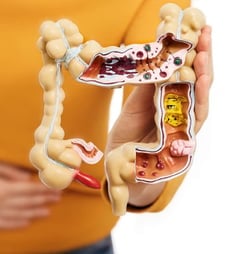

Breaking down foods to allow the body to absorb nutrients, the digestive system in the human body is kind of amazing!
Not only does the gut impact nutrition, but it also relates to the immune system, mental health, and general well-being. Taking good care of yourself means being aware of the various foods and liquids that go into the body, and also learning how to treat the digestive system right!
World Digestive Health Day is here to act as a reminder of the important role that digestive health plays for the body and the entire person!
World Digestive Health Day Timeline
Hippocrates Links Diet and Digestive Health
Hippocrates teaches that food and digestion are central to disease, advising simple, fiber‑rich diets and observing that many illnesses begin in the gut.
Beaumont’s Experiments Reveal How the Stomach Digests Food
U.S. Army surgeon William Beaumont studies a patient with a gastric fistula, directly observing stomach secretions and showing that chemical processes, not just grinding, drive digestion.
First Successful Gastroscopy of a Living Person
Adolph Kussmaul performs the first successful gastroscopy using a rigid tube, opening the way for direct visual examination of the upper digestive tract in living patients.
Santiago Ramón y Cajal Describes the Enteric Nervous System
Cajal’s microscopic studies of nerve cells map the dense neural network in the gut, laying foundations for recognizing the enteric nervous system as a semi‑autonomous “second brain.”
Fiber’s Role in Digestive Disease Prevention Highlighted
Denis Burkitt and colleagues observe that low‑fiber Western diets correlate with constipation, diverticular disease, and colon cancer, renewing interest in fiber for digestive health.
“Second Brain” Concept Popularizes the Gut–Brain Connection
Neuroscientist Michael Gershon’s book “The Second Brain” presents decades of enteric nervous system research, bringing the gut–brain axis into mainstream medical and public awareness.
Human Microbiome Program Launches Systematic Study of Gut Bacteria
The U.S. National Institutes of Health begins the Human Microbiome Project, using genetic sequencing to map gut microbes and clarify their roles in digestion, immunity, and disease.
How to Celebrate World Digestive Health Day
Improve Your Digestive Health
The inner workings of the gut can be complicated and require a lot of balance.
But even though the digestive system may be complicated, for most people in the western world there are a few simple things that can be done to make improvements.
Consider talking to your doctor about implementing some of these ideas in honor of World Digestive Health Day:
- Ingest Probiotics. An important factor in keeping the gut microbiome balanced is the existence of this good bacteria, which can be found in certain foods like yogurts, kimchi, kombucha, sauerkraut, and many others
- Drink Plenty of Water. Proper hydration is vital for the digestive system to be able to absorb nutrients properly
- Eat Fiber Rich Foods. Most adults need at least 25-30 grams of fiber per day, about 1/4 of which needs to be soluble fiber
- Get Enough Exercise and Rest. Many people don’t realize the impact that appropriate movement and sleep can make on the digestive system
Attend a World Digestive Health Day Event
Medical professionals can observe World Digestive Health Day by attending the various events, forums, webinars, continuous education and other learning opportunities that are scheduled in honor of the day. For a list of events, check out the WGO website.
Read Some Books on Digestive Health
In celebration of World Digestive Health Day, those who are interested in learning more can head to the library or a local bookstore and pick up a copy of one of these or other books on the topic:
- The Mind-Gut Connection by Emeran Mayer, MD
- Why Has Nobody Told Me This Before? by Dr. Julie Smith
- The Good Gut by Justin & Erica Sonnenburg, PhDs
- Gut: The Inside Story of Our Body’s Most Underrated Organ by Giulia Enders
History of World Digestive Health Day
World Digestive Health Day was founded in 2004 through the efforts of the folks at the World Gastroenterology Organization (WGO). The event was established in honor of the 45th anniversary of the creation of the WGO, which took place on May 29, 1958.
The idea behind the day is to increase knowledge and understanding about digestive health through this campaign, encouraging increased public awareness and providing more accessible information.
Each year, the sponsors and organizers of World Digestive Health Day provide a theme that helps to pinpoint a specific topic related to the observance of the day. Some of the themes of past events have included:
- Digestive Health: Make It a Priority (2024)
- Your Digestive Health: A Healthy Gut from the Start (2023)
- Colorectal Cancer Prevention: Getting Back on Track (2022)
- Gut Microbiome – A Global Perspective (2020)
Facts About World Digestive Health Day
Gut Microbes Outnumber Human Cells in Genetic Terms
The microorganisms that live in the human digestive tract collectively carry more than 3 million genes, vastly outnumbering the roughly 20,000 to 25,000 genes in the human genome.
This microbial “second genome” produces vitamins, metabolites, and signaling molecules that influence digestion, immunity, and even brain function.
Most of the Immune System Resides in the Gut
An estimated 70 percent of the body’s immune cells are located in the gastrointestinal tract, particularly in gut-associated lymphoid tissue.
This concentration allows the gut to act as a frontline defense, constantly sampling food and microbes and deciding whether to mount an immune response or promote tolerance.
The Enteric Nervous System Contains Hundreds of Millions of Neurons
The digestive tract has its own extensive nervous system, called the enteric nervous system, containing between 200 and 600 million neurons, comparable to the number found in the spinal cord.
This “second brain” can coordinate many aspects of digestion independently of the central nervous system, including motility, secretion, and blood flow.
Fermented Foods for Digestion Date Back Thousands of Years
Many traditional diets independently developed fermented foods that support digestive health, such as kimchi in Korea, yogurt in the Middle East and Central Asia, and sauerkraut in Europe.
Archaeological and historical evidence shows that milk fermentation was practiced at least 7,000 years ago, long before people understood bacteria, suggesting empirical recognition of its digestive benefits.
Digestive Diseases Account for Millions of Deaths Worldwide
Disorders of the digestive system, including liver disease, colorectal cancer, peptic ulcer disease, and inflammatory bowel disease, collectively cause more than 2 million deaths each year globally.
In some regions, digestive diseases rank among the top causes of years of life lost and disability, highlighting how central gut health is to overall public health.
Stress and Mood Can Alter Gut Motility and Sensitivity
Psychological stress and mood disorders are closely linked with digestive symptoms such as abdominal pain, bloating, and altered bowel habits.
Research on the brain–gut axis shows that anxiety and depression can change gut motility and visceral sensitivity, which helps explain why conditions like irritable bowel syndrome frequently coexist with mental health disorders.
Astronauts’ Digestion Changes in Microgravity
In microgravity, food, gas, and fluids move differently through the digestive tract, which can alter motility, nutrient absorption, and the composition of the gut microbiome.
Space agencies design astronaut diets with controlled fiber content and reduced gas-producing ingredients to minimize discomfort and maintain gut function during long-duration missions.