
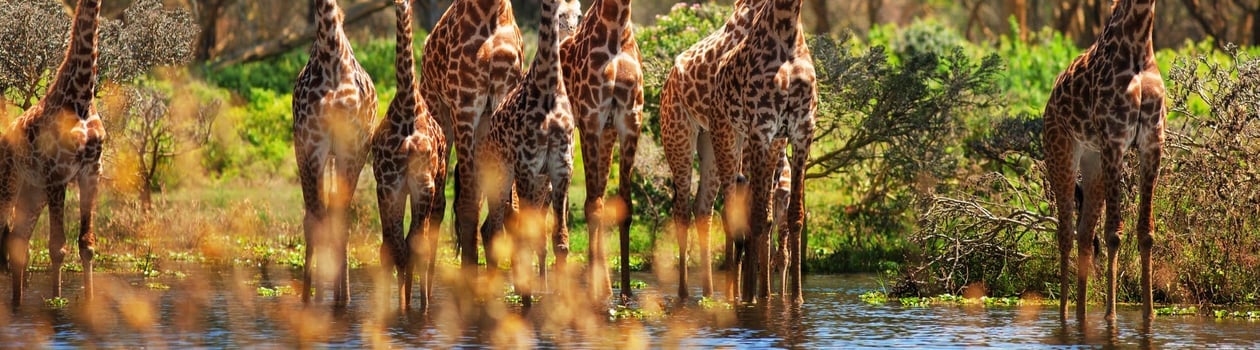
With their long, swaying necks, distinctive pattern on their furry coats and those endless spindly legs, giraffes are some very odd-looking creatures when you really think about it.
But we love them – and that’s why they’ve got a day of their own!
Whether you’re into conserving their native habitats, enjoy hanging out with our necky friends at the zoo or you just appreciate the joy of nature’s most weird and wonderful creatures, World Giraffe Day is a day of observance when you can really put your neck out!
How to Celebrate World Giraffe Day
Support Giraffes
The Giraffe Conservation Foundation (GCF) website has plenty of information for you if you wish to donate to the effort of saving the world’s giraffe population, and you should certainly take a look if you are fond of the long-necked creatures.
Even small donations count towards helping, and just a little money can go towards helping to ensure the future safety of the Masai giraffe.
Raise Awareness
Many zoos across your country will be taking part in fundraising and observance of this day – so if you want to get involved, you could pop along and play your part.
There are also opportunities to get involved via schools, NGOs, government institutions and conservation organizations too.
Most of the work on the day itself will be to raise awareness of the plight of the giraffe and to engage the community on the issue. Giraffes need people on the ground who understand the issues and are able to have an impact on the wider community!
Make It Artsy
If you’re an artist, then you could try painting an image that captures the essence of these beasts. You can convey their giant, striding nature on canvas and then perhaps share your work on social media.
For someone who is a writer, you could also pen an article on the dangers that giraffes face and the things that individuals can do to support the species for posterity.
While the vast majority of your audience will care about the plight of these animals, they won’t necessarily know what steps they can take to make a difference. Giraffes are often thousands of miles away in other countries.
Provide Resources
Your task might be to create a resource that people can use to take action to protect giraffes. Alternatively, you could create a journalistic piece, chronicling current issues facing the species.
Be sure to share information about giraffe conservation on your social networking accounts, and get the conversation started about keeping these beautiful animals a part of our wildlife.
GCF began celebrating World Giraffe Day as a way to raise awareness. The best thing you can do, therefore, is to help them in their effort and protect this marvelous species.
History of World Giraffe Day
The conservation and protection of wild animals have long been on our agenda – beautiful creatures such as giraffes are at risk in their natural habitat due to a number of factors, including poaching and destruction of their ecosystems and habitats.
World Giraffe Day was initiated in 2014 by the Giraffe Conservation Foundation and hopes to bring awareness of the amazing animal’s plight to every concerned person across the world while also celebrating these quirky creatures.
According to the GCF, there are only around 100,000 giraffes left in the wild, meaning they are approaching high-risk status.
In the IUCN Red List of Threatened Species, giraffes have recently had their listed status changed to ‘Vulnerable to extinction’ – their numbers in Africa have dropped hugely by around 40% in just the last three decades alone.
Specifically, the Masai giraffe has lost half of its numbers in the last 30 years, and now only around 32000 are remaining in Tanzania and in southern Kenya. For the most part, these drops in the population are due to the increase of human settlements and the loss of habitat that goes along with it.
It would be a tragedy if giraffes were to go extinct in the wild. Not only are they a friendly species, but they’re also an inspiration. They’re unique in the animal kingdom, owing to their long necks, and colorful markings.
Interestingly, there are four separate species of giraffe in the world. There’s the Masai giraffe that lives on the border between Kenya and Tanzania. Then there’s the reticulated giraffe, the southern giraffe that lives in countries like Botswana and the northern giraffe, which dominates much of the north of Africa. The giraffe, as you might guess, is the tallest animal in the world.
And no two individuals have the same spots. Every giraffe is different, just like how two people never have the same fingerprints.
Unfortunately, giraffes are officially extinct in more than seven African countries, highlighting the need to protect them. The GCF now has dozens of partners all over the world, committed to helping to preserve this majestic beast.
Parks in western countries regularly organize activities and games to celebrate the day, including face-painting in the style of giraffe spots! Many zoos also provide visitors with the opportunity to meet expert giraffe keepers and learn more about how they live, both in captivity and the wild.
There’s a desperate need for an event like World Giraffe Day. These creatures, like elephants, lions, and hippos, are an inspiration for children all around the world and a leading driver of conservation efforts. It is almost impossible to imagine an Africa where these giant beasts don’t roam the savannah.
Facts About World Giraffe Day
Giraffes’ High-Pressure Hearts
A giraffe’s heart has to generate roughly twice the blood pressure of most large mammals to push blood up its long neck to the brain.
To cope with this strain, the heart is thick-walled and powerful, and the arteries in the neck contain specialized valves and tight, muscular walls that prevent blood from rushing to the head when the animal lowers its neck to drink.
A Tall Tale of Evolution in the Neck
Although a giraffe’s neck can reach about 6 feet long, it still contains only seven cervical vertebrae, the same number found in humans.
Each vertebra is simply greatly elongated, and the joints between them are reinforced, giving the animal both the reach to browse high foliage and enough flexibility to fight with “necking” blows during dominance contests.
Four Distinct Giraffe Species, Not One
For most of the 20th century, giraffes were treated as a single species with local subspecies, but genetic and morphological research has shown there are at least four distinct species: northern, reticulated, Masai, and southern giraffes.
These lineages are as genetically different from one another as polar bears are from brown bears, which has major implications for how each population is managed and protected.
Giraffes as Savanna Landscape Shapers
Giraffes are selective browsers that favor the leaves and shoots of trees such as acacias, often feeding higher than any other large herbivore.
By stripping foliage from certain heights and species, they help shape the structure of savanna woodlands, influence which plants can regenerate, and open up canopies so light can reach grasses and shrubs below.
A Silent Giant That Really Is Not Silent
Long thought to be mostly mute, giraffes actually produce a range of sounds, including snorts, grunts, and low-frequency humming that is often below the range of human hearing.
Research using overnight recordings in zoos has documented a characteristic humming at around 92 hertz, suggesting that vocal communication, especially at night, is more important to their social lives than once believed.
Ancient Egyptians and the “Camel-Leopard”
Giraffes were familiar to ancient Egyptians, who depicted them in tomb paintings and rock art and traded them along Nile and Red Sea routes.
The scientific name Giraffa camelopardalis reflects an old belief that the animal looked like a camel with a leopard’s spots, a comparison recorded by classical writers and preserved in the Latin-based nomenclature used today.
Towering But Surprisingly Vulnerable Sleepers
Despite their great size, giraffes sleep far less and more cautiously than many mammals, often taking short naps that last only a few minutes while standing.
Total daily sleep time in the wild can be under five hours, and deep, recumbent sleep with the head curled back onto the body is brief and infrequent, likely an adaptation to living in open habitats where predators can approach from a distance.
World Giraffe Day FAQs
How did giraffes become symbols of diplomacy in history?
In the 15th century, giraffes were gifted to foreign rulers as diplomatic gestures. For instance, in 1414, a giraffe was sent from Malindi to China’s Emperor Yongle, causing great fascination.
What unique celebrations occur globally on World Giraffe Day?
In Kenya, local communities engage in educational programs and art competitions to honor giraffes. Zoos worldwide host special events, including giraffe feedings and conservation talks.
Are there myths or misconceptions about giraffes’ sleep habits?
A common myth suggests giraffes sleep only 30 minutes a day. In reality, they sleep about 4.5 hours daily, often in short naps throughout the day and night.
How do giraffes communicate, given their quiet nature?
Though often perceived as silent, giraffes communicate using sounds like snorts, moos, and humming, especially at night. These vocalizations help them stay connected within their groups.
What role do giraffes play in their ecosystems that might surprise us?
Giraffes act as pollinators. As they feed on acacia trees, pollen sticks to their muzzles, aiding in plant reproduction across vast areas.
How have giraffes influenced art and culture in different societies?
In ancient Egypt, giraffes symbolized grace and were depicted in hieroglyphics. Their unique appearance inspired various art forms and cultural stories.
What are some lesser-known threats to giraffe populations?
Beyond habitat loss and poaching, giraffes face threats from diseases like giraffe skin disease, which causes lesions and can lead to severe health issues.
How do giraffes’ unique physical traits aid in their survival?
Their long necks allow them to access food sources unavailable to other herbivores, reducing competition. Additionally, their height provides a vantage point to spot predators from a distance.
Are there any quirky facts about giraffe social structures?
A group of giraffes is called a “tower.” Interestingly, these groups are fluid, with individuals often joining or leaving without strict social bonds.
How can individuals contribute uniquely to World Giraffe Day?
People can participate in virtual giraffe art classes, adopt a giraffe through conservation programs, or even host giraffe-themed parties to raise awareness and funds for conservation efforts.



You may also like

American Zoo Day
Celebrate American Zoo Day by exploring wildlife, supporting conservation, and learning how zoos protect endangered species and connect people with nature.
- Australia
- Canada
- United Kingdom
- and 1 more

National Zoo Lovers Day
Gather some friends and family and appreciate the incredible animals of the world by visiting, donating to, or volunteering at your local Zoological Garden.
National Zoo Awareness Day
National Zoo Awareness Day encourages everyone to appreciate the beauty and importance of zoos. This day invites people to explore the wonders of wildlife and learn about the crucial role zoos play in conservation. When visiting zoos, families and friends can bond over shared experiences and create lasting memories. Zoos...
- Australia
- Canada
- International
- and 2 more

World Sleep Day
Resting your eyes, recharging your body, and dreaming of wonderful things are just a few reasons to love bedtime.
- India
- International
- United Kingdom
- and 1 more
National days and holidays on June 21

Summer Solstice
It's the day with the most sunshine, the longest day of the year. Celebrate the official start of summer with outdoor fun!
- Canada
- Sweden
- United Kingdom
- and 1 more

World Music Day
From Beethoven to Taylor Swift, there’s music for everyone. Revisit your old favorites or discover new artists from different cultures on World Music Day.

National Peaches ‘N’ Cream Day
Incredibly simple but oh so delicious, the combination of peaches and cream is sure to delight your friends and family, not to mention your own taste buds.
National Turkey Lovers’ Day
No need to wait until Thanksgiving to enjoy a delicious turkey. This is your chance to do up a bird in the oven, gather your friends and family, and dig in.
Seize Every Day
Join free for personalised recommendations, email reminders and exclusive guides. Never miss a day.