World Parkinson’s Day marks the birthday of Dr. J Parkinson in April of each year.
On this day there are efforts made to increase the public awareness of this terrible disease, as well as all the good works put forth by the world’s organizations that are dedicated to preventing and finding a cure for this debilitating disease.
World Parkinson’s Day Timeline
“Rest Tremor” is described
Sylvius de la Boë is a Dutch physician and scientist who makes note of the “rest tremor” that will eventually be a critical sign of this disease.
Parkinson’s Disease is first described
Originally called a “shaking palsy” by English medical doctor James Parkinson, after whom this neurological syndrome is named.
Jean-Martin Charcot refines earlier descriptions
Dr. Charot is particularly influential in clarifying and expanding information while disseminating it internationally. He also separates PD from other disorders.
Pre-dopamine treatments are used
After findings the year before that show low dopamine levels in PD patients, André Barbeau first notes the benefits of using oral levo-dopa, a direct precursor to dopamine.
First World Parkinson’s Day is celebrated
Choosing April 11 as a nod to Dr. Parkinson, this inaugural day is established by the World Health Organization.
How to Celebrate World Parkinson’s Day
World Parkinson’s Day offers a whole host of ways people can get involved in observing and raising awareness for the day. Try out some of these ideas or come up with some of your own:
Join a World Parkinson’s Day Activity
Activities are put on all over the world to promote this important cause and the opportunity to participate is open to any and all who want to help in this effort.
So get online and check out what’s happening in your local area. From lectures and educational events to fund-raisers, there’s bound to be something where support can be shown!
Raise Awareness with a Marathon Run
One of the popular ways of supporting the awareness of this disease is participating in marathons in cities throughout the world.
The number of countries that are participating in this expand every year, including Uruguay, Mexico, Bolivia, Fulvio Captinio, the USA, and an increasing number with every passing year.
Learn More and Share About Parkinson’s Disease
Many people do not understand what Parkinson’s is, or are unaware of how to identify it. In the interest of promoting awareness of this disease, a simplified description follows:
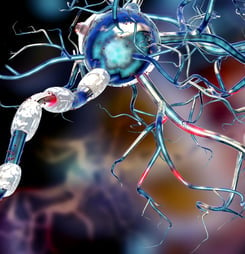
Parkinson’s disease is a disorder that results in the degeneration of the central nervous system, and directly impacts those nerves that handle motor functions for the body as a whole.
As the disease advances in a person with PD, it becomes apparent from the slowness of the body and the increasing stiffness of the limbs that there is a developing problem.
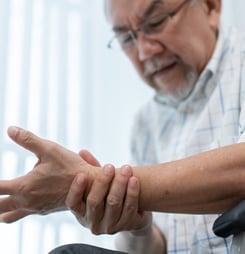
The limbs will begin to shake uncontrollably as it gets further on and eventually an entire scope of additional symptoms will develop as more and more motor functions are impacted. Sufferers are often tired, and memory problems become more apparent as time goes on.
Hold a Fundraiser for World Parkinson’s Day
What can you do to help out on this important day? As mentioned above there are numerous marathons and walk-a-thons that take place in various cities to help generate donations to support the ongoing research into this condition.
This would be a great time to work together with various friends, family or coworkers to help organize refreshment stands or bake sales to produce more funds that can be donated to Parkinson’s Disease research groups.
It also might be a great idea to organize larger events at some local parks, or even with some local schools since getting children involved and aware is a great idea!
This would be an ideal opportunity to work together with teachers and schools to create a day where there are educational courses about the disease, and musical performances to generate money for donations.
Make a Donation to a Parkinson’s Disease Cause
Those who might not have the time to organize a full event can still give a donation through a number of different viable organizations that promote the cause to fight against Parkinson’s Disease.
Check out the information and opportunities for some of these organizations:
- The Michael J. Fox Foundation for Parkinson’s Research. Set up by the famous actor who has the disease, this foundation promotes research to slow the progression and ease symptoms for those with PD.
- Parkinson’s Foundation. This organization works to improve care and advance research toward a cure for Parkinson’s Disease.
- American Parkinson’s Disease Association. The largest grassroots organization dedicated to fighting Parkinson’s Disease.
No matter what activities are chosen, remember that this day is dedicated to an open awareness of this disease as well as making an effort to help support those groups and organizations that are intent on eradicating or controlling this illness.
So on World Parkinson’s Day, make sure to talk about it to those people in life, and encourage them to join in on the fight!
Facts About World Parkinson’s Day
Silent Loss of Dopamine Cells
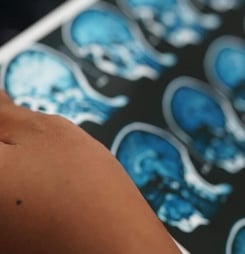
Parkinson’s disease begins long before symptoms appear, as nerve cells in a region of the midbrain called the substantia nigra gradually die and stop producing dopamine, a chemical that helps coordinate smooth, purposeful movement.
By the time classic motor symptoms such as tremor and slowness are obvious, most people have already lost more than half of the dopamine-producing neurons in this area.
Non-motor Symptoms Can Precede Tremor by Years
Problems like constipation, loss of smell, depression, anxiety, REM sleep behavior disorder, and subtle changes in thinking can show up many years before a person develops a noticeable tremor or stiffness.
These “non-motor” symptoms are now recognized as a key part of Parkinson’s disease and may offer important clues for earlier diagnosis and intervention.
Parkinson’s Is the Fastest-Growing Neurological Disorder
Worldwide, the number of people living with Parkinson’s disease more than doubled from 1990 to 2016, and researchers describe it as the fastest-growing neurological disorder in terms of prevalence, disability, and deaths.
Aging populations, longer life expectancy, and possible environmental exposures are thought to contribute to this rapid rise.
Levodopa Remains the Gold Standard After Half a Century
Levodopa, introduced in the late 1960s, is still the most effective medication for easing the motor symptoms of Parkinson’s disease.
Once in the brain, it is converted into dopamine and can dramatically improve slowness and stiffness, although its long-term use is often complicated by motor fluctuations and involuntary movements known as dyskinesias.
Deep Brain Stimulation Treats Circuits, Not Cells
For some people with advanced Parkinson’s, deep brain stimulation (DBS) can significantly reduce tremor and motor complications by delivering electrical pulses to specific brain targets such as the subthalamic nucleus or globus pallidus internus.
DBS does not stop the underlying degeneration, but it modulates abnormal brain circuits to improve movement and can reduce the need for high doses of medication.
Environmental Exposures Influence Risk
While age is the strongest risk factor for Parkinson’s disease, certain environmental exposures have been linked to higher risk, including some pesticides, herbicides, and solvents such as trichloroethylene.
At the same time, observational studies consistently find that regular physical activity and, paradoxically, caffeine consumption are associated with a lower risk, suggesting that lifestyle may modify vulnerability in some people.
Exercise Acts Like Medicine for Parkinson’s Symptoms
Structured exercise programs, including brisk walking, cycling, tai chi, dance, and boxing-style training, have been shown to improve gait, balance, and quality of life in people with Parkinson’s disease.
High-intensity or regular aerobic exercise in particular appears to help maintain mobility and may even have disease-modifying effects by promoting neuroplasticity in brain circuits involved in movement.
World Parkinson’s Day FAQs
History of World Parkinson’s Day
Dr. James Parkinson, an English doctor and scientist, first described the disease in “An Essay on the Shaking Palsy”, which was published in 1817.
He described a pattern of lessened muscular power, involuntary tremulous motion, even if these are supported. He also wrote of the fact that there is a tendency for people with this disease to bend the body forward and to involuntarily switch from a walking to a running pace, while the sense and intellect deteriorate.
It wasn’t until several decades later, in the 1870s, that the ailment was given the name Parkinson’s Disease (sometimes called PD). When French Neurologist Jean Martin Charcot picked up and continued the work started by Dr. Parkinson, Charcot then named the disease in honor of him.
The first World Parkinson’s Day took place in 1997. It was started by a collaboration between the World Health Organization and the European Parkinson’s Disease Association (EPDA), with the two groups having a focus on raising awareness and support for research and information surrounding prevention of and a cure for this medical condition. It is now an official WHO holiday supported by the United Nations.
One of the prominent symbols of Parkinson’s disease is the red tulip, and this was established at the 9th World Parkinson’s disease Day at the Luxembourg Conference.
The story of the Red Tulip can be tied back to J.W.S. Van der Wereld, a Dutch horticulturist who was suffering from Parkinson’s disease.
He had successfully generated a Red and White Tulip and named it in honor of the man who named his medical condition. On the tail of this, the Tulip received the Award of Merit, granted by the Royal Horticultural Society in London, and then was granted the Royal General Bulb Growers Trial Garden Award.
There’s no doubt that World Parkinson’s Day is an important cause to get behind, and this is the perfect day to do it. So now it’s time to get started and observe this day!