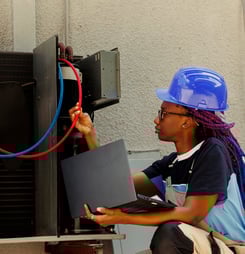

Feeling a little chilly? Or wishing things were a bit chillier on a hot day? World Refrigeration Day exists to raise awareness and understanding of the outsized role refrigeration, air conditioning, and heat pump technology play in modern life, from safe food and lifesaving medicines to comfortable homes and reliable digital services.
So get ready to cool off and chill out because World Refrigeration Day is here, celebrating the science, the skilled trades, and the behind-the-scenes systems that keep temperatures where people need them.
How to Celebrate World Refrigeration Day
World Refrigeration Day brings a few clever ideas along for celebrating, like some of these:
Show Some Love to a Fridge
In honor and celebration of World Refrigeration Day, this is a great moment to pay some respect to the refrigerator in the kitchen by giving it a proper clean-out. Not the quick “shuffle leftovers to the side” kind of clean, either. A real one.
Start by checking temperatures. Many food safety educators recommend keeping the refrigerator at about 40°F or below and the freezer at 0°F. If the dial inside the fridge is more suggestion than science, a simple appliance thermometer can help confirm what is actually happening on the shelf where milk and leftovers live.
Next comes the satisfying part: pulling everything out and wiping down the surfaces. Sticky shelves and mystery drips are more than gross. They can also become breeding grounds for mold and bacteria that may transfer to containers. Warm, soapy water works well for most interiors, and removable bins and shelves are easier to wash in the sink.
While everything is out, it’s also a smart time to:
- Throw away expired condiments, suspicious leftovers, and anything covered in an impressive layer of frost.
- Organize foods in a way that helps avoid cross-contamination, such as keeping raw meat sealed and on lower shelves where drips cannot reach ready-to-eat foods.
- Avoid stuffing the fridge too tightly. Refrigerators cool by circulating air, and overcrowding can create warm spots that shorten freshness.
Then there’s the often-ignored maintenance that appliances quietly beg for: cleaning the condenser coils. Many refrigerators have coils underneath the unit or behind a lower grille. When coils become clogged with dust and pet hair, the fridge works harder, uses more electricity, and may struggle to maintain temperature. A coil brush and vacuum can make a noticeable difference.
It’s also worth remembering that there was a time when people depended on iceboxes cooled by blocks of ice, along with constant shopping trips and careful meal planning to prevent spoilage. Modern refrigeration is not just convenience. It’s a daily, humming piece of food safety engineering that most people only notice when it stops.
Thank a Refrigeration Engineer
Those who know someone who makes, manufactures, installs, or repairs refrigeration systems can use World Refrigeration Day as a reason to show genuine appreciation.
Refrigeration and HVACR professionals do far more than rescue a warm soda. They help protect the cold chain that keeps perishable foods safe from producer to store to kitchen. They troubleshoot the systems that keep restaurant walk-in coolers stable and prevent costly food waste. They support comfort and productivity in workplaces through air conditioning, and they maintain heat pumps that provide efficient heating and cooling in one package.
A thoughtful thank-you can be simple:
- Send a message that recognizes the skill involved, especially the mix of electrical, mechanical, and diagnostic expertise.
- Ask them what part of their work people misunderstand most, then share that insight with friends or coworkers.
- Give a shout-out on social media that celebrates safe food, cold storage, and comfort cooling, not just “fixing my fridge.”
For anyone curious, it can also be eye-opening to ask what “refrigeration” means in their world. For a technician, it might involve superheat, subcooling, airflow, and leak detection. For a designer, it might mean system efficiency, controls, and selecting the right refrigerant for safety and environmental goals. It’s a field where the details matter, and the details are the job.
Celebrate with a Cool Refrigeration Theme
World Refrigeration Day offers an exciting opportunity for those in the industry to bond together over different topics and themes. Each year’s events are celebrated with a unique theme, and some of the themes from the past have included:
- Cooling Matters
- Cooling Champions: Cool Careers for a Better World
- Cold Chain 4 Life
Celebrating a theme can be as casual or as nerdy as people want. At home, a theme can become a mini learning project: exploring how a freezer prevents freezer burn, why some produce should not be chilled, or what makes certain medicines temperature-sensitive. In schools and community groups, the theme can turn into hands-on demonstrations about heat transfer: conduction, convection, and evaporation.
In professional settings, themes offer a prompt to discuss real-world challenges that refrigeration touches every day:
- Food quality and safety, including how stable temperatures reduce spoilage.
- Healthcare needs, such as vaccine storage and transport where a narrow temperature range is essential.
- Energy use, since cooling often represents a major portion of electricity demand in buildings and supply chains.
- Environmental responsibility, including the move toward more efficient systems and refrigerants with lower climate impact.
Even without a formal event, people can celebrate the theme by sharing an interesting cooling-related story: a behind-the-scenes look at grocery store cases, a data center cooling strategy, or a quick explanation of how heat pumps move heat instead of “creating cold.”
Get a Job in the Refrigeration Industry
Not sure what type of career would be best suited? Consider a career in the refrigeration industry. Trade schools, colleges, and universities are all equipped to teach the necessary skills for those who want to design, build, or repair refrigeration systems.
Apprenticeships and on-the-job training opportunities may also be available for those who are interested in entering directly into the workforce.
Refrigeration careers tend to attract people who enjoy practical problem-solving. Systems must be safe, reliable, efficient, and well-controlled, which means there is room for many strengths: hands-on mechanical ability, electrical knowledge, attention to detail, and comfort with tools and measurements.
Depending on interest, possible career paths can include:
- Service and installation technician work in residential, commercial, or industrial environments.
- Refrigeration engineering and system design, focusing on equipment selection, controls, and performance.
- Building controls and automation, where sensors and software help systems run efficiently and consistently.
- Cold chain logistics support, including monitoring and compliance roles for temperature-sensitive products.
- Manufacturing, testing, and quality assurance for components like compressors, valves, and heat exchangers.
World Refrigeration Day is also a good reason for people to learn what “HVACR” includes. Refrigeration overlaps with air conditioning and heat pumps, and many professionals work across all three. That overlap matters because the same core cycle and principles power everything from a home refrigerator to a supermarket rack system to a heat pump keeping a building comfortable.
For students, one of the best celebrations is simply speaking with someone in the field. Many professionals are happy to explain what a typical day looks like, what training mattered most, and which skills lead to career growth. It’s a practical industry with a future-focused mission: meeting cooling needs while improving efficiency and reducing environmental impact.
World Refrigeration Day Timeline
William Cullen Demonstrates Artificial Refrigeration
At the University of Glasgow, Scottish physician William Cullen showed that evaporating ether under a vacuum can produce cooling and a small amount of ice, providing the first documented demonstration of artificial refrigeration.
Jacob Perkins Builds First Working Vapor-Compression Refrigerator
American-born inventor Jacob Perkins, working in London, patents and constructs a “machine for producing cold and ice” that uses a closed vapor-compression cycle with ether, marking the first practical mechanical refrigerator.
James Harrison Commercializes Mechanical Ice Making
In Australia, engineer James Harrison develops and installs vapor-compression refrigeration machines for breweries and meatpacking plants, making large-scale artificial ice and refrigerated food processing commercially viable.
Carl von Linde’s Efficient Ammonia Refrigerator
German engineer Carl von Linde designs one of the first reliable and efficient industrial refrigeration machines using compressed ammonia, helping to spread mechanical refrigeration across breweries, cold stores, and food industries in Europe.
Refrigerated Railcars Transform Meat Distribution
In the United States, mechanically cooled and ice-refrigerated railcars allow slaughterhouses in hubs like Chicago to ship dressed meat long distances while chilled, revolutionizing the meatpacking industry and urban diets.
Electric Home Refrigerators Enter the Kitchen
1913–1920s
Electric Home Refrigerators Enter the Kitchen
Inventors and appliance makers introduce early electric household refrigerators, beginning with Fred W. Wolf’s 1913 unit and followed by mass-produced models in the 1910s and 1920s, which gradually replace iceboxes in many homes.
https://www.whirlpool.com/blog/kitchen/history-of-the-refrigerator.html
Montreal Protocol Reshapes Refrigeration Refrigerants
Nations adopt the Montreal Protocol on Substances that Deplete the Ozone Layer, committing to phase out ozone-harming CFC and HCFC refrigerants, which drives a global redesign of refrigeration and air-conditioning systems toward safer alternatives.
History of World Refrigeration Day
When considering World Refrigeration Day, the term “refrigeration” is used in its widest sense, considered to be the process of achieving and maintaining a required temperature below that of its surroundings.
That broad definition is important because refrigeration is less about one appliance and more about a principle: moving heat from where it is not wanted to where it can be released. “Cold” is not created in the same way a toaster creates heat. Instead, refrigeration systems use energy to transfer heat, typically by compressing and expanding a refrigerant fluid in a cycle that absorbs heat indoors and releases it elsewhere.
Of course, when many people think of refrigeration, their minds automatically go to their own kitchens at home, where a refrigerator likely plays a prominent role in everyday life. And certainly one important example of refrigeration is the preservation and distribution of perishable food products.
Refrigeration slows bacterial growth, extends shelf life, and makes it possible to store ingredients for days instead of hours. It also supports food variety by allowing produce, dairy, and meats to be transported farther while maintaining quality.
But refrigeration systems are also used on a much wider scale. Specifically, they are extensively used for providing thermal comfort to people through air conditioning. Comfort cooling is not only about pleasant indoor temperatures. It can be essential for maintaining safe indoor conditions for vulnerable people during extreme heat, and it can protect buildings and equipment from humidity-related damage.
Similarly, heat pumps are devices that take heat from one source and move it to another location, which is another way refrigeration technology is used in the modern world. In heating mode, a heat pump effectively runs the refrigeration cycle “in reverse,” drawing heat energy from outdoor air, water, or the ground and delivering it indoors.
This is a key reason heat pumps are often discussed in conversations about energy efficiency: moving heat can require less energy than producing it through combustion or electric resistance heating.
World Refrigeration Day was founded in 2019 by Stephen Gill, a past President of the Institute of Refrigeration, and it was launched together with the World Refrigeration Day Secretariat. The campaign was created to shine a light on cooling as a cornerstone of modern society and to highlight the people who make it possible, including technicians, engineers, educators, and researchers.
The celebration was chosen for this day as a nod to the birthday of Lord Kelvin, on June 26, 1824. Also known as William Thomson, the Scotsman Kelvin was famous for his foundational work in thermodynamics and for the Kelvin scale, an international system for measuring absolute temperature.
Temperature measurement is not just a scientific curiosity in refrigeration. It is the heart of control, safety, and performance. Reliable temperature standards make it possible to design systems, compare performance, set storage requirements, and confirm that sensitive goods stayed within limits.
World Refrigeration Day has been established by agreement between industry trade associations and professional membership bodies from around the world, all of whom have an interest in raising awareness and honoring the work of refrigeration.
That shared effort reflects how interconnected refrigeration is. Cooling is not owned by a single sector. It appears in grocery stores, restaurants, farms, laboratories, hospitals, warehouses, transportation, and homes.
In 2019, the UN Environment Programme OzonAction announced they would partner with World Refrigeration Day to promote awareness of the importance of refrigeration. That connection points to a major modern dimension of refrigeration: environmental responsibility. Refrigeration has a complicated relationship with the environment.
Cooling protects health and reduces food waste, which can lower emissions linked to wasted production. At the same time, refrigeration systems consume energy, and some refrigerants can have significant climate impacts if leaked. The industry’s push toward better efficiency, careful handling, and refrigerants chosen for lower environmental harm has become a central part of the story.
Today, the day is celebrated in many countries throughout the world, as well as online, with events, educational outreach, and industry discussions. It offers a chance to appreciate the invisible infrastructure of comfort and safety, and to notice how often “keeping it cool” quietly keeps everything else running.
Ancient Civilizations Used Ingenious Natural Cooling Methods
Long before electric refrigerators, societies developed surprisingly sophisticated ways to keep food cool. Ancient Persians built towering windcatcher-icehouse complexes called yakhchals, which combined evaporative cooling, thick insulating walls, and nighttime cold to store ice and perishables in desert climates. Similar traditions appeared elsewhere, from Greek and Roman ice pits to Chinese ice harvesting for imperial kitchens, showing that controlling temperature has been a core human challenge for millennia.
Mechanical Refrigeration Helped Transform Global Food Trade
The rise of mechanical refrigeration in the late 19th century fundamentally changed how food moved around the world. Refrigerated ships and railcars meant meat, dairy, and fruit could travel long distances without spoiling, allowing countries like Argentina, Australia, and the United States to export chilled and frozen meat to Europe year-round. This technology reshaped farming patterns, urban diets, and global trade networks by decoupling food supply from local seasons.
Refrigeration Radically Reduced Foodborne Illness Risk
Lowering food temperature is one of the most effective tools for slowing the growth of pathogenic bacteria such as Salmonella and E. coli. Modern household refrigerators are designed to keep food at or below about 4 °C (40 °F), a threshold recommended by food safety authorities because microbial growth accelerates rapidly above it. The widespread adoption of reliable cold storage in homes, restaurants, and supply chains has been a major, if often invisible, contributor to safer diets in high‑income countries.
Vaccine Potency Depends on a Continuous “Cold Chain”
Most routine vaccines must be kept between 2 °C and 8 °C from the factory to the clinic, and some newer vaccines require ultra‑low temperatures. Public health agencies describe the vaccine cold chain as a system of specialized refrigerators, freezers, insulated containers, and trained staff that preserves vaccines until they are administered. Breaks in this cold chain can render doses ineffective, so reliable refrigeration is considered as fundamental to immunization programs as the vaccines themselves.
Phasing Out Older Refrigerants Helped Heal the Ozone Layer
For much of the 20th century, refrigeration relied heavily on chlorofluorocarbons (CFCs) and later hydrochlorofluorocarbons (HCFCs), chemicals that were later found to deplete the stratospheric ozone layer. The Montreal Protocol, agreed in 1987, set binding schedules to phase out these substances, forcing major redesigns of cooling equipment worldwide. Atmospheric measurements now show that key ozone‑depleting refrigerants are declining, and the ozone layer is on a path to gradual recovery, often cited as one of the most successful environmental interventions in history.
Climate-Friendly Cooling Focuses on Refrigerant Choice and Efficiency
While hydrofluorocarbons (HFCs) were adopted because they do not destroy ozone, many are extremely powerful greenhouse gases with global warming potentials hundreds or thousands of times that of carbon dioxide. The Kigali Amendment to the Montreal Protocol aims to phase down high‑GWP HFCs, pushing industry toward alternatives such as natural refrigerants (ammonia, carbon dioxide, hydrocarbons) and new low‑GWP synthetic blends, alongside better energy efficiency and leak prevention. Together, these measures are expected to significantly reduce the climate impact of the rapidly growing cooling sector.
Refrigeration Is Critical Infrastructure for Modern Healthcare
Beyond vaccines, hospitals rely on precise temperature control to safely store blood, organs for transplant, many injectable drugs, and laboratory reagents. Technical guidance highlights that medical refrigeration often uses stricter temperature tolerances and backup power systems compared with domestic fridges, because even brief deviations can damage sensitive products. As health systems expand laboratory testing, advanced therapies, and blood banking, the need for reliable, well‑maintained refrigeration has become a core but largely unseen part of medical infrastructure.