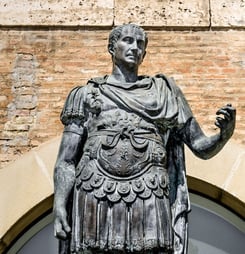

Often reviled (certainly by Dante) was Marcus Junius Brutus Minor, known to most as “Brutus” or more simply “Et tu Brute?” So why dedicate a holiday to this most heinous of individuals?
This slayer of Kings and betrayer of friends? Why, my good people, because National Brutus Day reminds us that even in this modern age, betrayal, subterfuge, and (metaphorical at least) back-stabbing is still alive and well.
National Brutus Day Timeline
Lucius Junius Brutus and the Birth of the Roman Republic
According to Roman tradition, Lucius Junius Brutus leads the revolt that overthrows the last king, Tarquin the Proud, helping to found the Roman Republic and establishing his family name as a symbol of tyrant-slaying and civic duty.
Life of Marcus Junius Brutus
Born into a prominent Roman family, Marcus Junius Brutus rises as a politician and orator, serving under Pompey and later reconciling with Julius Caesar, whose favor and pardon set the stage for Brutus’s later, infamous act of betrayal.
The Assassination of Julius Caesar on the Ides of March
On March 15, Julius Caesar is stabbed to death in a meeting of the Senate near Pompey’s theater, with Brutus among the leading conspirators, an event that turns his name into a lasting byword for political betrayal and backstabbing.
Brutus in Dante’s Inferno
In his Divine Comedy, Dante Alighieri places Brutus in the very lowest circle of Hell, where Lucifer eternally chews Brutus, Cassius, and Judas Iscariot, cementing Brutus’s medieval reputation as one of history’s supreme traitors.
Shakespeare’s Julius Caesar and “Et tu, Brute?”
William Shakespeare’s play Julius Caesar is first performed in London, giving the world the line “Et tu, Brute?” and portraying Brutus as a conflicted idealist, a depiction that powerfully shapes how later generations understand betrayal by a friend.
Brutus as a Symbol in Political Thought and Art
Romantic and revolutionary movements in Europe seize on Brutus as a complex symbol of tyrannicide and republican virtue, with painters, sculptors, and writers debating whether his violent betrayal represents heroic patriotism or unforgivable treachery.
“Brutus” and the Idiom of Backstabbing
In modern English, “Brutus” and “Et tu, Brute?” enter everyday speech as shorthand for being stabbed in the back by a trusted ally, used in journalism, film, and casual conversation to describe personal and political betrayals alike.
Learn About National Brutus Day
National Brutus Day is the day where we say “Eu tu Brutus.” If you have ever read the famous Julius Ceaser play, by William Shakespeare, of course, you will know what this term means.
To save you the hassle of having to read it, though, we’ll tell you: it means backstabbing! From the days of Shakespeare to the modern world of today, we still encounter backstabbers.
There are people who plot and go behind other people’s backs in order to get what they really want. We’re sure a lot of you are reading this and are nodding your heads because you have, unfortunately, encountered a backstabber yourself.
So, what’s National Brutus Day about? Are we paying tribute to all of the backstabbers out there? Certainly not; National Brutus Day is a reminder that there are still people who backstab and betray.
You can use this to make sure that you have your guard up and that you know the signs of a backstabber. You could also use this day as an opportunity to focus on the good people in your life so that the backstabbers don’t win.
No matter what you do, don’t use this day as an opportunity to turn into a backstabber yourself!
You may be wondering how to spot a backstabber! Backstabbers aren’t easy to identify, especially if they are good at it. If your instincts are telling you that someone is a backstabber, you should listen to them. This does not mean you should go around accusing people, but you should have a wall up and protect yourself.
There are a few other signs to look out for as well. This includes the person giving you ultra-sweet talks to the point where it seems a bit OTT!
Other signs include when people start the pettiest quarrels, as well as people who vanish when they don’t need you anymore! One of the biggest signs of a backstabber, though, is when they have loads of dirt on you, but you realize that you don’t know anything about them!
History of National Brutus Day
Let’s start by talking a little about the man, and how he became the world’s most famous betrayer second only to that slayer of messiahs.
It is first important to understand that his history is plagued from intrigue straight from his birth. You see, though Caesar was only 15 at the time, there were rumors that it was Caesar who fathered Brutus, rather than Marcus Junius Brutus Major.
This rumor was in part fueled by the questionable circumstances of his father’s death while participating in the Lepidian revolution. Quintus Servilius Caepio, his uncle, took over the responsibilities of raising him in 59 BC.
So how did he come into Caesar’s confidence and become so close a friend that his betrayal shocked his dear friend to the core? The explanation comes best, perhaps, at an examination of our own lives and experiences.
Sometimes we know that those we call our friends are not, perhaps, the best of people. While we may adore them as our friend, their choices and actions as pertains to others we may not approve of.
This is where Brutus found himself, a dear friend he could not counsel away from madness had to be put down for the good of the nation he ruled. It is this conundrum that casts questions on whether Brutus was hero, villain, martyr, or betrayer. Perhaps each in equal measure.
Now that you know a bit about the history of the man himself, let’s take a look at the actual day. Ruth and Thomas Roy of Wellcat Holidays established National Brutus Day.
You may have seen their names on this website a few times, as they have created a number of days of observance. The day is to remind us that while backstabbing may have taken form for different end goals in Ancient Rome, it is still very much a thing to be concerned about today!
How to Celebrate National Brutus Day
Celebrating National Brutus Day… Is such a day worthy of celebration? It only stands to cast yet more light on the dark seedy underbelly of the political arena.
But perhaps it also prompts us to ruminate on the great game they play, the pull and tug of politics, the conflicts of loyalties and priorities, and the need to give and take on issues that may at turns enrage and exalt their constituents.
Sometimes the road to the ends they promise isn’t a straight one, but twists and curves along a moral road.
You can use National Brutus Day as an opportunity to cleanse your life of anyone who is not good for you or seems to be up to no good!
You can also use this day as an opportunity to educate yourself about how to be aware of people that do not have good intentions. There are a lot of interesting reads on this matter. Or, why not use this day to appreciate all of the genuine people in your life who have good intentions?
Facts About National Brutus Day
Brutus’s Ancestry Tied Him to the Founding of the Roman Republic
Marcus Junius Brutus built part of his political identity on a prestigious lineage, claiming descent from Lucius Junius Brutus, the semi-legendary aristocrat who helped overthrow Rome’s last king, Tarquinius Superbus, around 509 BCE and became one of the first consuls of the new Republic.
This ancestral story, preserved in Livy and later Roman tradition, framed Brutus’s later attack on Caesar as a replay of his forebear’s defense of republican liberty.
The Ides of March Was a Routine Calendar Marker Before It Became Infamous
In the Roman calendar, the “Ides” simply marked the middle of the month, originally tied to the full moon, and on March 15 it was associated with religious observances to Jupiter.
Only after the assassination of Julius Caesar in 44 BCE, when more than 60 senators attacked him during a Senate meeting, did the Ides of March acquire its enduring association with political treachery and sudden regime change.
Ancient Accounts Say Caesar Was Stabbed 23 Times but Likely Killed by One Wound
According to the physician Antistius, cited by Suetonius and preserved in later summaries, Julius Caesar suffered 23 stab wounds during the Senate attack, yet only one blow to the chest was considered fatal.
This detail has become a classic example in forensic history of how the spectacle of overkill in a political assassination can obscure the fact that just a single strike actually ended the victim’s life.
The EID MAR Coin Openly Celebrated a Political Murder
Shortly after Caesar’s death, Brutus issued a silver denarius now known as the “EID MAR” coin, showing a freedman’s cap flanked by two daggers and the inscription “EID MAR” for the Ides of March.
In a rare instance of ancient coinage openly commemorating an assassination, the imagery proclaimed the killing as an act of liberation from tyranny; surviving examples are so scarce that one sold at auction for millions of dollars in the 21st century.
Brutus’s Reputation Has Swung Between Patriot and Traitor for Two Millennia
Ancient and modern writers have struggled to categorize Brutus, with interpretations ranging from heroic tyrant-killer to ungrateful betrayer.
Dante placed him in the lowest circle of Hell alongside Judas, eternally chewed by Satan, while many Enlightenment thinkers and some modern historians have praised him as a principled defender of republican government, illustrating how judgments about “betrayal” depend heavily on who is seen as legitimate.
Enlightenment Thinkers Used Brutus to Debate Tyrannicide
During the 17th and 18th centuries, political philosophers repeatedly invoked Brutus when arguing over whether it was ever lawful to kill a ruler.
Writers such as Algernon Sidney and later Jean-Jacques Rousseau discussed Roman tyrannicides, including Brutus, as test cases for whether loyalty to a friend or sovereign could be overridden by an alleged higher duty to the people or the constitution, embedding his story in the development of modern republican thought.
Lucius Junius Brutus Swore Romans to Reject Kings Forever
In Rome’s foundational legend, after the rape and suicide of Lucretia exposed royal abuse, Lucius Junius Brutus rallied leading families, expelled the Tarquins, and then made the assembled Romans swear an oath never again to tolerate a king.
Whether or not every detail is historical, the story crystallized an enduring Roman suspicion of one-man rule that later conspirators, including Marcus Brutus, could invoke when justifying drastic action against perceived tyrants.