
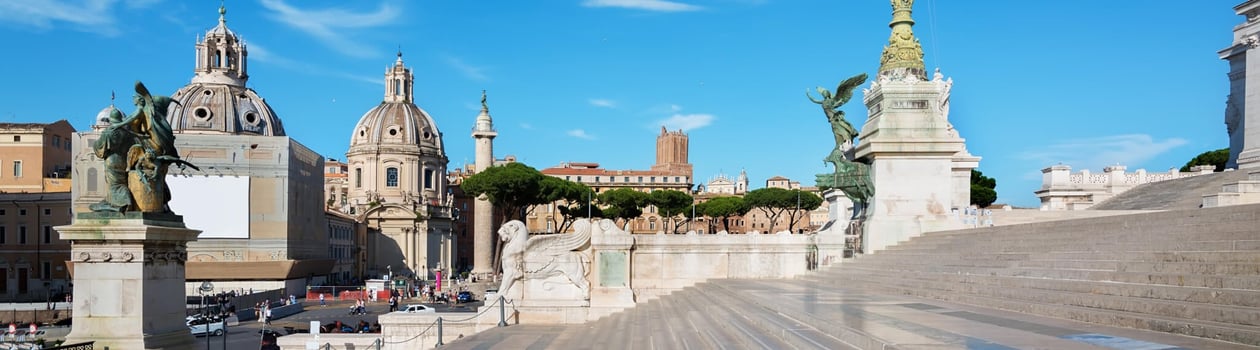
Republic Day, or “Festa della Repubblica,” is a national holiday in Italy. Every year on this day, Italians remember a special vote that changed their country.
Long ago, after an exhausting war, people in Italy decided they didn’t want a king anymore. So they voted to start a new chapter as a republic, which means the people and their elected leaders would make decisions together.
Republic Day Italy Timeline
Proclamation of the Kingdom of Italy
The Kingdom of Italy is officially proclaimed under King Victor Emmanuel II, establishing a unified constitutional monarchy that anchors the Savoy dynasty at the center of Italian political life.
Mussolini’s Dictatorship Announced
Benito Mussolini declares to Parliament that he accepts responsibility for Fascist violence and effectively inaugurates his personal dictatorship, undermining the liberal monarchy and paving the way for its later discredit.
Armistice of Cassibile and Italian Civil War
The public announcement of the armistice with the Allies causes the collapse of the Fascist regime, German occupation of much of Italy, and the start of a bitter civil war between Fascists and the Resistance that shapes postwar republican ideals.
Liberation of Northern and Central Italy
Partisan forces and Allied troops liberate major northern cities such as Milan and Turin, marking the effective end of Nazi‑Fascist rule in most of Italy and strengthening the legitimacy of anti‑Fascist parties that will later support the republic.
Institutional Referendum and Birth of the Republic
Italian voters choose between monarchy and republic in a national referendum; the republic wins with about 54 percent of the vote, signaling the end of the Savoy monarchy and opening the way for a new democratic system.
First Nationwide Vote Including Women
For the first time in a nationwide ballot, Italian women vote in the institutional referendum and elections to the Constituent Assembly, expanding political participation and reinforcing the democratic character of the emerging republic.
Entry into Force of the Italian Constitution
The new republican Constitution takes effect, embedding principles such as popular sovereignty, separation of powers, and the use of referendums, and providing the legal framework for Italy’s modern democratic republic.
How to Celebrate Republic Day Italy
If you want to join in the fun of Republic Day, there are lots of things you can do:
- Go to a parade: If you’re in Italy or a city with many Italians, there might be a parade or a big get-together.
- Make an Italian meal: Try cooking something Italian at home, like pasta or pizza, and have friends or family over.
- Have an Italian-themed party: Decorate with the colors of the Italian flag and play Italian music.
- Watch Italian movies or listen to Italian songs to feel like you’re part of the celebration, even if you’re far away.
- Raise a glass of something bubbly, like Prosecco, and make a toast to Italy and its people.
History of Republic Day Italy
The story of Republic Day dates back to the aftermath of World War II. Italy was left in ruins, and its people sought a fresh start.
The monarchy, associated with the Fascist regime, was under scrutiny. On June 2, 1946, a referendum was held, and Italians were asked to vote on the government they preferred: monarchy or republic. The Republicans won by a narrow margin, signaling a new era for Italy.
The results were announced three days later, which was the monarchy’s end. This decision led to the royal family’s exile and the Italian Republic’s birth. On June 18th, the republic was formally proclaimed, and Alcide De Gasperi became the provisional head of the new Italian state.
The following year, on June 2nd, Italians celebrated their first Republic Day. This was not just a political shift but a cultural rebirth that laid the groundwork for modern Italian democracy.
Republic Day is both a serious and festive event. In the capital city, Rome, a big parade with soldiers and other groups marching in their uniforms. The Italian flag is everywhere, with its green, white, and red colors. In Rome, there is also a quiet moment where people remember those who fought for Italy’s freedom.
A wreath-laying ceremony at the Tomb of the Unknown Soldier at the Altare della Patria in Rome reminds us of the sacrifices made for Italy’s liberty and independence and to pay tribute to everyone who did something brave for Italy.
Italians all over the world feel happy on this day. They get together to eat, dance, and tell old stories about Italy. Sometimes, museums or art places let people come in for free or show special things about Italy’s past.
Facts About Republic Day Italy Day
Women Voted Nationally for the First Time in 1946
The 1946 institutional referendum that created the Italian Republic was also the first time Italian women could vote in a nationwide election. Although some local municipal votes had included women earlier that year, the June 2–3 referendum and concurrent Constituent Assembly elections marked their full entry into national political life, with an estimated 89 percent of eligible women casting ballots and 21 women elected to the Assembly.
A Deep North–South Divide Marked the Referendum Result
Support for the republic in 1946 was not uniform across Italy. While the country as a whole voted about 54 percent for the republic and 46 percent for the monarchy, northern and central regions such as Piedmont, Lombardy, and Tuscany backed the republic by large margins, whereas much of the south, including Campania and Sicily, voted predominantly for the monarchy. Historians often interpret this pattern as reflecting different wartime experiences, social structures, and levels of attachment to the House of Savoy.
The Italian Republic Was Built by a Broad Ideological Coalition
The Constitution of the Italian Republic, which came into force in 1948, was drafted by a Constituent Assembly that brought together Christian Democrats, Socialists, Communists, and liberal and republican currents. Despite sharp ideological differences, these parties agreed on key principles such as popular sovereignty, rejection of authoritarianism, and strong guarantees of fundamental rights, creating what Italian jurists describe as a “compromise Constitution” that still underpins the country’s democracy.
Article 1 Explicitly Ties the Republic to Work
The very first sentence of the Italian Constitution defines the country as a “democratic Republic founded on labor.” This wording, adopted in 1947, reflects postwar lawmakers’ desire to break with a system associated with privilege and to emphasize the social value of work, workers’ rights, and broad participation in economic life as core elements of the new republican identity.
A Constitutional Court Was Created to Guard the New Republic
The 1948 Constitution established the Corte Costituzionale, or Constitutional Court, as a guardian of the republican order. Although it began operating in 1956, it was designed from the outset to review laws for compatibility with the Constitution, arbitrate conflicts between branches of government and regions, and protect citizens’ fundamental rights, giving Italy one of the earliest specialized constitutional courts in Western Europe.
The House of Savoy Was Banned from Italy for Decades
After Italians voted to abolish the monarchy, the new republican Constitution barred male members of the former royal House of Savoy from entering Italy and stripped them of their property titles. This ban, rooted in the monarchy’s association with fascism and war, remained in force until a constitutional amendment in 2002, after which male heirs of the dynasty could return to the country for the first time in over half a century.
The “Italian Economic Miracle” Flourished Under the New Republic
In the 1950s and 1960s, the young Italian Republic experienced rapid industrialization and growth often called the “economic miracle.” Backed by the institutions created after 1946 and participation in European integration, Italy shifted from a largely agrarian society to one of the world’s major industrial economies, with massive internal migration from the rural south to the industrial north reshaping Italian society and politics.
Republic Day Italy FAQs



You may also like

Constitution Day
Learn about the true origins and content of the United States Constitution to both honor the history of the nation and consider the values it was founded on.
- Denmark
- Mexico
- United States

Icelandic National Day
Celebrate Icelandic National Day with parades, folk songs, traditional foods, and historic sites honoring Iceland’s independence, culture, and national pride.
- Canada
- Denmark
- Germany
- and 3 more

Constitution Day in Thailand
Constitution Day in Thailand marks a significant moment in the nation's journey toward democracy. It commemorates the first time the country adopted a constitution, reflecting a shift from absolute monarchy to a system that values the voices of its people. This public holiday reminds the nation of its ongoing efforts...
- Thailand

National Italian Beef Day
Have you ever bitten into a sandwich so full of flavor it made you stop and smile? That’s the magic of Italian beef. This mouthwatering classic layers thin slices of seasoned roast beef inside a chewy roll, soaked with rich gravy and topped with bold peppers. It’s messy in the best...
- United States
National days and holidays on June 2

Vivid Sydney
Vivid Sydney is a dazzling celebration that transforms the city into a vibrant playground of lights, music, and creativity. For weeks, iconic landmarks and urban spaces glow with stunning light installations and 3D projections, captivating both locals and tourists. This festival draws millions of visitors each year, offering an enchanting...
- Australia

National I Love My Dentist Day
Having a good dentist is essential to keeping a healthy smile. National I Love My Dentist Day, celebrated annually, is a fun way to show appreciation for these dedicated professionals. It highlights their hard work, commitment, and essential role in maintaining our dental health. Behind every calm cleaning and carefully placed...
- United States

National Bubba Day
Some names carry a special kind of warmth, and Bubba is one of them. National Bubba Day is all about celebrating the people who go by this friendly, familiar name. Maybe it’s a little brother, a best friend, a cousin who became a built-in buddy, or the neighbor who treats everyone...
- United States

National Rotisserie Chicken Day
The rotisserie chicken is an inexpensive, hassle-free way to make a delicious lunch or dinner. Go out and buy one, and forget about cooking for one night.
- Australia
- Canada
- United Kingdom
- and 1 more
Seize Every Day
Join free for personalised recommendations, email reminders and exclusive guides. Never miss a day.