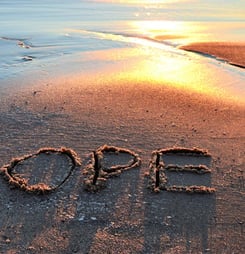

Audacity to Hope Day invites people to tap into the stubborn, shining strength that shows up when life gets complicated. It celebrates the human ability to face setbacks with courage, imagine something better, and take practical steps toward it, even when confidence feels shaky.
At its heart, the day is about acknowledging hard seasons without letting them have the final word. Difficult experiences can become raw material for growth, clarity, and empathy. Audacity to Hope Day encourages reflection on personal aspirations, then nudges those hopes out of the “someday” category and into small, real-world action.
Across communities, people gather to share stories of perseverance and triumph. Some stories are quiet and personal, like rebuilding after loss or learning to manage anxiety. Others are collective, like neighbors organizing support for a family in crisis or groups working to improve mental health access. Together, these narratives form a living reminder that hope is not naïve optimism. It is a choice, a practice, and sometimes a brave act of defiance.
How to Celebrate Audacity to Hope Day
Organizations and community groups often spotlight inspiring journeys that show what hope looks like in motion. Stories of people navigating health challenges, supporting mental well-being, rebuilding careers, or creating new beginnings can feel like a hand extended across the gap between “where things are” and “where they could be.”
Audacity To Hope Day encourages people to find strength in their aspirations and to support others in theirs. It is less about grand gestures and more about honest momentum. Hope becomes most convincing when it shows up as a next step: a conversation, an apology, a plan, a brave appointment, a first draft, a tiny routine that keeps a person steady.
Here are some engaging ways to observe this meaningful day.
Share Stories of Triumph
Gather friends, family, classmates, or coworkers and trade personal tales of overcoming challenges. This can be as simple as a dinner-table prompt or as structured as a storytelling circle where each person gets a few minutes to share. The goal is not perfection or performance. It is sincerity.
To make it comfortable for everyone, set a few ground rules: people can pass, no one has to share details they do not want to share, and listeners practice respect. Encourage “what helped” as much as “what happened.” Sometimes the most useful part of a story is the practical support that made progress possible: therapy, community, faith, medication, exercise, a mentor, a new boundary, a second chance.
For groups, consider collecting stories in writing. A shared document, bulletin board, or message wall can become a visible reminder that resilience is common, even if it feels lonely in the moment.
Create a Vision Board
Design a board, digital collage, or notebook spread filled with images and words that represent goals, values, and the way someone wants life to feel. A vision board works best when it is specific enough to guide action, not just dreamy enough to decorate.
Instead of only big outcomes, include process goals and supports. For example: “apply to three programs,” “walk three times a week,” “finish a portfolio,” “learn to cook five affordable meals,” “save a small emergency fund,” or “ask for help.” Add reminders of why the goal matters, such as “freedom,” “health,” “family,” “curiosity,” or “peace.”
A helpful twist is to make two sections: “Hope” and “Next Step.” Under “Hope,” place the dream. Under “Next Step,” place the next action that can be taken in less than an hour. Hope becomes audacious when it is paired with movement.
Engage in Community Service
Volunteer with a shelter, food pantry, library program, youth mentorship group, environmental cleanup, or community center. Service has a way of turning abstract hope into something tangible. It also gently shifts attention away from personal worries and toward shared solutions.
To keep the experience grounded, choose a role that fits your actual capacity. Someone with limited time might donate supplies, make a small recurring contribution, or help with one event. Someone who thrives on social connections might enjoy a team-based volunteer shift. Someone who prefers quiet work could help sort donations, assemble kits, or do behind-the-scenes admin tasks.
If volunteering in person is not feasible, consider remote support: tutoring, writing encouraging cards for care packages, or helping a local group organize resources. The point is to reinforce a simple message: hope grows when people show up for each other.
Host a Hope-Themed Movie Night
Invite loved ones to watch films that inspire, motivate, or remind viewers that change is possible. Choose stories that reflect different kinds of courage: recovering from failure, rebuilding after tragedy, standing up for others, or learning to accept help.
After the movie, talk about what resonated. A few questions can keep it meaningful without turning it into a seminar:
- Which moment felt most honest?
- What did the character do when things looked bleak?
- What kind of support made a difference?
- What is one “next step” the story inspires in real life?
Offer simple snacks, keep the atmosphere relaxed, and remember that hope can be gentle. Not every inspiring story needs a dramatic soundtrack and a big speech. Sometimes it is just someone showing up again and again.
Write Letters of Encouragement
Write heartfelt notes to friends, relatives, teachers, coworkers, caregivers, or people who rarely hear praise. Specific encouragement lands best. Instead of “You’re great,” try “I noticed you kept going even when it was stressful, and that mattered.”
Letters can also be written to strangers in structured settings such as community outreach efforts, care packages, or supportive message boards. Keep the message warm and universally accessible. Avoid giving advice unless it is requested, and focus on recognition, solidarity, and simple hope.
For a personal growth version, write a letter to a future self. Describe what is hoped for, what is feared, and what is being promised in terms of effort. Then include a list titled “What I can control,” such as daily habits, boundaries, learning, and reaching out for help. The letter becomes both encouragement and a plan.
Audacity To Hope Day Timeline
Early Modern Philosophy of Hope
Philosopher Baruch Spinoza discusses hope and fear as central human emotions in his work “Ethics,” framing hope as an uncertain expectation of future good and influencing later philosophical views of resilience and human motivation.
Existential Hope in Kierkegaard’s “Fear and Trembling”
Danish philosopher Søren Kierkegaard explores faith, despair, and the courage to trust in a better outcome despite uncertainty, shaping later religious and existential notions of “hoping against hope” in the face of adversity.
Viktor Frankl Publishes “Man’s Search for Meaning”
Psychiatrist and Holocaust survivor Viktor Frankl argues that meaning and purpose are crucial for surviving extreme suffering, showing that a forward-looking sense of purpose functions as a powerful form of hope and psychological resilience.
Vaclav Havel Defines Hope as “the Ability to Work for Something.”
In his essay “The Power of the Powerless” and later writings, Czech dissident and future president Václav Havel describes hope as a commitment to work for what is right, not a prediction of success, influencing global discussions of moral courage.
Emergence of Snyder’s Hope Theory
Psychologist C. R. Snyder begins publishing empirical work that defines hope as a combination of “agency” (willpower) and “pathways” (planning routes to goals), turning hope into a measurable construct in positive psychology and resilience research.
Barack Obama’s 2004 DNC Keynote on Hope
Illinois State Senator Barack Obama delivers the Democratic National Convention keynote address in Boston, centering on the idea that hope, rooted in ordinary people’s struggles, can drive personal and national renewal and overcome division.
“The Audacity of Hope” Popularizes a Bold Vision of the Future
Barack Obama publishes his book “The Audacity of Hope,” expanding on the theme that daring to believe in a better future, despite setbacks and uncertainty, can motivate civic engagement and personal perseverance around the world.
History of Audacity To Hope Day
Audacity To Hope Day grew from a powerful cultural message about believing in the future even when circumstances feel uncertain. The phrase “audacity of hope” entered widespread public awareness after Barack Obama used it prominently in a well-known speech in 2004, framing hope as an active force that helps people keep moving forward. Later, the phrase appeared again as the title of his book, which further cemented it in popular language.
Over time, the idea moved beyond the moment that amplified it. Many people recognized something universal in the phrase: hope is not always polite or quiet. Sometimes it is bold. Sometimes it is stubborn. Sometimes it is the only sensible response to an unsatisfying status quo. That framing helped shift hope from being merely a feeling to being a posture, a choice that can influence behavior.
Supporters and community-minded groups later began treating the concept as something worth setting aside time to honor. The day emerged as a reminder that hope can be brave and necessary, especially when it calls for patience, learning, and the willingness to try again.
Rather than focusing on a single personality or a single speech, the observance highlights everyday people who choose to keep going: caregivers, students, neighbors, advocates, artists, entrepreneurs, and anyone who has had to rebuild.
What makes the day distinctive is how it blends inspiration with accountability. Audacity implies risk, and hope implies possibility. Put together, the phrase suggests a particular kind of courage: believing in better while acknowledging what is hard.
It is the person who keeps applying after rejection, the family that keeps showing up for therapy, the community that keeps organizing after setbacks, the friend who keeps calling, the worker who keeps learning.
In that sense, the day also reflects a broader cultural understanding of resilience. Resilience is not about pretending everything is fine. It is the capacity to adapt, recover, and continue. Hope supports that capacity by giving effort a reason. When people can imagine a worthwhile future, they are more likely to take the small, unglamorous steps that make that future possible.
Audacity To Hope Day is often observed through storytelling, service, and reflection, because those practices make hope concrete. Stories help people feel less alone. Service turns belief into help. Reflection turns vague wishes into intentional direction.
Some people mark the day privately, journaling about what they want to change and what they are willing to do. Others mark it publicly, sharing messages of encouragement, hosting community gatherings, or highlighting organizations that bring hope into practical focus through education, health support, mentorship, and mutual aid.
Though the phrase became famous through a political spotlight, its meaning has expanded into something broader and more personal. The day now centers on the courage it takes to imagine improvement and to participate in it. It recognizes that hope does not erase grief, uncertainty, or struggle. Instead, it offers a way to carry those realities while still moving forward.
Audacity To Hope Day ultimately honors the decision to keep choosing possibility. It is for the person beginning again, the person asking for help, the person offering help, and the person learning to trust that small steps can add up. In a world that often rewards cynicism as “realism,” the day makes room for a different kind of realism: one that admits hardship and still dares to believe that effort, community, and time can create change.
Hope as a Measurable Psychological Strength
Psychologists treat hope as a specific mental skill rather than a vague feeling, defining it as a combination of “agency” (the belief one can initiate and sustain actions toward goals) and “pathways” (the perceived ability to generate routes to those goals).
Research using the Adult Hope Scale shows that people with higher measured hope tend to set more challenging goals and persist longer when obstacles arise.
Optimistic Outlooks and Physical Health
Long-term studies have found that people who score higher on optimism scales are less likely to develop some major health problems.
In one large cohort of U.S. women, those with the highest optimism levels had significantly lower risks of coronary heart disease and all-cause mortality, even after accounting for factors like smoking, income, and physical activity.
Hope and Survival in Serious Illness
In medical settings, hope has been linked to better outcomes for patients facing serious diagnoses.
Research on people with illnesses such as cancer and HIV/AIDS shows that those who report higher levels of hope often experience less depression, better adherence to treatment, and, in some studies, even longer survival, suggesting that maintaining hope can indirectly influence the course of disease.
Cultural Traditions That Ritualize Hope
Many cultures embed hope into formal rituals and seasonal observances.
For example, at the Jewish celebration of Passover, the retelling of the Exodus story reinforces hope in liberation and justice, while in Japan, the first shrine visit of the New Year (hatsumode) is centered on making wishes and purchasing lucky charms that symbolize hopeful expectations for the year ahead.
Hope as a Political and Social Force
Hope has repeatedly catalyzed social and political movements. Historians note that narratives of a better future helped sustain campaigns such as the U.S. civil rights movement, the anti-apartheid struggle in South Africa, and the pro-democracy movements in Eastern Europe, where shared messages of hope encouraged people to take risks and persist despite repression.
Neuroscience of Anticipating a Better Future
Brain imaging studies suggest that hope and positive anticipation activate reward-related regions such as the ventral striatum and prefrontal cortex.
When people imagine desirable future outcomes, these areas show increased activity, which researchers believe may support motivation to work toward long-term goals even when immediate rewards are absent.
Community Resilience After Disasters
Sociologists and public health researchers have found that collective hope can speed recovery after disasters.
Communities that maintain hopeful expectations about rebuilding, combined with a sense of shared purpose, are more likely to organize mutual aid, participate in planning processes, and report better mental health outcomes in the years following events such as hurricanes or earthquakes.