
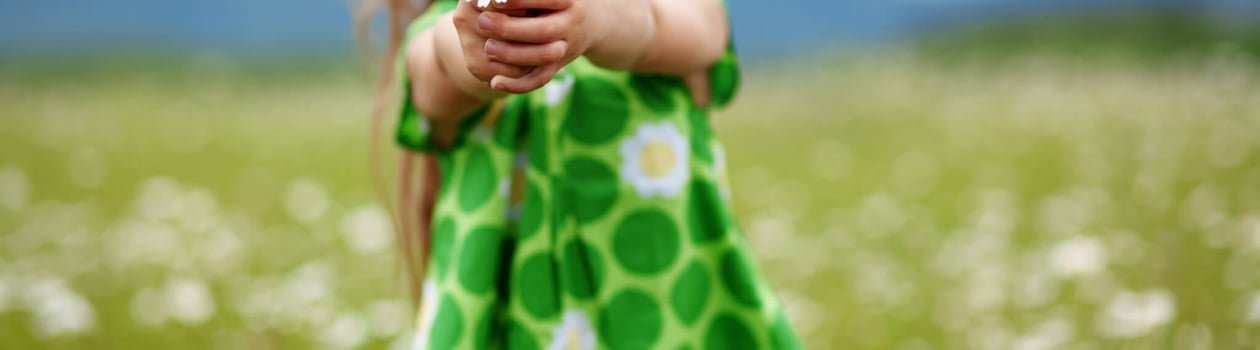
Why give flowers only on Valentine’s Day? A bouquet can say “thank you,” “I’m thinking of you,” “I’m proud of you,” or even “I’m sorry” without requiring a big speech. Flowers do what people often struggle to do: communicate care in a simple, tangible way that brightens a room and changes the mood the moment they arrive.
Bring Flowers to Someone Day is a cheerful nudge to make that gesture on purpose. It invites people to lean into the long tradition of giving blooms, consider what different flowers and colors can represent, and remember that “just because” is a perfectly good reason to show up with something beautiful.
It is less about perfection and more about thoughtfulness, whether the flowers go to a partner, a friend, a neighbor, a teacher, a coworker, or even to the giver’s own kitchen table.
How to Celebrate Bring Flowers to Someone Day
Bring Flowers to Someone
The simplest way to mark Bring Flowers to Someone Day is also the whole point: pick a person and deliver flowers. That person does not need to be a romantic interest. Flowers can be a gentle form of support for someone who has been having a hard week, a small congratulations for a milestone, or a quiet reminder that they are appreciated.
A little intention goes a long way. Before buying anything, it helps to think through a few practical details:
- What message should the flowers carry? Bright and playful feels different from calm and elegant. A wildflower-style bundle suggests relaxed warmth, while a structured arrangement can feel formal and “occasion-ready.”
- What is their environment like? Someone with a busy desk may prefer a smaller arrangement that does not demand attention. Someone who loves decorating might enjoy something more dramatic.
- Do they have pets or allergies? Some people are sensitive to strong fragrances, and certain flowers can be unsafe for pets. When in doubt, choosing low-fragrance blooms and keeping the arrangement simple can be a considerate approach.
- Will they be home? If delivering in person, a quick check-in can prevent flowers from sitting outside too long. If sending via delivery, adding clear instructions helps avoid confusion.
The note matters almost as much as the flowers. It does not need to be poetic. A single sentence can turn a pretty object into a meaningful message: “You handled a lot lately and I noticed,” “Thanks for showing up for me,” or “No special reason, I just wanted you to have something lovely.”
Bring Flowers to Someone Day can also be used for self-care without any guilt attached. Buying a bouquet for oneself is a legitimate celebration. It can turn a regular meal into something a little more ceremonial, make a home office feel less like a cave, or provide a small sense of rhythm and ritual. Trimming stems, changing water, and watching buds open can be surprisingly grounding.
For those who want a more hands-on version of the day, a few alternative “flower gifts” can be just as charming:
- A potted plant for someone who likes something longer-lasting.
- A small jar of single stems for a minimalist friend.
- A pressed flower card for someone who prefers keepsakes.
- A seed packet paired with a short note about future blooms for a patient, hopeful gesture.
Share the Day with Others
Bring Flowers to Someone Day is also easy to amplify. Sharing the idea with others can set off a small chain reaction of kindness, and it does not require anyone to spend a lot of money. A quick message to friends or family can plant the idea: “If you’ve been meaning to thank someone, flowers are a sweet excuse.”
Social media sharing can be part of it too, but the spirit of the day stays strongest when the focus remains on the recipient rather than the performance. A thoughtful approach might include:
- Posting a photo of a bouquet with a prompt encouraging others to surprise someone.
- Sharing a simple tip about keeping flowers fresh so people feel confident buying them.
- Highlighting the joy of giving flowers to unexpected people, like a mentor or a neighbor.
This day can be especially meaningful in group settings. Coworkers can pool a small amount to send flowers to a teammate who carried a big project. Friends can coordinate to brighten someone’s home during a difficult season. Families can give flowers to caregivers, grandparents, or anyone who tends to quietly support everyone else.
For those who like a playful twist, it can become a mini challenge: each person brings a single stem, then everyone combines them into one shared arrangement. The result is wonderfully mismatched and, in its own way, more personal than a perfect store-bought bouquet.
Do Some Flower Research
Flowers come with layers of cultural meaning that can make the gift feel more tailored. Learning a little about floriography, often called the language of flowers, can help a giver choose blooms that match the message they want to send. It is not a strict code that everyone agrees on, but it is a fascinating tradition that has influenced art, literature, and gifting customs for centuries.
A good place to start is with the “vibe” of common flowers. Many people recognize a few classic associations:
- Roses often suggest love and devotion, with color shifting the tone.
- Lilies can feel elegant and ceremonial, sometimes tied to remembrance.
- Tulips tend to read as cheerful, clean, and springlike.
- Daisies often feel innocent and friendly, like encouragement in flower form.
- Sunflowers bring obvious optimism and boldness.
- Orchids can communicate admiration and a sense of luxury.
Color plays a big role too. Even without memorizing an entire dictionary, a few broad impressions help:
- Red reads as passionate, bold, or romantic.
- Pink often feels affectionate, gentle, and appreciative.
- White tends to signal simplicity, sincerity, and calm.
- Yellow is typically cheerful and friendly, though some traditions interpret it differently.
- Purple often feels special, creative, and a little dramatic.
Research can also be delightfully practical. People can learn:
- Which flowers last longer in a vase.
- How different flowers open over time, from tight buds to full blooms.
- Which arrangements are likely to be strongly scented.
- How to care for flowers so the gift stays enjoyable for as many days as possible.
For anyone who wants to go deeper, a Victorian-era floriography book can be a fun reference. It also reveals why flower meanings can feel slippery: different authors and regions often assigned different messages to the same bloom. That flexibility can be freeing. The most reliable “meaning” is the one the giver attaches to the note.
Bring Flowers To Someone Day Timeline
Flowers in Ancient Egyptian Ritual and Gift-Giving
Ancient Egyptians used lotus blossoms, garlands, and floral collars in religious ceremonies and as offerings and gifts for both the living and the dead, linking flowers with honor and affection.
Classical Greece Associates Flowers with Love and the Gods
In classical Greece, flowers such as roses and violets were dedicated to deities like Aphrodite and were woven into wreaths and bouquets given at symposia and festivals to convey admiration and affection.
Roman Empire Popularizes Floral Bouquets and Wreaths
Romans cultivated roses and other blooms extensively, using them in wreaths, garlands, and scattered petals as gifts at banquets and public celebrations, embedding flower-giving in social and political life.
Courtly Flower Symbolism in Classical Japan
At the Japanese imperial court, poetry and seasonal observances attached specific meanings to blossoms like plum, cherry, and chrysanthemum, laying foundations for later hanakotoba, the Japanese “language of flowers.”
Lady Mary Wortley Montagu Describes Ottoman “Language of Flowers”
In letters from Constantinople, Lady Mary Wortley Montagu reported a Turkish custom of assigning meanings to flowers and other objects, helping spark Western fascination with floral communication.
First Popular English “Language of Flowers” Book Published
“The Language of Flowers,” attributed to Charlotte de Latour, appears in English translation, cataloging symbolic meanings for specific blooms and encouraging Victorians to send coded messages through bouquets.
Florists’ Telegraph Delivery (FTD) Modernizes Sending Flowers
American florists formed Florists’ Telegraph Delivery, using telegraph and later telephone networks so people could order bouquets remotely, transforming flower giving into a convenient, long-distance gesture.
History of Bring Flowers to Someone Day
Flowers have always had meaning, but what started it? Long before modern gifting culture, humans used plants and flowers in rituals, celebrations, and everyday symbolism. Their beauty is temporary, their fragrance can change a space instantly, and their seasonality makes them feel tied to time and memory. That combination made flowers natural messengers.
In Ancient Greece, Rome, and China, giving someone flowers was a way to communicate the floriography of flowers, also known as the language of flowers. In practice, this “language” was not one standardized dictionary shared by everyone.
It was more like a set of associations that developed through stories, art, religious practices, and social customs. Certain plants became linked with particular qualities, deities, virtues, or life events. A flower could be a decoration, an offering, a sign of honor, or a subtle signal, depending on the context.
During these times, flowers helped communicate the stories of the gods, which detailed significant meaning and importance. Myths and legends often explained why a flower looked the way it did, when it bloomed, and what it represented.
Laurel, for example, carried associations with victory and honor in the classical world. Floral imagery showed up in garlands, ceremonial crowns, and public celebrations, reinforcing the idea that flowers were not merely pretty but symbolic.
This didn’t entirely exist throughout the Middle Ages, as it took until the mid-1700s for the French and English to discover how flowers were used as a language of communication, specifically in the country of Turkey.
In that period, European fascination with Ottoman culture included attention to customs of messaging and symbolism, including the idea that objects, including flowers, could be used to convey sentiments.
Whether the historical details are sometimes simplified in popular retellings, the broader point holds: people repeatedly rediscovered the pleasure of sending coded messages through everyday items, and flowers were among the most elegant tools for it.
The Victorian Era then brought the language of flowers to the forefront, expanding on the detail, color, shape, and position in relation to other flowers. Victorian society, with its emphasis on manners and restrained expression, offered the perfect stage for elaborate floral symbolism.
When direct statements of desire or frustration were not considered appropriate, a bouquet could step in as a socially acceptable messenger. People also began producing guides that assigned specific meanings to specific flowers, and bouquets became curated statements rather than random bundles.
Numerous books were made to present the meanings of flowers, but because they were written by numerous authors, the meaning was usually up to interpretation. That interpretive quality is part of what keeps floriography interesting.
The “rules” were never entirely fixed, and even in the Victorian era, not everyone followed the same guide. Still, the idea that flowers could speak persisted, and it shaped the way people thought about gifting. Even now, many people instinctively treat flowers as emotional shorthand, reaching for red roses when they want romance or choosing softer colors when they want comfort.
Bring Flowers to Someone Day, nevertheless, is about giving someone flowers for any reason. Whether it’s to kindle an old spark, apologize for something you did, or celebrate a life event such as a graduation or anniversary, giving flowers can be a great way to express emotion and send messages to the people you care about.
In modern life, the “language” is often less about decoding and more about intention. A bouquet can say, “I remembered,” which is one of the most powerful messages a person can receive. It can also create a pause in routine. Flowers are a nonverbal way to mark a moment, even when the moment is simply a tough week that deserves a little softness.
Flowers all have their own significant meaning, and depending on the one you choose, you can convey anything you want to. Some meanings come from tradition, some from personal experience. A person might associate carnations with a beloved family member, or daisies with a childhood garden.
Bring Flowers to Someone Day leaves room for those personal associations. The goal is not to deliver the “correct” symbolic message, but a sincere one.
On this day, people take the time to purchase flowers at a local flower shop or send flower bouquets by purchasing them online. Either route can be thoughtful, and each has its own charm.
A florist can help translate a feeling into a design, suggesting blooms that fit a budget, a color preference, or a recipient’s style. An online order can be a practical option for long-distance surprises, and it makes it possible to reach someone who might not otherwise receive flowers.
To keep the gift feeling good from start to finish, it helps to remember the unglamorous side of bouquets: they are living things that need a little care. A giver can quietly set the recipient up for success by choosing a sturdy arrangement, including a small packet of flower food if available, and offering a quick care tip in the note. Trimming stems at an angle, using a clean vase, and refreshing water can add days to the life of the gift.
Bring Flowers to Someone Day, at its core, celebrates a small, human habit that has lasted through centuries: using something beautiful and fleeting to say something that people hope will last.
The Hidden Power of Flowers
Flowers are more than just beautiful gifts—they influence emotions, connect people, and even reflect global and environmental systems.
From boosting mood and strengthening social bonds to traveling across continents and leaving an ecological footprint, the simple bouquet carries a deeper story worth understanding.
Flowers and Human Emotions
Experimental research has found that receiving flowers can have a measurable effect on mood and social behavior.
In a frequently cited study from Rutgers University, participants who were given flowers showed immediate and long-term increases in positive mood, reported feeling more socially connected, and even displayed more genuine “Duchenne” smiles compared with those who received other gifts such as candles or fruit baskets.
The Global Cut Flower Trade
The modern cut flower bouquet is often the end of a long international supply chain.
According to data compiled by the International Trade Centre, the global trade in cut flowers and foliage is worth several billion dollars annually, with the Netherlands acting as a major re-export hub and countries such as Colombia, Ecuador, Kenya, and Ethiopia among the leading producers supplying Europe and North America.
Water and Carbon Footprints of Bouquets
Behind a simple bunch of roses lies a significant environmental footprint. Research on cut flower production has shown that flowers grown in heated greenhouses in colder climates can have far higher energy and carbon costs than those grown outdoors in equatorial regions and flown by air, while intensive irrigation for flower farms can strain local water resources, particularly in parts of East Africa and South America.
Victorian “Language of Flowers” Was Never Standardized
The popular idea that each flower has one fixed meaning comes largely from Victorian floriography books, but historians note that there was never a single authoritative code.
Dozens of competing dictionaries were published in Britain, France, and the United States in the 19th century, and they often contradicted each other, so the “message” of a bouquet could vary widely depending on which book a person consulted.
Tulip Mania and Rare Blooms as Status Symbols
Long before supermarket bouquets, rare flowers were luxury items and speculative assets.
In the Dutch “Tulip Mania” of the 1630s, unusual striped tulip varieties became so coveted that single bulbs sometimes sold for more than a skilled artisan’s annual income, turning the act of giving or displaying certain flowers into a conspicuous sign of wealth and social status.
Flower Color Meanings Have Deep Roots
While individual floriography books differ, some color associations go back centuries.
Red flowers in Europe have long been linked with passionate love and sacrifice, white with purity and mourning, and yellow with both friendship and, in some periods, jealousy or infidelity.
These symbolic meanings draw on religious art, heraldry, and literary traditions rather than any universal rule about colors.
Chrysanthemums and Cultural Contrast
The same flower can carry very different messages around the world.
Chrysanthemums are associated with death and used primarily for funerals and graves in many parts of continental Europe and Japan, yet in countries such as the United States and Australia, they are common gifts for celebrations or used as cheerful decorative blooms, which can lead to unintended misunderstandings in cross-cultural gifting.
Bring Flowers To Someone Day FAQs


You may also like
Flower Day
Flower Day shines like a burst of sunshine, brightening the world with petals and perfume. Streets, shops, and homes seem to bloom all at once. It’s not just about admiring flowers. It’s about what they make us feel—lighter, happier, more awake. One whiff of a lily or glance at a daisy...
- United States
National Plant a Flower Day
Brighten up your garden with a kaleidoscope of colors and sweet fragrances. Put your green thumb to the test and bring nature to life!
- United States
National Water a Flower Day
Celebrate National Water a Flower Day by nurturing blooms, learning smart watering tips, and appreciating how flowers brighten gardens, homes, and daily life.
- Canada
- International
- United Kingdom
- and 1 more
National Orange Blossom Day
Try a recipe using the fragrant blossoms of oranges, or even try making your own essential oils or perfumes with this sweet-smelling little flower.
- France
- United States
National days and holidays on May 15

Cannes Film Festival
The Cannes Film Festival is one of the most glamorous and important events in the film industry. Held annually in the beautiful city of Cannes on the French Riviera, this festival draws the biggest names in cinema, from directors to actors. The red carpet is a dazzling display of style...
- France

National Bike to Work Day
Improve your health and help the environment at the same time by leaving the car at home and taking your bike to work for at least one day of the year.
- Canada
- United States

National Endangered Species Day
Many magnificent species of animal and insect are at risk of going extinct, so join the cause by volunteering, donating, or spreading awareness of these threats.
- Australia
- Canada
- United Kingdom
- and 1 more

National NASCAR Day
Rev your engines for NASCAR! The high-speed thrills, heart-pumping action, and fierce competition make for an unforgettable experience. So strap in and hold on tight, it's going to be a wild ride!
- Argentina
- Brazil
- Canada
- and 3 more
Seize Every Day
Join free for personalised recommendations, email reminders and exclusive guides. Never miss a day.