
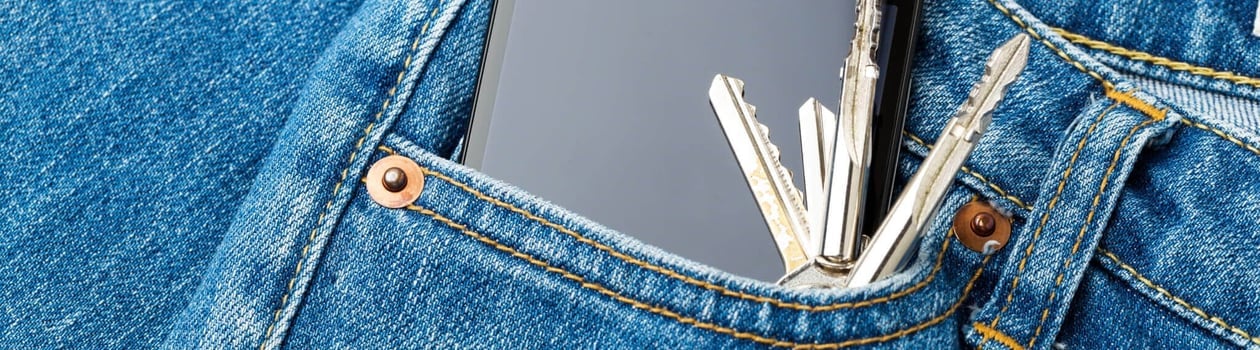
Car Keys and Small Change Day
Car Keys and Small Change Day is a quirky celebration that reminds us of the convenience of pockets. Pockets hold those small but crucial items, like car keys and spare change, which we often take for granted.
This day encourages us to appreciate the simplicity and usefulness of pockets in our everyday lives.
Whether it’s a quick run to the store or an emergency, having these items within easy reach makes a big difference!
Car Keys and Small Change Day Timeline
c. 3300 BCE
Ötzi’s Belt Pouch
A leather pouch sewn to the belt of Ötzi the Iceman holds tools and tinder, providing some of the earliest archaeological evidence of a wearable pocket-like container.
13th Century
“Fitchets” in Medieval Europe
Tailors in medieval Europe introduce fitchets, simple vertical slits in tunics and robes that allow access to purses or bags worn underneath clothing.
17th Century
Sewn‑in Pockets for Men
Men’s garments in Europe begin to include pockets sewn directly into coats, waistcoats, and breeches, turning the pocket into a standard, built‑in feature of everyday dress.
18th Century
Tie‑on Pockets for Women
Many women in Europe and colonial America wear separate tie‑on pockets under their skirts, using slits in their gowns to reach keys, coins, and small personal items.
1853
Riveted Pockets and Work Trousers
Levi Strauss and Jacob Davis develop riveted work pants, reinforcing pocket corners so miners and laborers can safely carry coins and small tools without tearing the fabric.
1903–1913
From Switch to Detachable Car Keys
Early automobiles use simple ignition switches, but by the 1910s manufacturers introduce separate, removable keys that drivers can carry to lock ignitions and discourage theft.
1949
First Modern Car Ignition Key
Chrysler introduces a double‑sided key that both unlocks the doors and starts the car, helping to standardize the small metal car key as an everyday pocket essential.
How to Celebrate Car Keys and Small Change Day
Create a Pocket Scavenger Hunt
Invite friends and family for a pocket scavenger hunt. Hide car keys and small change around the house. Give clues to make it challenging.
Whoever finds the most items wins a fun prize. It’s a playful way to use those forgotten coins and keys.
Go on a Spontaneous Road Trip
Gather spare change and hit the road. Let the small coins fuel an unexpected adventure. Explore nearby towns, try local snacks, and make new memories.
This lighthearted trip celebrates the freedom car keys provide.
Organize a Charity Drive
Clean out those pockets and collect loose change for charity. Even small amounts can make a big difference. Donate to a local cause or a favorite organization. It’s a simple yet impactful way to help others.
Host a Car Wash Fundraiser
Rally neighbors and friends for a car wash. Use the event to collect donations in the form of small changes. Donate the proceeds to a worthy cause. Everyone enjoys clean cars while contributing to the community.
Start a Change Jar Tradition
Place a jar in a common area for collecting spare coins throughout the year. On Car Keys and Small Change Day, count the collected money. Use it for a family treat or donate it. This tradition can turn small coins into big surprises.
Why Celebrate Car Keys and Small Change Day?
Car Keys and Small Change Day is here to highlight the importance of small conveniences. Pockets have evolved over centuries, becoming integral parts of our clothing.
They keep our essential items close, making our daily routines smoother. This day also serves as a fun reminder to organize and utilize our pockets better, ensuring we don’t lose those tiny yet essential objects that keep us going.
History of Car Keys and Small Change Day
The specific origins of this day are not well-documented, but it highlights the importance of small, portable items like car keys and coins that we often carry in our pockets.
The exact starting date of Car Keys and Small Change Day is unknown. The day aims to honor the historical significance of pockets, which have been used since ancient times. The oldest known pocket dates back to 3300 BCE, found on the “Iceman.”
In the 13th century, “fitchets” in Europe were similar to modern pockets and accessible through slits in clothing.
By the 17th century, men’s trousers included sewn-in pockets, while women used removable pouches under their skirts. Over time, pockets became integral in both men’s and women’s fashion, especially with the advent of jeans in the 20th century.

Facts About Car Keys and Small Change Day
Hidden Pouches in Ancient Clothing
Why Women’s Clothes Lacked Useful Pockets
The Tiny “Watch Pocket” on Jeans Has 19th‑Century Roots
From Single Key to Rolling Code
Key Fobs Contain Surprising Computing Power
Loose Change Adds Up to Billions
Coins Are Slowly Disappearing from Everyday Purchases
Car Keys and Small Change Day FAQs
Why do many women’s clothes still have fewer or smaller pockets than men’s?
Researchers and fashion historians point to a mix of tradition, tailoring, and marketing.
In the 17th to 19th centuries, men’s garments increasingly had pockets sewn in, while women typically wore separate tie-on pouches under their skirts, so there was less pressure to add pockets to dresses themselves.
In the 20th century, as women’s clothing was cut closer to the body, designers often argued that pockets would spoil the line of the garment, and handbags became the default way to carry items.
Modern studies have found that women’s pockets are not only fewer in number but also significantly smaller than men’s, which limits what can be carried and can encourage extra accessory purchases.
How did pockets develop historically, and what came before them?
Early “pockets” were not sewn into clothing but were separate pouches or bags tied to belts or worn at the waist.
The famous Copper Age mummy known as Ötzi the Iceman, dated to around 3300 BCE, wore a belt with a small pouch that held tools and tinder, functioning much like a pocket does today.
In medieval and early modern Europe, people commonly used drawstring pouches attached to girdles or belts.
From the 17th century onward, men’s coats, waistcoats, and trousers increasingly included pockets sewn into the fabric, while women continued to rely on removable pouches under their skirts until dress styles changed in the 19th and 20th centuries.
Are coins and small change actually becoming obsolete in everyday life?
Use of coins and small-denomination cash has declined in many countries due to the rise of cards and digital payments, but it has not disappeared.
Central banks and payment studies in Europe, North America, and parts of Asia show that cash is used for a shrinking share of transactions by value, yet it remains common for low-value, in-person payments such as vending machines, small shops, street markets, and public transport in some regions.
In lower-income economies and rural areas, coins are often still essential because digital infrastructure is limited and cash is trusted and universally accepted.
What is “lost change” and does it really add up to significant money?
“Lost change” refers to coins that fall out of circulation in practical terms because they are misplaced, dropped, forgotten in drawers or cars, or end up in places like couch cushions and public spaces.
While each instance involves only a small amount, large populations generate surprisingly big totals.
For example, the U.S. Transportation Security Administration reports collecting hundreds of thousands of dollars in coins left behind at airport checkpoints each year, which by law are turned over to the government.
Similar patterns occur in other public environments, showing that small-denomination money can accumulate into substantial sums when aggregated.
How can someone carry car keys and small valuables more securely to reduce loss or theft?
Security experts recommend a few simple habits: use a sturdy keyring or fob so keys are not easily separated, avoid overloading one pocket with all essentials, and keep keys in a front pocket or interior jacket pocket rather than an easily accessible back pocket.
When possible, attach keys inside a bag or backpack with a clip or lanyard so they cannot fall out.
For modern keyless entry fobs, it can also be helpful to use a signal-blocking pouch or wallet when in high-risk areas to reduce the possibility of relay attacks that attempt to intercept the fob’s radio signal.
Why did car keys become such a central everyday object, instead of just another tool?
As car ownership expanded in the 20th century, the car key became both a practical tool and a symbol of mobility and autonomy.
Early automobiles sometimes used simple switches or removable steering wheels as security, but by the mid‑1900s dedicated ignition keys and locking systems were standard.
Over time, keyrings and keychains turned into a way to carry not only car keys but also house keys and small identification tokens, and they began to reflect personal identity through logos, souvenirs, and decorative charms.
Today, even as keys shift to electronic fobs or smartphone-based “digital keys,” they still represent access to transportation and independence in daily life.
Why do some countries round cash payments instead of using the smallest coins?
In several countries, the smallest coins have been withdrawn or are used less often because they are expensive to produce relative to their value and inconvenient for both consumers and businesses.
To handle prices that do not match the remaining coin denominations, governments or central banks may adopt rounding rules, such as rounding the final cash total to the nearest 5 cents.
Electronic payments are usually still charged to the exact cent, but cash transactions follow the rounding guideline.
This approach reduces minting costs and speeds up cash handling while keeping the overall impact on consumers very small.
Also on ...
View all holidaysNational Tooth Fairy Day
Have you heard of the little visitor who brings treats to kids while they sleep? She's sparkly, sneaky, and always on the hunt for lost teeth!
Rare Disease Day
Many people living with uncommon illnesses often feel forgotten. Raising awareness can inspire research, understanding, and hope for better treatments.
Open That Bottle Night
After years of patiently waiting, it's time to indulge in the luxurious nectar that's been aging gracefully.
We think you may also like...
National Drive-In Movie Day
Bring snacks and drinks, comfy blankets, and of course your car and go see a new or old favorite movie at your local drive-in, from the comfort of your car.
National Thank You Note Day
Taking a moment to express gratitude with a handwritten message, a simple gesture that lets others know you appreciate them.