
Life often brings times when two perfect things come together to create something that is absolutely sublime and beautiful. Sometimes, this involves two people being brought together. Other times it’s the perfect song with the ideal mood.
But, topping all of that, Chocolate Covered Cashew Day celebrates the coming together of a nut and bean to create what may very well be the penultimate snack food!
How to Celebrate National Chocolate Covered Cashews Day
Most people don’t need a whole lot of motivation or inspiration to celebrate a day such as this! Try out these ideas for enjoying National Chocolate Covered Cashews Day:
Enjoy Some Chocolate Covered Cashews
Well, celebrating Chocolate Covered Cashew Day is as simple as buying up a bag of cashews dipped in chocolate and going to town on them. Or, toss some chocolate-covered cashews into a boring trail mix to take it far beyond expectations. And, if you’re like most people, it may be enticing to sample all the world has to offer for finding a personal and particular palette of gourmet cashews dipped in chocolate.
Make Gourmet Chocolate Covered Cashews at Home
Some people love to enjoy the alluring taste of dark chocolate and sea salt dipped cashews. Others might think that covering cashews with white chocolate mixed with lavender brings a gentle floral taste to the treat.
These ideas are truly just the beginning of all the beautiful things that could be discovered! Just buy a bag of raw cashews or roast cashews, melt a variety of chocolates and then let the imagination run wild!
Learn About Cashew Health Benefits
Although this is definitely a sweet treat that should be eaten in moderation, Chocolate Covered Cashews are not filled with completely empty calories in the same way a chocolate-covered marshmallow might be (not that anyone is hating on marshmallows!).
Cashews come with their own health benefits and, if kept to a reasonable number, can be part of a healthy, enjoyable diet. Here are some of the health benefits that cashews have to offer:
- Rich in Fiber and Low in Sugar
- Good Source of Copper and Protein
- Filled with Heart-Healthy Fats
- High in Manganese and Magnesium
- Full of Antioxidants that may help fight free radicals
Give Chocolate Covered Cashews as Gifts
Whether just sharing them at the office with coworkers who love them, or wrapping them up in a brightly colored bow and giving them to a family member, Chocolate Covered Cashews make a fabulous gift!
For a personal touch, gifts of Chocolate Covered Cashews can certainly be made at home and placed in a pretty container. But for those who are less prone to be creative in the kitchen, try ordering online or buying from a local shop that carries these or other spectacular brands:
- Godiva. Hailing from Brussels, Belgium, this company offers milk chocolate and dark chocolate options for cashews.
- Harry and David. This American company offers a selection of milk, dark, and sea-salted varieties.
- Hotel Chocolat. This British chocolatier and cocoa grower offers chocolate cashews mixed with caramel, for an even sweeter flavor.
Why Celebrate National Chocolate Covered Cashews Day?
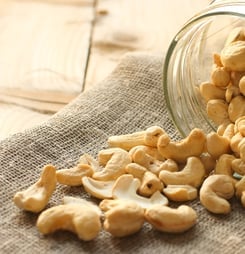
Cashews are slightly sweet with a crunch that satisfies, and a smooth texture that is buttery and altogether versatile. Eaten on their own, these little nuts are fabulous. But pairing them with chocolate takes them to a whole new level.
Rich, flavorful chocolate wrapped around the distinctly nutty flavor of roasted cashew nuts. Could anyone imagine anything better? For those who think they can, it seems unbelievable, because National Chocolate Covered Cashew Day just blows almost anyone’s taste buds out of the water!
National Chocolate Covered Cashews Day Timeline
Cashew Domestication and Portuguese Spread
Portuguese colonists began cultivating cashew trees in northeastern Brazil and exporting them to Goa and other parts of India and East Africa, laying the groundwork for global cashew production.
Cacao and Chocolate Reach Europe
After being used for centuries in Mesoamerica as a bitter cocoa drink, cacao was brought to Spain in the early 1500s; by the 17th century, sugar-sweetened chocolate beverages were popular among European elites.
First Solid Eating Chocolate Bar
British firm J. S. Fry & Sons produces what is widely regarded as the first solid chocolate bar suitable for eating, transforming chocolate from a drink into a confectionery that can coat or embed nuts.
Invention of Milk Chocolate
Swiss chocolatier Daniel Peter, working with Henri Nestlé’s condensed milk, perfects milk chocolate, creating a milder, creamier product that becomes a standard coating for nuts and other inclusions.
Rise of Chocolate-Covered Nuts
As industrial chocolate making expands in Europe and the United States, confectioners begin mass-producing chocolate-covered almonds, peanuts, and other nuts, establishing a template later used for cashews.
India Launches Organized Cashew Industry
The government of India establishes the Cashew Export Promotion Council, helping structure cashew processing and export; India soon becomes a dominant global supplier of cashew kernels used in snacks and confectionery.
Premium Chocolate-Covered Nuts Go Mainstream
Specialty chocolatiers in Europe and North America popularize gourmet chocolate-covered nuts with high-quality couverture chocolate and carefully roasted kernels, a trend that includes upscale chocolate-covered cashews.
History of National Chocolate Covered Cashews Day
The history of the Chocolate Covered Cashew is the culmination of the history of two foods and how they crossed miles and ages to come together. The first is the cashew, a delicious nut that grows in an odd configuration on a tree that was originally native to Brazil (no, this isn’t the Brazil nut, that’s something different).
Today, the cashew nut is also associated with Costa Rica and other countries in Central America. And now, India has become the largest producer of cashew nuts.
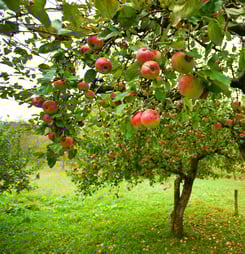
The cashew tree is an evergreen (from the Anacardium occidentale family) that develops quite an unusual fruit, even more unusual for the fact that the nut actually grows ‘under’ the fruit, rather than in the middle of it. In fact, there’s a special name for nuts that grow in this way, they’re called an ‘accessory fruit’. Little known to the common person is the fact that the fruit itself, called the Cashew Apple, is edible as well!
It might be interesting to note that the shell of the cashew is toxic if eaten by humans, so that’s why it is never sold with the shell. The name of the nut in Portuguese is “caju”, making the English version of it simply “cashew”. Of course, some people think its name sounds more like a sneeze than a nut!
Just as important as the story of the cashew nut, history provided humans with chocolate. The chocolate bean comes from the cacao tree and has been cultivated for almost 3000 years in Mesoamerica, which is the area that includes both Central American and parts of South America. Chocolate was originally eaten in its bitter form, without sweetener. Since then, it has come into its own in a wide variety of flavors including milk and dark chocolate, as well as other varieties.
At some point in the past, a genius was born who realized that these two flavors cashews and chocolate!) needed to come together and be joined in delicious culinary matrimony. Out of this stroke of brilliance was born the Chocolate Covered Cashew, and if there is a more perfect treat out there, we certainly don’t know what it is.
From there, it was only reasonable and sensible that National Chocolate Covered Cashews Day would be born, in order to honor and enjoy this delicious treat!
Delicious and Surprising Facts About Cashews
Cashews may look like ordinary nuts, but they have a surprisingly unusual origin, production process, and global journey.
From how they grow to why they are never sold in their shells, these facts reveal the hidden story behind one of the world’s favorite snacks.
Cashews Are Botanically “Accessory Fruits”
Botanists classify the cashew nut as part of an accessory fruit because the true seed sits in a hard shell attached to the outside of a swollen, fleshy stem called the cashew apple.
This odd arrangement sets cashews apart from familiar tree nuts like almonds or walnuts, whose seeds develop inside the fruit rather than hanging below it.
Why Cashews Are Never Sold In Their Shells
Raw cashew shells contain a caustic oil closely related to urushiol, the irritant found in poison ivy and poison oak.
Traditional and modern processors have to heat or steam the shells to neutralize this oil before the nuts can be safely handled and eaten, which is why consumers rarely encounter cashews in their shells.
From Brazilian Forests to Indian Plantations
The cashew tree originated in northeastern Brazil and was spread around the tropics by Portuguese traders in the 16th century, first to India and later to East Africa.
Over time, India and several West African nations became leading producers and exporters, so the majority of cashews eaten worldwide today are no longer grown in the nut’s original South American homeland.
The Overlooked Cashew Apple Is a Local Delicacy
In major cashew-growing regions such as Brazil and Goa in India, the brightly colored cashew apple is widely used even though it rarely appears in international markets.
It can be eaten fresh, pressed into juice, fermented into vinegar, or distilled into alcoholic drinks like Brazilian cajuína and Goan feni, turning what would otherwise be farm waste into a local food resource.
Nuts, Including Cashews, Support Heart Health
Regular consumption of tree nuts such as cashews has been associated with lower risks of cardiovascular disease in large population studies.
Research suggests that their mix of unsaturated fats, fiber, minerals, and bioactive compounds can help improve blood lipid profiles and reduce inflammation when they replace more refined snacks in the diet.
Cashews Are A Surprisingly Important Global Cash Crop
Cashews are a major livelihood for millions of smallholder farmers in countries such as Côte d’Ivoire, India, Vietnam, and Tanzania.
The international cashew trade is valuable enough that some producing countries have created national cashew boards or policies to regulate quality, support farmers, and improve processing standards for export.