Commonwealth Covenant Day is a significant public holiday in the Northern Mariana Islands. It celebrates the unique political bond between the islands and the United States, marked by the 1976 Covenant Agreement.
This agreement established the islands as a U.S. commonwealth, allowing them to govern themselves while maintaining strong ties with the U.S. People across the islands view this day as a chance to reflect on their shared values of democracy, individual freedoms, and the benefits that have come from this partnership.
More than just a historical moment, the day holds great importance for residents, who have seen the positive impacts of the agreement over the years.
The Covenant has brought numerous benefits, from U.S. citizenship to economic opportunities, that have improved the quality of life on the islands.
Commonwealth Covenant Day Timeline
Spanish Contact with the Mariana Islands
Explorer Ferdinand Magellan’s voyage records the first known European contact with the Mariana Islands, beginning centuries of Spanish colonial rule over the archipelago.
Germany Acquires the Northern Marianas
Following Spain’s defeat in the Spanish-American War, Germany purchases the Northern Mariana Islands (excluding Guam) from Spain, placing the islands under German administration.
Japanese Mandate over the Northern Marianas
After World War I, the League of Nations grants Japan a mandate over former German islands north of the equator, including the Northern Marianas, leading to large-scale Japanese settlement and development.
Creation of the Trust Territory of the Pacific Islands
The United Nations places the Northern Marianas within the Trust Territory of the Pacific Islands, to be administered by the United States with responsibility to guide the islands toward self-government and self-determination.
Plebiscite on the Commonwealth Covenant
Voters in the Northern Mariana Islands approve the Covenant to Establish a Commonwealth in Political Union with the United States in a United Nations–observed plebiscite, with 78.8 percent voting in favor.
How to Celebrate Commonwealth Covenant Day
As the day arrives each year, families and friends come together to honor this lasting relationship and to express pride in their self-governance.
It’s not just about looking back but also about recognizing the progress and potential that the Covenant continues to offer.
Whether you’re feeling adventurous or reflective, there’s something for everyone. Here are some playful and creative ideas to make the day memorable!
Wave That Flag
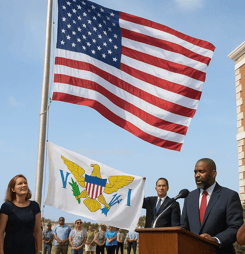
Start the day by waving the Northern Mariana Islands flag high and proud! Gather with friends or join the community for a festive flag parade.
Adding music, cheers, or even a mini dance party while waving will amplify the fun. It’s a simple yet powerful way to show your island pride.
Throw a Feast
Celebrate through food by hosting a feast with a mix of local and international flavors. Invite loved ones to enjoy a variety of dishes that represent the cultural diversity of the islands.
Try a mix of traditional Chamorro and Carolinian foods with a modern twist to keep things exciting!
Explore History
Dive into the island’s history by watching a documentary or reading up on the Covenant. “The Insular Empire” is a great film to start with, offering insights into the Northern Marianas’ journey.
You can even create trivia games from what you learn and test your family’s knowledge!
Craft Something Special
Create fun, island-themed crafts, like designing your own Northern Mariana Islands-inspired shirts or flags. Kids and adults alike will enjoy painting, stitching, or assembling something meaningful.
These creations can then be displayed during the day’s celebrations or given as gifts.
Volunteer or Give Back
What better way to honor the spirit of the Covenant than giving back to your community? Join a local service project or organize a cleanup at a favorite beach or park.
Helping out not only strengthens bonds but also shows love for the island and its future.
History of Commonwealth Covenant Day
Commonwealth Covenant Day began after a key moment in the history of the Northern Mariana Islands. In 1975, the people of the islands faced an important decision. They could either become fully independent or form a special relationship with the United States.
After much discussion, a majority voted to enter into a covenant with the U.S. instead of pursuing independence. This agreement gave the islands the status of a commonwealth, meaning they could govern themselves while still being connected to the U.S.
The covenant officially took effect on March 24, 1976. The U.S. Congress and the islands’ leaders worked together to create this unique political agreement.
This new status allowed the Northern Mariana Islands to manage their internal affairs while the U.S. remained responsible for defense and other major policies.
The decision to mark this day as a holiday came soon after, with celebrations recognizing the important steps taken for self-government and progress.
This day symbolizes more than just a legal agreement. It represents the islanders’ choice to balance independence with the benefits of U.S. citizenship and support.
Over the years, Commonwealth Covenant Day has grown into a proud tradition. It allows residents to reflect on the journey toward self-rule and the opportunities the covenant has brought.
Today, it stands as a reminder of the hard-earned unity and partnership that continue to shape life on the islands.
Facts About Commonwealth Covenant Day
A Plebiscite With Unusually High Participation
When the people of the Northern Mariana Islands voted on their future political status in a 1975 plebiscite, about 95% of eligible voters registered and roughly 95% of those registered cast ballots, an extraordinarily high level of participation for any democratic vote; of those who voted, 78.8% chose to approve the proposed covenant and enter into political union with the United States.
From Centuries of Colonial Rule to Local Self-Government
Before gaining self-governing powers, the Northern Mariana Islands had spent roughly four centuries under a succession of foreign powers, including Spain, Germany, and Japan, followed by U.S. administration as part of the United Nations Trust Territory of the Pacific Islands after World War II, meaning the move to local constitutional government in the late 1970s marked the first time in hundreds of years that islanders could run most of their own internal affairs.
A Legal “Covenant” Rather Than a Standard Territorial Law
The governing document between the Northern Mariana Islands and the United States is styled as a “Covenant to Establish a Commonwealth” rather than a typical territorial statute, reflecting its character as a negotiated agreement that locks in specific guarantees such as local self-government, control over internal affairs, and a clear allocation of responsibilities for defense and foreign affairs to the United States.
Citizenship and Status Finalized a Decade After the Agreement
Although the political union was negotiated and approved in the mid‑1970s, the relationship did not fully take legal effect until November 4, 1986, when a presidential proclamation implemented key provisions including U.S. citizenship for eligible island residents, formally completing the transition from United Nations trusteeship to a self-governing commonwealth under U.S. sovereignty.
Part of a Broader U.S. Reshaping of Pacific Territories
The political reordering that brought the Northern Mariana Islands into union with the United States happened alongside separate negotiations with other parts of the former Trust Territory, including the Federated States of Micronesia and the Republic of the Marshall Islands, so the covenant there formed one piece of a wider U.S. effort in the 1970s and 1980s to replace colonial-era trusteeship with self-governing arrangements tailored to each island group.
A Rare Example of Territory Added by Negotiation, Not Conquest
In contrast to earlier U.S. expansions in the Pacific that followed war or great-power treaties, the Northern Mariana Islands’ political union emerged from a multi-year negotiation with local representatives, legislative approval, and a monitored popular vote, making it a relatively rare instance in which a modern U.S. territorial relationship was built through a formal exercise of self‑determination by the local population.
Insular Areas and Unequal Representation
Like other U.S. insular areas such as Guam and American Samoa, the Northern Mariana Islands sit in a constitutional gray zone in which residents are U.S. citizens but lack voting representation in Congress and cannot vote for president, a status that has fueled ongoing debates about how democratic self‑government and political equality should be defined for people living in U.S. territories.