
Von Neumann probe programmed to multiply
Doctor Steel (Fibonacci Sequence)
Clickin’ and tickin’ with the equation of phi
Striving and climbing and bribing and lying
For science, fudge the numbers so that everything fits”
There are sequences that appear in nature time and time again, ones that seem to define the very basis of the reality of the world and coordinate how everything comes together. One of these numbers is the Fibonacci sequence and it can be found in the most surprising of places.
Fibonacci Day commemorates this sequence and the man who brought it to the attention of humans way back in 1202. It’s time for Fibonacci Day!
History of Fibonacci Day
Who’s the man? That would be Leonardo of Pisa, known today as Fibonacci. He does not seem to have been the first to think of this sequence, but he was the first to bring it to the European world and bring awareness to its importance in the furthering of science.
The sequence itself first appeared in Indian Mathematics, known as Virahanka numbers, and was connected with Sanskrit prosody. The number sequence is also tied to the golden ratio and the golden triangle, both of which appear again and again in nature, as does the sequence itself.
Where does this unique sequence appear, some might ask? It is in the most fundamental of things, from the petals of the yellow chamomile to the complex and seemingly random branching of a tree’s limbs–and these are just a few.
Look deeper and a person who works to pay attention will find these numbers within the pine cone as well as in the shape of an unfurling fern. In a truly strange one to understand, the numbers can be found in the description of the family tree of bees, which is deeply important to apiarists as a result.
And because of its prevalence in nature, this sequence also has a tendency to be repeated by humans so that it is found in various forms of art and architecture. It can be seen in buildings, paintings, drawings, sculptures and so much more.
The sequence has also inspired songs, such as that by the illustrious Doctor Steel (above), which is simply titled “Fibonacci Sequence”. This song is definitely worth taking the time to check out and then listen to the rest of this artist’s stuff.
That can be the first step in celebrating Fibonacci Day!
How to Celebrate Fibonacci Day
Get involved with the fun by learning new things and connecting the dots in celebration of this important day. Try out these ideas to get started:
Understand More About the Fibonacci Sequence
Celebrating Fibonacci Day is best done by studying and researching the Fibonacci sequence. There’s so much about the Fibonacci sequence that leads to fascinating discoveries and even just reading about it is pure joy!
Learning how to create the Fibonacci sequence isn’t very difficult. Simply start with 0,1. Then each additional number is always the last two numbers of the sequence added together. Like this: 0,1,1,2,3,5,8,13,21,34 and so on…..
While it might seem completely random, it’s a growth sequence that creates a beautiful pattern in life and in art. And because it’s so prevalent in nature, the Fibonacci sequence provides the human eye with a sense of familiarity and even, perhaps, comfort.
Find the Fibonacci Sequence in Normal Life
Going out in nature and finding where it exists, which is everywhere! You can even look in your own home and yard and find places where the Fibonacci sequence structures the world around you. Of course, as nature is filled with uniqueness and variants, these are not the case 100% of the time, or our world would look more like it was made from a cookie-cutter. But the principle of the sequence can be found in so many different places.
Try these out for starters:
Snail Shells
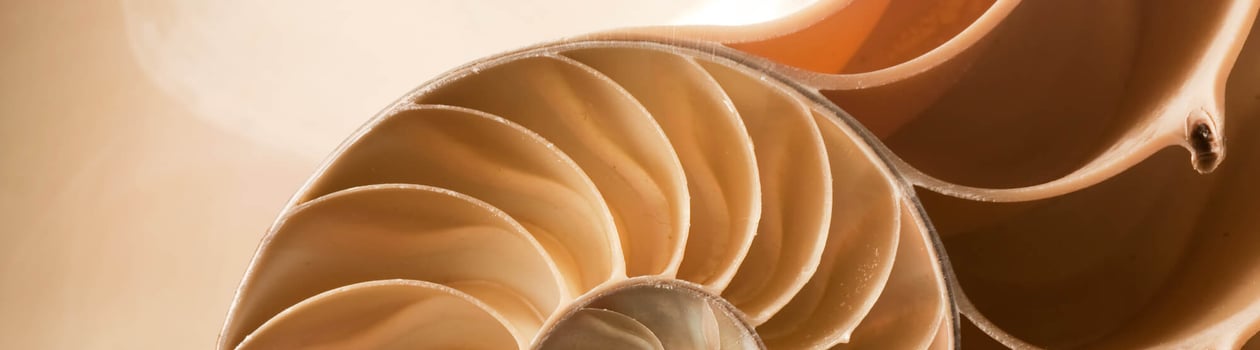
Spirals often incorporate these numbers as they grow in a pattern that mimics the Fibonacci sequence.
Giant Sunflowers
Another version of this sequence can be found in the spiral of the sunflower. Looking at the center of the seeds, the eye can perceive that the number sequence continues to grow in the seeds as the flower gets bigger.
Pineapples
Those who are interested in counting the scales on a pineapple will find that, for the most part, the Fibonacci sequence is present when looking at the fruit from a diagonal perspective.
Flower Petals
Most flowers found in nature contain a number of petals from the Fibonacci sequence: either 1,3,5, 8,13 or even 21 petals. Very few have 4, 6 or 7 petals. Of course, there are exceptions (such as the four-leaf clover) but it’s less common.



You may also like

Doctor Who Day
Embark on a journey through time and space with a mysterious alien known for their time-traveling adventures in an iconic, blue police box.
- Australia
- Canada
- United Kingdom
- and 1 more

National Texas Stress Day
National Texas Stress Day is an occasion to honor the hardworking Texas Stress team. This team, known for its dedication and expertise in various industries, including refineries, power plants, and gas plants, ensures the safety and efficiency of these operations. The day highlights the crucial role of these professionals in...
- United States

World Family Doctor Day
World Family Doctor Day spotlights the steady, practical work of family doctors and the way they quietly shape healthier lives. In many healthcare systems, these physicians are the front door: the ones people turn to first with a new symptom, a lingering worry, or a routine question that still deserves...
- Australia
- Canada
- New Zealand
- and 2 more

Global Car Recycling Day
Ensuring environmental sustainability and economic growth requires stricter regulations and support for the global car recycling industry.
- Germany
- Japan
- United States
National days and holidays on November 23

National Espresso Day
Get your shot of concentrated coffee, try blends from different regions or treat yourself to an espresso machine for an easy caffeine fix all year round.
- Canada
- Italy
- United Kingdom
- and 1 more
Doctor Who Day
Embark on a journey through time and space with a mysterious alien known for their time-traveling adventures in an iconic, blue police box.
- Australia
- Canada
- United Kingdom
- and 1 more

National Brand Day
National Brand Day is celebrated every fourth Monday of November. It honors the dedication and hard work of brand builders. On this day, we spotlight entrepreneurs who pour their time, creativity, and resources into building brands that resonate with us all. Why do we celebrate this day? It's about recognizing the...
- Australia
- Canada
- United Kingdom
- and 1 more

National Cashew Day
National Cashew Day falls on November 23rd every year, celebrating one of the most beloved snacks around the world. This day is not just about enjoying these crunchy nuts; it's a time to explore their rich history and various health benefits. Portuguese explorers introduced the cashew nut, which actually hails...
- Brazil
- International
- United States
- and 1 more
Seize Every Day
Join free for personalised recommendations, email reminders and exclusive guides. Never miss a day.