
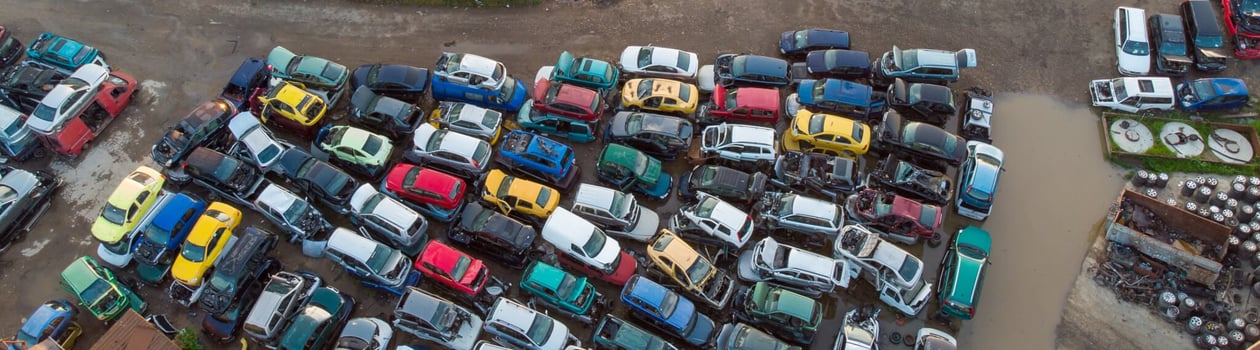
With roughly 1.4 billion vehicles in use around the world, cars, vans, and trucks are a daily convenience and a massive material footprint. When those vehicles reach the end of their useful lives, they do not simply disappear. They become a complicated mix of metals, plastics, glass, rubber, fluids, and electronics that can either be recovered responsibly or become an environmental headache.
That is where Global Car Recycling Day steps in. The day shines a spotlight on what happens after a vehicle is “done,” encouraging better practices from recycling centers and manufacturers, and nudging the public to treat end-of-life vehicles as a resource to be managed carefully rather than a nuisance to be abandoned. It is especially relevant as vehicles become more advanced, including electric models that introduce new recycling and safety challenges.
How to Celebrate Global Car Recycling Day
Getting involved with Global Car Recycling Day does not require owning a junkyard or knowing the difference between ferrous and non-ferrous metals on sight. Meaningful participation can be as practical as handling one’s own vehicle responsibly, or as simple as learning how the process works and sharing accurate information with others.
Below are a few ways individuals, families, workplaces, and community groups can use the day as a prompt to make smarter choices around vehicle end-of-life planning and to encourage a more circular automotive economy.
Understand More About Car Recycling
Cars are sometimes described as one of the most recycled consumer products, but that only holds true when the recycling is done correctly. A vehicle is not a single recyclable item. It is a rolling collection of material streams and potential hazards.
A typical end-of-life vehicle workflow looks something like this:
- Collection and intake: The vehicle is delivered to a licensed or authorized facility, logged, and assessed. Some parts may be earmarked for resale or reuse based on condition.
- Depollution: Before anything is crushed or shredded, the vehicle should be made safe. Facilities remove and properly manage fluids and hazardous components such as fuel, motor oil, transmission fluid, brake fluid, coolant, and refrigerants from air conditioning systems. Items like batteries and airbag components also require careful handling.
- Dismantling: Reusable parts are removed in a reverse-assembly process. Engines, transmissions, alternators, starters, doors, wheels, tires, catalytic converters, and many other components can be reused, refurbished, or remanufactured depending on condition and local markets.
- Shredding and separation: After depollution and dismantling, the remaining shell is crushed or shredded. Magnets and other separation technologies sort ferrous metals (iron and steel) from non-ferrous metals (such as aluminum and copper), along with additional material streams.
The real value of this process is not just “getting rid of a car.” It is recovering materials at scale and preventing toxic substances from leaking into soil and water. It is also about reducing the demand for newly mined raw materials by using recovered metals and parts.
A practical way to observe the day is to focus on choices that make recycling cleaner and more effective:
- Plan ahead for a vehicle’s final years. Keeping basic maintenance records, setting aside all keys, and storing paperwork in one place can make the handoff to a recycler smoother and help confirm the vehicle was processed properly.
- Choose a reputable recycler. An authorized treatment facility or licensed operator is more likely to follow depollution requirements, handle hazardous materials safely, and provide documentation that the vehicle has been dismantled and recycled rather than abandoned.
- Do not strip and dump. It can be tempting to remove only the obviously valuable items and leave the rest to become someone else’s problem. Proper recycling depends on the unglamorous steps, especially fluid removal and safe handling of components that can injure workers or contaminate land.
- Learn what “reuse” looks like. Buying a quality used part, when appropriate, can extend the life of existing components and reduce the demand for new manufacturing. It also supports the legitimate dismantling side of the recycling industry.
Electric vehicles deserve special mention. While conventional vehicles have long been depolluted and dismantled at end-of-life, EVs add high-voltage battery systems that require specialized training, safe storage, and careful transport. Responsible recyclers treat these batteries with respect, not improvisation. Global Car Recycling Day keeps attention on building capacity and good habits before larger volumes of end-of-life EVs arrive.
Advocate for Car Recycling Laws
Regulation matters in car recycling because it sets expectations for what “responsible” actually means. Without standards, the temptation is to focus only on the parts with obvious resale value while cutting corners on the messy steps: draining fluids, controlling emissions from refrigerants, handling airbags properly, and ensuring that leftover material streams are not dumped or burned in unsafe ways.
Even in places with robust environmental rules, enforcement and consistency can vary. Some jurisdictions focus heavily on hazardous waste controls but may not set strong targets for reuse and material recovery. Others have frameworks that push manufacturers to think about recyclability earlier in the design process.
Advocacy can be practical rather than abstract. The public can ask for policies that support:
- Clear licensing and oversight for end-of-life vehicle treatment facilities
- Mandatory depollution steps before crushing or shredding
- Targets for reuse, recycling, and recovery by weight, with realistic reporting requirements
- Tracking and documentation that discourages illegal dumping and “disappearing vehicles”
- Safe pathways for EV and hybrid batteries, including handling, transport, and specialized recycling capacity
- Design-for-recycling standards, which encourage manufacturers to reduce hard-to-separate materials and improve labeling of plastics
Advocacy also includes supporting the legitimate businesses doing the work correctly. Responsible car recycling is not only an environmental service. It is skilled labor, logistics, and industrial processing that keeps valuable materials in circulation.
Learn More
Learning about end-of-life vehicles tends to change how people view their own cars. A personal vehicle might feel like a single object, but it is more like a mini supply chain on wheels, built from steel, aluminum, copper, plastics, rubber, and textiles. When it reaches retirement age, that supply chain can either be recovered or wasted.
For people who want to dig deeper in honor of Global Car Recycling Day, “learn more” can be hands-on:
- Learn the vocabulary. Terms like depollution, authorized treatment facility, recovery, remanufacturing, and post-shredder separation help make the topic less mysterious.
- Understand the risky parts. Fluids and refrigerants are obvious concerns, but so are airbags (which can include pyrotechnic components) and batteries (which can be hazardous even when “dead”).
- Recognize the value of reuse. Recycled metal is important, but reusing parts is often even better because it preserves the energy and labor already invested in manufacturing those components.
- Pay attention to modern complexity. Infotainment systems, sensors, wiring harnesses, and advanced materials can make newer cars harder to process than older, mostly-metal vehicles. Recycling systems need to evolve as vehicles evolve.
For workplaces, the day can also be a prompt to look at fleet practices. Simple steps like setting consistent end-of-life criteria, using approved recyclers, and tracking where vehicles go after retirement can reduce risk and improve environmental outcomes without adding much administrative burden.
Global Car Recycling Day Timeline
Early U.S. Auto Wrecking Yards Emerge
As automobiles spread, small “auto wrecking” and salvage yards began operating in American cities, stripping end-of-life cars for reusable parts and scrap metal rather than discarding them outright.
Environmental Movement Spurs Modern Recycling Mindset
With the first Earth Day and growing concern over pollution and resource use, recycling gained prominence, helping to transform informal auto scrap operations into a recognized part of environmental protection efforts.
North American Automotive Recycling Industry Matures
Academic and industry analyses describe a structured automotive recycling supply chain, from insurance auctions and dismantlers to shredders and steel mills, highlighting vehicles as one of the most recycled consumer products.
EU Adopts End‑of‑Life Vehicles (ELV) Directive
The European Union issues Directive 2000/53/EC on end-of-life vehicles, requiring manufacturers and recyclers to prioritize reuse, recycling, and recovery, which pushes carmakers to design vehicles that are easier to dismantle and recycle.
CarTakeBack Network Expands Producer‑Responsible Recycling
UK-based CarTakeBack is established as an international network helping automakers meet legal obligations for end-of-life vehicles, providing take-back and recycling systems that prioritize proper depollution and material recovery.
Steel Industry Embraces Car‑to‑Car Recycling
Steelmakers and research partners in Europe and elsewhere run “car-to-car” projects to turn steel from end-of-life vehicles into high-quality flat steel for new cars, advancing circular economy goals in the automotive sector.
Automotive Steel Recycling Recognized as Major Resource Stream
The American Iron and Steel Institute reports that more than 14 million tons of steel are recovered each year from end-of-life vehicles in North America, underscoring the central role of car recycling in the scrap steel economy.
History of Global Car Recycling Day
Global Car Recycling Day is a newer awareness initiative dedicated specifically to end-of-life vehicles. It was created to encourage responsible vehicle recycling and to highlight the environmental benefits of recovering materials and parts rather than sending them to landfill or allowing them to become pollution sources.
The initiative has been driven by CarTakeBack, a car recycling network that works with authorized treatment facilities. The day has also been promoted through parts of the wider metals and vehicle recycling sector, reflecting a shared interest in raising standards and improving public understanding of what proper recycling involves.
The broader story behind the day fits into a longer trend: increasing attention to the circular economy and to the full life cycle of products that used to be treated as disposable. Cars were not always designed with end-of-life in mind. Over time, recycling systems matured, regulations tightened in many regions, and the industry developed better processes for depollution and material separation. Global Car Recycling Day builds on that progress while also pointing to the work still left to do.
It also highlights a shift in what “car recycling” means. For many people, the idea still sounds like a scrapyard and a crusher. In reality, modern vehicle recycling is closer to industrial disassembly and materials management. Parts are pulled for reuse, fluids are handled as controlled waste streams, and metals are processed so they can return to manufacturing as feedstock rather than becoming long-term waste.
As the automotive world changes, the day keeps attention on challenges that are easy to overlook. Lightweight composites can be difficult to separate. Electronics add complexity and contain materials worth recovering. Electric and hybrid vehicles introduce high-voltage systems and batteries that require specialized knowledge and infrastructure. Those pressures make it even more important to use authorized channels, invest in safe processes, and encourage manufacturers to design vehicles with disassembly and recovery in mind.
At its core, Global Car Recycling Day is a reminder that a vehicle’s final chapter should be planned, managed, and measured. A responsibly recycled car is not a sad ending. It is a practical reset that turns yesterday’s ride into tomorrow’s raw materials and replacement parts, with fewer environmental consequences along the way.
Global Car Recycling Day Facts
Recycling a modern car can recover almost 90% of its weight
In the European Union, official statistics show that when a car reaches the end of its life and is processed through authorized facilities, nearly nine‑tenths of its total weight can be reused or recycled.
In 2022, end‑of‑life vehicles in the EU achieved an average reuse and recycling rate of 89.1 percent by weight, with an overall 94.4 percent rate when energy recovery is included, illustrating how effective properly regulated vehicle recycling systems can be.
Japan tracks every end‑of‑life car with a national electronic system
Japan’s Automobile Recycling Law, in force since 2005, created a nationwide electronic manifest that follows each vehicle from the time a recycling fee is paid through collection, dismantling and final treatment.
This traceability system helps ensure airbags, refrigerants and other regulated parts are properly recovered and has contributed to Japan being recognized in research as having some of the world’s most advanced and tightly controlled end‑of‑life vehicle recycling practices.
Most plastics from scrapped cars in Europe are still not recycled
Although metals from old cars are routinely recovered, plastics lag far behind.
The European chemical industry estimates that end‑of‑life vehicles in Europe generate about 800,000 metric tons of plastic each year, yet less than 20 percent of that material is recycled.
The remaining plastics are typically landfilled or burned for energy, highlighting a major gap in making car recycling fully circular.
EU law gives car owners a right to free take‑back at the end of a vehicle’s life
Under the European Union’s End‑of‑Life Vehicles Directive, when a car has reached the end of its useful life, the last owner must be able to hand it over to an authorized treatment facility without paying a fee, as long as the vehicle still contains its essential components and is not loaded with waste.
This “free take‑back” rule is designed to discourage illegal dumping and ensure that vehicles enter formal recycling channels where hazardous materials are safely removed and valuable parts are recovered.
Steel from old cars can dramatically cut the climate impact of new vehicles
Replacing primary steel made from iron ore with recycled steel scrap from sources such as end‑of‑life vehicles sharply reduces emissions.
Analysis for the European market found that recycled steel produced in electric arc furnaces had an average carbon intensity of about 0.7 metric tons of CO2‑equivalent per ton of steel, compared with roughly 2.1 tons for conventional blast‑furnace steel.
Using more scrap in automotive steel therefore cuts both energy use and the life‑cycle carbon footprint of new cars.
End‑of‑life vehicle recycling has grown into a multibillion‑dollar global industry
Dismantling, shredding and processing scrapped vehicles now support a sizable international market.
One industry analysis valued the global end‑of‑life vehicle recycling sector at about 27.5 billion U.S. dollars in 2023, with expectations of steady growth as more countries strengthen regulations and as automakers seek recycled metals to meet climate and circular‑economy goals.
Electric and hybrid cars introduce new recycling challenges for dismantlers
Traditional car recyclers are set up to handle fuels, oils, airbags and metals, but high‑voltage batteries and power electronics from electric and hybrid vehicles require different expertise.
Studies comparing countries such as China and Japan note that safe handling of traction batteries, recovery of critical materials like cobalt and nickel, and prevention of fires all demand new regulations, specialized equipment and updated training in the vehicle recycling industry.
Global Car Recycling Day FAQs



You may also like

Check Your Batteries Day
Check Your Batteries Day reminds us to check and change the batteries in our household devices. Why, you may wonder? Well, it's not just about keeping your remote controls working; it's about safety and preparedness. How to Celebrate Check Your Batteries Day Celebrating Check Your Batteries Day can be both fun and...
- Australia
- Canada
- International
- and 2 more

National Battery Day
In the hustle and bustle of our daily lives, it's easy to overlook the small things that keep our world running smoothly. One such unsung hero is the humble battery. From powering our smartphones and laptops to enabling the rise of electric vehicles and renewable energy storage, batteries play a...
- United States

World Refill Day
Discover World Refill Day, a global campaign to cut single-use plastic, promote reusable packaging, and inspire governments, brands, and individuals to act.
- Australia
- Canada
- India
- and 2 more

Global Recycling Day
From trash to treasure, give your waste a new lease on life! Contribute to a better future with the power of recycling.
- Australia
- Canada
- International
- and 2 more
National days and holidays on June 20

National Dog Dad Day
Celebrate National Dog Dad Day by honoring the bond between men and their dogs with treats, playdates, photos, and giving back to pups in need.
- Australia
- Canada
- United Kingdom
- and 1 more

World Martini Day
Gin and vermouth, shaken not stirred…and garnished with olives. The classic and iconic Martini had been a favorite of everyone from James Bond to Ernest Hemingway.
- Canada
- France
- United Kingdom
- and 1 more

International Surfing Day
Hit the waves on International Surfing Day, or volunteer or donate to help clean up the oceans and keep them clean and surf-friendly for years to come.
- Australia
- Brazil
- France
- and 2 more

American Eagle Day
Show your national pride on American Eagle Day by wearing eagle-adorned clothing, or donating to a cause to help protect and preserve these majestic creatures.
- United States
Seize Every Day
Join free for personalised recommendations, email reminders and exclusive guides. Never miss a day.