Global School Play Day celebrates the power of play in education by pressing pause on packed schedules and giving children something that can feel surprisingly rare: time to play simply because play matters.
It’s a shared, global reminder that learning isn’t built only through lessons and worksheets, but also through imagination, movement, friendships, and the kind of problem-solving that happens when adults step back.
At its heart, Global School Play Day is dedicated to unstructured, screen-free play. The emphasis is on child-led choice rather than teacher-directed activities, with adults acting as calm supervisors instead of directors.
The idea is intentionally simple: give students space to explore their interests, test their ideas, and navigate the social world through play.
Schools and learning communities around the world participate by letting students decide how they want to play—whether that means building with blocks, inventing playground games, setting up pretend “restaurants,” creating art, or designing elaborate obstacle courses from whatever materials are available.
Because the day isn’t tied to any single type of play, it works across ages, cultures, and settings. A classroom with a few baskets of toys can participate just as meaningfully as a school with access to large outdoor spaces.
This global initiative underscores the importance of play in childhood development and highlights its essential role in learning and growth. Unstructured play is one of the few spaces where children routinely practice planning, experimenting, revising, and trying again—without the pressure of being graded.
It also offers powerful opportunities for identity-building and confidence: the quiet child becomes the master LEGO architect; the energetic student becomes the creator of a new tag game with rules everyone can follow.
Research and long-standing educational practice consistently show that free play supports problem-solving, empathy, and creativity. When children create their own play scenarios, they make decisions, anticipate consequences, and adapt in real time.
A cardboard box becomes a spaceship. A disagreement becomes a lesson in compromise. A fallen tower becomes a design challenge. These moments aren’t extras added onto learning—they are learning, just in a different form.
Free play also strengthens social skills by giving children repeated, natural opportunities to communicate, negotiate, and cooperate with peers. In structured activities, adults often smooth over conflict or assign roles. In child-led play, children do that work themselves.
They practice inviting others in, managing frustration, taking turns, and repairing relationships after disagreements—skills that later carry into group projects, classroom discussions, and everyday friendships.
Educators advocate for Global School Play Day in response to growing concerns about reduced playtime caused by tight schedules and increased academic pressure. In many schools, unstructured play is the first thing to disappear when time, staffing, or expectations become strained.
This day pushes back against that trend by offering a collective, visible moment to say: play is not a reward for finishing work—it is a core part of development.
By setting aside dedicated time for play, schools promote a more balanced approach to education, one that integrates joy and learning rather than treating them as opposites. Teachers often notice that after a day of play, classroom relationships feel warmer and more cooperative.
Students who don’t always shine in traditional academic tasks may be seen in a new light by both peers and adults—and that shift in perception can be powerful.
Participating in Global School Play Day also raises awareness among educators and parents about the need to prioritize play beyond a single event. The day offers a break from the structured, often demanding school routine, giving children time to reset their bodies and minds.
Physical play supports coordination, strength, and overall well-being, while imaginative and constructive play nurtures language, storytelling, spatial reasoning, and flexible thinking.
Even moments of quiet—daydreaming or calmly sorting objects—have value, allowing children to regulate themselves and choose what they need.
While one day can’t fix everything, it can change what a community notices. Adults may realize how capable children are at organizing themselves. Schools may discover that fewer materials can spark deeper creativity. Students may learn what kinds of play help them feel calmer, more connected, or more confident.
Ultimately, celebrating Global School Play Day can lead to lasting shifts in school culture—protecting recess, expanding choice-based centers, introducing “loose parts” for building and inventing, or simply allowing more time for exploration without constant adult direction.
The goal is healthier, happier students and learning environments that recognize play as serious, meaningful work for a developing brain.
How to Celebrate Global School Play Day
Organize a Toy Swap
A toy swap turns “old” toys into brand-new possibilities. Encourage kids to bring in gently used items they’re ready to part with, such as small figures, puzzles, stuffed animals, card games, toy cars, or dress-up accessories. Then let students browse and trade.
To keep it smooth, schools can set simple boundaries: no expensive items, no sentimental family keepsakes, and nothing with screens.
Some classes use a token system where each child earns a certain number of swap tickets for what they bring, which helps prevent the fastest grabbers from taking everything in the first two minutes. Others keep it more relaxed and treat it like a shared library for the day.
Beyond the fun, a toy swap naturally encourages conversation, negotiation, and flexible thinking. Kids figure out what matters to them, how to ask for what they want, and how to handle disappointment when a toy they hoped for is already taken. It’s social learning disguised as a treasure hunt.
Host an Outdoor Adventure
Outdoor play gives children more room to move, more ways to collaborate, and more chances to invent their own games. Instead of running a teacher-led “field day,” the spirit of Global School Play Day is to provide options and let students decide what happens.
Schools can set out open-ended equipment, such as balls, jump ropes, sidewalk chalk, cones, hoops, or cardboard. Students might create obstacle courses, start a scavenger hunt they invent themselves, or design relay races with rules that evolve every five minutes.
That constant revision is part of the magic: children learn quickly what rules feel fair, what keeps a game going, and what makes others want to join.
Outdoor play is also a great equalizer. Some children who struggle to sit still during academic tasks thrive when they can run, climb, balance, and coordinate with peers.
For students who prefer quieter play, outdoor spaces can still work well with options like chalk art, nature-inspired building, or small-group imaginative play in a tucked-away corner.
Craft a Creation Station
A creation station is a gift to the builders, makers, and tinkerers. Set out materials that are intentionally “unfinished,” like paper, tape, markers, glue sticks, cardboard, string, pipe cleaners, craft sticks, and recyclables. Add building materials if available, such as blocks, magnetic tiles, or interlocking bricks.
The key is to avoid giving a model to copy. Instead of saying “Everyone make a snowflake” or “Build a house,” offer simple invitations: “Make something that moves,” “Build something taller than your knee,” or “Invent a tool for an imaginary job.” Then step back and let students lead.
Creation stations support fine motor skills, spatial reasoning, and persistence. Kids learn that the first attempt might flop and that’s normal.
They also practice asking peers for help, sharing limited supplies, and explaining their designs. Many educators find that the conversation around creations is just as valuable as the final product.
Hold a Dress-Up Parade
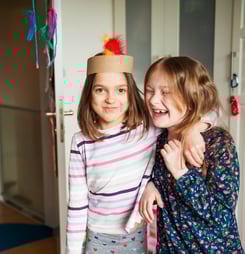
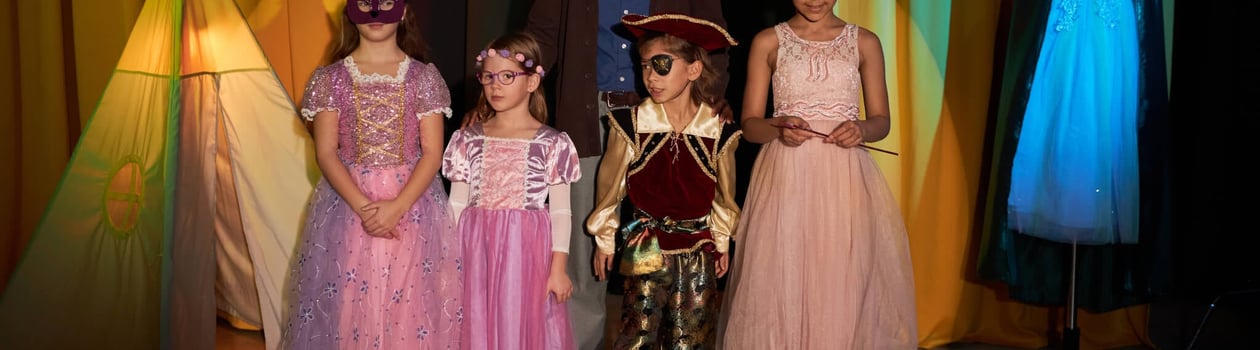
Dress-up play is not just cute. It’s a powerful way children explore identity, storytelling, and empathy. A dress-up parade can be as simple as inviting students to wear costumes from home or providing a “costume corner” with hats, scarves, aprons, capes, and safe props.
Rather than scripting a show, allow students to create characters and scenarios. A parade can turn into a mini theater festival, a pretend news broadcast, or a completely unplanned storyline involving superheroes, chefs, astronauts, and animals negotiating a peace treaty over invisible pizza.
For inclusivity, the focus should stay on imagination rather than expense. The best costumes are often improvised: a paper crown, a cardboard shield, or a cape made from a scarf.
The goal is self-expression, not perfection, and adults can support that by celebrating creativity and discouraging comparisons.
Unleash the Board Games
Board games bring a different kind of play: slower, strategic, and wonderfully social. Invite students to bring favorites from home or provide a selection that fits different ages and attention spans, such as simple matching games, cooperative games, classic strategy games, and card games.
This classic activity teaches turn-taking, flexible thinking, and patience. It also gives children a structured way to practice sportsmanship, including what to do when someone bends the rules, what “fair” actually means, and how to lose without the whole table collapsing into drama.
To keep the day child-led, adults can avoid “assigning” games and instead set up a few areas where games are available. Students can form groups naturally, learn rules from each other, or even invent new rules. Rule-making, after all, is one of the most advanced forms of play-based negotiation.
Build a Quiet Zone
Not every child enjoys loud, high-energy play, and Global School Play Day works best when it honors many play styles. A quiet zone offers an alternative that is still playful, still child-led, and still restorative.
Stock the space with puzzles, books, drawing materials, sensory items, building toys with smaller pieces, fidget tools, and soft seating if available.
Some children will use it as a recharge station between bursts of active play. Others will choose it for the entire day, happily absorbed in a puzzle or a sketchbook.
A quiet zone also supports self-regulation. Children learn to notice what their bodies need and make a choice that helps them feel balanced.
Adults can help by keeping expectations clear: quiet does not mean “no fun,” and quiet does not mean “no talking.” It simply means the space is designed for calmer voices and focused play.
Plan a Talent Show
A talent show can be a lively way to celebrate student interests, but it fits the spirit of Global School Play Day best when it stays informal and low-pressure.
Instead of auditions and strict schedules, consider an open mic format where students can sign up if they want, perform alone or with friends, or simply be part of the audience.
“Talent” can mean almost anything: telling jokes, demonstrating a cartwheel, showing a magic trick, performing a short skit, doing a dance, reciting a poem, playing a rhythm on a desk, or teaching others a hand-clap game. When students define what counts, more students feel brave enough to participate.
This activity builds confidence and strengthens the community. It also gives students practice being supportive audience members, which is a surprisingly important social skill. The real win is not a perfect performance, but a room full of kids learning to celebrate each other’s efforts.
Global School Play Day Timeline
Friedrich Fröbel Founds the First Kindergarten
German educator Friedrich Fröbel opens the first kindergarten in Blankenburg, emphasizing learning through guided play, songs, and hands-on activities as central to early childhood education.
John Dewey Publishes “The School and Society”
American philosopher John Dewey argues that schools should be communities of active inquiry where children learn by doing, validating play, games, and real-life activities as vital for meaningful learning.
Maria Montessori Opens Her First Children’s House
Maria Montessori’s Casa dei Bambini in Rome integrates self-directed activity and manipulative materials, showing that child-led, playful exploration can build concentration, independence, and academic skills.
Mildred Parten Identifies Stages of Social Play
Psychologist Mildred Parten publishes her classic study on preschool play, outlining categories from solitary to cooperative play and demonstrating how free play supports children’s social development.
UN Adopts the Convention on the Rights of the Child
The United Nations General Assembly approves the Convention on the Rights of the Child, whose Article 31 recognizes every child’s right to rest, leisure, play, and recreational activities.
American Academy of Pediatrics Issues “The Importance of Play”
The American Academy of Pediatrics releases a landmark clinical report warning that hurried, highly scheduled childhoods reduce free play, which is crucial for healthy cognitive, social, and emotional development.
Peter Gray Describes the “Decline of Play”
Boston College psychologist Peter Gray publishes work in the American Journal of Play linking decades-long declines in children’s free play to rising anxiety, depression, and difficulties with self-control and resilience.
History of Global School Play Day
Global School Play Day began in 2015, initiated by a small group of educators who wanted to put unstructured play back where it belongs: at the center of childhood.
Their concern was not that schools were doing too much learning, but that many students were losing time to develop through the natural, self-directed experiences that support learning in the first place.
The inaugural event drew tens of thousands of students, proving there was a hunger for something simple and joyful. Teachers and schools shared photos and reflections, and the idea spread quickly through educator networks.
The growth made sense: the concept required no special curriculum, no expensive equipment, and no complicated training. It simply asked adults to trust children.
The day was shaped by conversations within the education community about the importance of play, including ideas popularized by psychologist and researcher Dr. Peter Gray, who has discussed how reduced opportunities for free play can affect children’s well-being and development.
Inspired by these discussions, organizers and supporters emphasized that play is not merely downtime. It is where children practice independence, build social understanding, and work through stress.
From the start, Global School Play Day centered on a few clear principles: keep it screen-free, keep it unstructured, and let students lead. Adults supervise for safety, provide space and materials, and resist the urge to turn play into a lesson.
That restraint can be the hardest part for well-meaning grown-ups, but it is also what makes the day distinct. Child-led play is different from “fun activities” planned by adults, and Global School Play Day intentionally protects that difference.
Since its inception, participation has expanded to include students across many countries and grade levels, from early childhood settings through older students who can benefit from play in different ways. In some schools, the day looks like a giant, imaginative playground.
In others, it looks like groups of teenagers strategizing over card games, building complex structures, or enjoying friendly athletic competitions that they organize themselves.
Global School Play Day is commonly observed on the first Wednesday in February, offering a recurring moment each year for schools and families to reflect on how much room play has in children’s lives.
More importantly, it encourages communities to consider what could change after the day ends: a little more recess protected, a little more choice built into the schedule, and a little more respect for the kind of learning that happens when children are trusted to play.
Facts About Global School Play Day
Global School Play Day is a worldwide initiative that highlights the importance of unstructured, screen-free play in children’s learning and development. Observed by schools and learning communities across the globe, the day encourages educators to pause formal lessons and give students the freedom to play, explore, and connect—simply because play itself is essential to how children grow, learn, and thrive.
Play Is Recognized as a Fundamental Human Right for Children
In 1989, the United Nations Convention on the Rights of the Child formally recognized play as a fundamental right, stating in Article 31 that every child has the right to rest, leisure, and to engage in play and recreational activities appropriate to their age. This article obliges governments to actively create time, space, and opportunities for play, placing it alongside education, health care, and protection as a core element of childhood.
Unstructured Play Builds the Brain’s “Executive Function” Skills
Developmental research shows that free, self-directed play strengthens children’s executive function skills—such as working memory, cognitive flexibility, and self-control—which are strong predictors of academic success and long-term life outcomes. When children negotiate rules, switch roles, and manage conflicts in play, they are literally practicing the mental processes needed for planning, focusing, and adapting in complex real-world situations.
Declines in Play Are Linked to Rising Anxiety and Depression
Psychologists have documented that as children’s opportunities for independent, unstructured play have decreased over recent decades, rates of anxiety, depression, and feelings of helplessness in young people have increased. Scholar Peter Gray argues that play acts as a natural buffer against stress because it allows children to experience control, experiment with fear in safe ways, and build a sense of competence—conditions that are harder to achieve in highly structured, adult-directed environments.
Play-Based Learning Can Match or Outperform Formal Instruction in Early Years
Studies of early childhood classrooms find that children in play-based or “guided play” environments often equal or surpass peers in more formally instructed settings on language, math, and social-emotional measures. Rather than undermining academics, high-quality playful learning—where adults support but do not dominate children’s exploration—appears to deepen understanding, motivation, and the ability to transfer skills to new contexts.
Finnish Students Show Strong Results Despite Less Homework and More Downtime
International comparisons highlight that Finnish students, who report some of the lowest average daily homework loads among countries participating in the OECD’s PISA assessments, consistently perform at or above the OECD average in reading, math, and science. Finnish primary schools typically intersperse lessons with frequent outdoor breaks and emphasize play in the early years, suggesting that heavy academic pressure and homework are not the only path to high performance.
Outdoor Play Is Being Crowded Out by Screens Worldwide
Global analyses of children’s time use show that outdoor free play has been steadily displaced by screen-based activities, particularly in urban and higher-income settings. The World Economic Forum reports that many children now spend far more time on digital entertainment than playing outside, raising concerns about physical inactivity, weaker social ties, and reduced contact with nature, all of which are important for healthy development.
Pediatricians Now “Prescribe” Play for Healthy Development
In a 2018 clinical report titled “The Power of Play,” the American Academy of Pediatrics urged doctors to “prescribe” play in routine visits, emphasizing that play is not a luxury but essential for healthy brain structure, stress regulation, and social skills. The report recommends protecting recess, encouraging playful learning in schools, and coaching parents to prioritize daily, child-led play as part of preventive health care.