
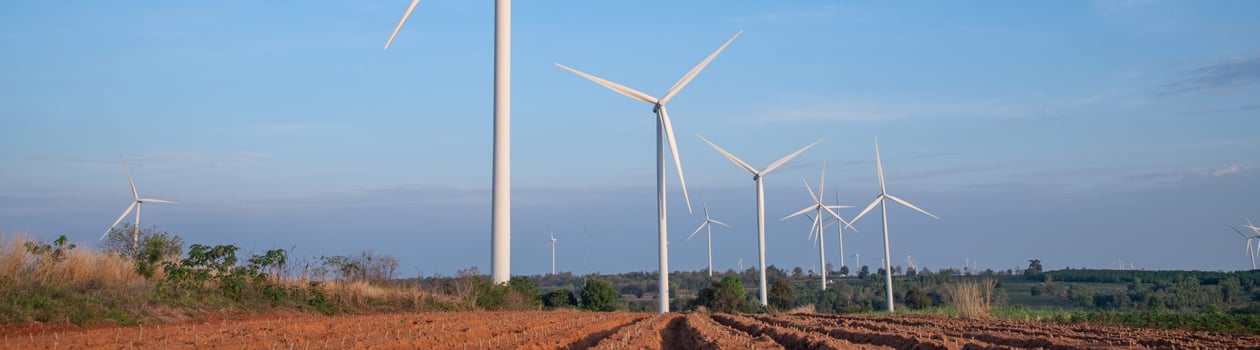
Humans have been harnessing the power of the breeze for thousands of years, long before anyone could imagine the modern electric grid.
Wind pushed sailboats across rivers and seas, turned the first grain-grinding windmills, and pumped water for farms and towns. It has always been a free, familiar force, sometimes gentle, sometimes bossy, and always in motion.
Modern technology now lets wind turbines convert that motion into electricity with remarkable efficiency. When the wind is right, a turbine’s blades capture kinetic energy and spin a generator, delivering power without burning fuel on site.
Global Wind Day celebrates that clean, renewable resource, along with the science, engineering, and communities that help put wind to work.
How to Celebrate Global Wind Day
Show some love and care for the planet’s resources and promote the use of sustainable energy by celebrating Global Wind Day with some of these ideas:
Get Involved with Renewable Energy
Each community has people who can connect together to make more efforts toward making use of energy resources that are more sustainable and renewable.
In celebration of Global Wind Day, consider joining a local conservation group, energy co-op, school sustainability committee, or nonprofit that supports renewable energy and efficiency.
The most helpful efforts are often practical ones: hosting a community talk with an engineer or grid expert, organizing a field trip to a renewable energy facility, or helping neighbors understand how to choose cleaner electricity options through their utility.
Those who enjoy civic participation can also show up for planning meetings or public comment periods when energy projects are discussed. Wind power development is rarely just a technical conversation.
It is also about land use, community benefits, wildlife protection, and long-term planning. Becoming a steady, informed voice can help raise the overall quality of local discussions, especially when rumors travel faster than facts.
Workplaces can participate too. A company sustainability team might inventory electricity use, request renewable options from its supplier, or invite a speaker to explain how wind energy purchases work.
Schools and universities can incorporate wind topics into science classes, debate clubs, and career exploration, since the wind sector needs technicians, electricians, mechanical engineers, data analysts, environmental scientists, and logistics planners.
Test Your Wind Energy IQ
Hop online and find wind energy knowledge quizzes on a number of different websites, including the US Department of Energy’s “Test Your Wind Energy IQ” page.
Kids and adults alike tend to enjoy questions that sound simple but have interesting answers, such as where wind comes from, why turbine blades look like airplane wings, and what happens when there is too much wind.
Many people are surprised to learn that turbines do not “store” wind. They rely on the steady churn of weather patterns, and they shut down in extremely high winds for safety.
To turn a quiz into a richer activity, try pairing it with a quick hands-on demonstration:
- Make a simple pinwheel and test different blade shapes or angles using paper and tape.
- Use a household fan to compare how a lightweight paper rotor spins differently than a thicker cardboard one.
- Keep a wind journal for a week, noting wind direction, temperature changes, and cloud patterns. It becomes obvious that wind is connected to uneven heating of Earth’s surface, geography, and time of day.
For classrooms, a “wind myth-busting” round can be especially fun: students can research one claim each about wind turbines, then present what they found, including what is true, what is exaggerated, and what depends on local conditions.
Use Wind Energy
Individuals, neighborhoods, farms, and businesses can all get involved with Global Wind Day by switching from less earth-friendly sources of energy to more renewable types. Checking with the local electricity provider is a good starting point, since many utilities offer optional green power programs, time-of-use plans, or community renewable subscriptions that include wind in the supply mix.
For people who like a clear paper trail, some areas offer Renewable Energy Certificates (RECs). These certificates represent the environmental attributes of renewable electricity generation, and they are often used by organizations and households that want to match their electricity use with renewable production.
The details vary widely by region, so it helps to understand what is being purchased and whether it is tied to new or existing projects.
Global Wind Day is also a great excuse to look beyond electricity and think about energy in everyday life. Wind power is strongest when paired with efficiency, because the cleanest kilowatt-hour is the one that never has to be produced.
Simple steps such as sealing drafty doors, upgrading to efficient lighting, or adjusting thermostat settings can reduce demand and make renewable supply go further.
Those who want a more “hands-on” wind moment can also celebrate the old-fashioned way: fly a kite, go sailing, or take a walk in a breezy spot and pay attention to the physics happening all around. Wind is invisible, but its effects are everywhere, and noticing it is part of the point.
To spread the word, keep it light and inviting. A small display at a library, a community poster explaining how turbines work, or a group photo with pinwheels can get people curious without turning the day into a lecture.
Stickers, yard signs, badges, and classroom projects can help start conversations, especially when they focus on practical benefits like cleaner air, local jobs, and stable long-term energy costs.
Global Wind Day Timeline
Sails Harness Wind on the Nile
Ancient Egyptians begin using sails to capture wind power for boats on the Nile, providing one of the earliest recorded examples of humans converting wind into useful work.
Persian Vertical-Axis Windmills Appear
In Persia and other parts of the Middle East, early vertical-axis windmills were developed to grind grain and pump water, marking the first widespread use of wind for mechanical power.
Windmills Spread Across Medieval Europe
Post mills and later tower mills spread through Europe, especially in the Netherlands and England, where thousands of windmills drain wetlands, grind grain, and power small industries.
James Blyth Generates Electricity from Wind
Scottish engineer James Blyth builds a wind turbine in Marykirk, Scotland, to power electric lighting in his cottage, widely cited as the first known wind turbine to generate electricity.
Poul la Cour’s Experiments in Denmark
Danish scientist Poul la Cour constructs experimental windmills in Askov to generate electricity and produce hydrogen, pioneering more aerodynamic blades and control systems for efficient wind power.
Smith–Putnam Megawatt Turbine Connects to the Grid
The 1.25 MW Smith–Putnam turbine in Vermont becomes the first megawatt-scale wind turbine connected to an electric utility grid, demonstrating the feasibility of large-scale wind generation.
Vindeby Offshore Wind Farm Begins Operation
Off the coast of Denmark, the Vindeby Offshore Wind Farm starts operating as the world’s first commercial offshore wind project, ushering in a new era of sea-based wind power development.
History of Global Wind Day
This annual event got its start in 2007 when it was founded by the European Wind Energy Association (EWEA) to promote the clean, renewable resource of wind energy.
At the time, wind power was growing quickly, but public awareness often lagged behind the technology. Many people had seen windmills in storybooks or on rural landscapes, yet utility-scale turbines were still new enough to inspire questions: How big are they? Are they safe? Do they actually make a difference?
Creating a dedicated day gave educators, engineers, and energy organizations a shared moment to answer those questions and invite the public to experience wind energy more directly.
Later, the EWEA, now known as WindEurope, joined the Global Wind Energy Council (GWEC) in sponsoring the event. Originally referred to as World Wind Day, the initiative grew beyond a mainly European focus and became Global Wind Day as participation expanded.
That growth makes sense, because wind itself ignores borders. Regions with strong wind resources, whether coastal, mountainous, or open plains, began adopting turbines as costs fell and performance improved.
Over time, the conversation also widened. Instead of focusing only on turbines as impressive machines, Global Wind Day increasingly highlighted broader themes: how renewables fit into reliable power systems, what kinds of jobs the wind sector supports, and how communities can plan projects responsibly.
Recent Global Wind Day events have attracted people from more than 50 countries with activities such as photo competitions, kite-flying events, charity runs, sailing regattas, and many other ways to participate.
The variety is part of the charm. Some events are playful and symbolic, like kite festivals that remind everyone wind is a real, touchable phenomenon.
Others are technical, including facility open days or talks where visitors learn how engineers measure wind speed and direction, how turbine towers are built, and how operators monitor performance.
In some places, journalists and educators have been invited to see turbines up close, helping translate a complex industry into everyday language.
The hope is that more people across the planet will not only learn about wind energy themselves, but include their families, communities, local businesses, and people with political influence.
That “bring someone along” spirit matters because energy decisions tend to be shared decisions. A wind farm may involve land leases, environmental assessments, transmission planning, and long-term operating agreements.
For communities, the best outcomes typically happen when people understand the tradeoffs, ask good questions early, and have a say in how projects fit local priorities. Global Wind Day offers a natural opportunity to practice that kind of informed curiosity.
Increasing knowledge about this unique source of clean, renewable energy is a vital part of working toward conservation and sustainability with the earth’s resources.
Wind energy is sometimes described as simple, but it is full of fascinating details. Turbine blades are shaped to create lift, similar to airplane wings, causing the rotor to spin. Inside the nacelle, a series of components converts that rotation into electricity.
Many turbines use gearboxes to increase rotational speed for the generator, while some designs use direct-drive systems that reduce moving parts.
Sensors help the turbine yaw, or turn, to face the wind, while pitch controls adjust the blade angle to manage power output. In very strong winds, turbines can shut down automatically to protect the equipment.
Wind power also prompts smart questions about how electricity systems work. Because wind output changes with weather, grid operators rely on forecasting, geographic diversity (it is rarely calm everywhere at once), flexible power resources, and increasingly, energy storage and demand management.
In other words, wind is not just a turbine topic. It is a systems topic, involving planning, meteorology, electronics, and the everyday reality that people expect electricity to be available whenever they flip a switch.
Global Wind Day also creates space to talk honestly about challenges and solutions. Responsible wind development includes careful siting to reduce impacts on birds and bats, along with monitoring and mitigation measures that can include curtailment during high-risk periods.
Communities may raise concerns about views, sound, or local wildlife, and those concerns deserve real answers rather than slogans.
At the same time, the benefits are tangible: wind generates electricity without combustion on site, helps diversify energy supply, and supports jobs across manufacturing, construction, operations, maintenance, and research.
Even the end of a turbine’s life has become part of the conversation. Much of a turbine, such as steel, copper, and concrete, can be recycled through established pathways.
Blades, often made from composite materials, have historically been harder to recycle, but the industry is actively working on new recycling methods and circular design approaches.
That kind of ongoing improvement is exactly what an awareness day can spotlight: wind energy is not static. It keeps evolving, and public understanding can evolve with it.
Global Wind Day Facts
Ancient Vertical-Axis Windmills Were Built From Reed and Wood
Long before the classic European windmill appeared, communities in the region of present-day Iran and Afghanistan built vertical-axis windmills between the 7th and 9th centuries.
These early machines used sails made from bundles of reed or wood slats, turning in a vertical frame to grind grain and pump water in arid landscapes, and are among the earliest known examples of wind-powered machinery.
Wind Turbines First Generated Electricity in the Late 1800s
The idea of using wind to make electricity dates back to the late 19th century, when engineers in several countries independently experimented with turbine-driven generators.
By the 1880s, pioneers such as Josef Friedländer in Austria, James Blyth in Scotland, and Charles F. Brush in the United States had each built working wind-driven generators, proving that wind could power electric lights decades before modern grids were common.
A Single Early U.S. Wind Machine Powered an Entire Mansion
In 1887–1888, American inventor Charles F. Brush built a huge wind turbine in Cleveland, Ohio, with a rotor about 17 meters across mounted on an 18‑meter tower.
Connected to batteries and a dynamo, it supplied nearly all the electricity for his large house for years, making it one of the earliest examples of a building-scale, mostly wind-powered home.
Modern Wind Power Avoids Hundreds of Millions of Tons of CO₂ in the U.S. Alone
Analysis by the University of Michigan’s Center for Sustainable Systems estimates that existing U.S. wind generation avoids about 351 million metric tons of carbon dioxide emissions annually compared with typical fossil-fueled power.
That scale of avoided pollution is comparable to taking tens of millions of cars off the road and highlights how quickly wind energy has grown from a niche source to a major climate tool.
Wind Farms Use Almost No Water Compared With Conventional Power Plants
Unlike coal, gas, and nuclear plants that rely on large amounts of water for cooling, wind turbines generate electricity without consuming water in normal operation.
The U.S. Department of Energy notes that shifting electricity production from thermal power stations to wind reduces pressure on freshwater resources, an advantage that becomes increasingly important in drought-prone and water-stressed regions.
Curtailment Means Turning Off Turbines Even When the Wind Is Blowing
As wind’s share of electricity grows, grid operators sometimes have to “curtail” wind farms, ordering them to reduce output below what the wind would naturally allow.
Studies by the National Renewable Energy Laboratory show this happens when transmission lines are congested, when other plants cannot ramp down, or when system stability limits are reached, and that upgrades to grids, markets, storage, and demand response can significantly cut these forced reductions.
Storing Wind Power in Water and Hydrogen Helps Balance the Grid
To make better use of strong winds at night or during low demand, power systems increasingly pair wind farms with large-scale storage.
The International Renewable Energy Agency reports that surplus wind electricity can be stored by pumping water uphill in hydropower reservoirs or by running electrolysers that produce hydrogen, which can later be used as a fuel or feedstock, turning variable wind into an energy resource that can be tapped on demand.
Global Wind Day FAQs

You may also like
National Windmill Day
Drive out to windmill country, or read up about the history of windmills and how they can provide clean, sustainable energy by harnessing Earth’s natural power.
- Netherlands
- United Kingdom
- United States

National Renewable Energy Day
National Renewable Energy Day is a celebration highlighting the critical role of renewable energy in powering a sustainable future. It underscores the need for eco-friendly energy sources, such as wind, solar, and hydropower, to reduce our reliance on fossil fuels. This day raises awareness of the harmful impacts of traditional energy...
- United States

National Big Wind Day
Nature's powerful gusts, bending trees and stirring the world, an awe-inspiring force reminding us of Earth's untamed might.
- United States

Solar Appreciation Day
From shrinking electricity bills to cutting air pollution, solar power has a knack for turning something ordinary, sunlight, into something genuinely useful. Solar Appreciation Day spotlights that simple magic and nudges communities, businesses, and households to learn how solar works, where it fits best, and what it can realistically do. At...
- Canada
- International
- United States
National days and holidays on June 15

Nature Photography Day
Celebrate Nature Photography Day by capturing the beauty of landscapes, wildlife, and everyday nature, fostering creativity, awareness, and conservation.
- Australia
- Canada
- United Kingdom
- and 1 more

National Lobster Day
National Lobster Day celebrates this decadent seafood delicacy, its rich history, fun facts, and the fishermen and festivals that bring lobster to the table.
- Australia
- Canada
- United States

Beer Day Britain
Celebrate Beer Day Britain with tastings, pub visits, and the National Cheers to Beer, honoring UK brewing heritage, community spirit, and beer culture.
- Australia
- Canada
- United Kingdom
- and 1 more

National Foam Party Day
Dive into bubbly fun on National Foam Party Day, celebrating joy, dancing, and community with safe, foam-filled events for families, friends, and kids.
- United States
Seize Every Day
Join free for personalised recommendations, email reminders and exclusive guides. Never miss a day.