
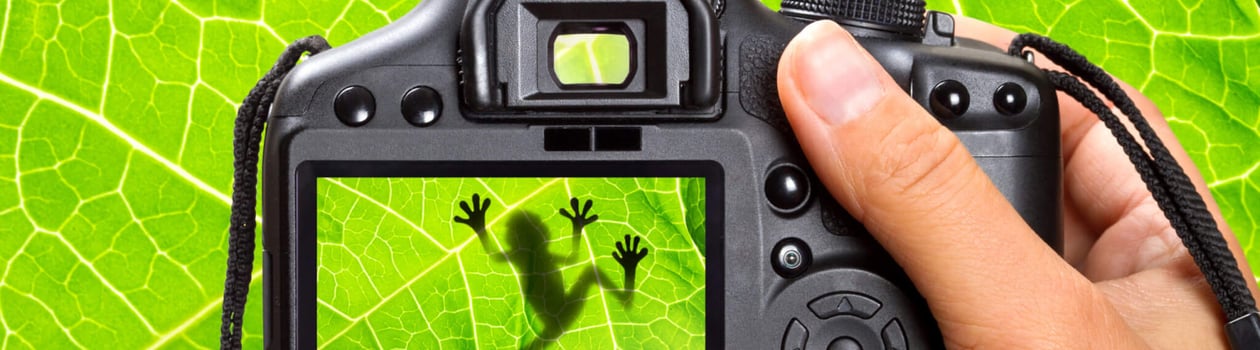
The natural world is full of so much gorgeous beauty and wonder, and it is important for us to embrace it as much as possible. We can experience so much breathtaking scenery in nature, and it is important to make sure you make the most of this.
Nature Photography Day is here to encourage more people to capture photos of the everyday beauty of the world!
How to Celebrate Nature Photography Day
Grab Your Camera
Obviously, the first step to celebrating Photography Day is getting out into the world with your camera.
You can’t take pictures of nature without being out in it, and who doesn’t need a walk every now and then? Visit your local park and discover the beauty held in such a natural setting, or take a look in your garden for the little-hidden world of insects and flowers.
Nature can be found everywhere, even in the cracks in the sidewalks! In fact, you could even take this one step further, and try to snap one picture every single day for a year of the natural world. Challenge yourself.
Take a Nature Safari
If you really want to make sure you get the best possible outcome from your nature photography, one of the best things you can do is to book something like a nature safari.
This kind of thing is going to set you up for success in the future, and give you access to some of the most incredible and unique wildlife and nature in the world.
You might even look at booking a trip like this to coincide with Nature Photography Day in order to really maximize what this day has to offer, and how much you can enjoy it.
Experience Nature Everywhere
Try to get out of the house and make the most of the world around you. Take your camera to the park, head into the garden, experience nature from a different viewpoint.
This is a great way of getting up close and personal with the natural world, and there are so many things that can play a major part in this. So, you are going to need to make the most of everything that comes with it.
Nature photography is a beautiful art that really brings us closer to the world we live in, and the view through the camera’s lens helps us catcher it every day.
So use Nature Photography Day as your excuse to get out into the world and take a closer look at it than you have before, and then capture it for the memories.
Why Celebrate Nature Photography Day
The world of nature is one that exists alongside our own, and it is important that we love and respect it, and the best way of doing this is to try to understand and admire the beauty of nature as much as possible. Many people have hobbies and interests that involve the natural world in some way
One of the best ways of being able to admire and experience the supreme magnificence of the natural world is to capture it on film. There is a reason why people take cameras and camcorders when they go on safaris.
Nature is so awe-inspiring and unique that we often only get fleeting moments that pass as quickly as they happen. And it is so important to try to capture these moments, as many of them are things we may never see or experience again.
Things like The Great Migration and thunderstorms are good examples of things in nature that you need to try to capture when you get the opportunity.
Have you ever enjoyed a photo of a flower? Or a close up of a bee landing on the entrance to its hive? Have you marveled at the grace of a gazelle leaping through the Savannah, or the lumbering majesty of a rare elephant as it feeds from the highest trees or draws water from a watering hole?
If so, you know what it is to marvel at the natural world around us. Nature Photography Day celebrates those amazing souls who are able to capture nature’s beauty in the eye of a camera.
Capturing these seminal moments is so important for allowing you to take in the beauty of the natural world, and preserve the amazing power of nature for years to come. So, let’s take a look at Nature Photography Day, what you need to know, and how you can go about celebrating this amazing global event.
Nature Photography Day Timeline
First Permanent Photograph from Nature
Joseph Nicéphore Niépce creates “View from the Window at Le Gras,” the earliest known surviving photograph taken directly from nature, laying groundwork for landscape and nature photography.
Daguerreotype Process Announced
Louis-Jacques-Mandé Daguerre publicly introduces the daguerreotype, quickly adopted to record detailed views of landscapes and natural scenes across Europe and America. [1]
Wet Collodion Process Enables Field Work
The introduction of the wet collodion glass negative gives photographers shorter exposures and sharper detail, making ambitious outdoor nature and landscape projects far more practical.
Carleton Watkins Photographs Yosemite
American photographer Carleton E. Watkins hauls giant cameras into Yosemite Valley to make monumental “mammoth plate” views that become landmark images of wild American scenery. [1]
George Shiras III Pioneers Night Wildlife Photography
George Shiras III experiments with flash powder, tripwires, and remote triggers to photograph nocturnal animals, helping to invent camera-trap style wildlife photography.
Ansel Adams’ Landscapes Aid Conservation
Ansel Adams publishes powerful black-and-white images of places such as Yosemite and the Sierra Nevada, which the Sierra Club and others use to promote U.S. wilderness protection. [1]
Eliot Porter’s “In Wildness” Popularizes Color Nature Photography
Eliot Porter’s book “In Wildness Is the Preservation of the World,” published by the Sierra Club, uses lyrical color photographs of forests and wildlife to link nature imagery with modern environmentalism. [1]
History of Nature Photography Day
The North American Nature Photography Association (NANPA) was formed in 1994 by well over 100 nature photography enthusiasts.
The members of this organization were deeply invested in the future of this art form, and ensuring that those who practice it are taking proper steps to protect the subject of their photography through environmental conservation and awareness.
Through their efforts they ensure that access to public land continues to exist for nature photographers. NANPA established Nature Photography Day in 2006 to help bring awareness to the works they produce and the fragility of the subjects of their work.
The first step in truly appreciating the beauty that is nature Photography is getting out into the world with your camera and finding beautiful and rare subjects to photograph.
To encourage amateur photographers to participate there’s even a competition held with prizes ranging from an amazing new camera, NANPA membership, and workshops with the leading experts in nature photography.
There are limitless possibilities in nature photography, ranging from standard photography to macro photography to capture all the smallest details of the natural world we live in.
In fact, with every passing year there is more and more technology developed that allows people to get closer and even more personal with the natural world, and the animals that inhabit it.
Making sure you have all the best equipment and gear to help you enjoy and celebrate this day properly is so essential, and you need to ensure you make the most of this moving forward.
Facts About Nature Photography Day
Early Wildlife “Photographs” Often Used Taxidermy
In the mid-19th century, long exposure times made it extremely difficult to photograph live, moving animals, so many early images of “wild” creatures actually used taxidermied or captive specimens arranged to look natural.
Histories of wildlife photography describe how these posed subjects were commonly employed until faster emulsions and more portable equipment made candid field photography of free-ranging animals more practical.
Camera Traps Turn Wildlife Images Into Ecological Data
Remotely triggered camera traps, which use motion or heat sensors to photograph animals with little human presence, have become standard tools in ecology and conservation biology.
Large-scale camera-trap surveys generate time-stamped image series that researchers analyze to estimate species occupancy and abundance, document elusive or nocturnal animals, and track changes in wildlife communities across landscapes and years.
Nature Photos Drive Global Citizen Science Records
Citizen science platforms such as iNaturalist treat user-uploaded nature photographs as primary evidence for species observations, and community verification can elevate them to “research grade.”
These vetted, georeferenced photo records are automatically shared with the Global Biodiversity Information Facility (GBIF), where millions of such entries underpin studies of species distributions, invasive spread, and climate-related range shifts on a global scale.
Ansel Adams’ Photography Supported U.S. Conservation Policy
Ansel Adams’ sharply detailed black-and-white photographs of places like Yosemite and the Sierra Nevada were actively used by the Sierra Club to advocate for protecting wild landscapes.
The National Park Service notes that Adams’ images, shown to lawmakers and the public, helped build political support for expanding national parks and shaped mid-20th-century debates about American wilderness conservation.
Eliot Porter’s Color Images Influenced River Conservation Debates
Eliot Porter was a pioneer of serious color nature photography, using the dye transfer process to render subtle hues of rock, water, and vegetation.
His 1963 Sierra Club book “The Place No One Knew: Glen Canyon on the Colorado” documented a canyon system scheduled for inundation by the Glen Canyon Dam and became an influential visual record frequently credited with fueling later public and political opposition to additional dam projects on the Colorado River system.
Viewing Nature Photographs Can Aid Mental Focus
Research in environmental psychology suggests that simply viewing images of natural scenes can help restore certain types of attention taxed by demanding mental tasks.
In a controlled study, participants who briefly looked at photographs of nature performed better on tests of executive attention than those who viewed urban scenes, supporting Attention Restoration Theory, which proposes that nature-related stimuli assist recovery from cognitive fatigue.
High-Speed Strobe Photography Revealed Insect Flight in Detail
From the 1970s onward, British photographer Stephen Dalton engineered high-speed setups that combined sensitive triggers with very short-duration electronic flash to freeze the motion of insects in flight.
His pioneering images, published in the mid-1970s, showed the precise wing positions and flight postures of creatures like dragonflies and moths, influencing both nature photography and scientific visualization of animal aerodynamics.
Nature Photography Day FAQs
How did early nature photographers capture images without modern equipment?
In the late 19th century, pioneers like George Shiras III used innovative methods to photograph wildlife.
Shiras employed camera traps and flash photography to capture nocturnal animals, often using tripwires to trigger the shutter. These techniques laid the groundwork for modern wildlife photography.
Are there any notable nature photography competitions held on Nature Photography Day?
While there isn’t a specific global competition tied to Nature Photography Day, many local photography clubs and organizations host events and contests to celebrate the day.
Participants often share their best nature shots on social media using hashtags like #NaturePhotographyDay, fostering a sense of community among enthusiasts.
How has nature photography influenced environmental conservation efforts?
Nature photography has played a significant role in conservation by raising awareness about environmental issues.
Photographers like Ansel Adams and Eliot Porter used their images to highlight the beauty of natural landscapes, influencing public opinion and policy towards preservation.
What are some unique ways people celebrate Nature Photography Day around the world?
Celebrations vary globally, from organized photo walks in urban parks to workshops in national reserves.
In some regions, photographers focus on documenting local flora and fauna to promote regional biodiversity.
Online communities also engage in virtual exhibitions and challenges to mark the occasion.
Are there any myths or misconceptions associated with nature photography?
A common misconception is that one needs expensive equipment to capture stunning nature photographs.
In reality, understanding light, composition, and patience are more crucial. Many remarkable images have been taken with basic cameras or smartphones.
How has the digital age transformed the practice of nature photography?
The advent of digital cameras and smartphones has democratized nature photography, making it accessible to a broader audience.
Social media platforms allow photographers to share their work instantly, fostering a global community and increasing environmental awareness.
What challenges do nature photographers face when capturing wildlife images?
Photographers often contend with unpredictable animal behavior, challenging weather conditions, and difficult terrains.
Ethical considerations, such as avoiding disturbance to wildlife and habitats, also play a crucial role in the practice.
Are there any famous nature photographs that have significantly impacted society?
Yes, images like Ansel Adams’ “The Tetons and the Snake River” have profoundly influenced public appreciation for natural landscapes, contributing to conservation movements and the establishment of protected areas.
How can individuals contribute to conservation efforts through nature photography?
By capturing and sharing images of local ecosystems, individuals can raise awareness about environmental issues.
Participating in citizen science projects, where photographs document species distribution and health, also aids conservation research.
What role do nature photography organizations play in supporting photographers?
Organizations like the North American Nature Photography Association (NANPA) provide resources, ethical guidelines, and networking opportunities for photographers.
They also advocate for the protection of natural habitats and promote the role of photography in conservation.



You may also like

World Photography Day
A beautiful way to tell a story, express emotions, and preserve the beauty of the world around us. Start capturing your own story today!

National Camera Day
Dust off an old digital camera, buy a disposable camera, or just fire up your smartphone and snap some pictures of your day to keep those memories forever.

National Photography Month
A picture’s worth a thousand words, so get out there and start taking snapshots of the beauty all around you, whether right at home or off in an exotic locale.

World Wildlife Day
Nature's untamed wonders are always captivating, from the majestic beasts of the savanna to the tiny creatures in your backyard.
National days and holidays on June 15

National Lobster Day
National Lobster Day celebrates this decadent seafood delicacy, its rich history, fun facts, and the fishermen and festivals that bring lobster to the table.

Beer Day Britain
Celebrate Beer Day Britain with tastings, pub visits, and the National Cheers to Beer, honoring UK brewing heritage, community spirit, and beer culture.
- Australia
- Canada
- United Kingdom
- and 1 more

National Foam Party Day
Dive into bubbly fun on National Foam Party Day, celebrating joy, dancing, and community with safe, foam-filled events for families, friends, and kids.

World Elder Abuse Awareness Day
World Elder Abuse Awareness Day promotes dignity, safety, and respect for older adults, raising global awareness, education, and action to prevent elder abuse.
- Australia
- Canada
- United Kingdom
- and 1 more
Seize Every Day
Sign up to get reminders, recommendations and guides.