Greek Independence Day
Embracing autonomy, Greece's journey echoes resilience, embodying a spirited quest for self-determination and the triumph of sovereignty.
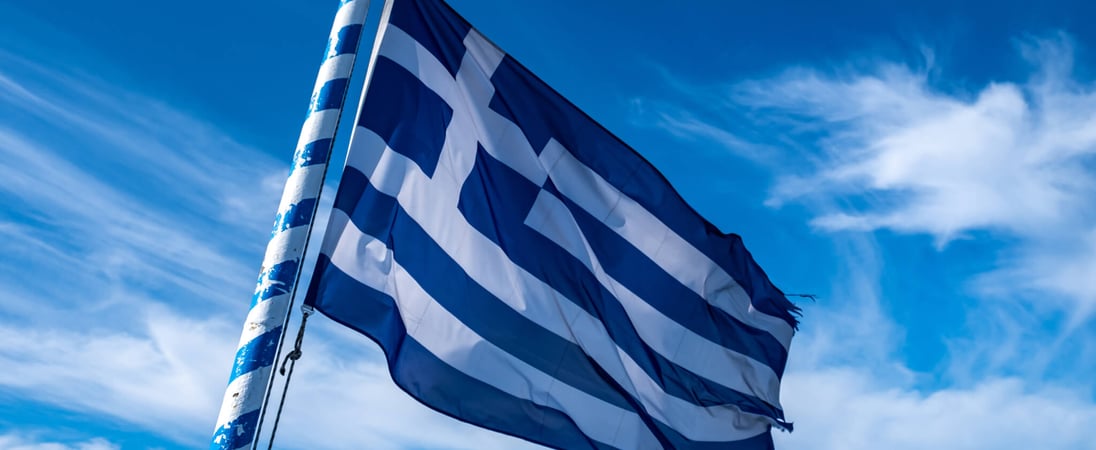
Greek Independence Day is the perfect time to fly your Greek flag and pick up some baklava from the local bakery.
This important holiday marks the day in 1821 when, after 400 years of rule, Greece began to revolt against the Ottoman Empire.
Greek Independence Day is significant not only to residents of Greece but is also celebrated among the Greek diaspora around the globe. The day honors the nation’s role in history and its contributions to Western culture.
Many around the world share in this celebration. But outside of Greece, thousands of Australians also revel in the day. From 1952 to 1971, the Australians allowed Greeks to migrate to their country after World War II, and the Civil War left Greece economically and politically unstable. During the peak of this migration, just over 160,000 Greeks lived Down Under.
Greek Independence Day Timeline
1453
Fall of Constantinople and Start of Ottoman Rule
The Ottoman conquest of Constantinople ends the Byzantine Empire and ushers most Greek lands into centuries of Ottoman control that later fuels Greek nationalist aspirations.
1814
Founding of the Filiki Eteria in Odessa
Greek merchants and intellectuals establish the secret society Filiki Eteria in Odessa to prepare a coordinated revolution against Ottoman rule across all Greek-inhabited territories.
February 22, 1821
Ypsilantis Crosses the Pruth River
Alexander Ypsilantis, leader of Filiki Eteria, crosses the Pruth River into Moldavia and calls for a general uprising, providing the first open military move of the Greek Revolution.
March 23, 1821
Liberation of Kalamata in the Peloponnese
Revolutionaries from Mani seize the city of Kalamata in the Peloponnese, one of the first major Greek towns to be freed, signaling that open revolt has begun in Greek territory.
October 20, 1827
Battle of Navarino
A combined British, French, and Russian fleet destroys the Ottoman-Egyptian navy at Navarino, a decisive intervention that ensures the survival of the Greek revolt and shifts diplomacy toward independence.
February 3, 1830
London Protocol Recognizes Greek Independence
Britain, France, and Russia sign the London Protocol, the first international act to recognize Greece as a fully sovereign and independent state, defining initial borders and great-power guarantees.
February 1833
Arrival of King Otto and Formation of the Kingdom of Greece
Prince Otto of Bavaria lands at Nafplion to assume the throne, marking the practical establishment of the modern Greek kingdom that emerged from the revolutionary struggle.
History of Greek Independence Day
Some Greeks call this holiday the Celebration of the Greek Revolution. That name emphasizes that it marks the start of the War of Independence, their fight for freedom, rather than the day they achieved it.
After the Ottoman Empire took over their lands, Greece lost much of its national culture and identity, which dates back to ancient Athens. The Ottoman rulers conquered the eastern Mediterranean region in the middle of the 1400s. By then, they had taken over Greece and reached as far east as Lebanon, Syria, and Palestine and as far south as Northern Africa. This large region gave the Ottomans complete control of the eastern Mediterranean Sea – control they’d not easily give up.
A secret society of brave Greeks, the Filiki Eteria, which translates to “Society of Friends,” was formed in 1814. Its sole purpose was to unite all Greeks to achieve their common goal of overthrowing the Ottoman Empire.
After almost seven years of resistance, the War for Independence started in 1821. The revolution was brutal, and countless brave Greeks — both fighters and civilians — sacrificed their lives. In 1826, the Ottoman leadership signed “The Protocol of St. Petersburg.” This important document recognized Greece as a self-governing territory of the Ottoman Empire. The Ottomans still considered Greece their territory. But this action indicated that they’d had enough of the revolutionaries.
After the war, the London Protocol met and officially recognized Greece as an independent state. That recognition restored freedom and national pride and opened a new chapter of freedom for Greeks.
How to Celebrate Greek Independence Day
No one has to be of Greek heritage or visit Greece to celebrate Greek Independence Day! Anyone who wants to honor the brave freedom fighters can join the fun.
Wear the Colors
Dress in blue and white, the colors of the Greek flag. Blue honors the nation’s nautical heritage, and white denotes the purity of the hearts of its freedom fighters.
Attend a Local Festival
Larger Greek communities enjoy marking the day with a parade or festival, especially in Australia and the United States. These celebrations are a great cultural experience – watching vibrant dancers, hearing the music, and enjoying the delicious cuisine.
Connect with the Greek Community
If your local community does not hold a festival or parade, look to connect with an online community. Listen to their social media discussions to learn even more about the culture and history of their homeland.
Attend a Greek Celebration
For an authentic experience, book a much-deserved trip to Athens to celebrate. Their yearly parade attracts over 100,000 people and lasts about 90 minutes. Parade spectacles include members of the Armed Forces, military vehicles, marching bands, dignitaries, and more. Some municipal and national sites also waive admission fees on Greek Independence Day in honor of the occasion.
Brush up on Greek history
The Mediterranean nation has a long history, dating back to ancient philosophers. Greece’s history is long and fascinating, with many colorful stories. Anyone interested can find volumes of books on the subject at their local library, and can also stream a documentary or find an online resource. Don’t worry about a lack of resources – there are many!
Dine at an Authentic Greek Restaurant
Try a sumptuous meal at a local Greek restaurant. Feast on some delicious, traditional foods like gyro, moussaka, or souvlaki. Then, enjoy baklava and other delicious pastries for dessert.
Greek Independence Day is not only for native Greeks. It encompasses their entire diaspora and invites non-Greeks to learn more about their history and culture.
Book a visit to attend the celebration in person or plan to honor the day from the comfort of home. Whatever the choice, Greek Independence Day is a time to reflect on the contributions of Greek society, which has significantly shaped the world.
Greek Independence Day FAQs
How did the Greek War of Independence influence ideas about nation-states in 19th-century Europe?
Many historians view the Greek War of Independence as an early example of a successful nationalist revolt against a multinational empire, which strengthened the idea that a shared language, religion, and historical memory could justify creating a separate state.
The conflict and its diplomatic settlement helped normalize the notion that great-power mediation and intervention could produce new nation-states, influencing later nationalist movements in regions such as Italy and the Balkans. [1]
What role did philhellenism play in international support for the Greek struggle?
Philhellenism was a current of admiration for Greek culture and history that spread among European and American intellectuals, politicians, and the wider public in the early 19th century.
This sympathy generated donations, volunteer fighters, and popular pressure on governments in Britain, France, and other countries, helping those governments justify diplomatic and ultimately military support for the Greek side in their conflict with the Ottoman Empire. [2]
Why is the Battle of Navarino considered a major naval turning point in the 19th century?
The Battle of Navarino in 1827 was one of the last large naval battles fought entirely by sailing ships and ended with the near destruction of the Ottoman-Egyptian fleet by a combined British, French, and Russian squadron.
The result crippled Ottoman sea power in the eastern Mediterranean and shifted the regional balance, strengthening the bargaining position of the Greek side and giving the three European powers greater leverage in the diplomatic settlement that followed. [3]
How did the Greek War of Independence affect political developments in the wider Ottoman Empire?
The conflict weakened Ottoman control in parts of southeastern Europe and showed that sustained rebellion, combined with foreign backing, could produce major territorial losses for the empire.
The war and its outcome contributed to what European diplomats called the “Eastern Question,” and created conditions in which later uprisings and independence movements in places such as Serbia, Bulgaria, and Romania could emerge and gain international attention.
What factors contributed to the growth of Greek diaspora communities in countries like the United States and Australia?
Greek migration to countries such as the United States and Australia expanded from the late 19th century onward, driven by rural poverty, limited economic opportunities at home, and periods of political instability in Greece.
Migrants often took work in shipping, factories, and small businesses and, over time established churches, fraternal associations, and community schools that helped maintain Greek language and customs while participating in local economic and civic life. [5]
How do cultural organizations help preserve Greek identity among diaspora communities?
Cultural organizations such as Greek Orthodox parishes, language schools, dance groups, and local associations give diaspora communities structured settings to practice shared traditions and the Greek language.
Scholars of migration and ethnicity note that these institutions foster social networks, intergenerational ties, and regular cultural events, which together support a continuing sense of Greek identity in multicultural societies. [6]
Also on ...
View all holidays
International Waffle Day
Start your day off right with a warm and crispy breakfast treat topped with your favorite fruits, syrups, and whipped cream.


American Red Cross Giving Day
The American Red Cross has given healthcare to those in need for generations, from volunteer blood drives to mobile vaccination sites. Volunteer to help!

Tolkien Reading Day
Take a journey through a magical world filled with brave heroes, fierce battles, and unforgettable adventures in a beloved classic series.