It’s always good to be reminded of healthy habits and important practices we need to have in our daily lives!
That’s why the observance of International Condom Day is here – to act as a reminder that using condoms is the best way to prevent the transference of sexually transmitted diseases in addition to preventing pregnancy.
International Condom Day Timeline
Early Documented Use of Condoms in Europe
Italian physician Gabriele Falloppio describes linen sheaths to prevent syphilis, providing one of the first detailed European accounts of condom use for disease prevention.
Vulcanization of Rubber Enables Early Rubber Condoms
Charles Goodyear patents vulcanized rubber, a process that makes rubber elastic and durable and soon allows the manufacture of reusable, thick rubber condoms.
Introduction of Latex and the Modern Condom Revolution
Development of water-based latex and dipping techniques enables thinner, disposable condoms, rapidly replacing older, heavier rubber models in mass production.
Condoms Become Central in Modern Family Planning
With the rise of the global family planning movement, condoms are promoted widely as a non‑hormonal contraceptive, integrated into national population and reproductive health programs.
HIV/AIDS Epidemic Reframes Condoms as Lifesaving Tools
As HIV/AIDS emerges, public health agencies begin promoting condoms not only for contraception but as a primary barrier method to reduce sexual transmission of HIV.
WHO Adds Condoms to the Essential Medicines List
The World Health Organization includes male latex condoms on its Model List of Essential Medicines, recognizing them as critical for HIV/STI prevention and reproductive health.
Strong Evidence Confirms Condom Effectiveness Against HIV
Systematic reviews and CDC/UNAIDS guidance show that consistent condom use dramatically reduces risk of HIV and many other STIs, solidifying their role in global prevention strategies.
How to Celebrate International Condom Day
Try out some of these fun and creative ways to celebrate International Condom Day to be safe, smart and intentional:
Buy Some New Condoms (Or Check those Old Ones)
People who are sexually active outside of a long-term relationship, or who have a partner who could be at risk, should make sure they have handy access to condoms on a regular basis.
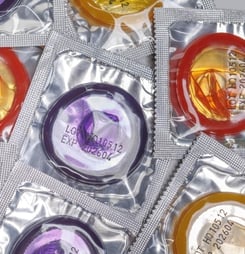
If it’s been awhile since they’ve been used, be sure to take a look in the medicine cabinet or nightstand and make sure they haven’t expired, since all condoms should have an expiration date after which they would be less effective.
Visit the International Condom Day Website
Get more educated on the use of condoms as well as finding out about pertinent events related to International Condom Day (ICD) by visiting the day’s website.
The website offers access to a list of events that are taking place throughout countries on five different continents. This includes the Americas, Europe, Asia and Africa.
On the website, it’s possible to view photos and information from previous ICD events and more.
It is certainly amazing the creative ideas that people in countries all over the world have come up with to celebrate and raise awareness for International Condom Day! Check it out!
Spread the Word About International Condom Day
Take some time on International Condom Day to share the story with others. Community leaders might want to get together and host an ICD event at a local community center, library or college.
Individuals can spread the word by reminding friends and family members about the importance of practicing safe sex.
Perhaps telling someone in person or even sharing on social media would be a great idea to get the word out!
Get an HIV Test
One of the most important parts of this day is staying protected from getting or spreading sexually transmitted diseases. In keeping with that goal, one good way to observe International Condom Day is to respect yourself and your sexual partner by getting an HIV test.
This can usually be accomplished at your doctor’s office, at a public health office or through another type of local clinic or hospital.
In fact, the Free HIV Test website gives people who live in the US access to a variety of options for receiving free HIV tests in several states across the nation. This website is run by the AIDS Healthcare Foundation, offering resources, medicine and preventative care for those who might be affected by HIV.
Care for your own health as well as the health of those you love by getting tested for HIV on International Condom Day. It’s quick, easy, and could change your life!
Learn More About HIV
As International Condom Day is sponsored by the AIDS Healthcare Foundation, this might be a great time to learn more about HIV and AIDS.
Since its entrance into the world as an epidemic in the early 1980s, HIV has gone from being a scary health issue with very little hope to a health concern that can be well-managed while leading a normal life.
Though it does continue to be a major public health issue, especially in developing countries, medical advances have provided more hope than ever.
Those who have HIV can reduce the risk of passing it on to a partner by 80% if they use a condom correctly every time they have sex.
Check out the AHF website to learn more about the ways condoms can be critical to safety and health!
History of International Condom Day
The idea of condoms has been around since ancient history, with the first mentions in literature coming in around 3000 BC.
At that time, the story about King Minos went that a sort of condom made from the bladder of a goat was used to protect the women he had sex with.
The evolution of the condom, or sheath, went through different iterations, such as the linen sheaths used by Ancient Egyptians or the animal intestines or bladders used by Ancient Romans. One tribe that inhabited New Guinea came up with the unique practice of using a female sheath that was made from a specific plant.
As might be expected, Chinese records show that they made sheaths from a version of silk. In many of these cases, the use of condoms became prevalent as it helped to protect from many different types of diseases, even when only made from linen or silk.
By 1855, rubber condoms were invented and in the next few years they were mass produced. Major advances in manufacturing brought about the development of making condoms from latex, which was more comfortable and more effective.
But, of course, it wasn’t until more modern days that the use of condoms, not only for pregnancy prevention but also to avoid sexually transmitted disease, has been the most effective. In fact, today’s latex condoms, when used properly each and every time, have been shown to be 98% effective in preventing pregnancy.
International Condom Day (ICD) was established by the AIDS Healthcare Foundation, a non-profit organization that was founded in the 1980s as a response to the AIDS epidemic. The first International Condom Day was introduced in 2009 as a fresh way to help people remember the importance of practicing safe sex.
And with the tagline “put it on”, the messaging is pretty clear!
Intentionally situated the day before Valentine’s Day, International Condom Day was established as a reminder that getting romantic should also mean playing it safe.
Facts About International Condom Day
Latex Condoms Can Be Over 98% Effective—But Typical Use Is Closer to 87%
Clinical trials show male latex condoms are about 98% effective at preventing pregnancy with perfect use, but real‑world “typical” use—where people sometimes put them on late, use them incorrectly, or occasionally skip them—drops protection to roughly 87% per year, highlighting how much technique and consistency matter.
Correct Condom Use Dramatically Reduces HIV and Other STI Transmission
When used correctly and consistently, external (male) condoms reduce the risk of HIV transmission by about 80% or more in serodiscordant heterosexual couples, and also significantly cut the risk of gonorrhea, chlamydia, and trichomoniasis, making them a cornerstone of global STI prevention strategies.
Internal (Female) Condoms Offer Similar Pregnancy Protection With Added Control
Internal condoms, first approved by the U.S. FDA in 1993, provide pregnancy protection comparable to external condoms with typical‑use failure rates around 21% versus 13% for male condoms, but they uniquely give receptive partners more control over barrier protection and can be inserted hours before sex.
Condoms Are on the WHO Model List of Essential Medicines
The World Health Organization includes condoms on its Model List of Essential Medicines, placing them alongside antibiotics and vaccines as basic tools every health system should provide because they simultaneously prevent unintended pregnancy, HIV, and other sexually transmitted infections.
Ancient Condoms Were Reusable Linen and Animal-Gut Sheaths
Historical and archeological evidence shows that before rubber and latex, people in ancient Egypt, Rome, and later in 16th–18th century Europe used reusable sheaths made from linen or animal intestines primarily to prevent venereal disease, long before modern concepts of contraception developed.
Latex Technology Turned Condoms Into a Mass Public-Health Tool
After vulcanized rubber condoms appeared in the mid‑1800s, a major shift came in the 1920s when manufacturers learned to make thinner latex condoms by dipping glass molds into liquid latex; these products were cheaper, longer‑lasting, and easier to mass‑produce, enabling widespread global distribution.
Condom Uptake Rose Sharply in Response to the AIDS Epidemic
Condom use expanded markedly worldwide in the 1980s and 1990s as HIV/AIDS emerged; public-health campaigns reframed condoms from mainly a birth-control tool to a life‑saving barrier against a fatal infection, leading many countries to integrate free or subsidized condoms into national HIV programs.