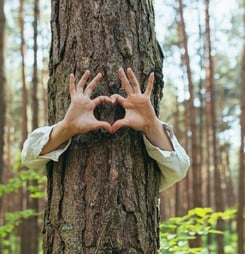

Trees—they produce the vast majority of the oxygen we need to survive, they provide us with much-needed shade on hot days, and they’re just plain beautiful.
For all of those reasons and many more, protecting the trees on our planet should be a real priority for all of us and thankfully, recently, it has.
Of course, with millions of hectares of forests being chopped down every year, we still have a long way to go, but we are making progress, and the International Day of Forests is proof of that!
International Day of Forests Timeline
Creation of the Food and Agriculture Organization (FAO)
The newly formed FAO makes forests and timber resources part of its core mandate, laying groundwork for coordinated global forest policy, data collection, and sustainable forest management.
Launch of the FAO Global Forest Resources Assessment
FAO begins regular global forest assessments, creating the first consistent picture of forest area, use, and change that later guides conservation and sustainable management worldwide.
Rio Earth Summit Adopts Forest Principles
At the UN Conference on Environment and Development in Rio de Janeiro, governments agree on the “Non-Legally Binding Forest Principles,” the first global consensus on sustainable forest management.
United Nations Forum on Forests Established
The UN Economic and Social Council creates the UN Forum on Forests to promote sustainable management of all forest types and strengthen international cooperation on forest policy.
Millennium Ecosystem Assessment Highlights Forest Services
The landmark UN-backed assessment shows forests are central to ecosystem services such as climate regulation, water protection, and livelihoods, reinforcing their role in global sustainability policy.
How to Celebrate International Days of Forests
There are a few great ways to celebrate this day, including some of these ideas:
Plant Some Trees
This doesn’t have to mean taking on some sort enormous commitment that requires you to quit your job and dedicate your life to planting thousands of trees.
Even one or two in your backyard would be enough! There must be a fruit you love, so why not plant a fruit tree or two?
There’s nothing quite like fruit that’s just been freshly picked off a tree to make you feel what summer is all about. Not to mention the 100% pesticide and herbicide-free juices and jams you could make and enjoy for months afterwards!
No place to plant your own trees? That’s okay! There are plenty of charities out there who would love your help in reforestation in critical spaces all over the world.
Contribute to organizations dedicated to planting trees and restoring forests. Your support aids global efforts to combat deforestation and climate change.
Spend Time in the Forest
Another way to celebrate International Day of Forests would be to go hiking in a forest nearby, or even going for a nice, relaxing walk there.
Visit a local forest or nature reserve to appreciate its beauty and biodiversity. Spending time among trees can boost well-being and deepen your connection to the environment.
Trees are something we sometimes take for granted, so going out for the purpose of appreciating their beauty and the beauty of nature in general while also enjoying some fresh air would definitely be beneficial.
Reduce the Use of Trees
If you’re not feeling quite so active, you can take some time on this day to think about what you can do to help prevent so many trees from being cut down—rent books from the library instead of buying, recycle used paper, and, of course, and of course teach your children to do the same!
There’s nothing quite like raising awareness about an issue to get it solved quicker, especially when it comes to people who are the future of humanity.
This International Day of Forests, make sure you make a difference. As with cutting down trees—one doesn’t seem to matter, but millions of hectares definitely do—so with us earthlings—if we all cared just a little bit, the planet would be a better place!
Plant a Tree in Your Community
Gather friends or neighbors to plant trees in local parks or schoolyards. This simple act enhances green spaces and provides lasting environmental benefits.
Share Awareness on Social Media
Use your online platforms to share facts about forests and their importance. Spreading awareness encourages others to join in preserving these vital ecosystems.
History of International Day of Forests
In 1971, the European Confederation of Agriculture suggested setting aside a day to honor forests. They wanted people to understand how important trees are for life on Earth. The idea quickly gained support.
Later, the United Nations Food and Agriculture Organization agreed with the proposal. Together, they worked to create a global day that would raise awareness about forests and their role in human and environmental health.
The International Day of Forests was more officially established this day by resolution of the United Nations General Assembly on November 28, 2012.
Since then, each year, various events celebrate and raise awareness of the importance of all types of forests, and trees outside forests, for the benefit of current and future generations.
The state of our forests is important to us all here on earth for many reasons – 80% of all terrestrial biodiversity lives in forests, and each year many species go extinct as a result of them being destroyed.
Of course, forests also play a critical role in climate change deforestation results in 12-18 percent of the world’s carbon emissions and accelerated global warming.
Forests also provide food, fiber, water and and even medicines for approximately 1.6 billion of the world’s population, especially the poorest people.