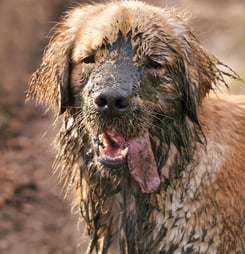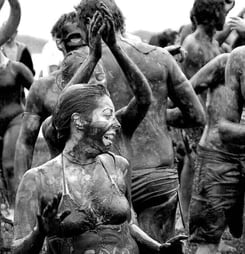

Mud has a talent for showing up at the exact wrong moment. It splatters shoes, clings to hems, and turns a neat walkway into a slip-and-slide of questionable decisions. But International Mud Day insists that the mess is the point and that a little earth and water can be one of the simplest, most joyful ingredients for outdoor play.
Mud is nature’s most democratic material. It does not require fancy gear or special skills. It invites stomping, squishing, sculpting, and storytelling. And when people lean into the fun, mud becomes more than a nuisance. It becomes a hands-on way to explore the outdoors, practice creativity, and remember that getting dirty is sometimes a sign that someone had a very good day.
International Mud Day also encourages adults to loosen their grip on spotless living. Not every smudge needs a panic response, and not every speck of dirt is the enemy. Many educators and nature-play advocates point out that outdoor messy play can support confidence, problem-solving, and cooperation.
Plus, mud offers a sensory experience that screens simply cannot copy: cool and slick one minute, thick and moldable the next, full of textures that shift with a single splash of water.
So yes, it gets everywhere. That is part of its charm. Let’s get muddy!
How to Celebrate International Mud Day
There are countless ways to celebrate International Mud Day, but all of them have one thing in common: participants should expect to get dirty. This day can be especially fun with children because kids often treat mud like an invitation instead of a warning sign.
Still, adults can join in as well. Mud play is not only for little boots and tiny hands. It is for anyone willing to sacrifice a bit of dignity and a towel.
Before the fun begins, a little planning helps a lot. Pick a spot where muddy footprints are not a disaster, such as a backyard, a patch of soil, a garden area being refreshed, or a play space that can handle water.
Keep a “mud kit” nearby: old clothes, a bucket of clean water for rinsing, a towel, and a bag for muddy items. If children are involved, set simple rules like “mud stays in the mud zone” and “no throwing mud at faces,” which keeps the celebration playful instead of chaotic.
Mud can also become a mini science lesson disguised as pure fun. People can experiment with different textures, compare sandy mud with clay-heavy mud, or test how leaves, grass, or tiny stones change the feel. The goal is not perfection. The goal is curiosity, laughter, and that oddly satisfying sound of shoes pulling free from the ground.
Have Fun with Mud
One of the most creative and entertaining activities for International Mud Day is making mud sculptures or mud cakes. Mud is wonderfully flexible. Add water to make it glossy and runny, add dry soil to make it thicker, and mix in natural extras like grass or pine needles for texture. Suddenly it feels less like dirt and more like a free art supply waiting outdoors.
Mud kitchens are a classic way to transform a simple patch of ground into an imaginary café. A few old pots, wooden spoons, and containers quickly become a complete cooking set. Mud soup gets stirred with serious concentration. Pebbles become “beans.” Leaves turn into “herbs.” The best part is that imaginative play expands naturally when the materials are open-ended. Mud does not come with instructions, so creativity fills in the rest.
Mud art can also be surprisingly beautiful. People can paint with mud using brushes, sticks, or their hands. They can create temporary murals on cardboard, rocks, or fences that can later be washed clean. They can press hands or footprints into soft mud to capture textures, almost like a short-lived fossil record of a day well spent.
For those who enjoy a bit of structure, try setting up small challenges:
- Build the tallest mud tower that can stand for a full minute.
- Make an animal sculpture using only mud and natural items found outdoors.
- Create a “mud bakery” menu and serve the funniest items imaginable.
- Construct a tiny village for toy figures, complete with roads and bridges.
Mud play also encourages teamwork. Someone becomes the “water carrier,” someone becomes the “architect,” and someone becomes the “quality control inspector” who announces, very officially, that the mud is “not muddy enough.” It is cooperation, just much stickier.
Create a Mud Pit
Another easy way to enjoy this day to the fullest is by creating a homemade mud pit using an inflatable pool or a sturdy plastic tub. This keeps the mess contained and makes the mud feel like a special attraction instead of a random puddle. It can be a truly memorable experience, especially for children who do not often get permission to jump in with both feet.
To make a mud pit, start with clean soil and slowly add water until it reaches the perfect squish level. Some people prefer thick, pudding-like mud for sculpting and stomping. Others enjoy thinner mud for splashing. Both options work. If different age groups are involved, consider making two sections: a deeper “splash” zone and a shallower “build” zone.
A few practical tips help keep the fun safe and manageable:
- Use soil from a known, clean area. Avoid places that may contain chemicals, animal waste, or sharp debris.
- Check the mud area for sticks, glass, thorns, or anything sharp.
- Supervise water play, even when the water is shallow.
- Avoid muddy play if someone has open cuts, and rinse skin afterward to prevent irritation.
- Plan an exit strategy: a rinse bucket or hose, a towel station, and a clear path to the bathroom or changing area.
Clothing can become an entire situation. The easiest solution is to wear old clothes that can be sacrificed to the occasion, or even better, create a set of “mud day clothes” used only for this purpose. Some stains simply will not disappear, and that is perfectly fine. Mud is not trying to be polite.
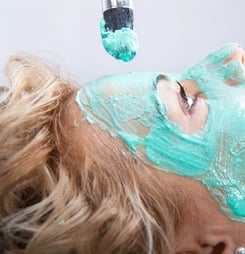
A contained mud pit can also become a mini obstacle course. Add a “mud runway” where participants must stomp from one side to the other without losing a shoe. Create a mud-and-water relay using cups and buckets. Or set up a “mud spa” corner where people can spread mud gently on arms or legs, let it dry briefly, then rinse it away as a sensory experiment. The point is to treat mud as an activity, not a problem.
International Mud Day Timeline
Ancient Mesopotamian and Egyptian Mud Therapies
Early civilizations along the Tigris, Euphrates, and Nile used river mud and clay on the skin for healing and cosmetic purposes, laying the groundwork for later therapeutic mud traditions.
Greek and Roman Balneotherapy with Mud and Mineral Springs
Classical Greek physicians and later Romans integrated mineral-rich muds and hot springs into medical practice to treat skin diseases, joint pain, and other ailments in organized bath complexes.
Rise of European Spa Towns and Medical Mud Treatments
Across Europe, spa resorts in places like Italy, Hungary, and Central Europe formalize “fango” and other mud applications as prescribed treatments for rheumatic and musculoskeletal disorders.
Soil Science Emerges as a Modern Discipline
Researchers such as Vasily Dokuchaev and his successors established soil science as a field, describing soils as natural bodies with horizons and complex biological activity rather than inert dirt.
James Lovelock and the Gaia Hypothesis Highlight Living Earth Systems
Publication of “Gaia: A New Look at Life on Earth” popularizes the idea of Earth, including its soils, as a self-regulating system, influencing later ecological thinking about soil as a living environment.
Discovery of Mycobacterium vaccae’s Mood‑Modulating Effects
Researchers report that a common soil bacterium, Mycobacterium vaccae, can influence serotonin pathways and reduce anxiety in mice, sparking public interest in the mental health benefits of soil contact.
Soil Biodiversity and “Exposure to Nature” Gain Health Focus
Interdisciplinary studies on the human microbiome and “old friends” hypothesis link contact with diverse environmental microbes, including those in soil and mud, to better immune regulation and reduced inflammation.
History of International Mud Day
The creators of International Mud Day wanted to find a way to help children around the world feel more connected to one another, and what better way to do it than through the earth itself? Mud is shared ground, literally. A child in one country and a child in another may have different languages, foods, and daily routines, but both understand the satisfaction of a good squish.
International Mud Day began in 2009, linked to conversations among early childhood educators during a World Forum for Early Childhood Care and Education gathering. Gillian McAuliffe from Australia and Bishnu Bhatta from Nepal are widely credited with shaping the idea after discussing ways to encourage community and appreciation for nature through simple, accessible play. The spirit of the day was refreshingly straightforward: invite children to play outside in mud and recognize that joyful mess crosses borders easily.
The celebration quickly became popular with educators and families because it supports a broader philosophy of learning. Many early childhood programs emphasize that play is not separate from education. Play is how children test ideas, develop social skills, and make sense of the world around them. Mud, in particular, is a powerful tool because it is open-ended and responsive. It changes with weather, with water, with pressure, and with imagination. It teaches cause and effect without needing a lecture.
Over time, the movement inspired schools, outdoor programs, and families in many places to celebrate together. Some groups organize large community events with mud pits, slides, and messy art stations.
Others keep things simple with a backyard puddle and a few kitchen tools. The day’s lasting appeal comes from its flexibility. It can be large or small, carefully planned or completely spontaneous, and it still delivers the same message: nature play matters.
International Mud Day also carries a gentle reminder about access. Not every child has equal opportunities for outdoor play, safe green spaces, or time in nature. Mud becomes a symbol of what communities can offer when they create space for children to explore outdoors, even if that exploration looks inconvenient at first glance. A little mess can be proof that children are being allowed to truly be children.
And yes, there is something wonderfully equalizing about it. No matter the age, background, or personality type, mud has a way of making everyone look equally ridiculous. That shared silliness is part of the magic.
After all, as American botanist Luther Burbank once said,
“Every child should have mud pies, grasshoppers, water bugs, tadpoles, frogs, mud turtles, wild strawberries, acorns, chestnuts, trees to climb. Brooks to wade… bees, butterflies, various animals to pet, hayfields, pine-cones, rocks to roll, sand, snakes, and hornets; any child who has been deprived of these has been deprived of the best part of… education.”
The quote may be old, but the idea still feels relevant today: hands-on experiences in nature are not a luxury. They are part of learning how life works. Mud simply happens to be one of the most entertaining teachers.